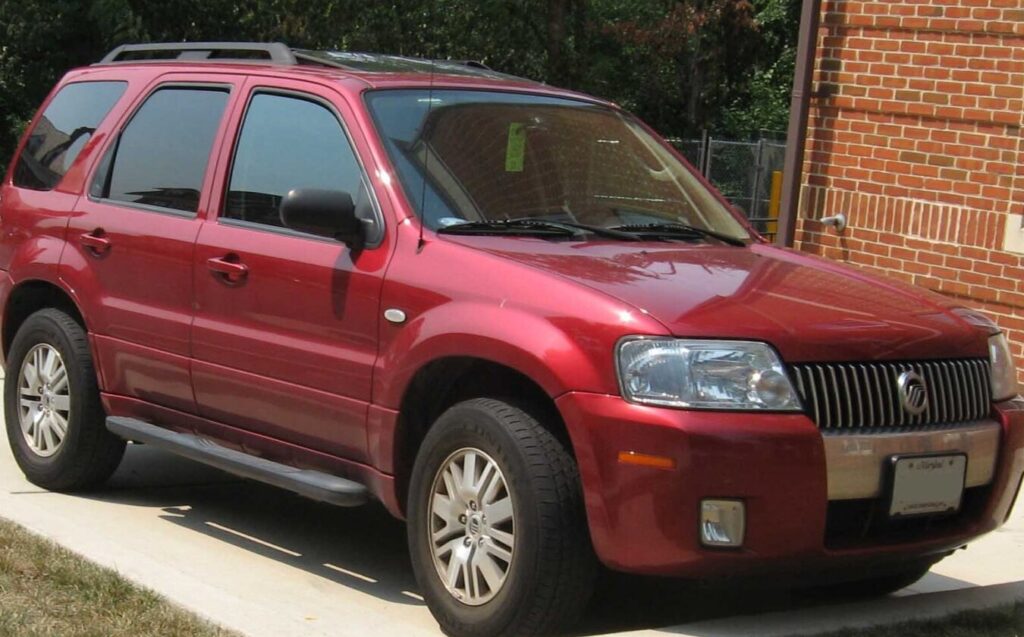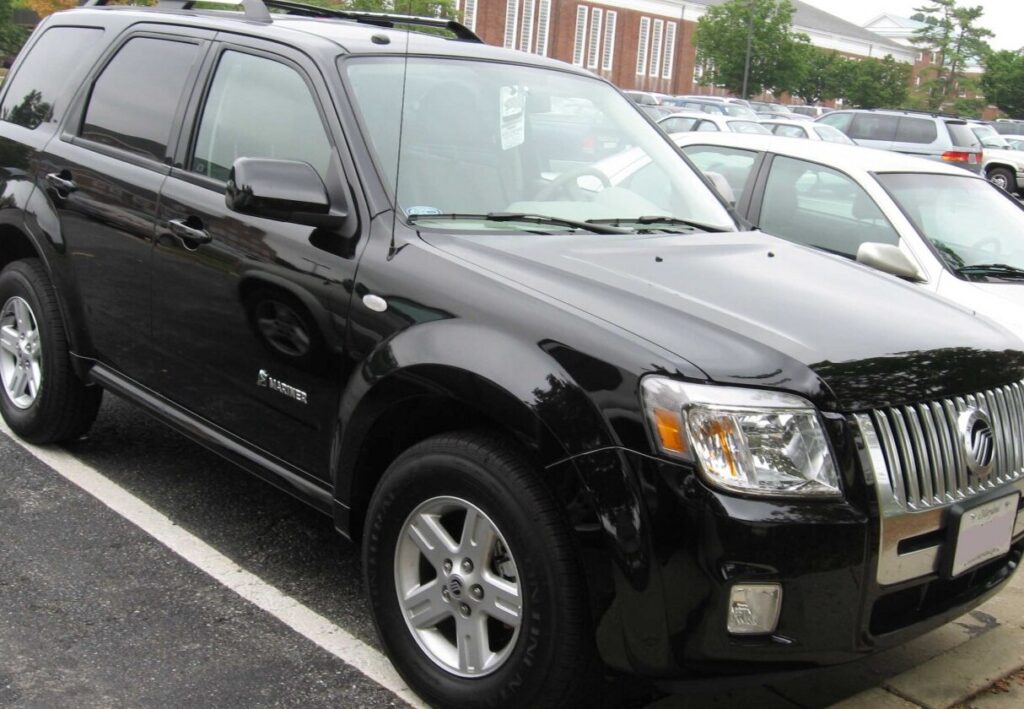
The Mercury Mariner II 2.5 Hybrid, produced from 2008 to October 2010, represented Mercury’s entry into the burgeoning hybrid SUV market. Positioned as a more fuel-efficient alternative within the Mariner lineup, it utilized Ford’s full hybrid electric vehicle (FHEV) technology. The Mariner II, built on the Ford Escape Hybrid platform, aimed to appeal to environmentally conscious consumers seeking the practicality of a compact crossover SUV without sacrificing significant performance. This particular 2.5L hybrid configuration occupied a mid-range position in the Mariner II offerings, bridging the gap between the base gasoline models and potential future, more premium trims that never materialized due to the Mariner brand’s eventual discontinuation.
Technical Specifications
| Brand | Mercury |
| Model | Mariner |
| Generation | Mariner II |
| Type (Engine) | 2.5 (177 Hp) Hybrid eCVT |
| Start of production | 2008 |
| End of production | October, 2010 |
| Powertrain Architecture | FHEV (Full Hybrid Electric Vehicle) |
| Body type | SUV, Crossover |
| Seats | 5 |
| Doors | 5 |
| Fuel consumption (urban) | 6.9 l/100 km (34.1 US mpg) |
| Fuel consumption (extra urban) | 7.6 l/100 km (30.9 US mpg) |
| Fuel consumption (combined) | 7.4 l/100 km (31.8 US mpg) |
| Fuel Type | Petrol (Gasoline) |
| Emission standard | PZEV |
| Weight-to-power ratio | 9.4 kg/Hp |
| Weight-to-torque ratio | 9 kg/Nm |
| Battery voltage | 330 V |
| Battery technology | Nickel-metal hydride (NiMH) |
| Max speed (electric) | 71 km/h (44.12 mph) |
| Electric motor power | 94 Hp @ 5000 rpm |
| System power | 177 Hp |
| Engine Power | 155 Hp @ 6000 rpm |
| Torque | 184 Nm @ 4500 rpm (135.71 lb.-ft. @ 4500 rpm) |
| Engine layout | Front, Transverse |
| Engine Model/Code | Duratec 25 |
| Engine displacement | 2488 cm3 (151.83 cu. in.) |
| Number of cylinders | 4 |
| Engine configuration | Inline |
| Cylinder Bore | 89 mm (3.5 in.) |
| Piston Stroke | 100 mm (3.94 in.) |
| Compression ratio | 12.3:1 |
| Number of valves per cylinder | 4 |
| Fuel injection system | Multi-port manifold injection |
| Engine aspiration | Naturally aspirated |
| Engine oil capacity | 4.7 l (4.97 US qt | 4.14 UK qt) |
| Coolant capacity | 8 l (8.45 US qt | 7.04 UK qt) |
| Kerb Weight | 1664 kg (3668.49 lbs.) |
| Trunk space (min) | 875 l (30.9 cu. ft.) |
| Trunk space (max) | 1880 l (66.39 cu. ft.) |
| Fuel tank capacity | 57 l (15.06 US gal | 12.54 UK gal) |
| Length | 4448 mm (175.12 in.) |
| Width | 1806 mm (71.1 in.) |
| Height | 1720 mm (67.72 in.) |
| Wheelbase | 2619 mm (103.11 in.) |
| Front track | 1542 mm (60.71 in.) |
| Rear track | 1529 mm (60.2 in.) |
| Ride height | 211 mm (8.31 in.) |
| Turning circle | 11.2 m (36.75 ft.) |
| Gearbox | automatic transmission eCVT |
Powertrain & Engine Architecture
The Mercury Mariner II 2.5 Hybrid’s powertrain centered around Ford’s 2.5-liter Duratec inline-four engine, designated as the 236 engine code. This engine produced 155 horsepower at 6000 rpm and 184 Nm (135.71 lb-ft) of torque at 4500 rpm. It featured multi-port fuel injection and a double overhead camshaft (DOHC) valvetrain with variable valve timing (iVCT). The engine was paired with an electronically controlled continuously variable transmission (eCVT). The eCVT wasn’t a traditional CVT; it integrated an electric motor directly into the transmission housing, allowing for electric-only operation at lower speeds and assisting the gasoline engine during acceleration. A 330-volt nickel-metal hydride (NiMH) battery pack, located under the trunk floor, powered the electric motor. The system intelligently blended power from both sources, prioritizing electric power when possible to maximize fuel efficiency. The engine also incorporated a start/stop system to further reduce fuel consumption during city driving.
Driving Characteristics
The 2.5L Hybrid Mariner II offered a noticeably different driving experience compared to its gasoline-only counterparts. While the total system output of 177 horsepower was comparable to some of the larger gasoline engines offered in the Mariner, the hybrid’s power delivery was smoother and more linear. The eCVT, while efficient, lacked the direct feel of a traditional automatic transmission. Acceleration was adequate for everyday driving, but not particularly sporty. The electric motor provided instant torque at low speeds, making city driving effortless. The hybrid system’s regenerative braking also contributed to a unique braking feel. Compared to the more powerful 3.0L V6 Mariner, the 2.5 Hybrid prioritized fuel economy over outright performance. The eCVT’s programming focused on maximizing efficiency, often holding lower gears longer to keep the engine in its optimal operating range.
Equipment & Trim Levels
The Mariner II 2.5 Hybrid typically came standard with features such as air conditioning, power windows and locks, a CD player with an auxiliary input, and keyless entry. Safety features included anti-lock brakes (ABS) and front airbags. Upholstery was generally cloth, with optional leather available. Higher trim levels, though relatively rare, could add features like a premium sound system, heated front seats, and a sunroof. The interior design was functional and straightforward, reflecting the Mariner’s focus on practicality. The dashboard layout was similar to other Mariner models, with easy-to-read gauges and logically placed controls. A hybrid-specific gauge cluster displayed energy flow information, showing when the vehicle was operating in electric-only mode, charging the battery, or utilizing both power sources.
Chassis & Braking
The Mariner II 2.5 Hybrid utilized an independent front suspension with McPherson struts and a multi-link independent rear suspension, both incorporating coil springs and anti-roll bars. This suspension setup provided a comfortable ride, although it wasn’t particularly sporty. The front brakes were ventilated discs measuring 303 mm, while the rear brakes were drum brakes measuring 254 mm. The use of rear drum brakes was a cost-saving measure, common in this class of vehicle. The steering was rack-and-pinion with electric power steering, providing light and easy steering feel. The standard tire size was 235/70R16, mounted on 16-inch wheels.
Market Reception & Comparison
The Mercury Mariner II 2.5 Hybrid was generally well-received by critics, who praised its fuel efficiency and smooth driving experience. However, some reviewers noted the lack of sporty handling and the somewhat unrefined feel of the eCVT. Compared to other hybrid SUVs of the time, such as the Toyota RAV4 Hybrid, the Mariner II offered a more affordable price point but lacked some of the Toyota’s refinement and established reputation for reliability. Fuel economy was a key selling point, with the Mariner II achieving EPA ratings of 31.8 mpg combined, significantly better than the gasoline-only models. Reliability was generally considered average, with some reports of battery degradation over time, a common issue with early NiMH hybrid batteries.
Legacy
The Mercury Mariner II 2.5 Hybrid represents an important step in Ford’s early foray into hybrid technology. While the Mariner brand was discontinued in 2010, the hybrid powertrain technology developed for the Mariner II paved the way for future Ford and Lincoln hybrid models. Today, used Mariner II Hybrids are relatively affordable and can offer a good value for buyers seeking a fuel-efficient and practical SUV. However, potential buyers should be aware of the potential for battery replacement costs, as NiMH batteries have a limited lifespan. The 2.5L hybrid powertrain, while not groundbreaking, demonstrated Ford’s commitment to improving fuel efficiency and reducing emissions, and its legacy continues in the company’s current hybrid offerings.