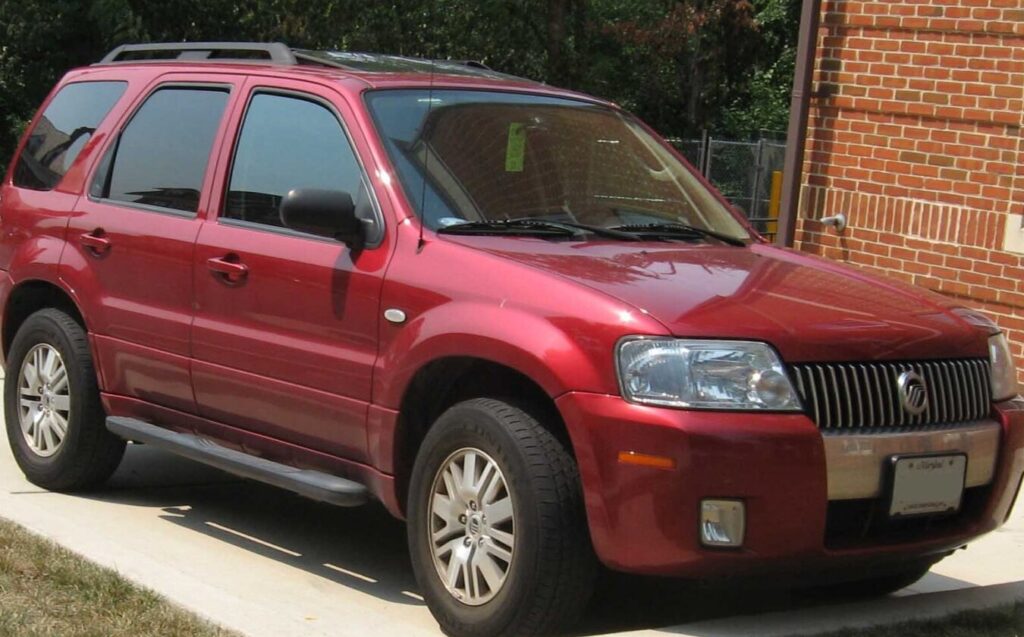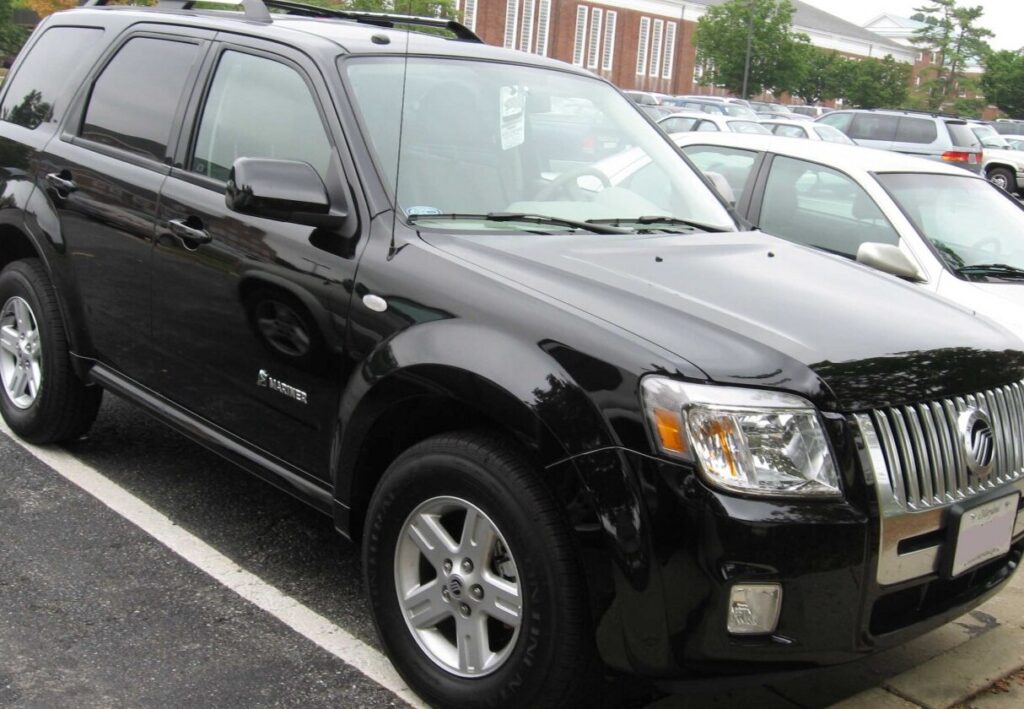
The Mercury Mariner II 3.0 V6 4WD Automatic was a crossover SUV produced by Mercury for the 2007 and 2008 model years. Positioned as a slightly more upscale offering within the compact SUV segment, the Mariner II represented a mid-cycle refresh of the original Mariner, sharing its underpinnings with the Ford Escape and Mazda Tribute. This particular variant, equipped with the 3.0-liter Duratec V6 engine and a four-speed automatic transmission, was a mid-range offering, slotting between the base 2.3-liter four-cylinder models and potential limited-edition trims. It aimed to provide a balance of power, capability, and comfort for American families.
Technical Specifications
| Brand | Mercury |
| Model | Mariner |
| Generation | Mariner II |
| Type (Engine) | 3.0 V6 (200 Hp) 4WD Automatic |
| Start of production | 2007 |
| End of production | 2008 |
| Powertrain Architecture | Internal Combustion engine |
| Body type | SUV, Crossover |
| Seats | 5 |
| Doors | 5 |
| Fuel consumption (economy) – urban (EPA) | 13.8 l/100 km (17 US mpg, 20.5 UK mpg) |
| Fuel consumption (economy) – extra urban (EPA) | 10.7 l/100 km (22 US mpg, 26.4 UK mpg) |
| Fuel Type | Petrol (Gasoline) |
| Weight-to-power ratio | 8.1 kg/Hp, 124.2 Hp/tonne |
| Weight-to-torque ratio | 6.1 kg/Nm, 162.7 Nm/tonne |
| Power | 200 Hp @ 6000 rpm |
| Power per litre | 67.4 Hp/l |
| Torque | 262 Nm @ 4850 rpm (193.24 lb.-ft. @ 4850 rpm) |
| Engine layout | Front, Transverse |
| Engine Model/Code | Duratec 30 |
| Engine displacement | 2967 cm3 (181.06 cu. in.) |
| Number of cylinders | 6 |
| Engine configuration | V-engine |
| Cylinder Bore | 89 mm (3.5 in.) |
| Piston Stroke | 79.5 mm (3.13 in.) |
| Compression ratio | 10:1 |
| Number of valves per cylinder | 4 |
| Fuel injection system | Multi-port manifold injection |
| Engine aspiration | Naturally aspirated engine |
| Valvetrain | DOHC |
| Engine oil capacity | 5.7 l (6.02 US qt | 5.02 UK qt) |
| Coolant | 10 l (10.57 US qt | 8.8 UK qt) |
| Kerb Weight | 1610 kg (3549.44 lbs.) |
| Max. weight | 2105 kg (4640.73 lbs.) |
| Max load | 495 kg (1091.29 lbs.) |
| Trunk (boot) space – minimum | 830 l (29.31 cu. ft.) |
| Trunk (boot) space – maximum | 1875 l (66.22 cu. ft.) |
| Fuel tank capacity | 62 l (16.38 US gal | 13.64 UK gal) |
| Permitted trailer load with brakes (12%) | 1588 kg (3500.94 lbs.) |
| Length | 4450 mm (175.2 in.) |
| Width | 1806 mm (71.1 in.) |
| Width with mirrors folded | 1979 mm (77.91 in.) |
| Width including mirrors | 2065 mm (81.3 in.) |
| Height | 1727-1778 mm (67.99 – 70 in.) |
| Wheelbase | 2619 mm (103.11 in.) |
| Front track | 1552 mm (61.1 in.) |
| Rear (Back) track | 1534 mm (60.39 in.) |
| Ride height (ground clearance) | 206 mm (8.11 in.) |
| Minimum turning circle (turning diameter) | 11.2 m (36.75 ft.) |
| Drivetrain Architecture | The Internal combustion engine (ICE) drives the front wheels permanently, and the rear wheels are driven through an electrically or mechanically operated clutch if necessary. |
| Drive wheel | All wheel drive (4×4) |
| Number of gears and type of gearbox | 4 gears, automatic transmission |
| Front suspension | Independent, type McPherson with coil spring and anti-roll bar |
| Rear suspension | Independent multi-link spring suspension with stabilizer |
| Front brakes | Ventilated discs, 302 mm |
| Rear brakes | Drum, 254 mm |
| Assisting systems | ABS (Anti-lock braking system) |
| Steering type | Steering rack and pinion |
| Power steering | Electric Steering |
| Tires size | 235/70 R16; 225/65 R17 |
| Wheel rims size | 16; 17 |
Powertrain & Engine Architecture
The heart of the Mariner II 3.0 was the Ford Duratec 30 engine, a 3.0-liter, naturally aspirated V6. This engine, part of Ford’s Duratec family, featured a 60-degree V-angle and a double overhead camshaft (DOHC) valvetrain with four valves per cylinder. The engine utilized multi-port fuel injection, delivering fuel directly into the intake ports. The Duratec 30 was known for its relatively smooth operation and adequate power delivery. Paired with this engine was a four-speed automatic transmission, a common choice for American market SUVs at the time. While not offering the efficiency of more modern transmissions, it provided acceptable shift quality and reliability. The 4WD system was an on-demand system, primarily driving the front wheels but engaging the rear wheels when slippage was detected, enhancing traction in inclement weather or on loose surfaces.
Driving Characteristics
The 200 hp and 193 lb-ft of torque provided by the 3.0-liter V6 and four-speed automatic offered adequate, though not exhilarating, performance. Acceleration from 0 to 60 mph was typically in the 8-9 second range. The automatic transmission’s gear ratios were tuned for everyday drivability rather than sporty performance. Compared to the base 2.3-liter four-cylinder Mariner, the V6 offered significantly more power, making highway merging and passing maneuvers much easier. However, it lacked the responsiveness of the manual transmission options available on some competitor models. The 4WD system provided enhanced stability and traction, particularly in slippery conditions, but added to the vehicle’s overall weight.
Equipment & Trim Levels
The Mariner II 3.0 V6 4WD Automatic typically came standard with features such as air conditioning, power windows and locks, a CD player, and cloth upholstery. Higher trim levels, such as the Limited, added features like leather upholstery, heated front seats, a sunroof, and upgraded audio systems. Optional extras included a navigation system, a rear entertainment system, and alloy wheels. Safety features included anti-lock brakes (ABS) and front airbags. The interior design was functional and relatively spacious, offering comfortable seating for five passengers.
Chassis & Braking
The Mariner II utilized an independent front suspension with McPherson struts and a multi-link independent rear suspension. This setup provided a reasonably comfortable ride, absorbing bumps and irregularities in the road surface. The front brakes were ventilated discs, providing good stopping power, while the rear brakes were drum brakes, a cost-saving measure common in this class of vehicle. A stabilizer bar was fitted to both the front and rear suspension to reduce body roll during cornering. The steering was rack-and-pinion with electric power assist, offering light and easy steering feel.
Market Reception & Comparison
The Mercury Mariner II 3.0 V6 4WD Automatic was generally well-received by critics as a competent and practical crossover SUV. However, it faced stiff competition from rivals such as the Honda CR-V, Toyota RAV4, and Ford Escape. The Mariner II’s fuel economy was average for its class, with EPA estimates of 17 mpg city and 22 mpg highway. Reliability was generally considered good, although some owners reported minor issues with the automatic transmission and electrical components. Compared to the four-cylinder Mariner, the V6 offered a significant performance upgrade, but at the cost of increased fuel consumption.
Legacy
The Mercury Mariner II, and specifically the 3.0 V6 4WD Automatic variant, represents a transitional period in the SUV market. While not a standout performer, it offered a comfortable and capable vehicle for families seeking a blend of practicality and affordability. Today, these vehicles can be found on the used car market at relatively low prices. The Duratec 30 engine is generally considered reliable, but regular maintenance is crucial to ensure long-term durability. The four-speed automatic transmission, while adequate, is less efficient than the more modern transmissions found in newer vehicles. The Mariner II remains a viable option for budget-conscious buyers seeking a dependable and spacious crossover SUV.