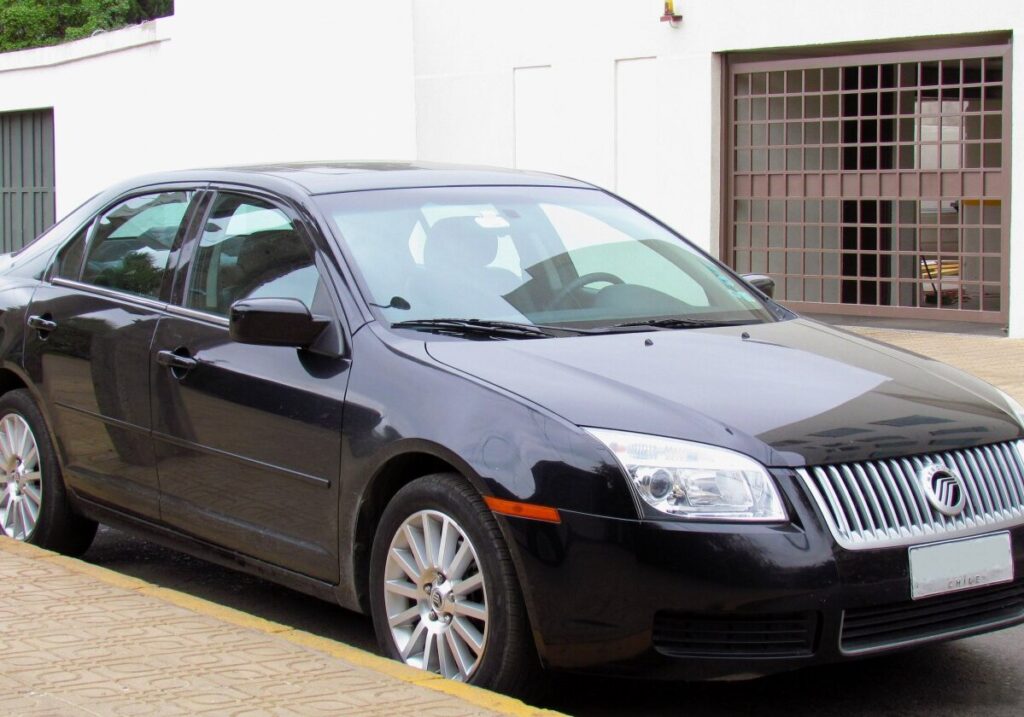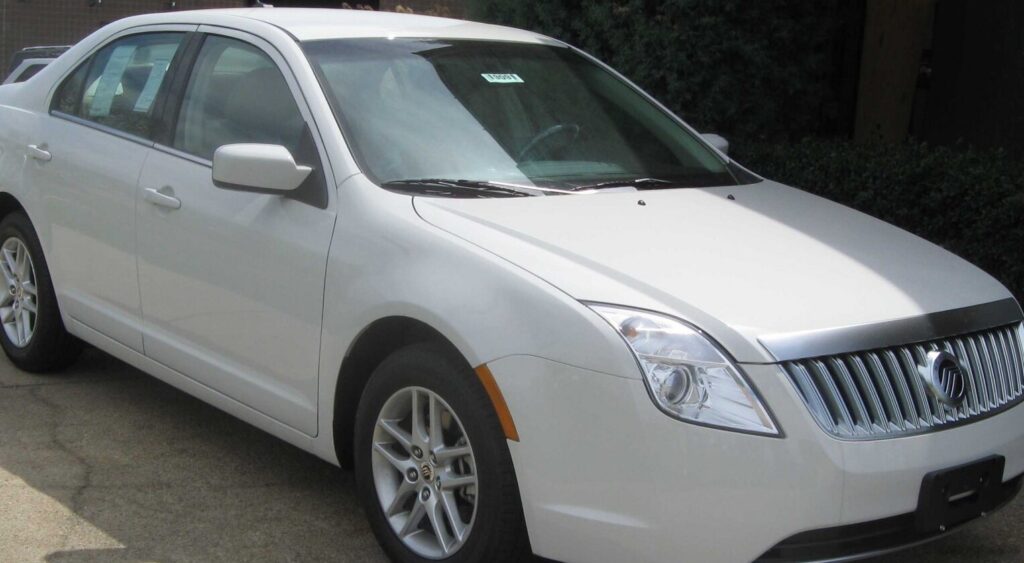
The Mercury Milan, particularly the facelifted version introduced in 2009, represented Mercury’s entry into the mid-size sedan segment. Positioned as a more upscale alternative to the Ford Fusion with which it shared a platform, the Milan aimed to attract buyers seeking a blend of style, comfort, and performance. The 2.5-liter, 175 horsepower variant, produced from 2009 through December 2010, served as the mainstream offering in the Milan lineup, balancing affordability with a reasonably powerful engine. It was built on the Ford CD3 platform (also known as the 1HX0/A3 platform), shared with the Mazda 6 and Ford Fusion.
Technical Specifications
| Brand | Mercury |
| Model | Milan |
| Generation | Milan (facelift 2009) |
| Type (Engine) | 2.5 (175 Hp) |
| Start of production | 2009 |
| End of production | December, 2010 |
| Powertrain Architecture | Internal Combustion engine |
| Body type | Sedan |
| Seats | 5 |
| Doors | 4 |
| Fuel consumption (urban) | 10.7 l/100 km (22 US mpg, 26.4 UK mpg) |
| Fuel consumption (extra urban) | 7.4-8.1 l/100 km (31.8 – 29 US mpg, 38.2 – 34.9 UK mpg) |
| Fuel consumption (combined) | 9.4 l/100 km (25 US mpg, 30.1 UK mpg) |
| Fuel Type | Petrol (Gasoline) |
| Emission standard | LEV II |
| Weight-to-power ratio | 8.6 kg/Hp, 116.7 Hp/tonne |
| Weight-to-torque ratio | 6.4 kg/Nm, 155.3 Nm/tonne |
| Power | 175 Hp @ 6000 rpm |
| Power per litre | 70.3 Hp/l |
| Torque | 233 Nm @ 4500 rpm (171.85 lb.-ft. @ 4500 rpm) |
| Maximum engine speed | 6500 rpm |
| Engine layout | Front, Transverse |
| Engine Model/Code | Duratec 25 |
| Engine displacement | 2488 cm3 (151.83 cu. in.) |
| Number of cylinders | 4 |
| Engine configuration | Inline |
| Cylinder Bore | 89 mm (3.5 in.) |
| Piston Stroke | 100 mm (3.94 in.) |
| Compression ratio | 9.7:1 |
| Number of valves per cylinder | 4 |
| Fuel injection system | Multi-port manifold injection |
| Engine aspiration | Naturally aspirated engine |
| Valvetrain | DOHC, iVCT |
| Engine oil capacity | 5 l (5.28 US qt | 4.4 UK qt) |
| Coolant capacity | 8.8 l (9.3 US qt | 7.74 UK qt) |
| Kerb Weight | 1500 kg (3306.93 lbs.) |
| Trunk (boot) space | 467 l (16.49 cu. ft.) |
| Fuel tank capacity | 66.2 l (17.49 US gal | 14.56 UK gal) |
| Length | 4849 mm (190.91 in.) |
| Width | 1834 mm (72.2 in.) |
| Width including mirrors | 2035 mm (80.12 in.) |
| Height | 1445 mm (56.89 in.) |
| Wheelbase | 2728 mm (107.4 in.) |
| Front track | 1567 mm (61.69 in.) |
| Rear track | 1557 mm (61.3 in.) |
| Minimum turning circle | 11.4 m (37.4 ft.) |
| Drivetrain Architecture | Front wheel drive |
| Number of gears | 6 |
| Gearbox type | Manual transmission |
| Front suspension | Coil spring, Double wishbone, Transverse stabilizer |
| Rear suspension | Independent multi-link spring suspension with stabilizer |
| Front brakes | Ventilated discs, 299×25 mm |
| Rear brakes | Disc, 279×10 mm |
| Assisting systems | ABS (Anti-lock braking system) |
| Steering type | Steering rack and pinion |
| Power steering | Electric Steering |
| Tires size | 205/60 R16; 225/50 R17; 225/45 R18 |
| Wheel rims size | 16; 17; 18 |
Introduction
The 2009-2010 Mercury Milan 2.5 represented a mid-cycle refresh for the model, bringing updated styling and some minor mechanical improvements. This version of the Milan aimed to provide a comfortable and relatively affordable mid-size sedan option for American families. The 2.5-liter Duratec engine, paired with a six-speed manual transmission, was positioned as the entry-level powertrain, offering a balance between fuel efficiency and adequate performance. It sat below the more powerful 3.5-liter V6 option in the Milan lineup, targeting buyers who prioritized value and economy over outright speed.
Powertrain & Engine Architecture
The heart of the Milan 2.5 was the Ford Duratec 25 engine, a 2.5-liter inline-four cylinder powerplant. This engine, part of the Duratec family, featured a cast iron block with an aluminum cylinder head. It utilized multi-port fuel injection and a double overhead camshaft (DOHC) valvetrain with variable valve timing (iVCT) on both intake and exhaust camshafts. The iVCT system helped optimize engine performance and fuel efficiency across a wider range of engine speeds. The engine’s design prioritized smoothness and refinement over peak power output. The six-speed manual transmission offered precise shifts and contributed to improved fuel economy compared to the optional automatic. The transmission’s gear ratios were tuned for everyday driving, with a focus on maximizing fuel efficiency at highway speeds.
Driving Characteristics
The 2.5-liter engine, producing 175 horsepower and 171 lb-ft of torque, provided adequate, but not exhilarating, performance in the Milan. Acceleration was sufficient for merging onto highways and passing slower traffic, but it wasn’t a particularly sporty driving experience. The manual transmission allowed drivers to maintain control over the engine’s powerband, but the engine’s relatively low torque output meant frequent downshifting was often necessary, especially when climbing hills or carrying a full load of passengers. Compared to the V6-powered Milan, the 2.5-liter model felt noticeably less powerful, but it offered a more engaging driving experience thanks to the manual transmission. The suspension was tuned for comfort, providing a smooth ride over most road surfaces, but it wasn’t particularly sporty or responsive.
Equipment & Trim Levels
The base Milan 2.5 typically came standard with features such as air conditioning, power windows and locks, a CD player with an auxiliary input jack, and cloth upholstery. Higher trim levels, such as the Comfort and Convenience packages, added features like alloy wheels, a power driver’s seat, a sunroof, and upgraded audio systems. Interior materials were generally of good quality for the price point, but they weren’t as luxurious as those found in some competing models. Optional extras included leather upholstery, a navigation system, and a premium sound system.
Chassis & Braking
The Milan 2.5 utilized a front-wheel-drive layout with a MacPherson strut front suspension and an independent multi-link rear suspension. This suspension setup provided a comfortable ride and decent handling characteristics. The front brakes were ventilated discs, while the rear brakes were solid discs. Anti-lock brakes (ABS) were standard equipment. The steering was electrically assisted, providing light and easy steering feel. The Milan’s chassis was designed to prioritize comfort and refinement over sporty handling, resulting in a relatively soft and forgiving ride.
Market Reception & Comparison
The Mercury Milan 2.5 received generally positive reviews from automotive critics. It was praised for its comfortable ride, spacious interior, and good value. However, some critics noted that the 2.5-liter engine was underpowered, especially when compared to the V6 option. Fuel economy was considered to be average for the segment. Compared to competitors like the Toyota Camry and Honda Accord, the Milan offered a more distinctive styling and a slightly more affordable price point. However, it lacked the brand recognition and reputation for reliability of its Japanese rivals.
Legacy
The Mercury Milan, and particularly the 2.5-liter variant, has become a relatively affordable and reliable used car option. The Duratec 2.5-liter engine is known for its durability and relatively low maintenance costs. While not a particularly exciting vehicle, the Milan 2.5 provides a comfortable and practical transportation solution for those seeking a mid-size sedan. Common issues reported by owners include minor electrical glitches and occasional problems with the air conditioning system. Overall, the Milan 2.5 remains a viable option for budget-conscious buyers looking for a dependable used car.