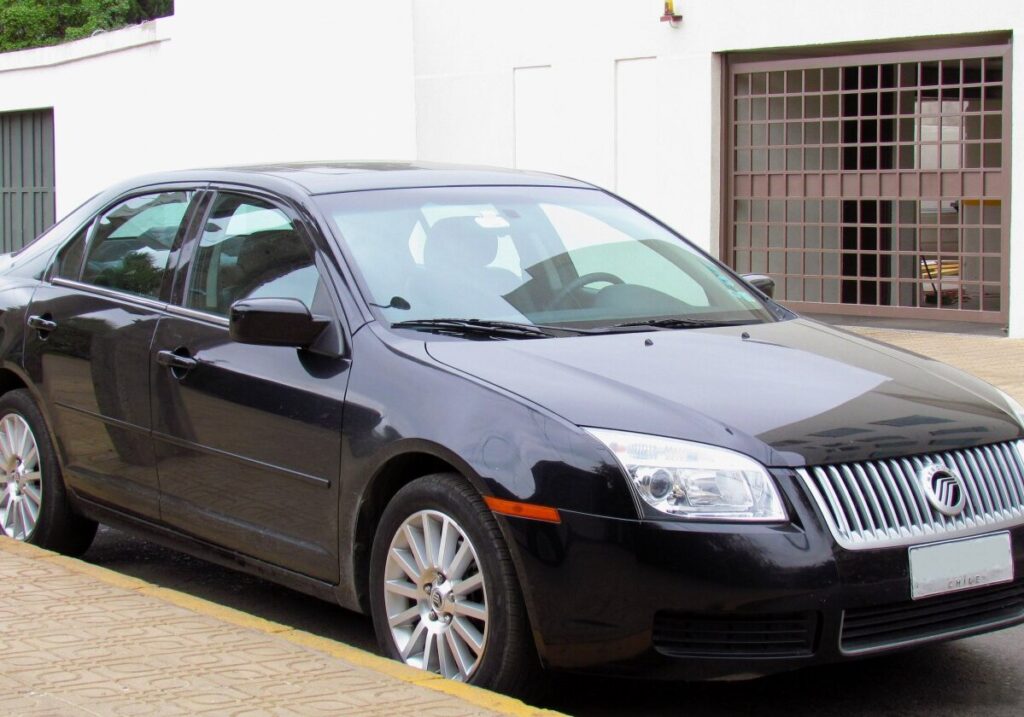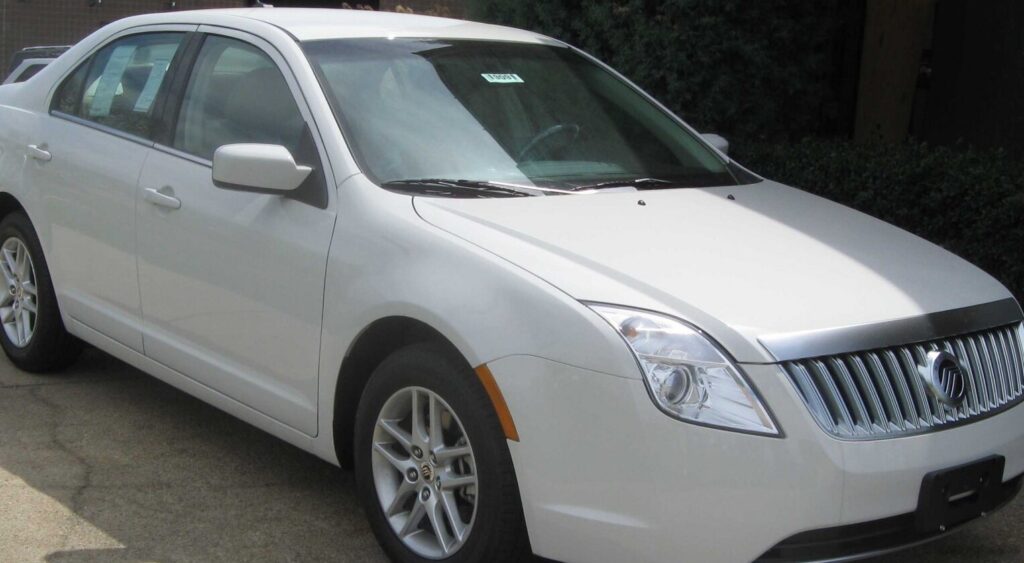
The Mercury Milan, particularly the facelifted version introduced in 2009, represented Mercury’s entry into the mid-size sedan segment. Positioned as a more upscale alternative to the Ford Fusion with which it shared a platform, the Milan aimed to attract buyers seeking a blend of comfort, style, and available features. The 2.5-liter, 175 horsepower variant with an automatic transmission was a core offering within the Milan lineup, serving as a popular choice for those prioritizing ease of driving and fuel efficiency over outright performance. Production of this specific configuration ran from 2009 until the Milan’s discontinuation in December 2010.
Technical Specifications
| Brand | Mercury |
| Model | Milan |
| Generation | Milan (facelift 2009) |
| Type (Engine) | 2.5 (175 Hp) Automatic |
| Start of production | 2009 |
| End of production | December, 2010 |
| Powertrain Architecture | Internal Combustion engine |
| Body type | Sedan |
| Seats | 5 |
| Doors | 4 |
| Fuel consumption (urban) | 10.2-10.7 l/100 km (23.1 – 22 US mpg) |
| Fuel consumption (extra urban) | 6.9-7.6 l/100 km (34.1 – 30.9 US mpg) |
| Fuel consumption (combined) | 9 l/100 km (26.1 US mpg) |
| Fuel Type | Petrol (Gasoline) |
| Emission standard | LEV II |
| Weight-to-power ratio | 8.7 kg/Hp |
| Weight-to-torque ratio | 6.5 kg/Nm |
| Power | 175 Hp @ 6000 rpm |
| Power per litre | 70.3 Hp/l |
| Torque | 233 Nm @ 4500 rpm (171.85 lb.-ft. @ 4500 rpm) |
| Maximum engine speed | 6500 rpm |
| Engine layout | Front, Transverse |
| Engine Model/Code | Duratec 25 |
| Engine displacement | 2488 cm3 (151.83 cu. in.) |
| Number of cylinders | 4 |
| Engine configuration | Inline |
| Cylinder Bore | 89 mm (3.5 in.) |
| Piston Stroke | 100 mm (3.94 in.) |
| Compression ratio | 9.7:1 |
| Number of valves per cylinder | 4 |
| Fuel injection system | Multi-port manifold injection |
| Engine aspiration | Naturally aspirated engine |
| Valvetrain | DOHC, iVCT |
| Engine oil capacity | 5 l (5.28 US qt | 4.4 UK qt) |
| Coolant capacity | 8.8 l (9.3 US qt | 7.74 UK qt) |
| Kerb Weight | 1526 kg (3364.25 lbs.) |
| Trunk (boot) space | 467 l (16.49 cu. ft.) |
| Fuel tank capacity | 66.2 l (17.49 US gal | 14.56 UK gal) |
| Length | 4849 mm (190.91 in.) |
| Width | 1834 mm (72.2 in.) |
| Width including mirrors | 2035 mm (80.12 in.) |
| Height | 1445 mm (56.89 in.) |
| Wheelbase | 2728 mm (107.4 in.) |
| Front track | 1567 mm (61.69 in.) |
| Rear track | 1557 mm (61.3 in.) |
| Minimum turning circle | 11.4 m (37.4 ft.) |
| Drivetrain | Front wheel drive |
| Number of gears | 6 |
| Gearbox type | Automatic transmission |
| Front suspension | Coil spring, Double wishbone, Transverse stabilizer |
| Rear suspension | Independent multi-link spring suspension with stabilizer |
| Front brakes | Ventilated discs, 299×25 mm |
| Rear brakes | Disc, 279×10 mm |
| Assisting systems | ABS (Anti-lock braking system) |
| Steering type | Steering rack and pinion |
| Power steering | Electric Steering |
| Tires size | 205/60 R16; 225/50 R17; 225/45 R18 |
| Wheel rims size | 16; 17; 18 |
INTRODUCTION
The 2009-2010 Mercury Milan 2.5 with the automatic transmission was a significant iteration of the model, benefitting from a mid-cycle refresh that included revised styling and enhanced interior materials. Built on the Ford CD3 platform (also known as the 1HX0/A3 platform), the Milan shared its underpinnings with the Ford Fusion and Lincoln MKZ. This platform was designed to provide a comfortable ride and responsive handling. The 2.5-liter engine and automatic transmission combination was positioned as the entry-level powertrain option, aimed at buyers prioritizing affordability and convenience. It sat below the more powerful 3.5-liter V6 in the Milan lineup.
Powertrain & Engine Architecture
At the heart of the Milan 2.5 was Ford’s Duratec 25 engine, a 2.5-liter inline-four cylinder powerplant. This engine, internally designated as the 2.5L Duratec, featured a cast iron block with an aluminum cylinder head. It utilized multi-port fuel injection and a double overhead camshaft (DOHC) valvetrain with variable valve timing (iVCT) on both intake and exhaust camshafts. This iVCT system helped optimize engine performance and fuel efficiency across a wider range of engine speeds. The engine produced 175 horsepower at 6000 rpm and 171.85 lb-ft of torque at 4500 rpm. The engine was paired with a six-speed automatic transmission, providing smooth and relatively efficient gear changes. This transmission was designed to balance performance with fuel economy, offering a comfortable driving experience for everyday use.
Driving Characteristics
The 2.5-liter engine and six-speed automatic transmission combination in the Milan delivered adequate, though not exhilarating, performance. Acceleration was sufficient for typical commuting and highway merging, but it lacked the punch of the optional V6. The automatic transmission was tuned for comfort, with smooth shifts and a focus on fuel efficiency. The gear ratios were optimized for everyday driving, providing reasonable acceleration in lower gears and comfortable cruising at highway speeds. Compared to the manual transmission versions of the 2.5-liter Milan, the automatic offered greater convenience, but at the expense of some driver engagement and fuel economy. The V6-equipped Milan offered significantly quicker acceleration and a more sporty driving experience, but came at a higher price point.
Equipment & Trim Levels
The 2.5-liter Milan typically came standard with features such as air conditioning, power windows and locks, a CD player with an auxiliary input, and cloth upholstery. Higher trim levels, such as the Convenience and Premium packages, added features like leather upholstery, a power driver’s seat, alloy wheels, and a premium sound system. Optional extras included a sunroof, navigation system, and remote start. The interior design was generally considered comfortable and well-appointed for its class, with a focus on providing a pleasant driving environment. The dashboard layout was straightforward and easy to use, with clearly labeled controls.
Chassis & Braking
The Milan 2.5 featured a front-wheel-drive layout with a coil spring, double wishbone suspension in the front and an independent multi-link suspension in the rear. This suspension setup was designed to provide a comfortable ride and responsive handling. The front suspension included a transverse stabilizer bar to reduce body roll during cornering. Braking duties were handled by ventilated discs in the front and solid discs in the rear. The Milan was equipped with an anti-lock braking system (ABS) as standard equipment, enhancing safety and control during emergency braking situations. The steering was rack and pinion with electric power steering, providing a light and easy steering feel.
Market Reception & Comparison
The Mercury Milan 2.5 Automatic received generally positive reviews from automotive critics. It was praised for its comfortable ride, spacious interior, and available features. However, some critics noted that the 2.5-liter engine lacked the power of its competitors and the optional V6. Fuel economy was considered competitive for its class, with the Milan achieving around 26 mpg in combined driving. Compared to other mid-size sedans, such as the Toyota Camry and Honda Accord, the Milan offered a more affordable price point and a more distinctive styling. However, it lacked the brand recognition and reputation for reliability of its Japanese competitors. The V6-equipped Milan offered a more compelling performance alternative, but at a higher cost.
Legacy
The Mercury Milan, and specifically the 2.5-liter automatic variant, has become a relatively affordable and reliable used car option. The Duratec 2.5 engine is known for its durability and relatively low maintenance costs. While not known for exceptional performance, the powertrain has proven to be dependable over the long term. Common issues are generally minor and related to routine maintenance items. Today, the Milan 2.5 represents a practical and economical choice for buyers seeking a comfortable and spacious mid-size sedan. Its discontinuation with the Mercury brand has led to a gradual decline in its presence on the road, but it remains a viable option for those seeking a value-oriented vehicle.