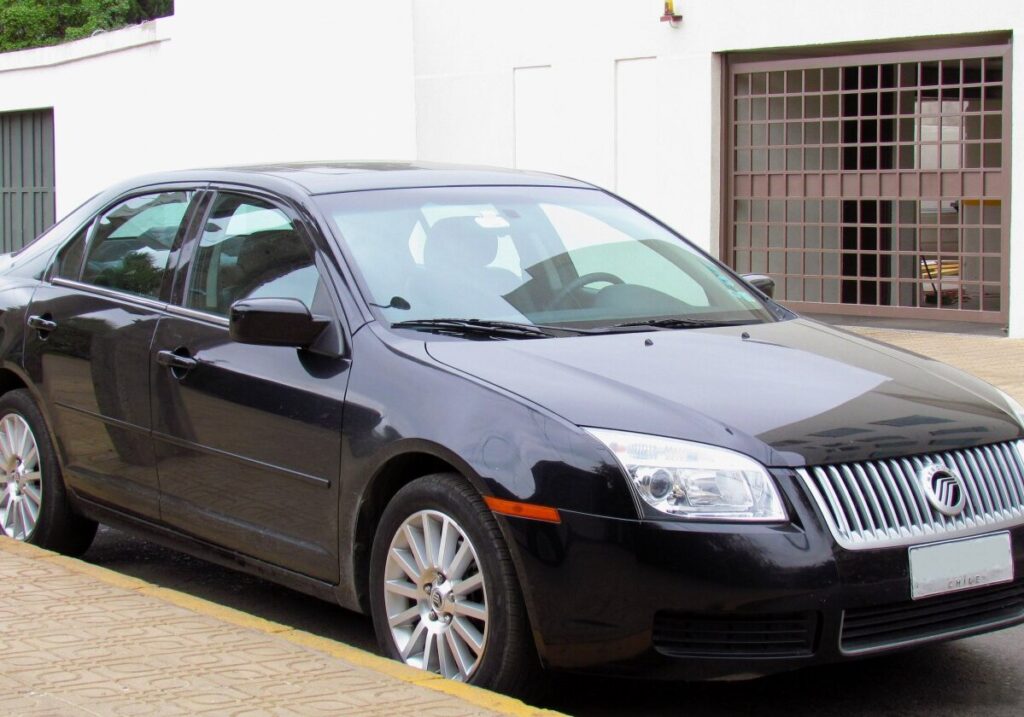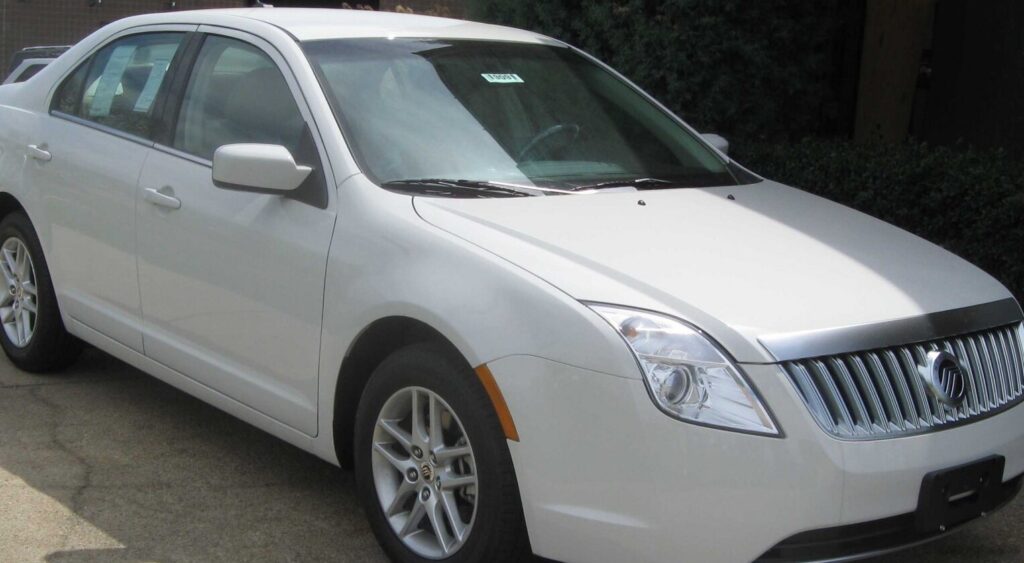
The Mercury Milan, particularly the facelifted version introduced in 2009, represented a significant step for the brand in the mid-size sedan segment. This iteration, specifically the 2.5-liter Hybrid model equipped with an eCVT (electronically controlled continuously variable transmission), was produced from 2009 through December 2010. It aimed to offer a compelling blend of fuel efficiency and respectable performance, positioning itself as a technologically advanced option within the Milan lineup. The 2009 facelift brought revised styling cues, and the hybrid powertrain was a key differentiator, appealing to a growing segment of environmentally conscious consumers.
Technical Specifications
| Brand | Mercury |
| Model | Milan |
| Generation | Milan (facelift 2009) |
| Type (Engine) | 2.5 (191 Hp) Hybrid eCVT |
| Start of production | 2009 |
| End of production | December, 2010 |
| Powertrain Architecture | FHEV (Full Hybrid Electric Vehicle) |
| Body type | Sedan |
| Seats | 5 |
| Doors | 4 |
| Fuel consumption (urban) | 5.7 l/100 km (41.3 US mpg) |
| Fuel consumption (extra urban) | 6.5 l/100 km (36.2 US mpg) |
| Fuel consumption (combined) | 6 l/100 km (39.2 US mpg) |
| Fuel Type | Petrol (Gasoline) |
| Weight-to-power ratio | 8.9 kg/Hp |
| Weight-to-torque ratio | 9.2 kg/Nm |
| Battery voltage | 275 V |
| Battery technology | Nickel-metal hydride (NiMH) |
| Max speed (electric) | 76 km/h (47.22 mph) |
| Electric motor power | 106 Hp @ 6500 rpm |
| Electric motor location | Integrated into the transmission |
| Electric motor type | Synchronous |
| System power | 191 Hp |
| Engine power | 156 Hp @ 6000 rpm |
| Power per litre | 62.7 Hp/l |
| Torque | 184 Nm @ 2250 rpm (135.71 lb.-ft. @ 2250 rpm) |
| Engine layout | Front, Transverse |
| Engine Model/Code | Duratec 25 |
| Engine displacement | 2488 cm3 (151.83 cu. in.) |
| Number of cylinders | 4 |
| Engine configuration | Inline |
| Cylinder Bore | 89 mm (3.5 in.) |
| Piston Stroke | 100 mm (3.94 in.) |
| Compression ratio | 12.3:1 |
| Number of valves per cylinder | 4 |
| Fuel injection system | Multi-port manifold injection |
| Engine aspiration | Naturally aspirated engine |
| Valvetrain | DOHC, iVCT |
| Engine oil capacity | 4.7 l (4.97 US qt | 4.14 UK qt) |
| Coolant capacity | 8 l (8.45 US qt | 7.04 UK qt) |
| Kerb Weight | 1691 kg (3728.02 lbs.) |
| Trunk (boot) space | 334 l (11.8 cu. ft.) |
| Fuel tank capacity | 66.2 l (17.49 US gal | 14.56 UK gal) |
| Length | 4849 mm (190.91 in.) |
| Width | 1834 mm (72.2 in.) |
| Width including mirrors | 2035 mm (80.12 in.) |
| Height | 1445 mm (56.89 in.) |
| Wheelbase | 2728 mm (107.4 in.) |
| Front track | 1567 mm (61.69 in.) |
| Rear track | 1557 mm (61.3 in.) |
| Minimum turning circle | 11.4 m (37.4 ft.) |
| Gearbox | automatic transmission eCVT |
Powertrain & Engine Architecture
The heart of the 2009-2010 Mercury Milan Hybrid is its 2.5-liter Duratec inline-four engine, designated as the 301A. This engine produces 156 horsepower at 6000 rpm and 184 lb-ft of torque at 2250 rpm. It features a sophisticated multi-port fuel injection system and double overhead camshafts (DOHC) with intelligent Variable Camshaft Timing (iVCT). The engine is paired with a 106 horsepower electric motor, integrated directly into the eCVT. This configuration allows for a combined system output of 191 horsepower. The eCVT, unlike traditional CVTs, doesn’t have fixed gear ratios. Instead, it utilizes a planetary gearset and two electric motor/generators to seamlessly vary the gear ratio, optimizing for both fuel efficiency and performance. The Nickel-metal hydride (NiMH) battery pack, operating at 275 volts, provides the energy storage for the electric motor. The system can operate in electric-only mode at speeds up to 47 mph, contributing to its impressive fuel economy.
Driving Characteristics
The Milan Hybrid’s driving experience is heavily influenced by the eCVT. Acceleration is smooth and linear, though it lacks the immediate responsiveness of a traditional automatic transmission. The eCVT prioritizes fuel efficiency, so aggressive throttle inputs result in the engine revving to its optimal power band, sometimes feeling slightly disconnected from the vehicle’s speed. Compared to the standard 3.5-liter V6 Milan, the hybrid offers less outright power, but its lower weight and electric motor assistance provide adequate performance for everyday driving. The hybrid system’s regenerative braking feature captures energy during deceleration, further enhancing fuel economy. The steering is light and precise, making it easy to maneuver in urban environments.
Equipment & Trim Levels
The Milan Hybrid was generally well-equipped, often including features like automatic climate control, a six-speaker audio system with an auxiliary input, and power windows and locks. Standard safety features included anti-lock brakes (ABS), traction control, and a suite of airbags. Higher trim levels added features such as leather upholstery, heated front seats, a premium audio system, and a navigation system. Optional extras included a sunroof and remote start. The interior design was generally conservative, focusing on functionality and comfort rather than outright luxury.
Chassis & Braking
The Milan Hybrid utilizes a front-wheel-drive layout. The front suspension consists of coil springs and a double wishbone setup with a transverse stabilizer bar, while the rear suspension employs an independent multi-link design, also with a stabilizer bar. This suspension configuration provides a comfortable ride quality, absorbing bumps and imperfections in the road surface effectively. The braking system features ventilated discs at the front and solid discs at the rear, providing adequate stopping power. ABS is standard, enhancing braking performance and stability in emergency situations.
Market Reception & Comparison
The Mercury Milan Hybrid was generally well-received by critics, who praised its fuel efficiency and smooth ride. However, some reviewers noted the lack of sporty handling and the somewhat uninspiring interior design. Compared to other hybrid sedans of the time, such as the Toyota Camry Hybrid and Honda Accord Hybrid, the Milan Hybrid offered a competitive fuel economy figure, but its overall refinement and brand recognition were lower. The standard 3.5-liter V6 Milan offered significantly more power but at the expense of fuel economy. The 2.5L non-hybrid Milan provided a balance, but the hybrid was the most technologically advanced option.
Legacy
The Mercury Milan Hybrid, while a relatively short-lived model, represented an important step in Mercury’s attempt to embrace fuel-efficient technology. The Duratec 2.5L engine and eCVT powertrain have proven to be reasonably reliable, although, like any hybrid system, the battery pack is a potential long-term maintenance item. On the used car market, the Milan Hybrid remains an affordable option for buyers seeking a fuel-efficient and comfortable mid-size sedan. Its relatively low resale value reflects the Mercury brand’s discontinuation in 2011 and the general perception of hybrid systems requiring potentially expensive repairs. However, for those willing to accept these risks, the Milan Hybrid offers a compelling value proposition.