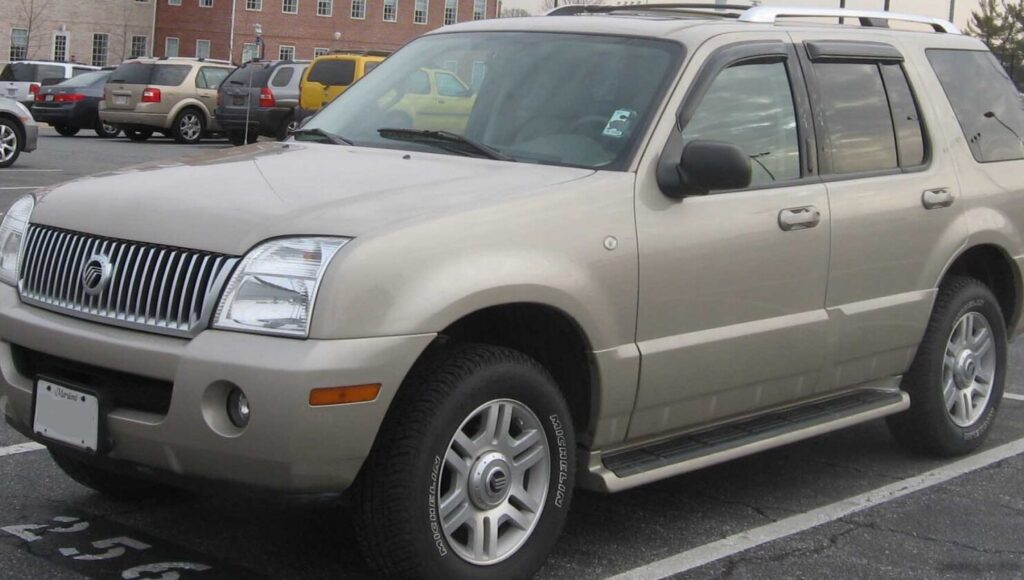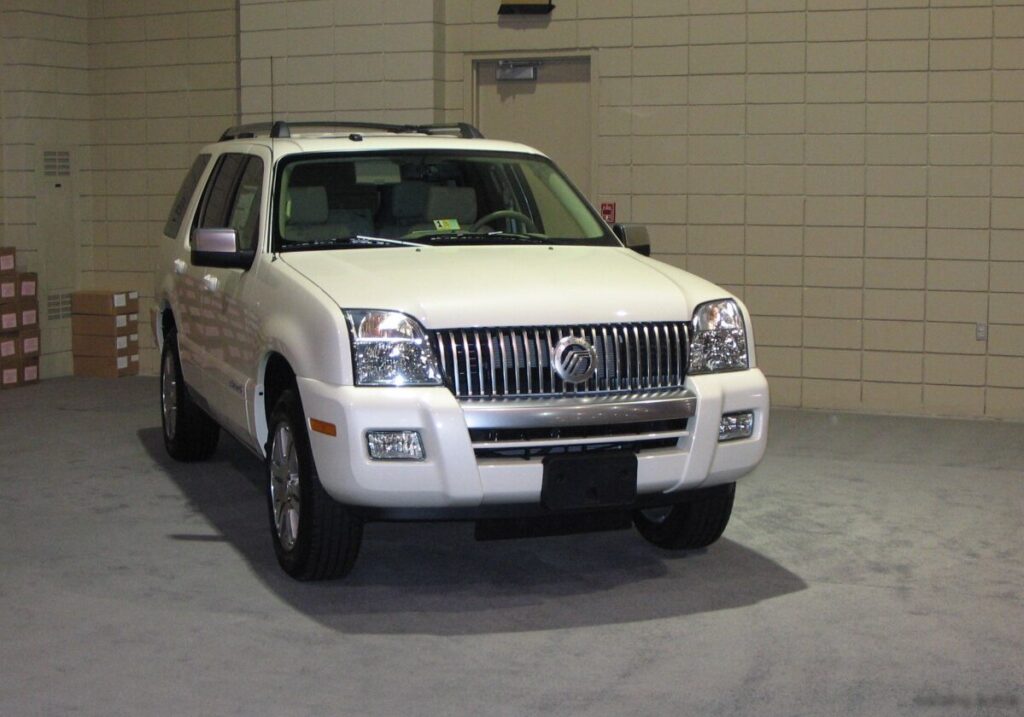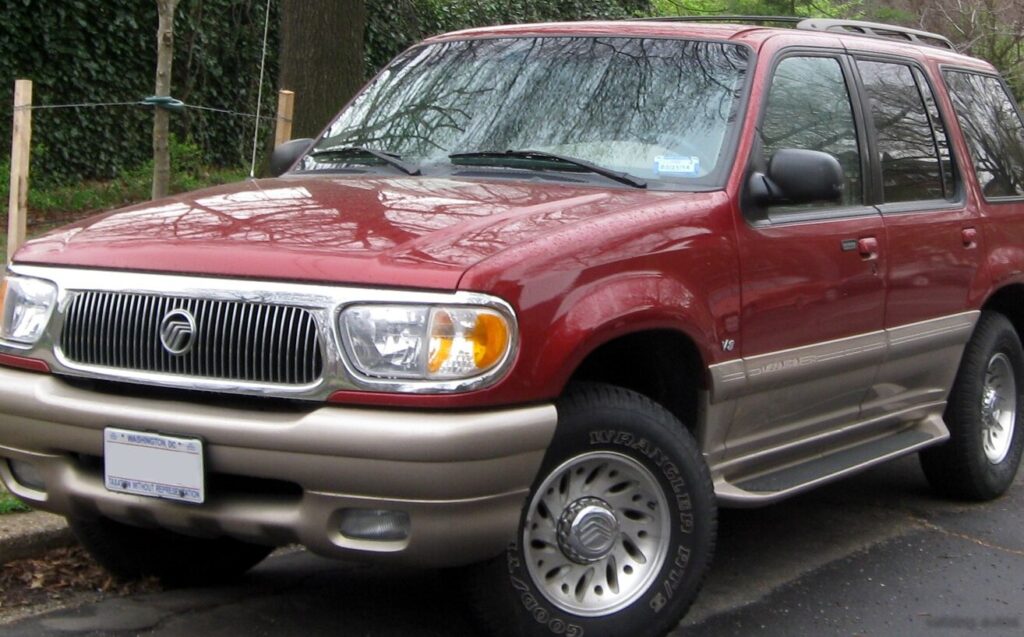
The Mercury Mountaineer I 4.0i V6, produced between 1997 and 2001, represented Mercury’s entry into the burgeoning mid-size SUV market. Sharing a platform with the Ford Explorer, the Mountaineer aimed to offer a more upscale experience with enhanced features and a slightly more refined interior. This particular variant, powered by the 4.0-liter V6 engine paired with a four-speed automatic transmission, occupied a middle ground in the Mountaineer lineup, offering a balance between capability, comfort, and affordability. It was positioned below the higher-trim models that offered optional all-wheel drive and some luxury features, but above any potential base-level, lower-powered options that weren’t widely offered.
Technical Specifications
| Brand | Mercury |
| Model | Mountaineer |
| Generation | Mountaineer I |
| Type (Engine) | 4.0 i V6 (208 Hp) |
| Start of production | 1997 |
| End of production | 2001 |
| Powertrain Architecture | Internal Combustion engine |
| Body type | SUV |
| Seats | 7 |
| Doors | 5 |
| Fuel consumption (urban) | 15.7 l/100 km (15 US mpg / 18 UK mpg) |
| Fuel consumption (extra urban) | 12.4 l/100 km (19 US mpg / 22.8 UK mpg) |
| Fuel Type | Petrol (Gasoline) |
| Acceleration 0 – 100 km/h | 9.5 sec |
| Acceleration 0 – 62 mph | 9.5 sec |
| Acceleration 0 – 60 mph | 9 sec |
| Maximum speed | 177 km/h (109.98 mph) |
| Weight-to-power ratio | 9 kg/Hp |
| Weight-to-torque ratio | 5.5 kg/Nm |
| Power | 208 Hp @ 5250 rpm |
| Torque | 339 Nm @ 3000 rpm (250.03 lb.-ft. @ 3000 rpm) |
| Engine layout | Front, Longitudinal |
| Engine displacement | 3996 cm3 (243.85 cu. in.) |
| Number of cylinders | 6 |
| Engine configuration | V-engine |
| Cylinder Bore | 100.3 mm (3.95 in.) |
| Piston Stroke | 84.3 mm (3.32 in.) |
| Compression ratio | 9.7:1 |
| Number of valves per cylinder | 2 |
| Fuel injection system | Multi-port manifold injection |
| Engine aspiration | Naturally aspirated engine |
| Engine oil capacity | 4.7 l (4.97 US qt | 4.14 UK qt) |
| Coolant capacity | 13.2 l (13.95 US qt | 11.61 UK qt) |
| Kerb Weight | 1880 kg (4144.69 lbs.) |
| Max. weight | 2510 kg (5533.6 lbs.) |
| Max load | 630 kg (1388.91 lbs.) |
| Trunk (boot) space – minimum | 1205 l (42.55 cu. ft.) |
| Trunk (boot) space – maximum | 2310 l (81.58 cu. ft.) |
| Fuel tank capacity | 83 l (21.93 US gal | 18.26 UK gal) |
| Length | 4990 mm (196.46 in.) |
| Width | 1875 mm (73.82 in.) |
| Height | 1830 mm (72.05 in.) |
| Wheelbase | 2830 mm (111.42 in.) |
| Front track | 1490 mm (58.66 in.) |
| Rear track | 1490 mm (58.66 in.) |
| Drivetrain Architecture | Rear wheel drive |
| Number of gears | 4 |
| Gearbox type | Automatic transmission |
| Front suspension | Double wishbone |
| Rear suspension | Coil spring |
| Front brakes | Ventilated discs |
| Rear brakes | Drum |
| Assisting systems | ABS (Anti-lock braking system) |
| Steering type | Steering rack and pinion |
| Power steering | Hydraulic Steering |
| Tires size | 235/75 R15 |
Powertrain & Engine Architecture
The heart of this Mountaineer variant is the Ford 4.0-liter OHV (Overhead Valve) V6 engine, internally designated as the 4.0L Windsor. This engine, a staple in Ford’s lineup for many years, is known for its robust construction and relatively simple design. It features a cast iron block and aluminum cylinder heads. The 4.0L Windsor utilizes a multi-port fuel injection system, delivering fuel directly to each intake port for improved efficiency and power delivery. The engine’s valvetrain consists of two valves per cylinder, operated by hydraulic lifters. The four-speed automatic transmission (typically the 4R70W) was chosen for its durability and suitability for towing, a common requirement for SUV buyers. This transmission features electronic control for smoother shifting and improved fuel economy compared to older designs. The transmission’s gear ratios were tuned for a balance of acceleration and highway cruising, prioritizing usability over outright performance.
Driving Characteristics
The 4.0L V6 with the four-speed automatic provided adequate, but not exhilarating, performance. Acceleration from 0-60 mph took around 9 seconds, which was competitive for the segment at the time, but noticeably slower than models equipped with the optional V8 engine. The automatic transmission, while smooth, could feel somewhat sluggish during quick acceleration or when attempting to pass on the highway. The gear ratios were spaced to prioritize fuel economy and towing capacity, rather than maximizing performance. In real-world driving, the Mountaineer felt stable and comfortable, but lacked the responsiveness of lighter vehicles or those with more powerful engines. The rear-wheel-drive configuration provided a more traditional driving experience, but also meant that it lacked the all-weather capability of all-wheel-drive models.
Equipment & Trim Levels
The 4.0L V6 automatic Mountaineer typically came standard with features such as air conditioning, power windows and locks, an AM/FM stereo, and cloth upholstery. Higher trim levels added features like leather upholstery, a power driver’s seat, upgraded sound systems, and alloy wheels. Optional extras included a sunroof, rear entertainment system, and upgraded towing packages. The interior design was generally functional and comfortable, with a focus on practicality rather than luxury. The third-row seating, while present, was best suited for children or shorter adults.
Chassis & Braking
The Mountaineer I utilized a body-on-frame construction, providing a robust and durable platform. The front suspension featured an independent double wishbone design, while the rear suspension employed a solid axle with coil springs. This setup provided a comfortable ride, but also resulted in some body roll during cornering. Braking duties were handled by ventilated discs at the front and drum brakes at the rear. Anti-lock braking system (ABS) was standard, enhancing safety and control during emergency braking situations. The Mountaineer’s chassis was designed to handle moderate off-road conditions, but it was primarily intended for on-road use.
Market Reception & Comparison
The Mountaineer I 4.0L V6 automatic was generally well-received by critics as a capable and comfortable family SUV. However, it was often criticized for its lack of power compared to V8-equipped models. Fuel economy was considered average for the segment, with the 4.0L V6 returning around 15-19 mpg in combined driving. Compared to the Ford Explorer, the Mountaineer offered a slightly more refined interior and a more upscale image. The 4.0L V6 automatic was a popular choice for buyers who prioritized affordability and fuel economy over outright performance.
Legacy
The 4.0L Windsor V6 engine and 4R70W transmission proved to be relatively reliable powertrains, with many examples still on the road today. However, like any older vehicle, they are prone to age-related issues such as oil leaks, corrosion, and transmission wear. The Mountaineer I, while not a particularly collectible vehicle, remains a popular choice for budget-minded buyers looking for a spacious and capable SUV. Its simple design and readily available parts make it relatively easy to maintain and repair. The 4.0L V6 automatic variant represents a solid, if unspectacular, option within the Mountaineer lineup, offering a good balance of practicality, affordability, and durability.