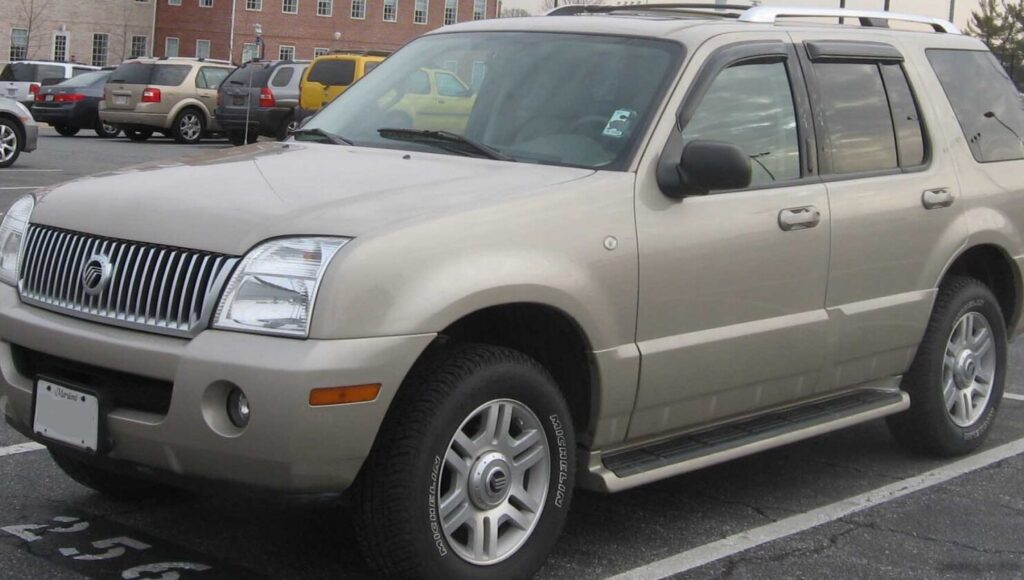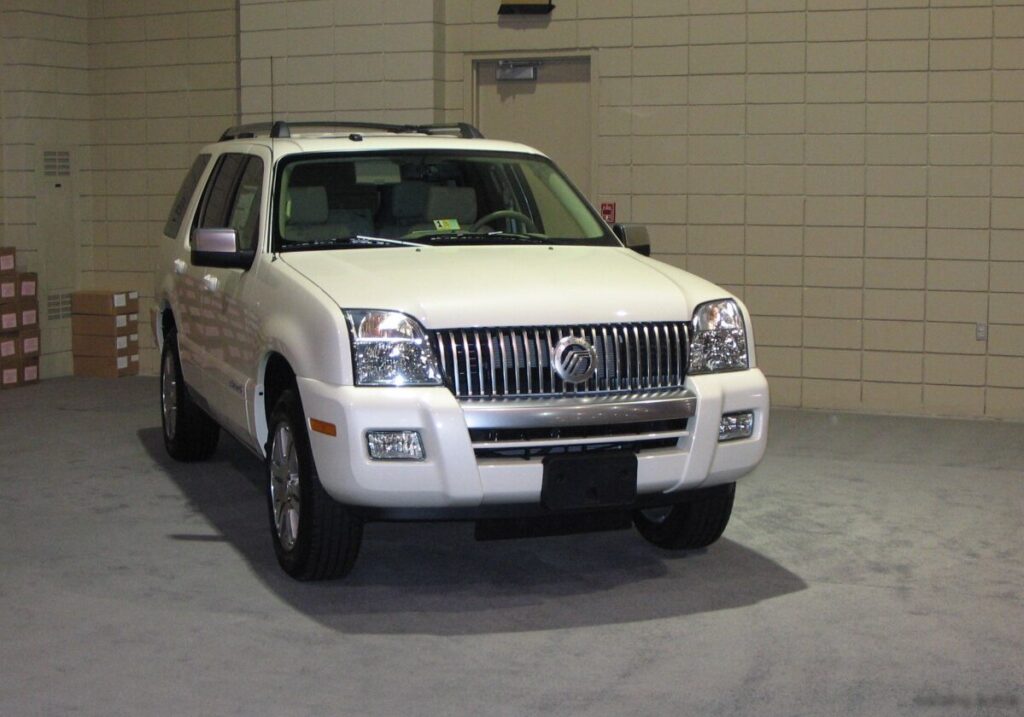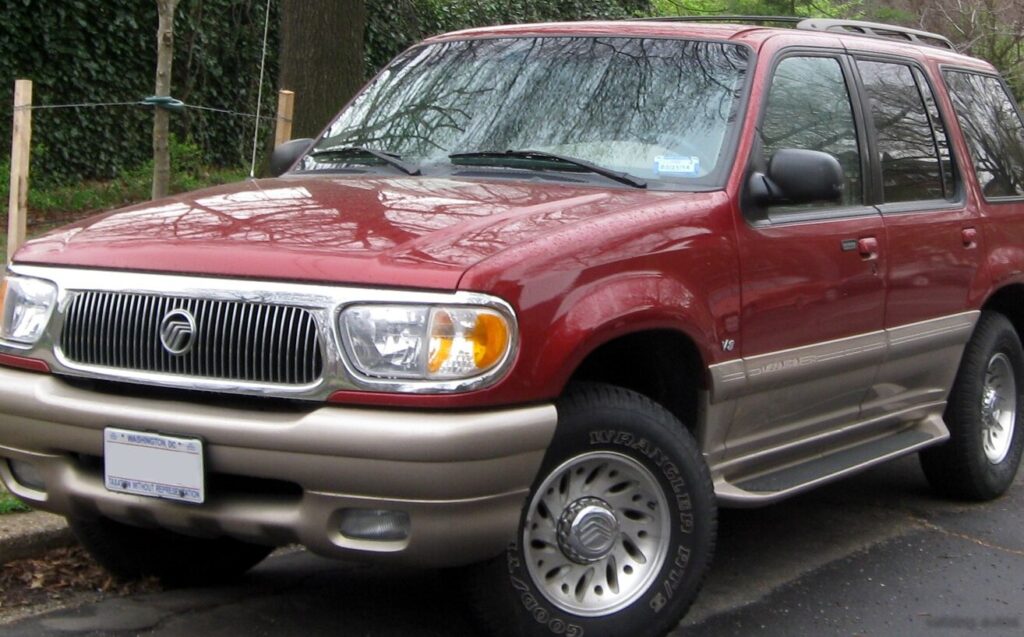
The Mercury Mountaineer I 4.0 i V6 AWD, produced between 1998 and 2001, represented Mercury’s entry into the burgeoning mid-size SUV market. Built on the Ford Explorer platform (UN83), the Mountaineer aimed to offer a more upscale alternative with enhanced features and a slightly more refined driving experience. This particular variant, equipped with the 4.0-liter V6 engine and a five-speed automatic transmission coupled with all-wheel drive, occupied a mid-range position within the Mountaineer lineup, offering a balance of capability, comfort, and price. It was positioned above the base model with the smaller engine, but below the potential for optional luxury packages.
Technical Specifications
| Brand | Mercury |
| Model | Mountaineer |
| Generation | Mountaineer I |
| Type (Engine) | 4.0 i V6 AWD (210 Hp) |
| Start of production | 1998 |
| End of production | 2001 |
| Powertrain Architecture | Internal Combustion engine |
| Body type | SUV |
| Seats | 7 |
| Doors | 5 |
| Fuel Type | Petrol (Gasoline) |
| Weight-to-power ratio | 9.5 kg/Hp, 105 Hp/tonne |
| Weight-to-torque ratio | 5.8 kg/Nm, 173 Nm/tonne |
| Power | 210 Hp @ 5100 rpm |
| Power per litre | 52.6 Hp/l |
| Torque | 346 Nm @ 3700 rpm, 255.2 lb.-ft. @ 3700 rpm |
| Engine layout | Front, Longitudinal |
| Engine displacement | 3996 cm3, 243.85 cu. in. |
| Number of cylinders | 6 |
| Engine configuration | V-engine |
| Cylinder Bore | 100.3 mm, 3.95 in. |
| Piston Stroke | 84.3 mm, 3.32 in. |
| Compression ratio | 9.7:1 |
| Number of valves per cylinder | 2 |
| Fuel injection system | Multi-port manifold injection |
| Engine aspiration | Naturally aspirated engine |
| Engine oil capacity | 4.7 l, 4.97 US qt | 4.14 UK qt |
| Coolant | 13.2 l, 13.95 US qt | 11.61 UK qt |
| Kerb Weight | 2000 kg, 4409.25 lbs |
| Trunk (boot) space – maximum | 2302 l, 81.29 cu. ft |
| Fuel tank capacity | 85 l, 22.45 US gal | 18.7 UK gal |
| Length | 4844 mm, 190.71 in |
| Width | 1831 mm, 72.09 in |
| Height | 1806 mm, 71.1 in |
| Wheelbase | 2880 mm, 113.39 in |
| Front track | 1547 mm, 60.91 in |
| Rear (Back) track | 1554 mm, 61.18 in |
| Drive wheel | All wheel drive (4×4) |
| Number of gears and type of gearbox | 5 gears, automatic transmission |
| Front suspension | Double wishbone |
| Rear suspension | Coil spring |
| Front brakes | Ventilated discs |
| Rear brakes | Disc |
| Assisting systems | ABS (Anti-lock braking system) |
| Steering type | Steering rack and pinion |
| Power steering | Hydraulic Steering |
| Tires size | 245/75 R16 S |
Powertrain & Engine Architecture
The heart of this Mountaineer variant is the Ford 4.0-liter OHV (Overhead Valve) V6 engine, internally designated as the 4.0L Windsor. This engine, a staple in Ford’s lineup for many years, is known for its durability and relatively simple design. It features a cast iron block and aluminum cylinder heads. The multi-port fuel injection system delivers fuel to each cylinder, optimizing combustion for power and efficiency. The engine produces 210 horsepower at 5100 rpm and 346 Nm (255.2 lb-ft) of torque at 3700 rpm. The five-speed automatic transmission (5R55E) was chosen for its smooth shifting and ability to handle the engine’s torque output. This transmission featured electronic control for optimized shift points and adaptability to driving conditions. The all-wheel-drive system, a viscous coupling type, automatically engages the front wheels when rear wheel slippage is detected, providing enhanced traction in adverse conditions.
Driving Characteristics
The 4.0L V6 and automatic transmission combination in the Mountaineer I provided adequate, though not exhilarating, performance. Acceleration from 0 to 60 mph was typically in the 8-9 second range. The automatic transmission’s gear ratios were tuned for everyday drivability and towing capability rather than outright speed. While the Mountaineer wasn’t a sports SUV, the 4.0L engine provided sufficient power for merging onto highways and passing other vehicles. Compared to the base 3.0L V6 engine, the 4.0L offered a noticeable improvement in both acceleration and towing capacity. However, it lacked the more spirited performance of the optional 5.0L V8 engine found in higher trim levels. The automatic transmission, while convenient, did result in some power loss compared to the available manual transmission.
Equipment & Trim Levels
The 4.0L AWD Mountaineer typically came standard with features such as air conditioning, power windows and locks, a CD player, and cloth upholstery. Optional extras included leather upholstery, a sunroof, upgraded sound systems, and alloy wheels. The Mountaineer offered a relatively spacious interior for its time, comfortably seating seven passengers. The third-row seats were typically best suited for children or shorter adults. The dashboard layout was functional and straightforward, with easy-to-read gauges and controls. The trim level of the Mountaineer influenced the level of standard equipment, with higher trims offering more luxurious appointments.
Chassis & Braking
The Mountaineer I utilized a body-on-frame construction, providing a robust and durable platform. The front suspension featured an independent double wishbone design, while the rear suspension employed a solid axle with coil springs. This setup provided a comfortable ride, although it wasn’t as refined as the independent rear suspension found in some competing SUVs. Braking duties were handled by ventilated discs at the front and solid discs at the rear. An Anti-lock Braking System (ABS) was standard, enhancing safety by preventing wheel lockup during hard braking. The hydraulic power steering provided responsive and predictable handling.
Market Reception & Comparison
The Mercury Mountaineer I was generally well-received by automotive critics as a capable and comfortable SUV. The 4.0L V6 engine was praised for its durability and adequate power. However, some reviewers noted that the Mountaineer’s interior, while well-equipped, lacked the refinement of some European competitors. Fuel economy was typical for a mid-size SUV of the era, averaging around 16 mpg city and 20 mpg highway. Compared to the Ford Explorer, the Mountaineer offered a slightly more upscale experience and a more distinctive exterior design. The 4.0L automatic combination offered a good balance between performance and fuel efficiency, making it a popular choice for families and those who occasionally needed to tow trailers.
Legacy
The Mercury Mountaineer I 4.0L V6 AWD has proven to be a relatively reliable vehicle, with many examples still on the road today. The 4.0L Windsor V6 engine is known for its longevity, and the 5R55E automatic transmission, while occasionally prone to issues, is generally durable with proper maintenance. In the used car market, these Mountaineers are often sought after for their affordability, spaciousness, and all-wheel-drive capability. While not a collector’s item, the Mountaineer I represents a significant chapter in Mercury’s history and a popular choice for those seeking a practical and dependable SUV.