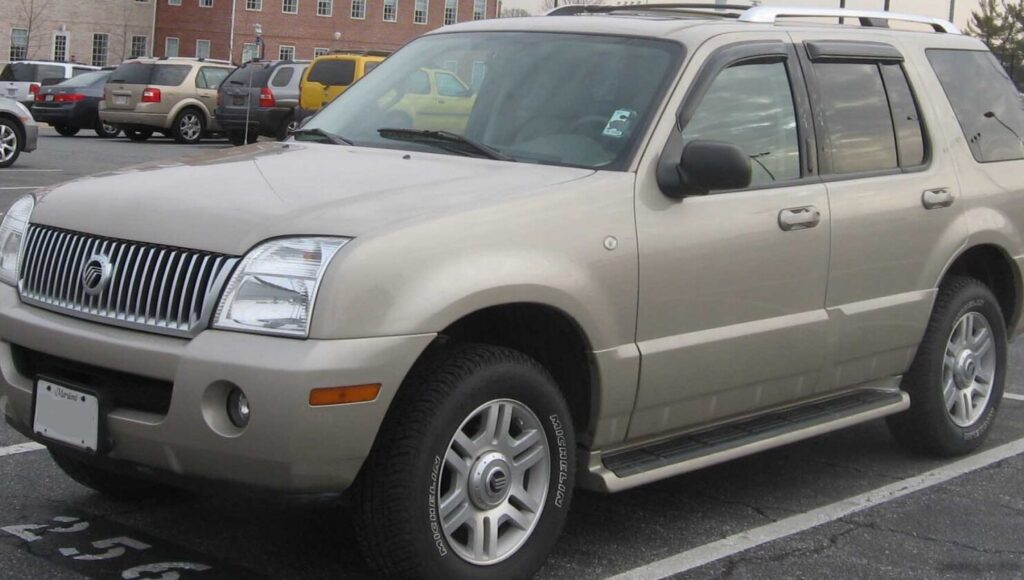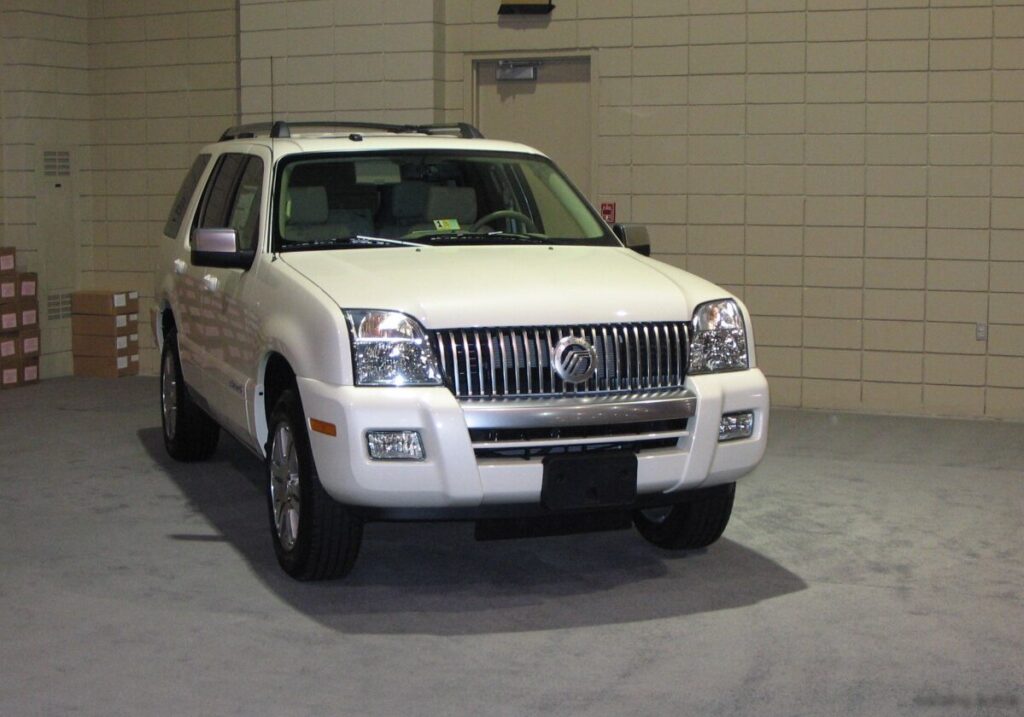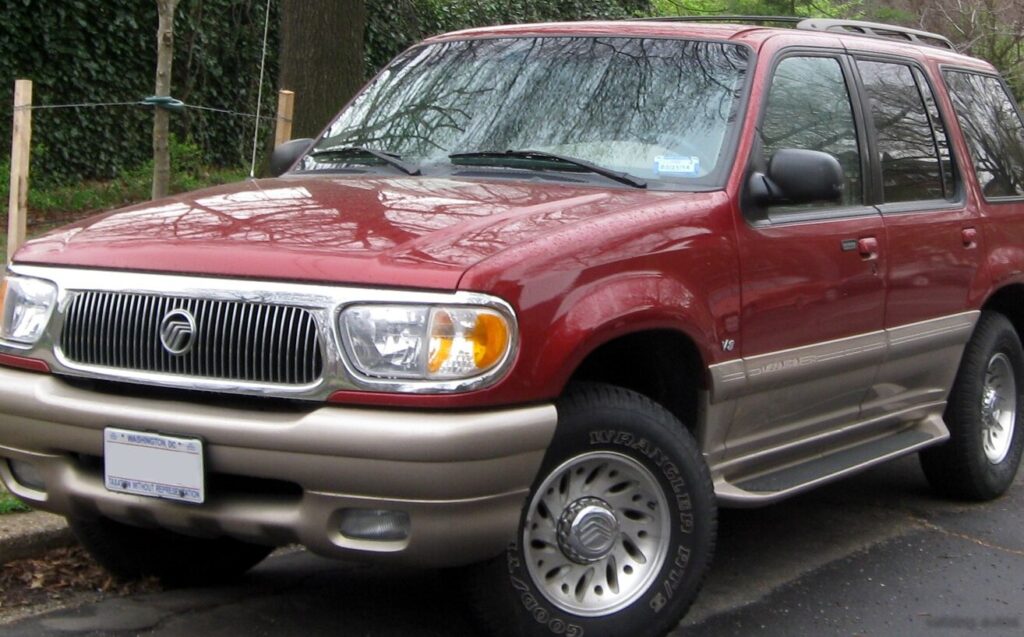
The Mercury Mountaineer I 4.9i V8 AWD, produced from 1996 to 2001, represented Mercury’s entry into the burgeoning mid-size SUV market. Built on the Ford Explorer platform (UN83), the Mountaineer aimed to offer a more upscale alternative with enhanced features and a more refined driving experience. This first generation Mountaineer was a significant vehicle for Mercury, helping to establish the brand as a competitor in the popular SUV segment. The 4.9i V8 AWD variant occupied a premium position within the Mountaineer lineup, offering the most powerful engine option and the added capability of all-wheel drive. It was targeted towards families needing space and towing capacity, but also desiring a more powerful and capable vehicle than the base Explorer models.
Technical Specifications
| Brand | Mercury |
| Model | Mountaineer |
| Generation | Mountaineer I |
| Type (Engine) | 4.9 i V8 AWD (218 Hp) |
| Start of production | 1996 year |
| End of production | 2001 year |
| Powertrain Architecture | Internal Combustion engine |
| Body type | SUV |
| Seats | 7 |
| Doors | 5 |
| Fuel consumption (economy) – urban | 16.8 l/100 km (14 US mpg, 16.8 UK mpg, 6 km/l) |
| Fuel consumption (economy) – extra urban | 13.1 l/100 km (18 US mpg, 21.6 UK mpg, 7.6 km/l) |
| Fuel Type | Petrol (Gasoline) |
| Acceleration 0 – 100 km/h | 8.3 sec |
| Acceleration 0 – 62 mph | 8.3 sec |
| Acceleration 0 – 60 mph | 7.9 sec |
| Maximum speed | 177 km/h (109.98 mph) |
| Weight-to-power ratio | 8.9 kg/Hp, 111.8 Hp/tonne |
| Weight-to-torque ratio | 5 kg/Nm, 200.5 Nm/tonne |
| Power | 218 Hp @ 4200 rpm |
| Power per litre | 44.1 Hp/l |
| Torque | 391 Nm @ 3300 rpm (288.39 lb.-ft. @ 3300 rpm) |
| Engine layout | Front, Longitudinal |
| Engine displacement | 4942 cm3 (301.58 cu. in.) |
| Number of cylinders | 8 |
| Engine configuration | V-engine |
| Cylinder Bore | 101.6 mm (4 in.) |
| Piston Stroke | 76.2 mm (3 in.) |
| Compression ratio | 8.8:1 |
| Number of valves per cylinder | 2 |
| Fuel injection system | Multi-port manifold injection |
| Engine aspiration | Naturally aspirated engine |
| Valvetrain | OHC |
| Engine oil capacity | 4.7 l (4.97 US qt | 4.14 UK qt) |
| Coolant | 14.9 l (15.74 US qt | 13.11 UK qt) |
| Kerb Weight | 1950 kg (4299.01 lbs.) |
| Max. weight | 2510 kg (5533.6 lbs.) |
| Max load | 560 kg (1234.59 lbs.) |
| Trunk (boot) space – minimum | 1205 l (42.55 cu. ft.) |
| Trunk (boot) space – maximum | 2310 l (81.58 cu. ft.) |
| Fuel tank capacity | 79 l (20.87 US gal | 17.38 UK gal) |
| Length | 4790 mm (188.58 in.) |
| Width | 1875 mm (73.82 in.) |
| Height | 1830 mm (72.05 in.) |
| Wheelbase | 2830 mm (111.42 in.) |
| Front track | 1490 mm (58.66 in.) |
| Rear (Back) track | 1490 mm (58.66 in.) |
| Drive wheel | All wheel drive (4×4) |
| Number of gears and type of gearbox | 4 gears, automatic transmission |
| Front suspension | Double wishbone |
| Rear suspension | Coil spring |
| Front brakes | Ventilated discs |
| Rear brakes | Drum |
| Assisting systems | ABS (Anti-lock braking system) |
| Steering type | Steering rack and pinion |
| Power steering | Hydraulic Steering |
| Tires size | 235/75 R15 |
Powertrain & Engine Architecture
The heart of the Mountaineer I 4.9i AWD was the Ford 4.9L (302 cubic inch) Windsor V8 engine. This engine, a staple of Ford’s lineup for decades, was known for its robust construction and ample low-end torque. The 4.9L engine utilized a cast iron block and cylinder heads, with a two-barrel throttle body fuel injection system. The overhead camshaft (OHC) design, while relatively simple, provided reliable valve operation. The engine produced 218 horsepower at 4200 rpm and 288 lb-ft of torque at 3300 rpm. This power was delivered to all four wheels through a four-speed automatic transmission (typically the 4R70W). The 4R70W was an electronically controlled transmission known for its durability and smooth shifting, although it could be prone to issues if not properly maintained. The longitudinal engine placement and all-wheel-drive system contributed to the Mountaineer’s substantial weight and overall size.
Driving Characteristics
The 4.9L V8 and automatic transmission combination provided adequate, though not exhilarating, performance. Acceleration to 60 mph took around 7.9 seconds, which was competitive for a full-size SUV of the era. The Mountaineer felt substantial on the road, with noticeable body roll in corners. The automatic transmission’s gear ratios were geared towards providing strong low-end torque for towing and hauling, rather than maximizing fuel efficiency or sporty acceleration. Compared to the 4.0L inline-six engine option, the V8 offered significantly more power and a smoother driving experience, but at the cost of increased fuel consumption. The all-wheel-drive system provided enhanced traction in inclement weather and on slippery surfaces, making it a capable vehicle for year-round use.
Equipment & Trim Levels
The Mountaineer I 4.9i AWD typically came well-equipped, positioning it as a premium offering. Standard features included air conditioning, power windows and locks, a premium sound system, and cloth upholstery. Leather upholstery, a sunroof, and upgraded audio systems were available as options. The interior design was generally conservative, reflecting the era’s styling trends. The Mountaineer offered seating for up to seven passengers, with a third-row bench seat that could be folded flat to increase cargo space. The dashboard layout was straightforward and functional, with easy-to-read gauges and controls.
Chassis & Braking
The Mountaineer I utilized a body-on-frame construction, which was common for SUVs at the time. The front suspension featured an independent double wishbone design, while the rear suspension employed a solid axle with coil springs. This setup provided a comfortable ride, but didn’t offer the handling precision of more modern independent rear suspension systems. Braking duties were handled by ventilated discs at the front and drum brakes at the rear. An anti-lock braking system (ABS) was standard, enhancing safety and control during emergency braking situations. The Mountaineer’s substantial weight required a robust braking system to provide adequate stopping power.
Market Reception & Comparison
The Mercury Mountaineer I 4.9i AWD was generally well-received by critics, who praised its spacious interior, powerful engine, and comfortable ride. However, some reviewers noted its relatively poor fuel economy and somewhat cumbersome handling. Compared to the Ford Explorer, the Mountaineer offered a more refined interior and a more upscale image. Against competitors like the Chevrolet Blazer and Jeep Grand Cherokee, the Mountaineer offered a compelling combination of features, performance, and value. Fuel economy was a significant drawback, averaging around 14-18 mpg in real-world driving.
Legacy
The 4.9L V8 engine and 4R70W transmission combination proved to be relatively reliable, although regular maintenance was crucial. The 4.9L engine is known for its durability, and many examples are still on the road today. However, age-related issues such as oil leaks and corrosion can be common. The Mountaineer I established Mercury as a viable player in the SUV market, paving the way for future generations of the model. Today, well-maintained examples of the Mountaineer I 4.9i AWD are sought after by collectors and enthusiasts who appreciate its classic American SUV styling and robust powertrain. The vehicle represents a bygone era of large, body-on-frame SUVs, offering a unique driving experience that is increasingly rare in the modern automotive landscape.