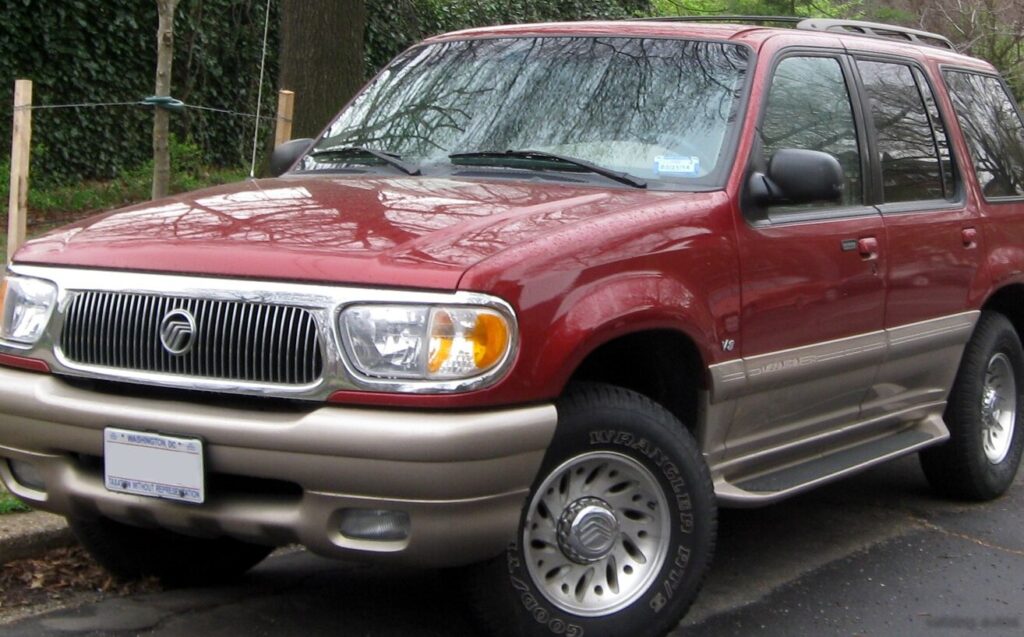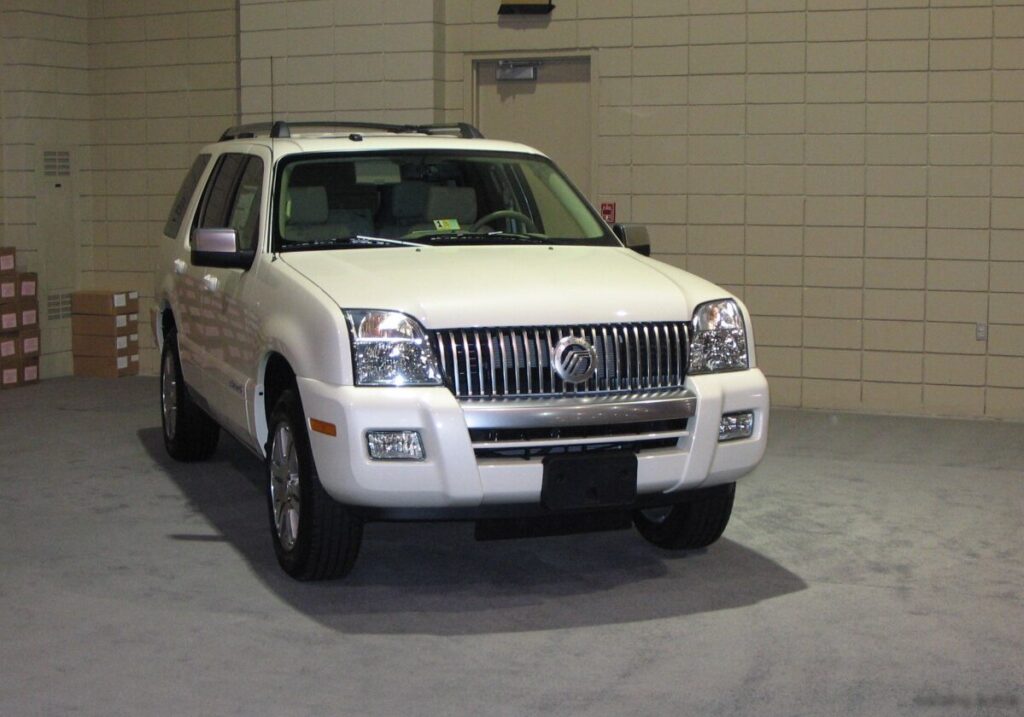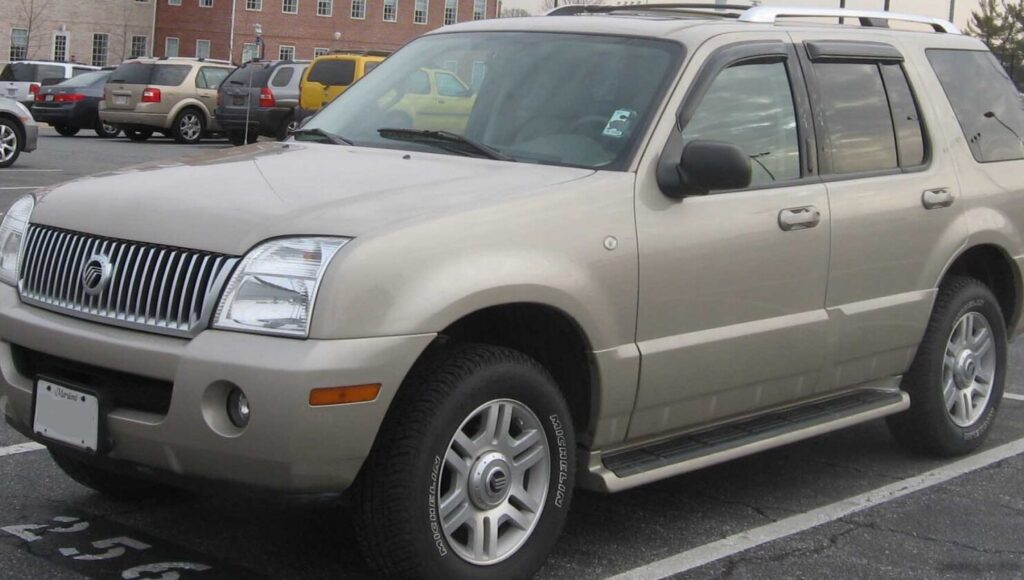
The Mercury Mountaineer II, specifically the variant equipped with the 4.6-liter V8 engine producing 239 horsepower and paired with a 5-speed automatic transmission, was a mid-size SUV produced from 2001 to 2005. Positioned as a more premium offering within the Mountaineer lineup, it aimed to provide a blend of capability, comfort, and power for families seeking a larger vehicle. This generation, built on the Ford Explorer platform, represented a significant redesign from the original Mountaineer, offering increased size, improved interior appointments, and a more refined driving experience. It competed directly with vehicles like the Chevrolet TrailBlazer, GMC Envoy, and Jeep Grand Cherokee.
Technical Specifications
| Brand | Mercury |
| Model | Mountaineer |
| Generation | Mountaineer II |
| Type (Engine) | 4.6 V8 (239 Hp) Automatic |
| Start of production | March, 2001 |
| End of production | 2005 |
| Powertrain Architecture | Internal Combustion engine |
| Body type | SUV |
| Seats | 7 |
| Doors | 5 |
| Fuel consumption (economy) – urban (EPA) | 15.7 l/100 km (15 US mpg, 18 UK mpg, 6.4 km/l) |
| Fuel consumption (economy) – extra urban (EPA) | 12.4 l/100 km (19 US mpg, 22.8 UK mpg, 8.1 km/l) |
| Fuel Type | Petrol (Gasoline) |
| Emission standard | LEV |
| Weight-to-power ratio | 8.2 kg/Hp, 121.8 Hp/tonne |
| Weight-to-torque ratio | 5.1 kg/Nm, 194.6 Nm/tonne |
| Power | 239 Hp @ 4750 rpm |
| Power per litre | 51.9 Hp/l |
| Torque | 382 Nm @ 4000 rpm (281.75 lb.-ft. @ 4000 rpm) |
| Engine layout | Front, Longitudinal |
| Engine Model/Code | Modular |
| Engine displacement | 4605 cm3 (281.01 cu. in.) |
| Number of cylinders | 8 |
| Engine configuration | V-engine |
| Cylinder Bore | 90.2 mm (3.55 in.) |
| Piston Stroke | 90 mm (3.54 in.) |
| Compression ratio | 9.4:1 |
| Number of valves per cylinder | 2 |
| Fuel injection system | Multi-port manifold injection |
| Engine aspiration | Naturally aspirated engine |
| Valvetrain | SOHC |
| Engine oil capacity | 5.7 l (6.02 US qt | 5.02 UK qt) |
| Coolant | 17.6 l (18.6 US qt | 15.49 UK qt) |
| Kerb Weight | 1963-1984 kg (4327.67 – 4373.97 lbs.) |
| Max. weight | 2604 kg (5740.84 lbs.) |
| Max load | 620-641 kg (1366.87 – 1413.16 lbs.) |
| Trunk (boot) space – minimum | 391 l (13.81 cu. ft.) |
| Trunk (boot) space – maximum | 2313 l (81.68 cu. ft.) |
| Fuel tank capacity | 85 l (22.45 US gal | 18.7 UK gal) |
| Permitted trailer load with brakes (12%) | 3166 kg (6979.84 lbs.) |
| Length | 4850 mm (190.94 in.) |
| Width | 1831 mm (72.09 in.) |
| Width including mirrors | 2139 mm (84.21 in.) |
| Height | 1830 mm (72.05 in.) |
| Wheelbase | 2889 mm (113.74 in.) |
| Front track | 1547 mm (60.91 in.) |
| Rear (Back) track | 1556 mm (61.26 in.) |
| Ride height (ground clearance) | 216 mm (8.5 in.) |
| Minimum turning circle (turning diameter) | 11.2 m (36.75 ft.) |
| Drivetrain Architecture | The Internal combustion engine (ICE) drives the rear wheels of the vehicle. |
| Drive wheel | Rear wheel drive |
| Number of gears and type of gearbox | 5 gears, automatic transmission |
| Front suspension | Coil spring, Double wishbone, Transverse stabilizer |
| Rear suspension | Double wishbone, Transverse stabilizer, Coil spring |
| Front brakes | Ventilated discs, 305 mm |
| Rear brakes | Disc, 302 mm |
| Assisting systems | ABS (Anti-lock braking system) |
| Steering type | Steering rack and pinion |
| Power steering | Hydraulic Steering |
| Tires size | 235/70 R16; 245/70 R16; 245/65 R17 |
| Wheel rims size | 7J x 16; 7.5J x 17 |
Powertrain & Engine Architecture
At the heart of this Mountaineer variant lies Ford’s 4.6-liter Modular V8 engine. This engine, designated within the Ford family as part of the Modular engine series, featured a single overhead camshaft (SOHC) design with two valves per cylinder. The engine utilized a multi-port fuel injection system, delivering fuel directly to each intake port for optimized combustion. The 9.4:1 compression ratio was a compromise between performance and the ability to run on readily available gasoline grades. The engine’s longitudinal mounting allowed for a rear-wheel-drive configuration, providing a more traditional SUV driving feel. Paired with this engine was a 5-speed automatic transmission, offering smooth shifts and a balance between acceleration and fuel efficiency. This transmission was designed to handle the V8’s torque output and provide a comfortable driving experience for passengers.
Driving Characteristics
The 4.6L V8 and 5-speed automatic combination in the Mountaineer II delivered adequate, though not exhilarating, performance. Acceleration was sufficient for everyday driving and towing, but it wasn’t as quick as some of the V6-powered competitors or the higher-output V8 options available in the Explorer and Mountaineer lineups. The automatic transmission was tuned for comfort, with relatively smooth shifts and a focus on drivability. The gear ratios were optimized for towing and cruising, rather than aggressive acceleration. Compared to the manual transmission versions, the automatic offered less driver engagement but greater convenience. The Mountaineer II with this powertrain felt substantial and planted on the road, offering a comfortable ride quality, but it wasn’t particularly sporty in handling.
Equipment & Trim Levels
The 4.6L V8 Automatic Mountaineer II typically came with a fairly comprehensive list of standard features. These included air conditioning, power windows and locks, a CD player, and cloth upholstery. Higher trim levels, such as the Luxury or Limited, added features like leather upholstery, heated seats, a premium sound system, and alloy wheels. Optional extras included a power sunroof, a navigation system, and a rear entertainment system. The interior design was generally functional and comfortable, with a focus on providing a family-friendly environment.
Chassis & Braking
The Mountaineer II utilized a body-on-frame construction, providing a robust and durable chassis. The front suspension featured coil springs and a double wishbone design, while the rear suspension employed a similar setup with coil springs and a solid axle. This suspension configuration provided a comfortable ride, but it wasn’t particularly sophisticated in terms of handling. Braking duties were handled by ventilated discs at the front and solid discs at the rear. An Anti-lock Braking System (ABS) was standard, enhancing safety and control during emergency braking situations. The Mountaineer II’s relatively heavy weight necessitated a robust braking system to provide adequate stopping power.
Market Reception & Comparison
Critics generally viewed the 4.6L V8 Automatic Mountaineer II as a competent and comfortable SUV, but not a standout performer. The V8 engine provided adequate power for most tasks, but fuel economy was a concern, averaging around 15 mpg in the city and 19 mpg on the highway. Compared to the base V6 engine, the V8 offered a noticeable increase in power and towing capacity, but at the expense of fuel efficiency. The automatic transmission was praised for its smoothness, but some reviewers found it to be somewhat sluggish in its response. Reliability was generally good, but some owners reported issues with the automatic transmission and the engine’s timing chain guides.
Legacy
The 4.6L V8 powertrain in the Mountaineer II has proven to be reasonably durable over the long term, although regular maintenance is crucial. The engine is known for its longevity, but the automatic transmission can be prone to issues if not properly maintained. Today, these Mountaineers can be found on the used car market at relatively affordable prices. They represent a capable and comfortable option for families seeking a large SUV, but potential buyers should be aware of the potential maintenance costs associated with an older vehicle. The 4.6L Modular V8 remains a popular engine for swaps and modifications, demonstrating its enduring appeal among automotive enthusiasts.