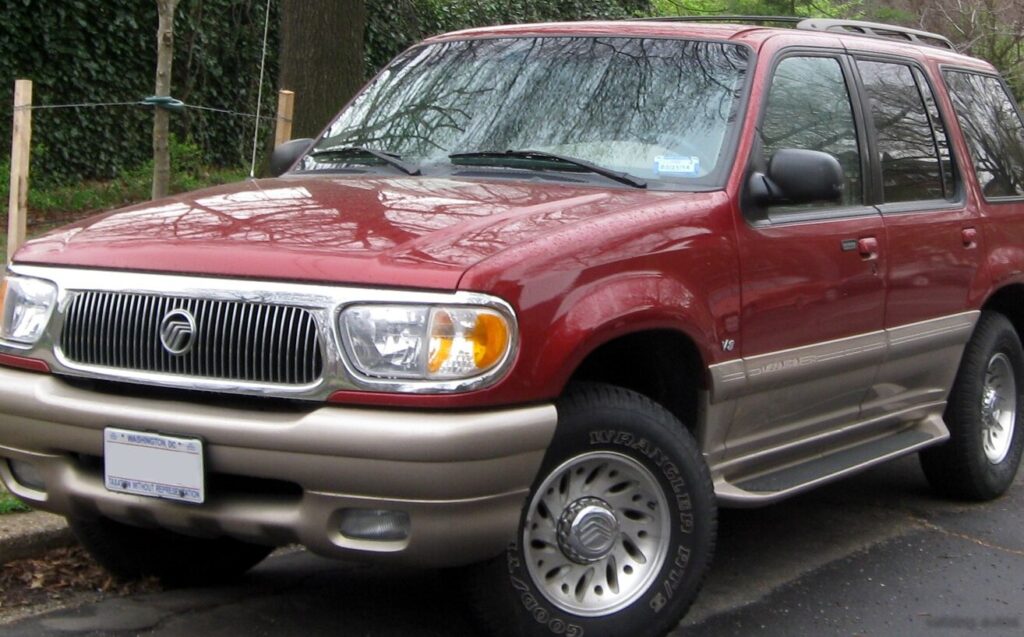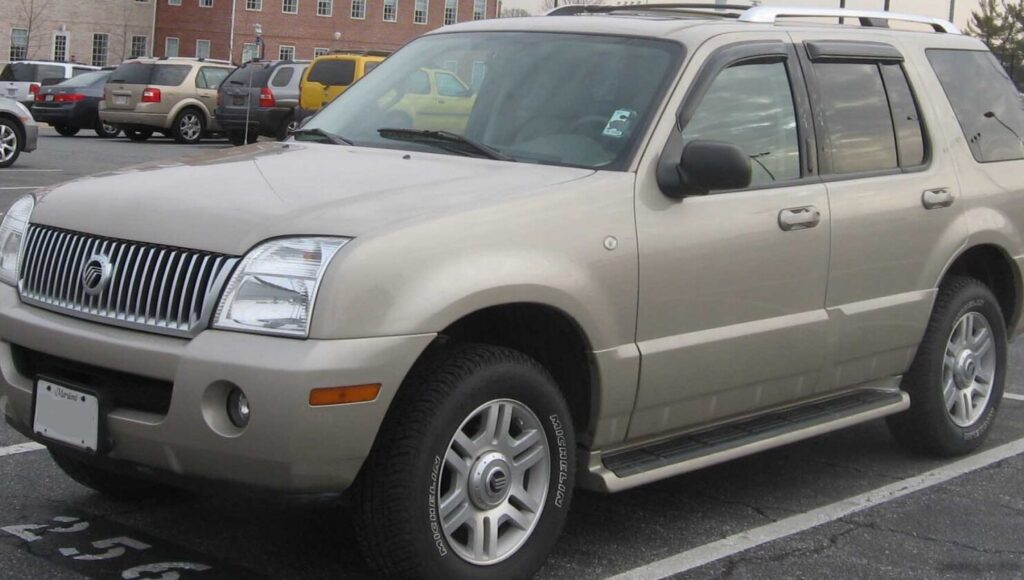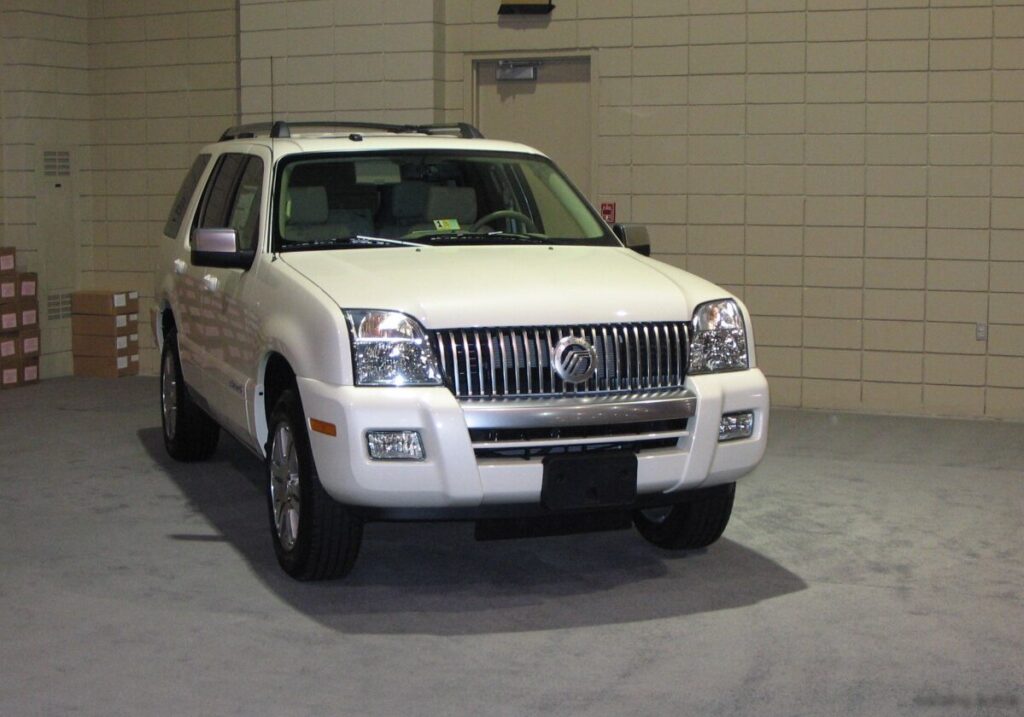
The Mercury Mountaineer III, specifically the variant equipped with the 4.0-liter V6 engine and a 5-speed automatic transmission, was produced from 2005 to 2010. This model represented the third generation of the Mountaineer, a mid-size SUV positioned within the Ford Motor Company’s lineup as a more premium offering compared to the Ford Explorer, with which it shared a platform. The Mountaineer III aimed to blend SUV practicality with a degree of luxury and refinement, appealing to families and individuals seeking a comfortable and capable vehicle. This particular 4.0L V6/Automatic configuration occupied a middle ground in the Mountaineer lineup, offering a balance between performance and fuel economy.
Technical Specifications
| Brand | Mercury |
| Model | Mountaineer |
| Generation | Mountaineer III |
| Type (Engine) | 4.0 V6 (210 Hp) Automatic |
| Start of production | 2005 |
| End of production | 2010 |
| Powertrain Architecture | Internal Combustion engine |
| Body type | SUV |
| Seats | 5 |
| Doors | 5 |
| Fuel consumption (urban) | 15.7-16.8 l/100 km (15 – 14 US mpg) |
| Fuel consumption (extra urban) | 11.2-11.8 l/100 km (21 – 19.9 US mpg) |
| Fuel Type | Petrol (Gasoline) |
| Emission standard | ULEV II |
| Weight-to-power ratio | 9.6 kg/Hp |
| Weight-to-torque ratio | 5.9 kg/Nm |
| Power | 210 Hp @ 5100 rpm |
| Power per litre | 52.4 Hp/l |
| Torque | 344 Nm @ 3700 rpm (253.72 lb.-ft. @ 3700 rpm) |
| Maximum engine speed | 6800 rpm |
| Engine layout | Front, Longitudinal |
| Engine Model/Code | Cologne |
| Engine displacement | 4009 cm3 (244.64 cu. in.) |
| Number of cylinders | 6 |
| Engine configuration | V-engine |
| Cylinder Bore | 100.4 mm (3.95 in.) |
| Piston Stroke | 84.4 mm (3.32 in.) |
| Compression ratio | 9.7:1 |
| Number of valves per cylinder | 2 |
| Fuel injection system | Multi-port manifold injection |
| Engine aspiration | Naturally aspirated engine |
| Valvetrain | SOHC |
| Engine oil capacity | 4.7 l (4.97 US qt | 4.14 UK qt) |
| Coolant capacity | 11.5 l (12.15 US qt | 10.12 UK qt) |
| Kerb Weight | 2022-2059 kg (4457.75 – 4539.32 lbs.) |
| Max. weight | 2702-2726 kg (5956.89 – 6009.8 lbs.) |
| Max load | 667-680 kg (1470.48 – 1499.14 lbs.) |
| Trunk (boot) space – minimum | 1277 l (45.1 cu. ft.) |
| Trunk (boot) space – maximum | 2430 l (85.81 cu. ft.) |
| Fuel tank capacity | 85 l (22.45 US gal | 18.7 UK gal) |
| Permitted trailer load with brakes (12%) | 2422 kg (5339.6 lbs.) |
| Length | 4915 mm (193.5 in.) |
| Width | 1867 mm (73.5 in.) |
| Height | 1849 mm (72.8 in.) |
| Wheelbase | 2888 mm (113.7 in.) |
| Front track | 1547 mm (60.91 in.) |
| Rear track | 1570-1575 mm (61.81 – 62.01 in.) |
| Ride height (ground clearance) | 208-221 mm (8.19 – 8.7 in.) |
| Minimum turning circle | 11.2 m (36.75 ft.) |
| Front suspension | Coil spring, Double wishbone, Transverse stabilizer |
| Rear suspension | Double wishbone, Transverse stabilizer, Coil spring |
| Front brakes | Ventilated discs, 305×30 mm |
| Rear brakes | Disc, 301×12 mm |
| Assisting systems | ABS (Anti-lock braking system) |
| Steering type | Steering rack and pinion |
| Power steering | Hydraulic Steering |
| Tires size | 245/65 R17; 235/65 R18; 255/50 R20 |
| Wheel rims size | 7.5J x 17; 7.5J x 18; 8J x 20 |
| Number of gears | 5 |
| Gearbox type | automatic transmission |
INTRODUCTION
The Mercury Mountaineer III, launched in 2005, represented a significant step forward for the model, sharing its underlying platform with the Ford Explorer but offering a more upscale experience. The 4.0-liter V6 engine paired with a 5-speed automatic transmission was a popular choice for buyers seeking a balance of power, towing capacity, and reasonable fuel efficiency. This configuration was positioned as a mid-range option, slotting between the base 4.6-liter V8 and the more powerful 5.0-liter V8 models. The Mountaineer III aimed to compete with other mid-size SUVs like the Chevrolet TrailBlazer and the Jeep Grand Cherokee, offering a comfortable ride and a spacious interior.
Powertrain & Engine Architecture
The heart of this Mountaineer variant is the 4.0-liter Cologne V6 engine. This engine, a staple in Ford’s lineup for many years, utilizes a single overhead camshaft (SOHC) design with two valves per cylinder. It features multi-port fuel injection, delivering fuel directly to each intake port for improved combustion efficiency. The engine’s block is constructed from cast iron, providing durability, while the cylinder heads are made of aluminum, contributing to weight reduction. The 5-speed automatic transmission, a Ford design, provides smooth and responsive shifting. It’s designed to handle the engine’s 210 horsepower and 253 lb-ft of torque effectively, offering a good balance between acceleration and fuel economy. The transmission features electronic control for optimized shift points based on driving conditions.
Driving Characteristics
The 4.0L V6/Automatic Mountaineer offered a comfortable and predictable driving experience. Acceleration was adequate for everyday driving, though not particularly sporty. The automatic transmission was tuned for smooth shifts, prioritizing comfort over aggressive performance. Compared to the V8 models, the V6 felt less powerful, especially when fully loaded or towing. However, it provided sufficient power for most driving situations. The gear ratios were optimized for highway cruising, allowing for relaxed and efficient travel. The Mountaineer’s rear-wheel-drive configuration contributed to a more balanced feel, although four-wheel drive was available as an option. Overall, this variant prioritized comfort and usability over outright performance.
Equipment & Trim Levels
The Mountaineer III 4.0L Automatic typically came standard with features such as air conditioning, power windows and locks, a CD player, and cloth upholstery. Higher trim levels, such as the Luxury and Premier editions, added features like leather upholstery, heated front seats, a premium sound system, and a power liftgate. Optional extras included a navigation system, a sunroof, and rear-seat entertainment. The interior design was generally considered comfortable and well-appointed, with a focus on providing a pleasant driving environment. The dashboard layout was straightforward and easy to use, with clearly labeled controls.
Chassis & Braking
The Mountaineer III utilized a body-on-frame construction, providing a robust and durable chassis. The front suspension featured an independent double wishbone design with coil springs and a transverse stabilizer bar, while the rear suspension employed a solid axle with coil springs and a transverse stabilizer bar. This setup provided a comfortable ride, although it wasn’t as refined as some of the more modern independent rear suspension designs. Braking duties were handled by ventilated discs at the front and discs at the rear. Anti-lock brakes (ABS) were standard, enhancing safety and control during emergency braking situations.
Market Reception & Comparison
The Mountaineer III 4.0L Automatic received generally positive reviews from automotive critics. It was praised for its comfortable ride, spacious interior, and reasonable fuel economy. However, some critics noted that the V6 engine felt underpowered compared to the V8 options. Compared to the 4.6L V8, the 4.0L offered better fuel economy but less power. The 5.0L V8 provided significantly more performance but at the expense of fuel efficiency. In terms of reliability, the 4.0L V6 proved to be a relatively dependable engine, although some owners reported issues with the automatic transmission over time.
Legacy
The Mercury Mountaineer III, particularly the 4.0L V6 Automatic variant, remains a relatively affordable and capable SUV in the used car market. While not as sought after as some of the higher-performance V8 models, it offers a good balance of practicality, comfort, and reliability. The 4.0L V6 engine is known for its durability, and with proper maintenance, it can provide many years of service. However, potential buyers should be aware of potential issues with the automatic transmission and should have it inspected by a qualified mechanic before purchase. The Mountaineer III represents a solid choice for those seeking a comfortable and spacious SUV at a reasonable price.