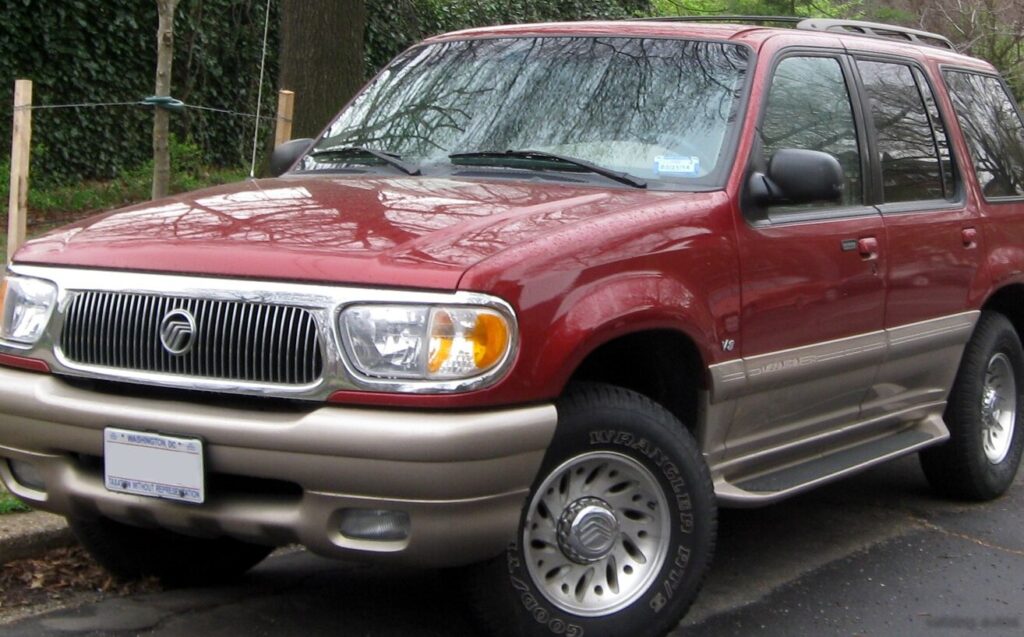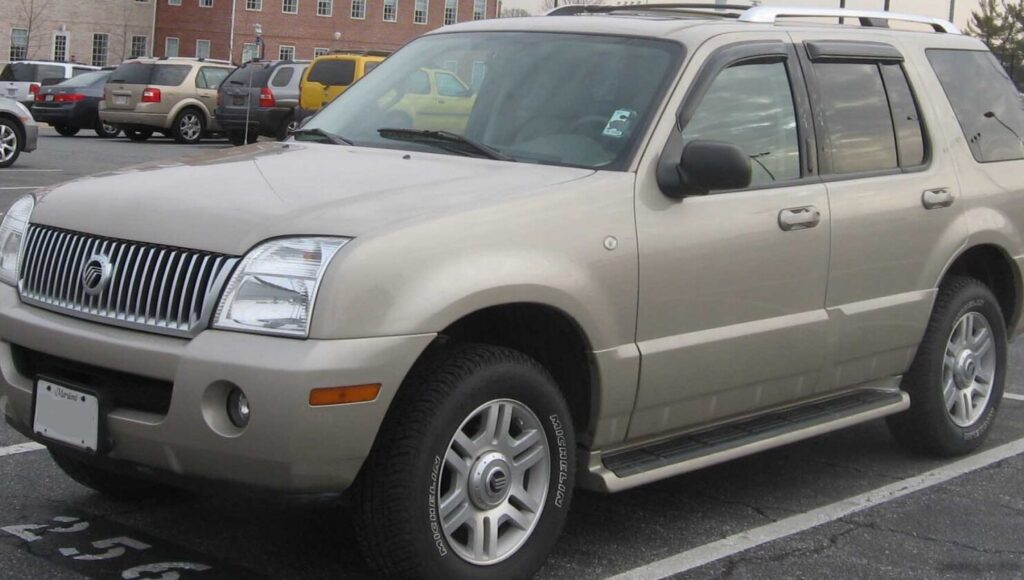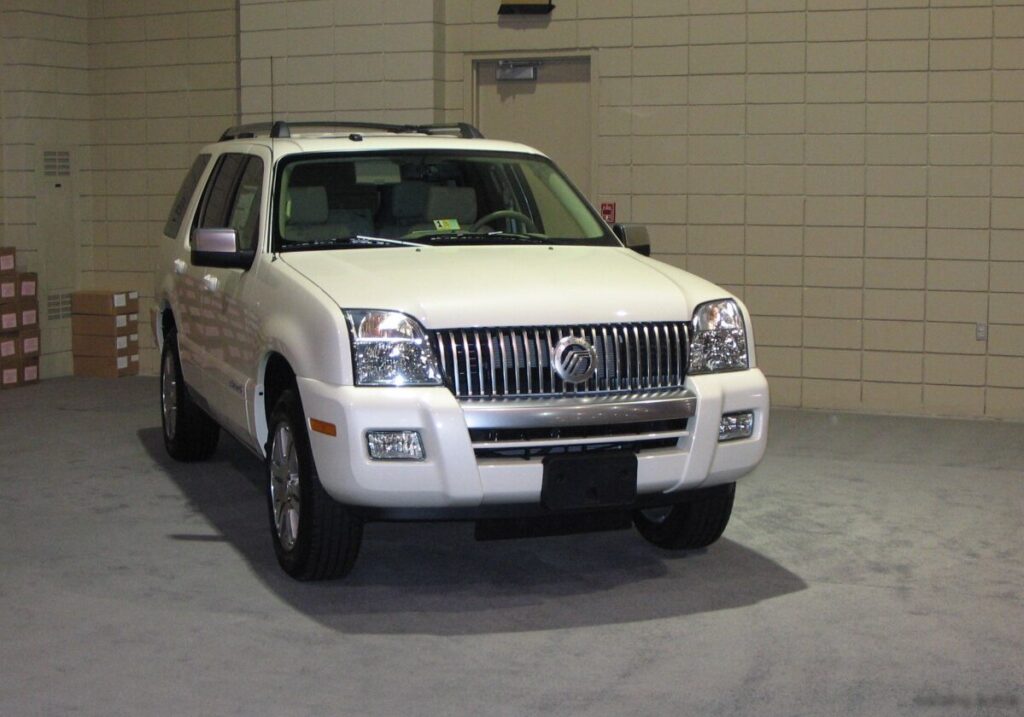
The Mercury Mountaineer III, specifically the variant equipped with the 4.6-liter V8 engine producing 292 horsepower and paired with a 6-speed automatic transmission, represented a significant offering in the mid-size SUV segment during its production run from 2005 to 2010. Built on the Ford Explorer platform (specifically the third generation, internally designated as the 5th generation Explorer), the Mountaineer aimed to provide a more premium experience than its Ford counterpart, offering enhanced features and a more refined interior. This particular engine and transmission combination positioned the Mountaineer as a capable towing vehicle and a comfortable family hauler, though it came with compromises in fuel economy typical of larger displacement V8 engines.
Technical Specifications
| Brand | Mercury |
| Model | Mountaineer |
| Generation | Mountaineer III |
| Type (Engine) | 4.6 V8 (292 Hp) Automatic |
| Start of production | 2005 |
| End of production | 2010 |
| Powertrain Architecture | Internal Combustion engine |
| Body type | SUV |
| Seats | 5 |
| Doors | 5 |
| Fuel consumption (urban) | 15.7 l/100 km (15 US mpg, 18 UK mpg) |
| Fuel consumption (extra urban) | 11.2 l/100 km (21 US mpg, 25.2 UK mpg) |
| Fuel Type | Petrol (Gasoline) |
| Emission standard | LEV II |
| Weight-to-power ratio | 6.9 kg/Hp, 144.4 Hp/tonne |
| Weight-to-torque ratio | 5 kg/Nm, 201.3 Nm/tonne |
| Power | 292 Hp @ 5750 rpm |
| Power per litre | 63.4 Hp/l |
| Torque | 407 Nm @ 4750 rpm (300.19 lb.-ft. @ 4750 rpm) |
| Maximum engine speed | 6250 rpm |
| Engine layout | Front, Longitudinal |
| Engine Model/Code | Modular |
| Engine displacement | 4606 cm3 (281.08 cu. in.) |
| Number of cylinders | 8 |
| Engine configuration | V-engine |
| Cylinder Bore | 90.2 mm (3.55 in.) |
| Piston Stroke | 90 mm (3.54 in.) |
| Compression ratio | 9.8:1 |
| Number of valves per cylinder | 3 |
| Fuel injection system | Multi-port manifold injection |
| Engine aspiration | Naturally aspirated engine |
| Valvetrain | SOHC |
| Engine oil capacity | 5.7 l (6.02 US qt | 5.02 UK qt) |
| Coolant capacity | 13.2 l (13.95 US qt | 11.61 UK qt) |
| Kerb Weight | 2022-2059 kg (4457.75 – 4539.32 lbs.) |
| Max. weight | 2700-2732 kg (5952.48 – 6023.03 lbs.) |
| Max load | 673-678 kg (1483.71 – 1494.73 lbs.) |
| Trunk (boot) space – minimum | 1277 l (45.1 cu. ft.) |
| Trunk (boot) space – maximum | 2430 l (85.81 cu. ft.) |
| Fuel tank capacity | 85 l (22.45 US gal | 18.7 UK gal) |
| Permitted trailer load with brakes (12%) | 3284 kg (7239.98 lbs.) |
| Length | 4915 mm (193.5 in.) |
| Width | 1867 mm (73.5 in.) |
| Height | 1849 mm (72.8 in.) |
| Wheelbase | 2888 mm (113.7 in.) |
| Front track | 1547 mm (60.91 in.) |
| Rear track | 1570-1575 mm (61.81 – 62.01 in.) |
| Ride height (ground clearance) | 208-216 mm (8.19 – 8.5 in.) |
| Minimum turning circle | 11.2 m (36.75 ft.) |
| Approach angle | 28-28.2° |
| Departure angle | 23.8-24.1° |
| Ramp-over angle | 18.4-19.2° |
| Drivetrain Architecture | Rear wheel drive |
| Number of gears | 6 |
| Gearbox type | Automatic transmission |
| Front suspension | Coil spring, Double wishbone, Transverse stabilizer |
| Rear suspension | Double wishbone, Transverse stabilizer, Coil spring |
| Front brakes | Ventilated discs, 305×30 mm |
| Rear brakes | Disc, 301×12 mm |
| Assisting systems | ABS (Anti-lock braking system) |
| Steering type | Steering rack and pinion |
| Power steering | Hydraulic Steering |
| Tires size | 245/65 R17; 235/65 R18; 255/50 R20 |
| Wheel rims size | 7.5J x 17; 7.5J x 18; 8J x 20 |
INTRODUCTION
The Mercury Mountaineer III, produced between 2005 and 2010, was Mercury’s entry into the increasingly popular mid-size SUV market. Sharing its platform with the Ford Explorer, the Mountaineer aimed for a more upscale experience, boasting a more refined interior and often including additional standard features. The 4.6-liter V8 engine paired with a 6-speed automatic transmission was a key offering within the Mountaineer lineup, targeting buyers who prioritized towing capacity and robust performance over ultimate fuel efficiency. It sat above the base V6 models in terms of price and performance, but below any potential higher-performance trims (which were not offered). The Mountaineer III represented a final attempt by Mercury to establish a distinct identity within the Ford Motor Company portfolio.
Powertrain & Engine Architecture
The heart of this Mountaineer variant is Ford’s 4.6-liter Modular V8 engine. This engine, designated within Ford as part of the Modular engine family, is a three-valve-per-cylinder design, utilizing a single overhead camshaft (SOHC). The engine employs multi-port fuel injection, delivering fuel directly to each intake port. The 4.6L engine is known for its relatively smooth operation and ample low-end torque. The 6-speed automatic transmission (likely a 6F50 or similar Ford-built unit) was chosen to handle the engine’s output and provide a balance between performance and fuel economy. This transmission featured electronic control and adaptive shifting algorithms. The transmission’s gear ratios were tuned for both everyday driving and towing, with a lower first gear for quick acceleration and higher gears for relaxed highway cruising.
Driving Characteristics
The 4.6L V8 and 6-speed automatic combination delivered a noticeable step up in performance compared to the base V6 Mountaineer. Acceleration was brisk, and the engine provided ample power for merging onto highways and passing other vehicles. While not a sports car, the Mountaineer felt confident and capable in most driving situations. The automatic transmission generally shifted smoothly, although some drivers noted a slight hesitation during downshifts. The Mountaineer’s weight (around 4,458 to 4,540 lbs) did impact overall agility, and the rear-wheel-drive configuration meant it wasn’t as capable in slippery conditions as all-wheel-drive variants. Towing capacity was a strong point, with the Mountaineer capable of hauling up to 7,240 lbs when properly equipped.
Equipment & Trim Levels
The Mountaineer III with the 4.6L V8 typically came standard with features such as air conditioning, power windows and locks, a CD player, and cloth upholstery. Higher trim levels, such as the Premier trim, added features like leather upholstery, heated front seats, a premium sound system, and a power liftgate. Optional extras included a navigation system, a DVD entertainment system, and a sunroof. The interior design was generally considered comfortable and well-appointed, though not as luxurious as some European or Japanese competitors.
Chassis & Braking
The Mountaineer III utilized a body-on-frame construction, providing a robust and durable chassis. The front suspension consisted of an independent double wishbone setup with coil springs and a transverse stabilizer bar. The rear suspension employed a similar double wishbone design with coil springs and a stabilizer bar. Braking duties were handled by ventilated discs up front and discs in the rear. Anti-lock brakes (ABS) were standard. The Mountaineer’s braking performance was adequate for its weight class, but not exceptional. The rear disc brakes were an improvement over earlier Explorer models that used rear drums.
Market Reception & Comparison
Critics generally praised the Mountaineer III’s spacious interior, comfortable ride, and strong V8 engine. However, fuel economy was a common complaint, as the 4.6L V8 was not particularly efficient. Compared to the V6 Mountaineer, the V8 offered significantly more power and towing capacity, but at the cost of increased fuel consumption. Compared to competitors like the Chevrolet TrailBlazer or the Jeep Grand Cherokee, the Mountaineer offered a competitive level of features and performance, but often lacked the brand cachet of some rivals. Reliability was generally considered average, with some reports of minor issues with the transmission and electrical systems.
Legacy
The Mercury Mountaineer III, particularly the 4.6L V8 Automatic variant, remains a relatively affordable and capable used SUV. The 4.6L Modular V8 engine is known for its durability, although regular maintenance is crucial to prevent issues. The 6-speed automatic transmission, while generally reliable, can be susceptible to wear and tear with high mileage. Today, these Mountaineers are often sought after by buyers looking for a comfortable and capable towing vehicle at a reasonable price. While the Mountaineer nameplate has been discontinued, the model represents a unique chapter in Mercury’s history and a solid offering in the mid-size SUV segment.