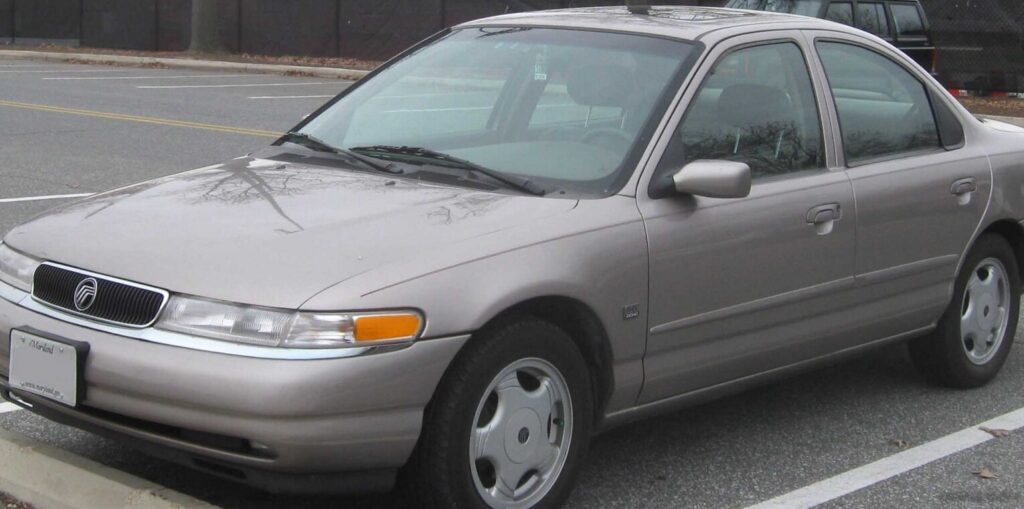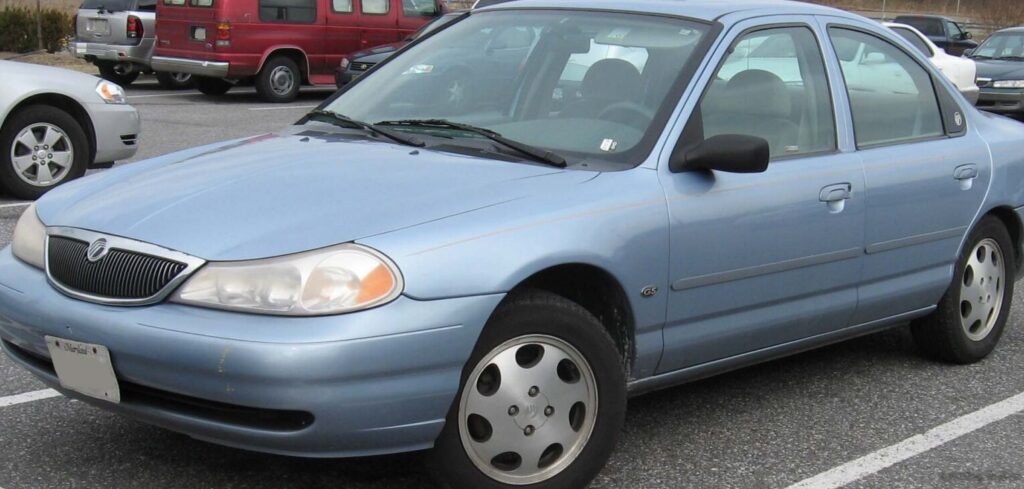
The Mercury Mystique, particularly the facelifted version introduced in 1997, represented Mercury’s entry into the mid-size sedan market. Produced from 1997 to 2000, it was based on the Ford CD270 platform, shared with the Ford Contour and, internationally, the Ford Mondeo. The 2.0-liter, 125 horsepower variant occupied a middle ground in the Mystique lineup, offering a balance between affordability and performance. It aimed to appeal to buyers seeking a comfortable and reasonably equipped sedan without the higher price tag of the more powerful options.
Technical Specifications
| Brand | Mercury |
| Model | Mystique |
| Generation | Mystique (facelift 1997) |
| Type (Engine) | 2.0 (125 Hp) |
| Start of production | 1997 |
| End of production | 2000 |
| Powertrain Architecture | Internal Combustion engine |
| Body type | Sedan |
| Seats | 5 |
| Doors | 4 |
| Fuel consumption (economy) – urban (EPA) | 9.8 l/100 km (24 US mpg, 28.8 UK mpg, 10.2 km/l) |
| Fuel consumption (economy) – extra urban (EPA) | 6.9 l/100 km (34.1 US mpg, 40.9 UK mpg, 14.5 km/l) |
| Fuel consumption (economy) – combined (EPA) | 8.4 l/100 km (28 US mpg, 33.6 UK mpg, 11.9 km/l) |
| Fuel Type | Petrol (Gasoline) |
| Power | 125 Hp @ 5500 rpm |
| Power per litre | 62.6 Hp/l |
| Torque | 176 Nm @ 4000 rpm (129.81 lb.-ft. @ 4000 rpm) |
| Maximum engine speed | 6375 rpm |
| Engine layout | Front, Transverse |
| Engine Model/Code | Zetec |
| Engine displacement | 1998 cm3 (121.93 cu. in.) |
| Number of cylinders | 4 |
| Engine configuration | Inline |
| Compression ratio | 9.6:1 |
| Number of valves per cylinder | 4 |
| Fuel injection system | Multi-port manifold injection |
| Engine aspiration | Naturally aspirated engine |
| Valvetrain | DOHC |
| Engine oil capacity | 4.25 l (4.49 US qt | 3.74 UK qt) |
| Coolant | 6.6 l (6.97 US qt | 5.81 UK qt) |
| Trunk (boot) space – minimum | 394 l (13.91 cu. ft.) |
| Fuel tank capacity | 55 l (14.53 US gal | 12.1 UK gal) |
| Length | 4694 mm (184.8 in.) |
| Width | 1755 mm (69.09 in.) |
| Height | 1384 mm (54.49 in.) |
| Wheelbase | 2704 mm (106.46 in.) |
| Front track | 1504 mm (59.21 in.) |
| Rear (Back) track | 1486 mm (58.5 in.) |
| Drivetrain Architecture | The Internal combustion engine (ICE) drives the front wheels of the vehicle. |
| Drive wheel | Front wheel drive |
| Number of gears and type of gearbox | 5 gears, manual transmission |
| Front suspension | Independent, type McPherson with coil spring and anti-roll bar |
| Rear suspension | Independent multi-link spring suspension with stabilizer |
| Front brakes | Disc, 260 mm |
| Rear brakes | Drum, 203 mm |
| Assisting systems | ABS (Anti-lock braking system) |
| Steering type | Steering rack and pinion |
| Power steering | Hydraulic Steering |
| Tires size | 185/70 R14; 205/60 R15 |
| Wheel rims size | 5.5J x 14; 6J x 15 |
Powertrain & Engine Architecture
The heart of the 1997-2000 Mercury Mystique 2.0 was the Zetec engine, a 1.998-liter inline-four cylinder powerplant. This engine, part of Ford’s Zetec family, featured a double overhead camshaft (DOHC) valvetrain with four valves per cylinder, contributing to its relatively efficient breathing. The engine utilized multi-port fuel injection, delivering fuel directly into the intake ports for improved combustion. The 9.6:1 compression ratio was a compromise between performance and the ability to run on readily available 87 octane gasoline. The engine produced 125 horsepower at 5500 rpm and 176 Nm (129.81 lb-ft) of torque at 4000 rpm. The Mystique 2.0 was typically paired with a five-speed manual transmission, although an optional four-speed automatic transmission was also available. The automatic transmission was a Ford-sourced unit, designed for smooth operation and ease of use, but at the expense of some performance and fuel economy.
Driving Characteristics
The 2.0-liter engine in the Mystique provided adequate, but not exhilarating, performance. Acceleration was reasonable for everyday driving, but it wasn’t particularly quick. Compared to the available V6 engine option, the 2.0-liter felt noticeably less powerful, especially when fully loaded or climbing hills. The five-speed manual transmission allowed drivers to keep the engine in its optimal power band, while the four-speed automatic, while convenient, resulted in slightly sluggish acceleration and more frequent downshifts. The automatic transmission’s gear ratios were geared more towards fuel efficiency than outright performance. Handling was generally considered competent, with the McPherson strut front suspension and multi-link rear suspension providing a comfortable ride. However, it wasn’t a particularly sporty car, and body roll was noticeable in corners.
Equipment & Trim Levels
The Mystique 2.0 typically came standard with features such as air conditioning, power windows and locks, and an AM/FM stereo. Higher trim levels, such as the LS, added features like cruise control, upgraded upholstery, and alloy wheels. Optional extras included a CD player, power sunroof, and upgraded sound system. Interior upholstery was typically cloth, with the LS trim offering upgraded cloth or available leather options. The dashboard layout was functional and straightforward, with easy-to-read gauges and well-placed controls.
Chassis & Braking
The Mystique’s chassis featured an independent McPherson strut suspension in the front and an independent multi-link suspension in the rear. This setup provided a good balance between ride comfort and handling. The front brakes were disc brakes, measuring 260mm in diameter, while the rear brakes were drum brakes, measuring 203mm. Anti-lock braking system (ABS) was standard, enhancing safety by preventing wheel lockup during hard braking. The steering was rack and pinion, with hydraulic power assist for ease of maneuvering. The standard tire size was 185/70 R14, with optional 205/60 R15 tires available on higher trim levels.
Market Reception & Comparison
The Mercury Mystique 2.0 was generally well-received by critics as a practical and affordable mid-size sedan. However, it wasn’t considered a standout in its class. The 2.0-liter engine was praised for its fuel efficiency, achieving around 28 mpg combined, but criticized for its lack of power compared to competitors. Compared to the V6-powered Mystique, the 2.0-liter offered significantly better fuel economy but considerably less performance. The automatic transmission was seen as a convenient option, but it did detract from the car’s overall responsiveness. Reliability was generally good, although some owners reported minor issues with the automatic transmission and fuel injection system.
Legacy
The Mercury Mystique, and specifically the 2.0-liter variant, has become a relatively affordable and accessible used car. The Zetec engine is known for its durability, and with proper maintenance, can last for many years. However, like any older vehicle, it’s important to inspect for common issues such as oil leaks and worn suspension components. The Mystique 2.0 remains a practical and economical choice for those seeking a reliable and reasonably priced mid-size sedan. While it may not offer the performance or luxury of more modern vehicles, it provides a comfortable and dependable driving experience.