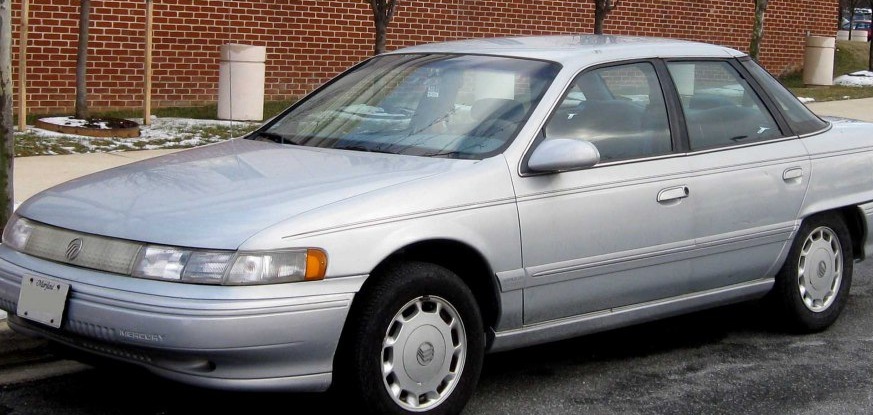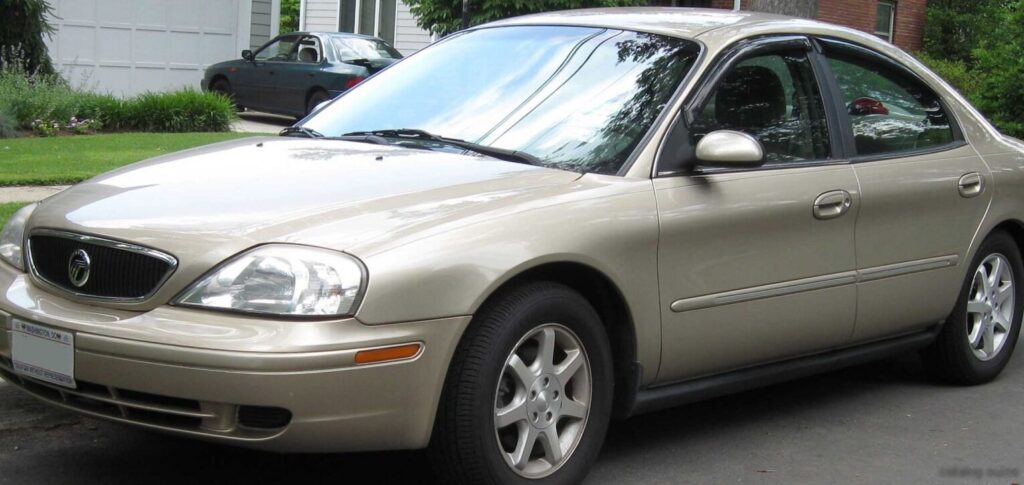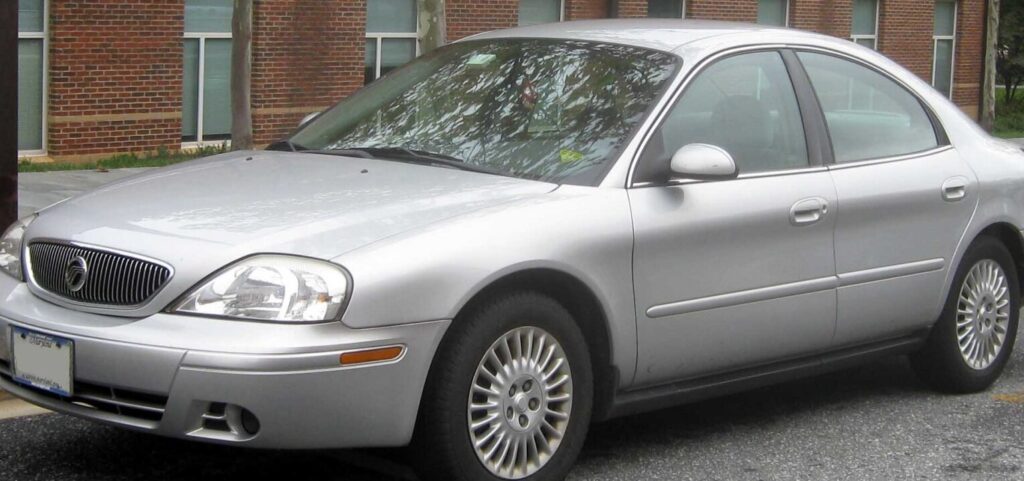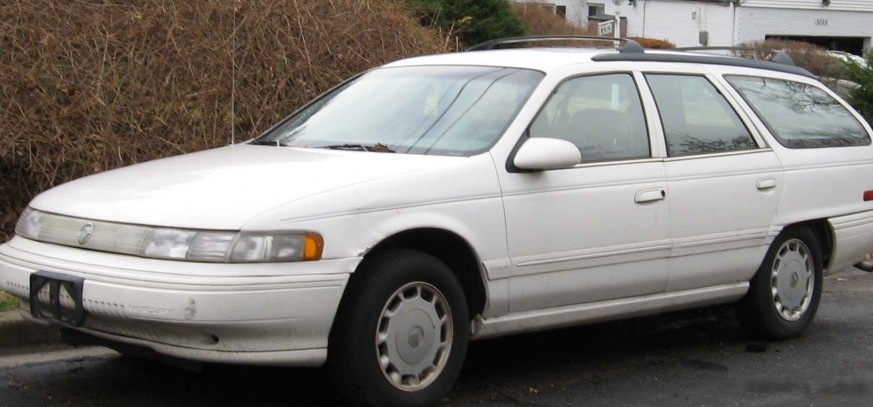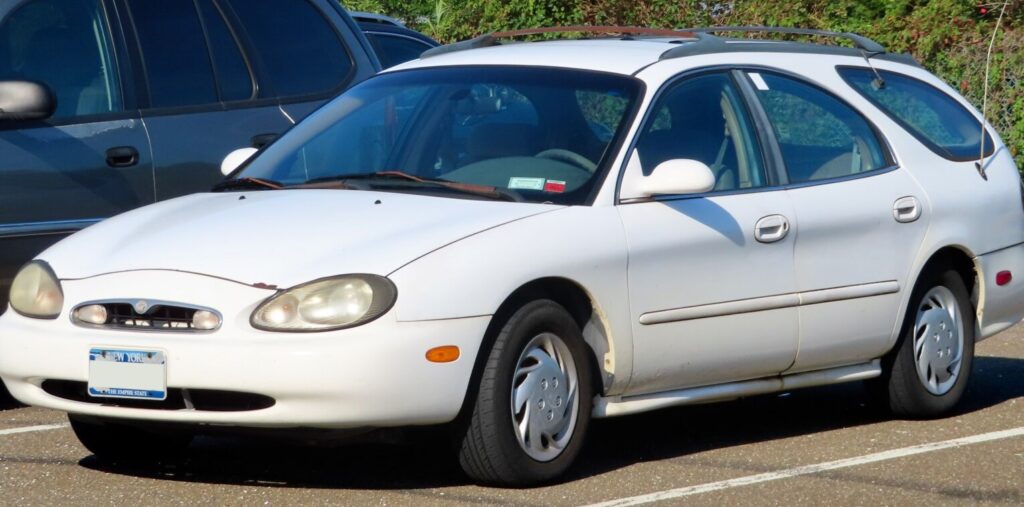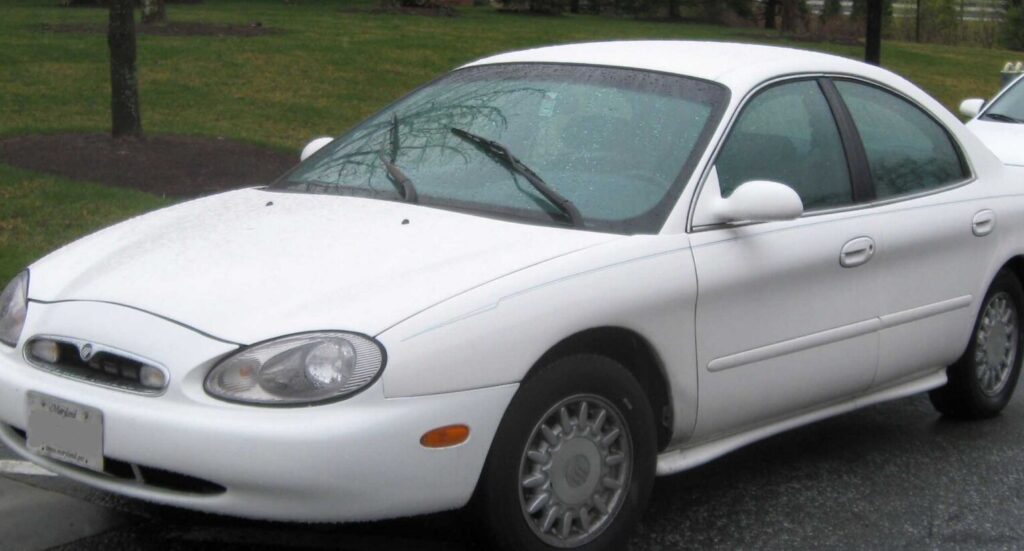
The Mercury Sable III, produced between 1995 and 1999, represented the third generation of Mercury’s mid-size sedan. Positioned as a more upscale alternative to the Ford Taurus with which it shared its platform (the FN10/A3), the Sable aimed for a more refined driving experience and a slightly more luxurious interior. The 3.0 V6 variant, producing 147 horsepower, occupied a middle ground in the Sable lineup, offering a balance between performance and fuel economy. It sat below the higher-output engine options, but provided a step up from the base 2.5L inline-four.
Technical Specifications
| Brand | Mercury |
| Model | Sable |
| Generation | Sable III |
| Type (Engine) | 3.0 V6 (147 Hp) |
| Start of production | 1995 |
| End of production | 1999 |
| Powertrain Architecture | Internal Combustion engine |
| Body type | Sedan |
| Seats | 5 |
| Doors | 4 |
| Fuel consumption (urban) | 12.4 l/100 km (19 US mpg) |
| Fuel consumption (extra urban) | 8.4 l/100 km (28 US mpg) |
| Fuel Type | Petrol (Gasoline) |
| Maximum speed | 190 km/h (118.06 mph) |
| Weight-to-power ratio | 10.4 kg/Hp |
| Weight-to-torque ratio | 6.7 kg/Nm |
| Power | 147 Hp @ 5250 rpm |
| Power per litre | 49.2 Hp/l |
| Torque | 230 Nm @ 3250 rpm (169.64 lb.-ft. @ 3250 rpm) |
| Engine layout | Front, Transverse |
| Engine Model/Code | Vulcan |
| Engine displacement | 2986 cm3 (182.22 cu. in.) |
| Number of cylinders | 6 |
| Engine configuration | V-engine |
| Cylinder Bore | 89 mm (3.5 in.) |
| Piston Stroke | 80 mm (3.15 in.) |
| Compression ratio | 9.3:1 |
| Number of valves per cylinder | 2 |
| Fuel injection system | Multi-port manifold injection |
| Engine aspiration | Naturally aspirated engine |
| Engine oil capacity | 4.25 l (4.49 US qt | 3.74 UK qt) |
| Coolant | 11 l (11.62 US qt | 9.68 UK qt) |
| Kerb Weight | 1535 kg (3384.1 lbs.) |
| Trunk (boot) space – minimum | 455 l (16.07 cu. ft.) |
| Fuel tank capacity | 61 l (16.11 US gal | 13.42 UK gal) |
| Length | 5070 mm (199.61 in.) |
| Width | 1850 mm (72.83 in.) |
| Height | 1410 mm (55.51 in.) |
| Wheelbase | 2760 mm (108.66 in.) |
| Front track | 1560 mm (61.42 in.) |
| Rear (Back) track | 1560 mm (61.42 in.) |
| Drivetrain Architecture | The Internal combustion engine (ICE) drives the front wheels of the vehicle. |
| Drive wheel | Front wheel drive |
| Number of gears and type of gearbox | 4 gears, automatic transmission |
| Front suspension | Spring Strut |
| Rear suspension | Coil spring |
| Front brakes | Ventilated discs |
| Rear brakes | Drum |
| Assisting systems | ABS (Anti-lock braking system) |
| Steering type | Steering rack and pinion |
| Power steering | Hydraulic Steering |
| Tires size | 205/65 R15 |
Powertrain & Engine Architecture
The Sable III’s 3.0L Vulcan V6 engine was a mainstay of Ford’s mid-size offerings throughout the 1990s. This engine, known for its durability and relatively simple design, featured a 60-degree V-configuration with two valves per cylinder. The Vulcan engine utilized a multi-port fuel injection system, delivering fuel directly to each intake port for improved efficiency and power delivery. The 4-speed automatic transmission, typically the 4F50E, was chosen for its smooth operation and reliability. This transmission featured electronic control, optimizing shift points for both performance and fuel economy. The engine code for this configuration is generally associated with the Vulcan family, though specific sub-codes may exist depending on the production year and minor variations.
Driving Characteristics
The 3.0L V6 with the 4-speed automatic provided adequate, though not exhilarating, performance. Acceleration from 0 to 60 mph was typically in the 9-10 second range. The automatic transmission’s gear ratios were tuned for comfortable cruising and everyday drivability, rather than aggressive acceleration. Compared to the manual transmission versions of the Sable, the automatic offered less driver engagement but greater convenience. Against the higher-output engines (like the 3.8L V6), the 3.0L felt noticeably less powerful, particularly when fully loaded or climbing hills. However, the automatic transmission helped to mask some of the engine’s shortcomings by keeping it within its optimal power band.
Equipment & Trim Levels
The 3.0L V6 Sable typically came standard with features like air conditioning, power windows and locks, and an AM/FM stereo. Higher trim levels, such as the LS, added features like upgraded upholstery (often cloth or leather), a power driver’s seat, and a premium sound system. Optional extras included a sunroof, alloy wheels, and a CD player. Interior color schemes varied, but generally consisted of neutral tones like gray, beige, and dark blue. The dashboard layout was functional and straightforward, prioritizing ease of use over flashy design.
Chassis & Braking
The Sable III utilized a front-wheel-drive layout with an independent front suspension featuring MacPherson struts and a multi-link rear suspension. The front brakes were ventilated discs, providing good stopping power, while the rear brakes were typically drum brakes, a cost-saving measure for this trim level. Anti-lock braking system (ABS) was standard, enhancing safety and control during emergency braking situations. The steering was rack-and-pinion with hydraulic power assist, offering a comfortable and responsive driving experience. Stabilizer bars were included at both the front and rear to reduce body roll during cornering.
Market Reception & Comparison
Critics generally viewed the 3.0L Sable as a competent and comfortable family sedan. However, it wasn’t often praised for its performance. Fuel economy was considered reasonable for its class, averaging around 19 mpg in the city and 28 mpg on the highway. Compared to the 2.5L inline-four Sable, the 3.0L offered a noticeable improvement in power and refinement. However, the higher-output 3.8L V6 Sable provided significantly more performance, albeit at a higher price point and with slightly lower fuel economy. Reliability was generally good, with the Vulcan V6 engine being known for its longevity.
Legacy
The Mercury Sable III 3.0L V6 Automatic has become a relatively affordable and reliable used car option. The Vulcan V6 engine is known for its durability, and with proper maintenance, can last for many years. While not a particularly exciting vehicle, it offers a comfortable and practical transportation solution. Parts availability is generally good, as many components are shared with the Ford Taurus. Today, these Sables are often found in the hands of budget-conscious buyers or those seeking a simple, dependable vehicle for daily commuting. The 4F50E transmission, while generally reliable, can exhibit issues with solenoid packs and valve bodies as it ages, requiring occasional maintenance or replacement.