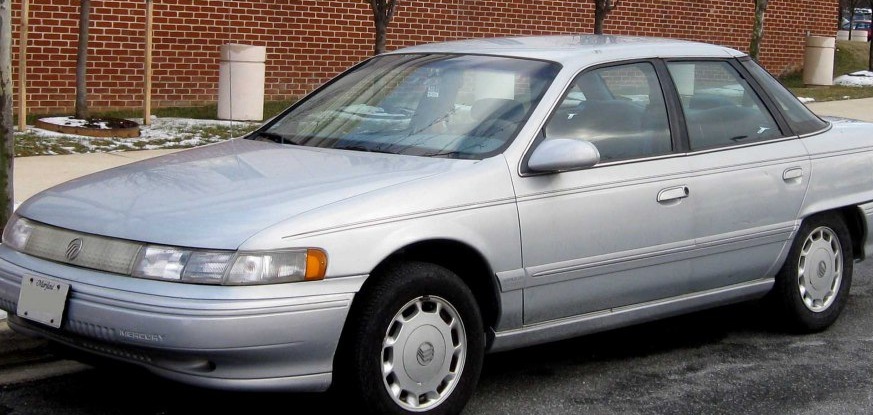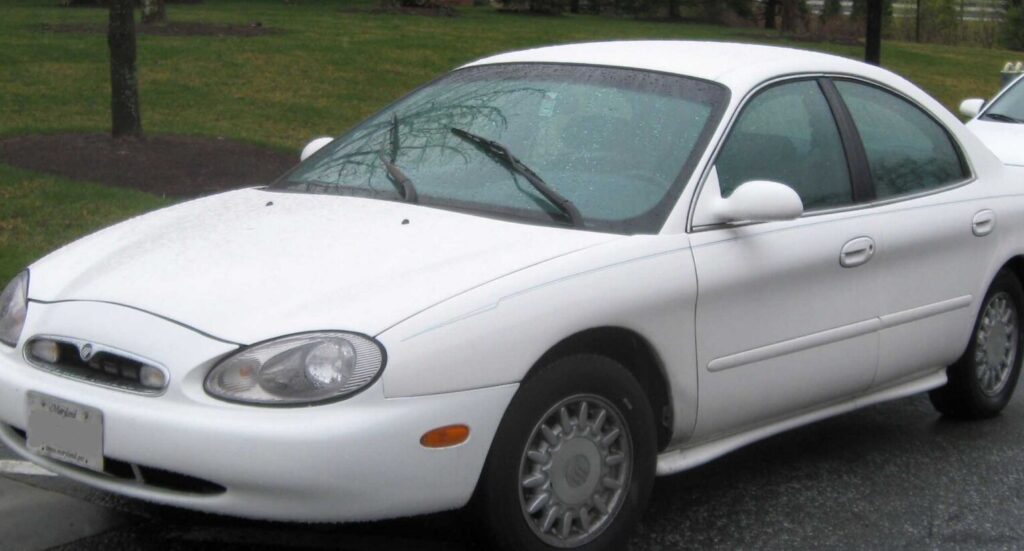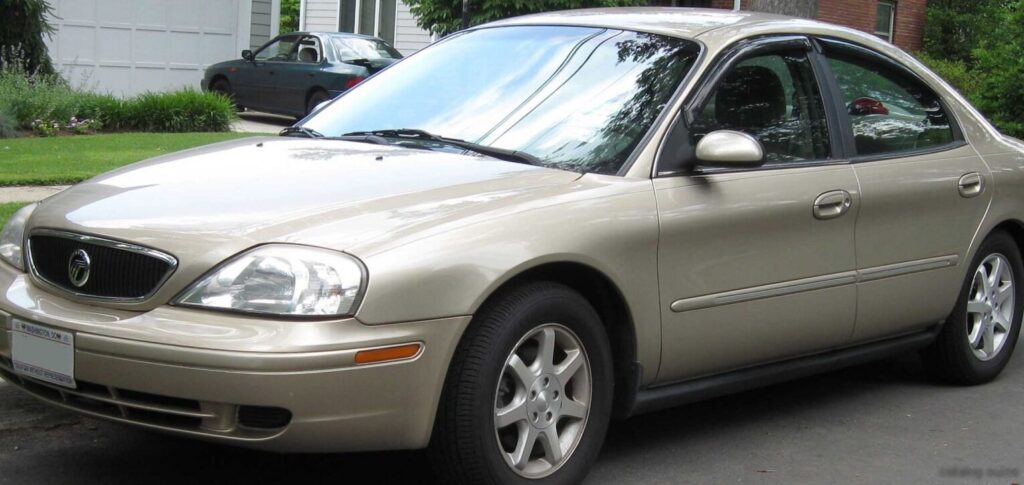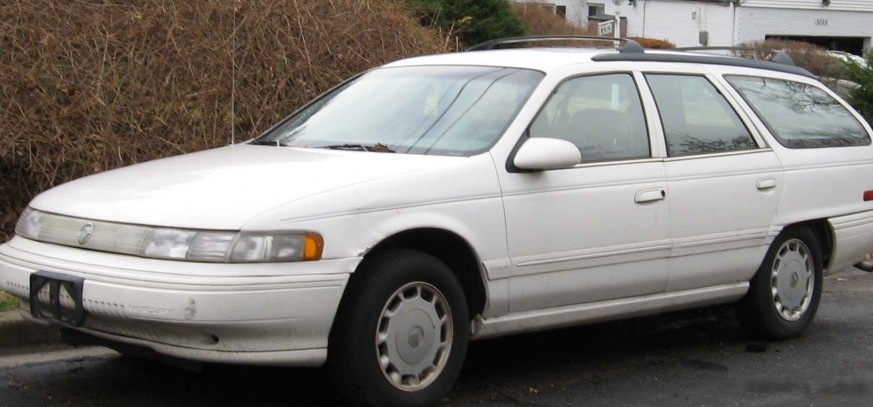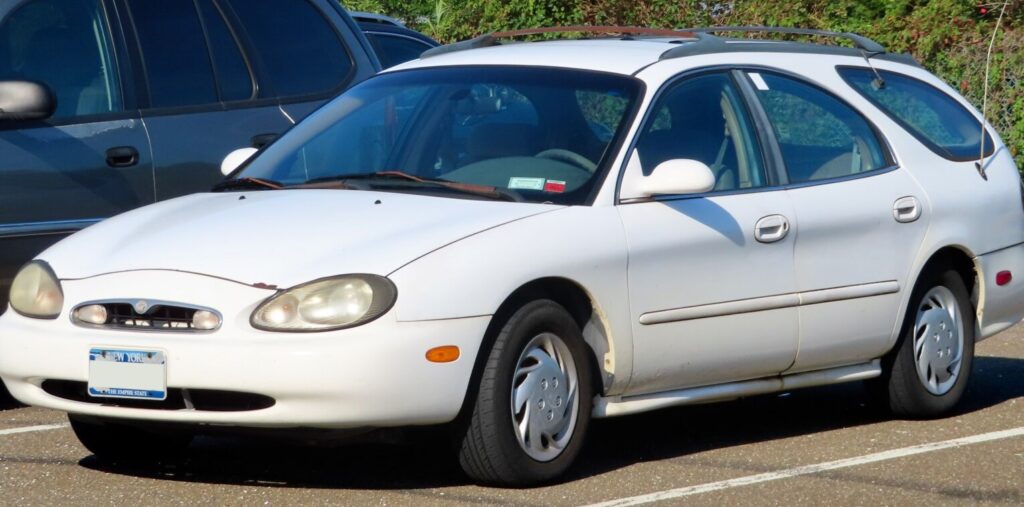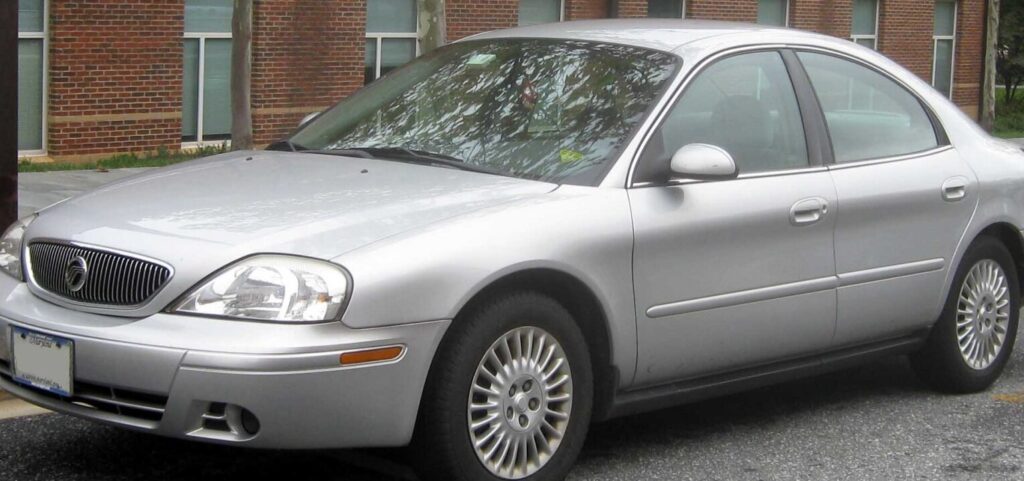
The Mercury Sable IV, specifically the facelifted version produced from 2004 to 2005, represented a final iteration of Ford’s mid-size sedan offering. Positioned as a more upscale alternative to the Ford Taurus, the Sable aimed to attract buyers seeking a comfortable and spacious family vehicle. The 3.0 V6 engine paired with an automatic transmission was a mid-range offering within the Sable lineup, slotting between the base 3.0L engine and the higher-performance options available in some model years. This configuration was designed to balance affordability with a reasonable level of performance and refinement, appealing to a broad segment of the family sedan market.
Technical Specifications
| Brand | Mercury |
| Model | Sable |
| Generation | Sable IV (facelift 2004) |
| Type (Engine) | 3.0 V6 (153 Hp) Automatic |
| Start of production | 2004 |
| End of production | 2005 |
| Powertrain Architecture | Internal Combustion engine |
| Body type | Sedan |
| Seats | 5-6 |
| Doors | 4 |
| Fuel Type | Petrol (Gasoline) |
| Weight-to-power ratio | 9.8 kg/Hp, 102 Hp/tonne |
| Weight-to-torque ratio | 6 kg/Nm, 168 Nm/tonne |
| Power | 153 Hp @ 5000 rpm |
| Power per litre | 51.2 Hp/l |
| Torque | 252 Nm @ 3250 rpm, 185.87 lb.-ft. @ 3250 rpm |
| Engine layout | Front, Transverse |
| Engine Model/Code | Vulcan |
| Engine displacement | 2986 cm3, 182.22 cu. in. |
| Number of cylinders | 6 |
| Engine configuration | V-engine |
| Cylinder Bore | 89 mm, 3.5 in. |
| Piston Stroke | 80 mm, 3.15 in. |
| Compression ratio | 9.4:1 |
| Number of valves per cylinder | 2 |
| Fuel injection system | Multi-port manifold injection |
| Engine aspiration | Naturally aspirated engine |
| Valvetrain | OHV |
| Engine oil capacity | 4.3 l, 4.54 US qt | 3.78 UK qt |
| Coolant | 11 l, 11.62 US qt | 9.68 UK qt |
| Kerb Weight | 1500 kg, 3306.93 lbs |
| Trunk (boot) space – minimum | 453 l, 16 cu. ft |
| Fuel tank capacity | 61 l, 16.11 US gal | 13.42 UK gal |
| Length | 5075 mm, 199.8 in |
| Width | 2024 mm, 79.69 in |
| Height | 1410 mm, 55.51 in |
| Wheelbase | 2756 mm, 108.5 in |
| Front track | 1565 mm, 61.61 in |
| Rear (Back) track | 1577 mm, 62.09 in |
| Drivetrain Architecture | The Internal combustion engine (ICE) drives the front wheels of the vehicle. |
| Drive wheel | Front wheel drive |
| Number of gears and type of gearbox | 4 gears, automatic transmission |
| Front suspension | Independent type McPherson, Transverse stabilizer |
| Rear suspension | Independent multi-link suspension, Transverse stabilizer |
| Front brakes | Disc |
| Rear brakes | Drum |
| Assisting systems | ABS (Anti-lock braking system) |
| Steering type | Steering rack and pinion |
| Power steering | Hydraulic Steering |
| Tires size | 215/60 R16 |
| Wheel rims size | 6J x 16 |
Powertrain & Engine Architecture
The heart of this Sable variant is the Ford Vulcan 3.0-liter V6 engine. This engine, a mainstay of Ford’s lineup for many years, is known for its durability and relatively simple design. The Vulcan engine utilizes an overhead valve (OHV) valvetrain, a configuration that prioritized cost-effectiveness and ease of maintenance over ultimate performance. Fuel delivery is managed by a multi-port fuel injection system, providing adequate fuel atomization for efficient combustion. The engine produces 153 horsepower at 5000 rpm and 252 Nm (185.87 lb-ft) of torque at 3250 rpm. This torque output, while not exceptional, provides sufficient power for everyday driving and moderate towing. The engine is transversely mounted in the front of the vehicle, driving the front wheels. The transmission is a four-speed automatic, chosen for its smooth operation and ease of use, catering to the target demographic of comfort-oriented drivers.
Driving Characteristics
The 3.0L V6 with the four-speed automatic transmission delivers a comfortable, if not particularly sporty, driving experience. Acceleration is adequate for merging onto highways and passing slower vehicles, but it’s not a particularly quick car. The automatic transmission is tuned for smooth shifts and prioritizes fuel economy over aggressive downshifting. Compared to the manual transmission versions of the Sable, or those equipped with the optional higher-output engines, this configuration feels noticeably less responsive. The gear ratios are optimized for cruising, making it a pleasant vehicle for long road trips. However, the lack of a fifth or sixth gear means that engine speeds can be relatively high at highway speeds, potentially impacting fuel economy and noise levels. The front-wheel-drive configuration provides predictable handling in most conditions, but it doesn’t offer the same level of grip as an all-wheel-drive system.
Equipment & Trim Levels
The 3.0L V6 Automatic Sable typically came standard with features such as air conditioning, power windows and locks, a CD player, and cloth upholstery. Higher trim levels offered upgrades like leather seats, a premium sound system, and alloy wheels. Safety features included anti-lock brakes (ABS) and front airbags. Optional extras could include a sunroof, heated seats, and a remote keyless entry system. The interior design was generally conservative, focusing on practicality and comfort rather than cutting-edge styling. The Sable aimed to provide a comfortable and well-equipped interior without the premium price tag of some of its competitors.
Chassis & Braking
The Sable IV utilized an independent McPherson strut suspension in the front and an independent multi-link suspension in the rear. This suspension setup provided a comfortable ride quality, absorbing bumps and imperfections in the road effectively. A transverse stabilizer bar was included at both the front and rear to reduce body roll during cornering. The braking system consisted of disc brakes in the front and drum brakes in the rear. While adequate for most driving situations, the rear drum brakes were a cost-saving measure and didn’t offer the same stopping power as disc brakes. The steering system was a rack-and-pinion setup with hydraulic power assist, providing responsive and easy steering.
Market Reception & Comparison
The 3.0L V6 Automatic Sable received generally positive reviews for its comfortable ride, spacious interior, and reasonable price. Critics noted that it wasn’t the most exciting car to drive, but it fulfilled its role as a practical and reliable family sedan. Compared to other trims in the Sable lineup, the 3.0L V6 Automatic offered a good balance between performance and fuel economy. It was more affordable than the higher-output engines, but it provided more power than the base engine. Fuel economy was rated at around 19 mpg city and 27 mpg highway, which was competitive for its class at the time. Reliability was generally good, with the Vulcan engine being known for its longevity.
Legacy
The Mercury Sable IV, particularly the 3.0L V6 Automatic variant, has become a relatively affordable and reliable used car option. The Vulcan engine is known for its durability, and with proper maintenance, it can last for many years. While not a collector’s item, the Sable IV represents a solid and dependable family sedan from a bygone era. Parts availability is generally good, and maintenance costs are relatively low. Today, these vehicles are often sought after by those looking for a comfortable and practical car without the complexities of modern technology. The Sable IV, in this configuration, remains a testament to Ford’s commitment to building durable and affordable vehicles for the American family.