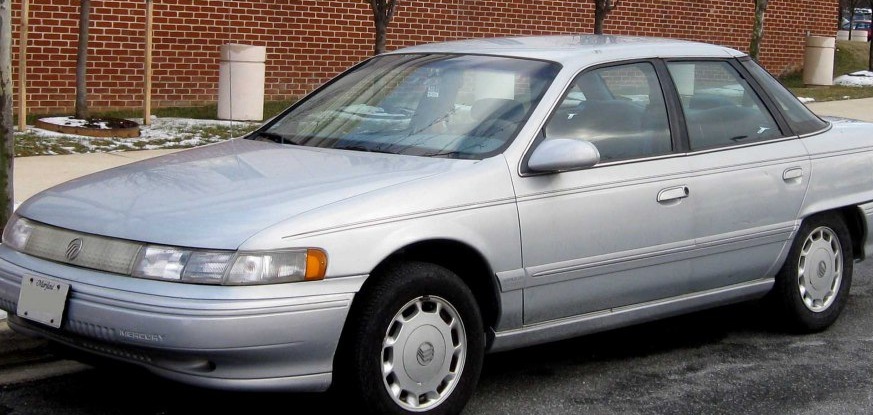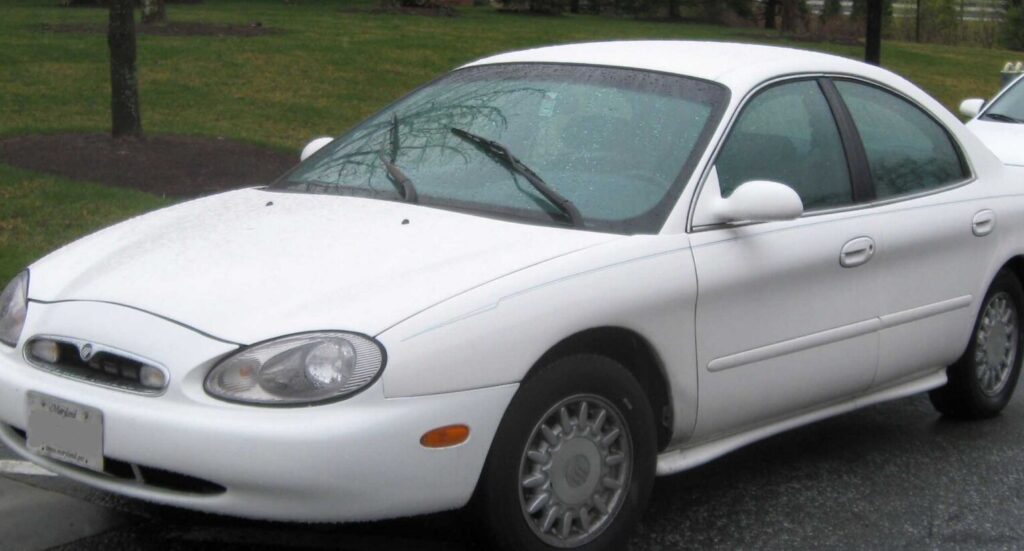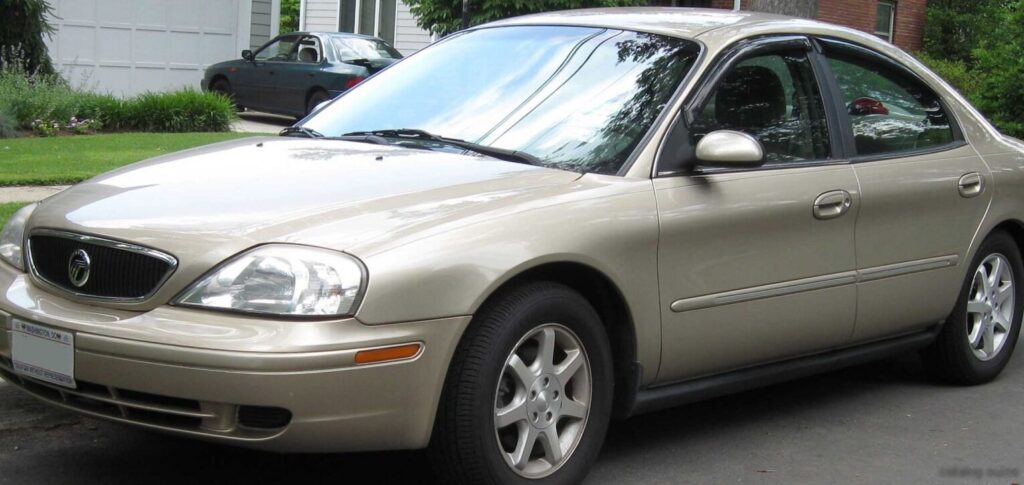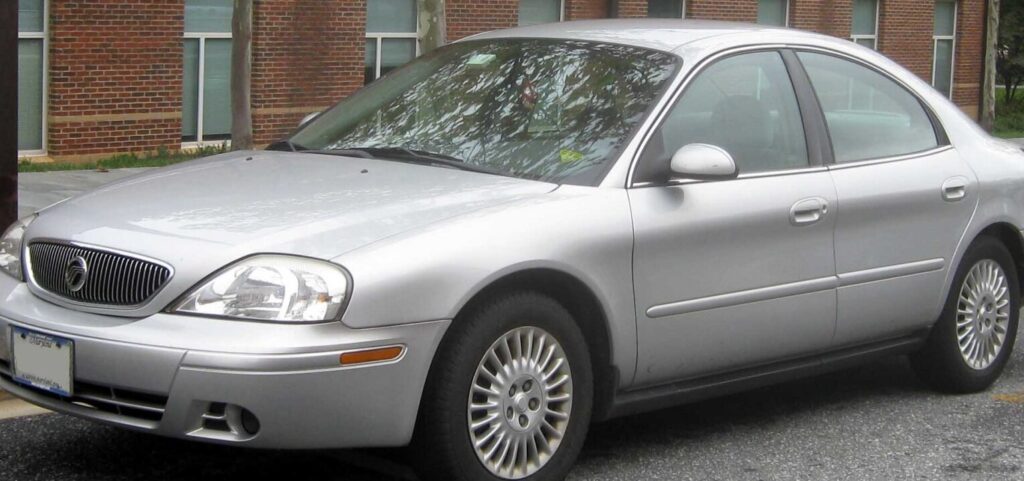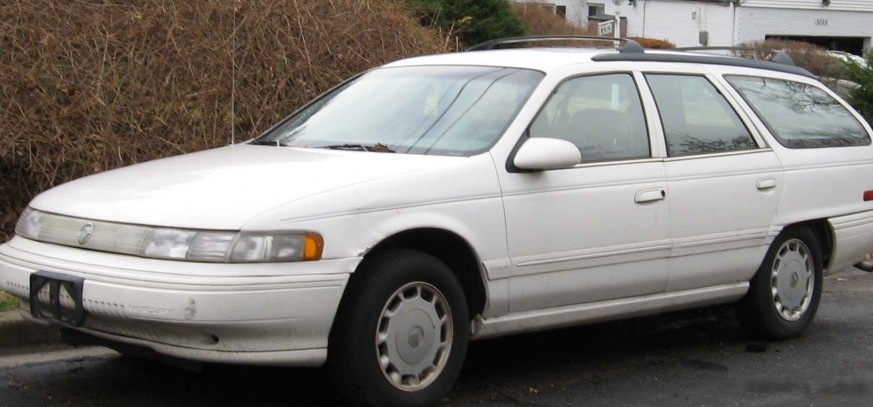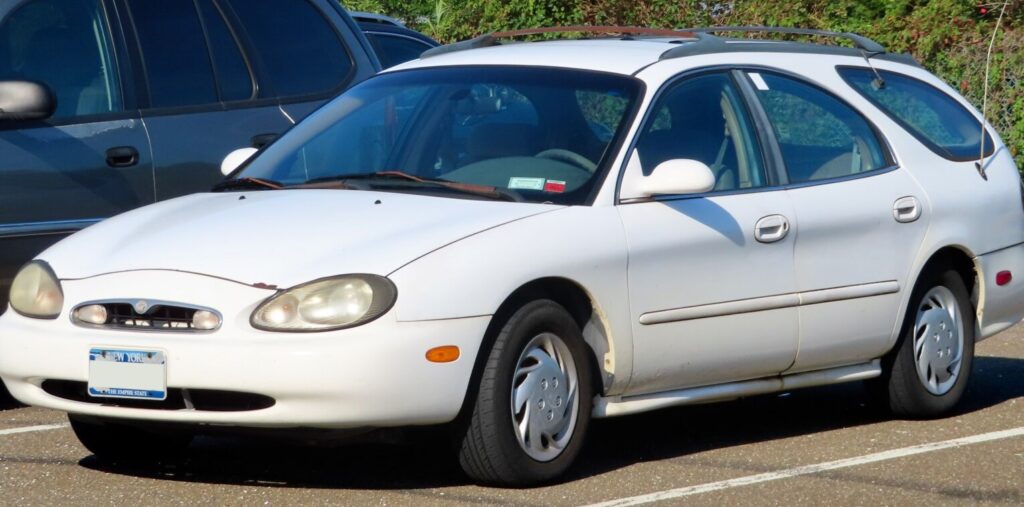
The Mercury Sable Station Wagon III, specifically the 3.0i V6 24V variant producing 203 horsepower, was a key offering in Mercury’s lineup from 1995 through 1999. Positioned as a comfortable and practical family vehicle, it represented a mid-range trim level within the Sable wagon family, slotting above the base 2.5L models and below any potential higher-performance or luxury-focused options (which were limited in the Sable range). This generation Sable, built on the Ford MN12 platform, aimed to provide a spacious and well-equipped alternative to other mid-size station wagons available in the North American market. It was a direct competitor to vehicles like the Buick Century wagon and the Dodge Caravan, appealing to buyers prioritizing practicality and a smooth ride.
Technical Specifications
| Brand | Mercury |
| Model | Sable |
| Generation | Sable Station Wagon III |
| Type (Engine) | 3.0 i V6 24V (203 Hp) |
| Start of production | 1995 |
| End of production | 1999 |
| Powertrain Architecture | Internal Combustion engine |
| Body type | Station wagon (estate) |
| Seats | 5 |
| Doors | 5 |
| Fuel consumption (urban) | 13.1 l/100 km (18 US mpg, 21.6 UK mpg) |
| Fuel consumption (extra urban) | 9.4 l/100 km (25 US mpg, 30.1 UK mpg) |
| Fuel Type | Petrol (Gasoline) |
| Maximum speed | 195 km/h (121.17 mph) |
| Weight-to-power ratio | 7.9 kg/Hp, 126.1 Hp/tonne |
| Weight-to-torque ratio | 5.9 kg/Nm, 168.3 Nm/tonne |
| Power | 203 Hp @ 5750 rpm |
| Power per litre | 68.4 Hp/l |
| Torque | 271 Nm @ 4500 rpm (199.88 lb.-ft. @ 4500 rpm) |
| Engine layout | Front, Transverse |
| Engine Model/Code | Duratec 30 |
| Engine displacement | 2967 cm3 (181.06 cu. in.) |
| Number of cylinders | 6 |
| Engine configuration | V-engine |
| Cylinder Bore | 89 mm (3.5 in.) |
| Piston Stroke | 79.5 mm (3.13 in.) |
| Compression ratio | 10:1 |
| Number of valves per cylinder | 4 |
| Fuel injection system | Multi-port manifold injection |
| Engine aspiration | Naturally aspirated engine |
| Valvetrain | DOHC |
| Engine oil capacity | 5.5 l (5.81 US qt | 4.84 UK qt) |
| Coolant | 10.6 l (11.2 US qt | 9.33 UK qt) |
| Kerb Weight | 1610 kg (3549.44 lbs.) |
| Trunk (boot) space – minimum | 1290 l (45.56 cu. ft.) |
| Trunk (boot) space – maximum | 2290 l (80.87 cu. ft.) |
| Fuel tank capacity | 70 l (18.49 US gal | 15.4 UK gal) |
| Length | 5060 mm (199.21 in.) |
| Width | 1900 mm (74.8 in.) |
| Height | 1460 mm (57.48 in.) |
| Wheelbase | 2760 mm (108.66 in.) |
| Front track | 1560 mm (61.42 in.) |
| Rear (Back) track | 1570 mm (61.81 in.) |
| Drivetrain Architecture | The Internal combustion engine (ICE) drives the front wheels of the vehicle. |
| Drive wheel | Front wheel drive |
| Number of gears and type of gearbox | 4 gears, automatic transmission |
| Front suspension | Spring Strut |
| Rear suspension | Coil spring |
| Front brakes | Ventilated discs |
| Rear brakes | Disc |
| Assisting systems | ABS (Anti-lock braking system) |
| Steering type | Steering rack and pinion |
| Power steering | Hydraulic Steering |
| Tires size | 205/65 R15 |
Powertrain & Engine Architecture
The heart of the 1995-1999 Mercury Sable 3.0i was the Ford Duratec 30 engine. This 3.0-liter, 60-degree V6 engine was part of Ford’s modern engine family, designed for improved refinement and efficiency compared to earlier Ford V6 designs. The engine featured a cast iron block with aluminum cylinder heads, incorporating a double overhead camshaft (DOHC) valvetrain with four valves per cylinder. This configuration allowed for good breathing and contributed to the engine’s respectable power output. Fuel delivery was handled by a multi-port fuel injection system, precisely metering fuel into each intake port. The Duratec 30 was known for its relatively smooth operation and decent reliability. Paired with this engine was a 4-speed automatic transmission, a common choice for Sable buyers prioritizing ease of use over outright performance. This transmission was designed to provide smooth shifts and adequate acceleration for everyday driving.
Driving Characteristics
The 3.0L V6 and 4-speed automatic combination in the Sable wagon delivered a comfortable, if not particularly sporty, driving experience. With 203 horsepower, acceleration was adequate for merging onto highways and passing slower traffic, but it wasn’t a particularly quick vehicle. The automatic transmission was tuned for smooth shifts and fuel economy, rather than aggressive downshifts. The gear ratios were optimized for cruising, making it a pleasant vehicle for long road trips. Compared to the base 2.5L four-cylinder Sable, the 3.0L offered a significant improvement in power and responsiveness. However, it didn’t match the performance of the larger engines found in some competing vehicles. The front-wheel-drive layout provided predictable handling, but it wasn’t designed for spirited cornering. Overall, the driving experience was geared towards comfort and practicality.
Equipment & Trim Levels
The 3.0i Sable wagon typically came with a fairly comprehensive list of standard features. These generally included air conditioning, power windows and locks, a decent sound system, and cloth upholstery. Higher trim levels, if available, might have added features like leather upholstery, upgraded sound systems, and power-adjustable seats. Optional extras could include a sunroof, alloy wheels, and a CD player. The interior design was functional and relatively spacious, with a focus on providing a comfortable environment for passengers. The wagon body style, of course, offered a significant advantage in terms of cargo space, making it a practical choice for families.
Chassis & Braking
The Sable wagon utilized a fairly conventional chassis design for a front-wheel-drive vehicle. The front suspension consisted of MacPherson struts, while the rear suspension employed a coil spring setup. This configuration provided a comfortable ride, but it wasn’t particularly sporty. Braking duties were handled by ventilated discs at the front and solid discs at the rear. An anti-lock braking system (ABS) was standard, enhancing safety by preventing wheel lockup during hard braking. Steering was rack-and-pinion with hydraulic power assist, providing light and easy steering feel. The suspension was tuned for comfort, prioritizing a smooth ride over sharp handling.
Market Reception & Comparison
The Mercury Sable wagon, including the 3.0i variant, generally received positive reviews for its spacious interior, comfortable ride, and practical wagon body style. Critics noted that it wasn’t the most exciting vehicle to drive, but it offered a good value for the money. Compared to the base 2.5L Sable, the 3.0i offered a noticeable improvement in performance, making it a more enjoyable vehicle to drive, especially when fully loaded with passengers or cargo. Fuel economy was reasonable for a V6-powered wagon, but it wasn’t class-leading. Reliability was generally good, although some owners reported minor issues with the automatic transmission over time.
Legacy
The Mercury Sable Wagon III, particularly the 3.0i variant, has become a relatively affordable and practical option in the used car market. The Duratec 30 engine is generally considered to be a reliable powerplant, and parts availability is good. While not a collector’s item, these wagons are appreciated by those seeking a spacious, comfortable, and reasonably reliable family vehicle. The 4-speed automatic transmission, while not the most modern, has proven to be durable in many cases. Today, these Sables represent a nostalgic reminder of a time when station wagons were a popular choice for families.