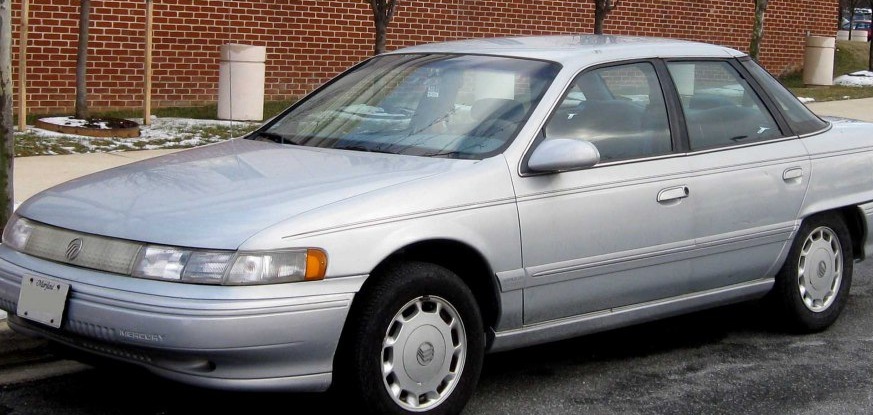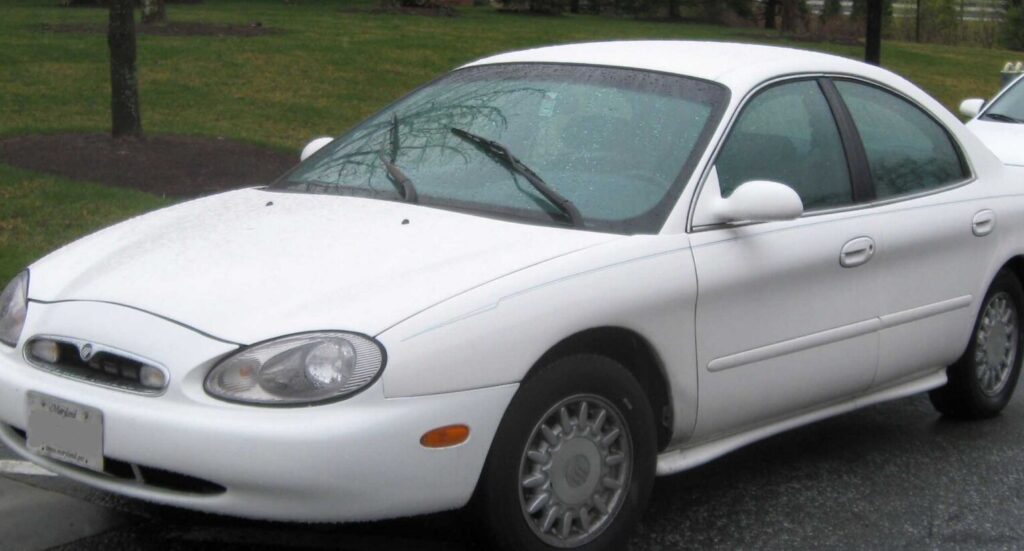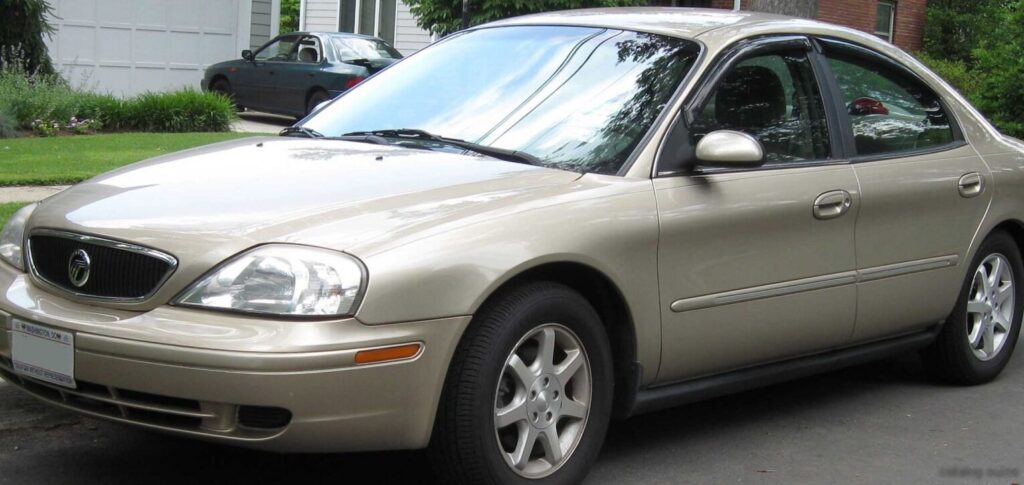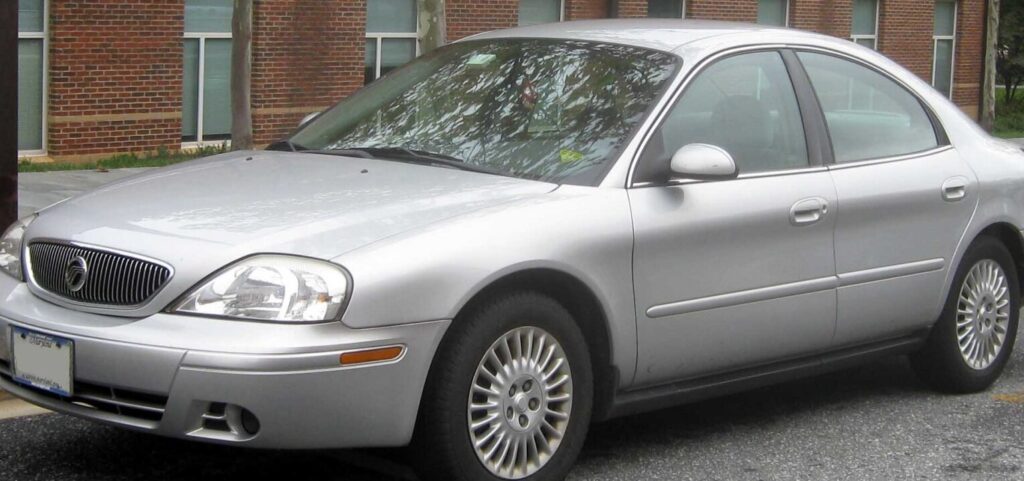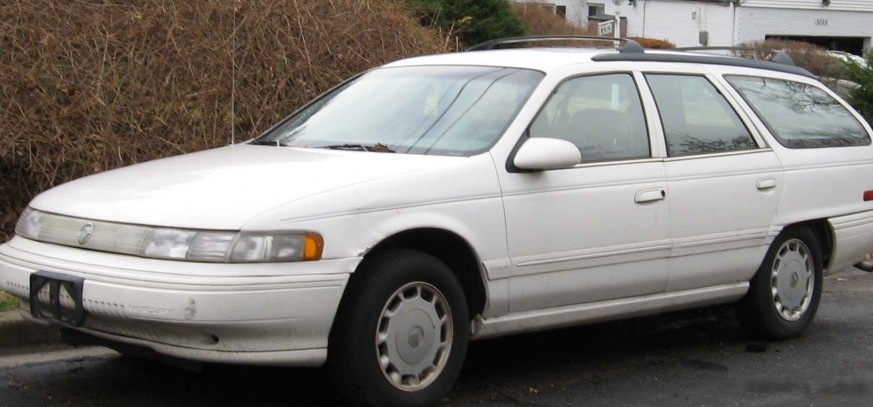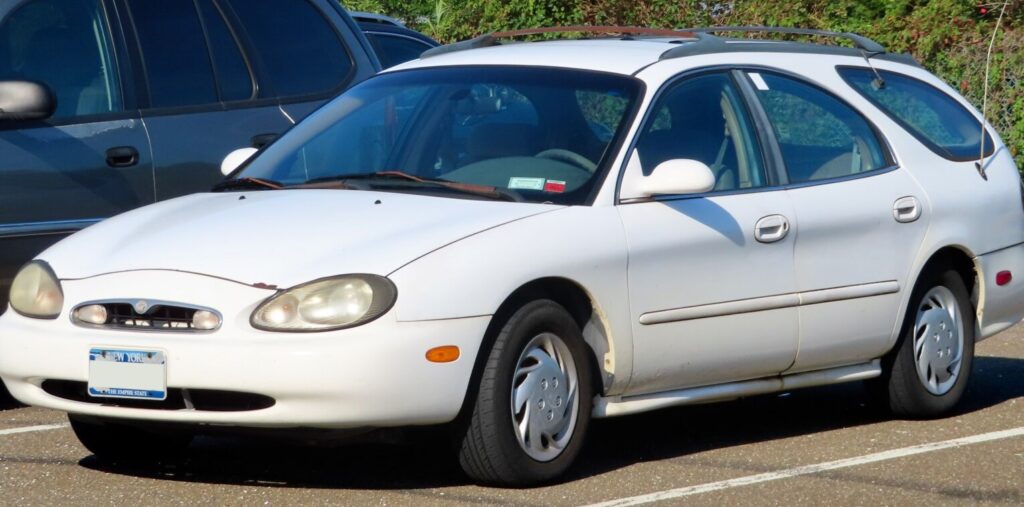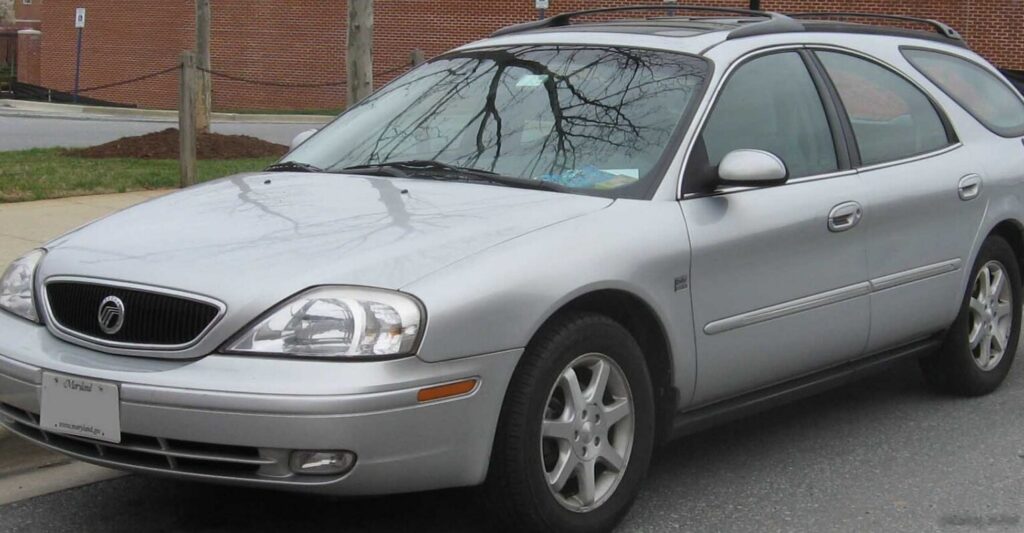
The Mercury Sable Station Wagon IV, specifically the 3.0 V6 variant with an automatic transmission, was produced from 1999 to 2003. This model represented the fourth generation of the Sable, a mid-size station wagon marketed by Mercury, the premium division of Ford. Positioned as a family-oriented vehicle, the Sable competed with other domestic station wagons like the Buick Century and the Chrysler LHS, offering a blend of space, comfort, and affordability. The 3.0 V6 Automatic trim occupied a middle ground in the Sable lineup, offering more power than the base 2.5L V6 but falling short of the performance offered by potential higher-trim options that were never fully realized for the Sable.
Technical Specifications
| Brand | Mercury |
| Model | Sable |
| Generation | Sable Station Wagon IV |
| Type (Engine) | 3.0 V6 (155 Hp) Automatic |
| Start of production | 1999 |
| End of production | 2003 |
| Powertrain Architecture | Internal Combustion engine |
| Body type | Station wagon (estate) |
| Seats | 5 |
| Doors | 5 |
| Fuel Type | Petrol (Gasoline) |
| Weight-to-power ratio | 10.4 kg/Hp, 96.4 Hp/tonne |
| Weight-to-torque ratio | 6.4 kg/Nm, 156.1 Nm/tonne |
| Power | 155 Hp @ 4900 rpm |
| Power per litre | 51.9 Hp/l |
| Torque | 251 Nm @ 3950 rpm (185.13 lb.-ft. @ 3950 rpm) |
| Engine layout | Front, Transverse |
| Engine Model/Code | Vulcan |
| Engine displacement | 2986 cm3 (182.22 cu. in.) |
| Number of cylinders | 6 |
| Engine configuration | V-engine |
| Cylinder Bore | 89 mm (3.5 in.) |
| Piston Stroke | 80 mm (3.15 in.) |
| Compression ratio | 9.28:1 |
| Number of valves per cylinder | 2 |
| Fuel injection system | Multi-port manifold injection |
| Engine aspiration | Naturally aspirated engine |
| Valvetrain | OHV |
| Engine oil capacity | 4.3 l (4.54 US qt | 3.78 UK qt) |
| Coolant | 11 l (11.62 US qt | 9.68 UK qt) |
| Kerb Weight | 1608 kg (3545.03 lbs) |
| Trunk (boot) space – minimum | 1087 l (38.39 cu. ft.) |
| Trunk (boot) space – maximum | 2302 l (81.29 cu. ft.) |
| Fuel tank capacity | 61 l (16.11 US gal | 13.42 UK gal) |
| Length | 5024 mm (197.8 in.) |
| Width | 1854 mm (72.99 in.) |
| Height | 1519 mm (59.8 in.) |
| Wheelbase | 2756 mm (108.5 in.) |
| Front track | 1565 mm (61.61 in.) |
| Rear (Back) track | 1570 mm (61.81 in.) |
| Drivetrain Architecture | The Internal combustion engine (ICE) drives the front wheels of the vehicle. |
| Drive wheel | Front wheel drive |
| Number of gears and type of gearbox | 4 gears, automatic transmission |
| Front suspension | Independent type McPherson, Transverse stabilizer |
| Rear suspension | Double wishbone, Transverse stabilizer |
| Front brakes | Ventilated discs, 277 mm |
| Rear brakes | Disc, 257 mm |
| Assisting systems | ABS (Anti-lock braking system) |
| Steering type | Steering rack and pinion |
| Power steering | Hydraulic Steering |
| Tires size | 215/60 R16 |
| Wheel rims size | 6J x 16 |
Powertrain & Engine Architecture
The heart of the Sable 3.0 V6 Automatic was the Ford Vulcan engine. This 3.0-liter, naturally aspirated V6 engine, designated as the code series, was a mainstay of Ford’s mid-size offerings for many years. The Vulcan engine utilized a cast iron block and aluminum cylinder heads, featuring a single overhead valve (OHV) valvetrain. This design, while not the most modern, was known for its durability and relative simplicity. Fuel delivery was managed by a multi-port fuel injection system, providing adequate, though not exceptional, performance. The engine produced 155 horsepower at 4900 rpm and 185 lb-ft of torque at 3950 rpm. The engine was transversely mounted in the front of the vehicle.
The engine was paired with a four-speed automatic transmission. This transmission, while reliable, was a somewhat dated design by the early 2000s. It featured conventional hydraulic control and lacked the sophistication of newer electronically controlled transmissions. The gear ratios were tuned for comfortable cruising and adequate acceleration, but didn’t prioritize sporty performance.
Driving Characteristics
The Sable 3.0 V6 Automatic offered a comfortable and predictable driving experience. Acceleration was adequate for everyday driving, but the combination of the engine’s modest power output and the four-speed automatic transmission meant it wasn’t particularly quick. The automatic transmission’s shift points were generally smooth, but could feel somewhat sluggish during quick acceleration maneuvers. Compared to a manual transmission-equipped Sable, the automatic version felt noticeably less responsive. The 3.0L engine provided sufficient torque for highway merging and passing, but required a deliberate kickdown of the throttle. The Sable’s suspension was tuned for comfort, providing a relatively smooth ride over most road surfaces.
Equipment & Trim Levels
The 3.0 V6 Automatic Sable typically came standard with features such as air conditioning, power windows and locks, an AM/FM stereo with a cassette player, and cloth upholstery. Optional extras included a CD player, upgraded sound system, power driver’s seat, and alloy wheels. Safety features included dual front airbags and ABS (Anti-lock Braking System). Interior trim was generally functional and durable, with a focus on practicality rather than luxury. The dashboard layout was straightforward and easy to use.
Chassis & Braking
The Sable IV utilized a front-wheel-drive platform. The front suspension consisted of an independent McPherson strut setup with a transverse stabilizer bar, while the rear suspension employed a double wishbone design, also with a stabilizer bar. This suspension configuration provided a comfortable ride, but wasn’t particularly sporty. The braking system featured ventilated discs at the front and solid discs at the rear. The ABS system helped to maintain steering control during hard braking situations.
Market Reception & Comparison
The Sable 3.0 V6 Automatic received generally positive reviews for its comfort, spaciousness, and affordability. However, critics often noted its lack of performance and somewhat dated technology. Compared to the base 2.5L V6 Sable, the 3.0L version offered a noticeable improvement in acceleration and overall driving experience. However, it came at a slightly higher price point. Fuel economy was average for the class, typically ranging from 18-22 mpg in city driving and 25-29 mpg on the highway. Reliability was generally good, with the Vulcan engine being known for its durability.
Legacy
The Mercury Sable, and particularly the 3.0 V6 Automatic variant, has become a relatively affordable and practical option in the used car market. The Vulcan engine is known for its longevity, and with proper maintenance, these vehicles can provide many years of reliable service. While not a particularly exciting vehicle, the Sable 3.0 V6 Automatic remains a viable choice for those seeking a spacious, comfortable, and affordable station wagon. Parts availability is generally good, as the Vulcan engine and many other components were used in a wide range of Ford and Mercury vehicles. However, due to its age, finding well-maintained examples can be challenging.