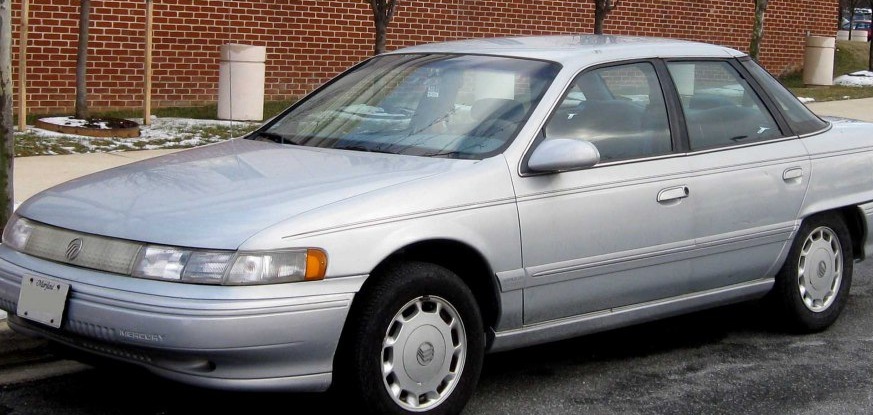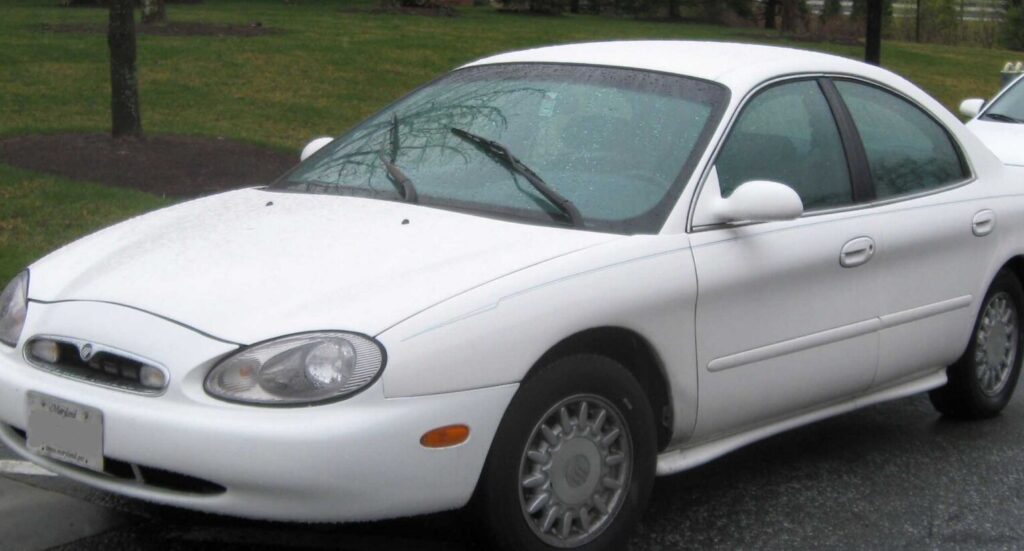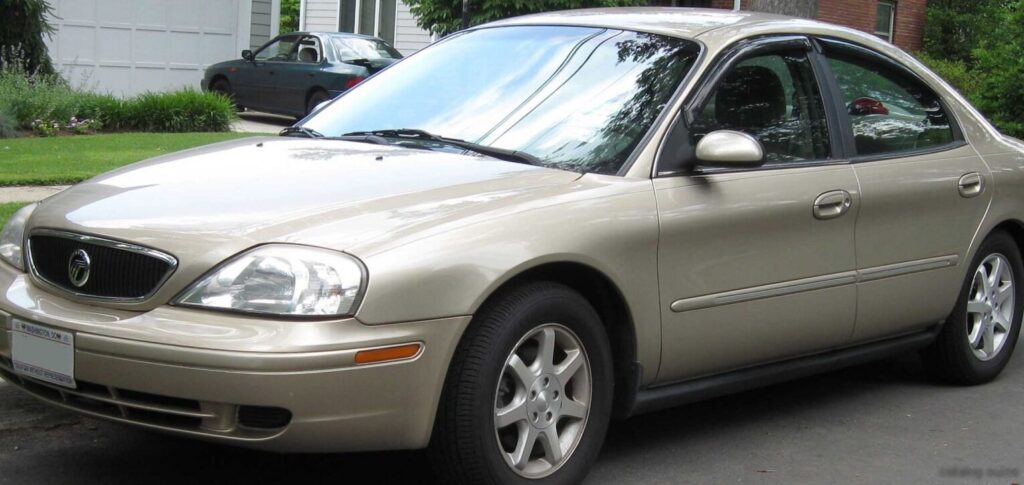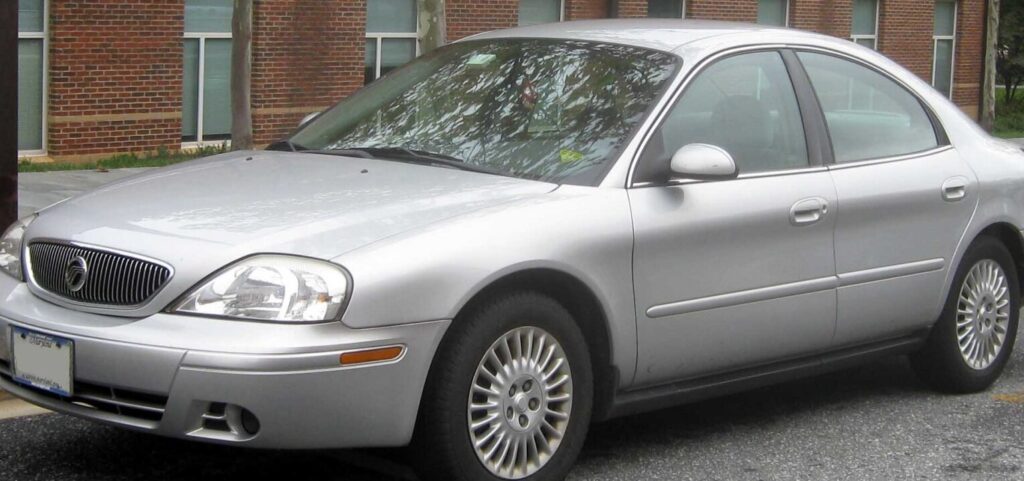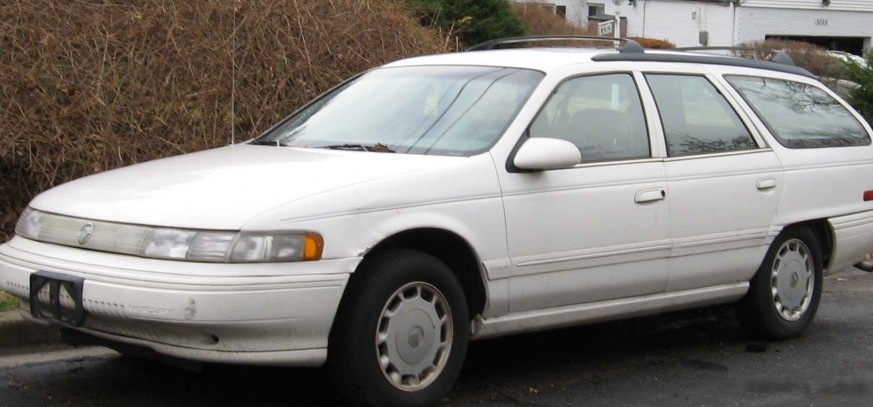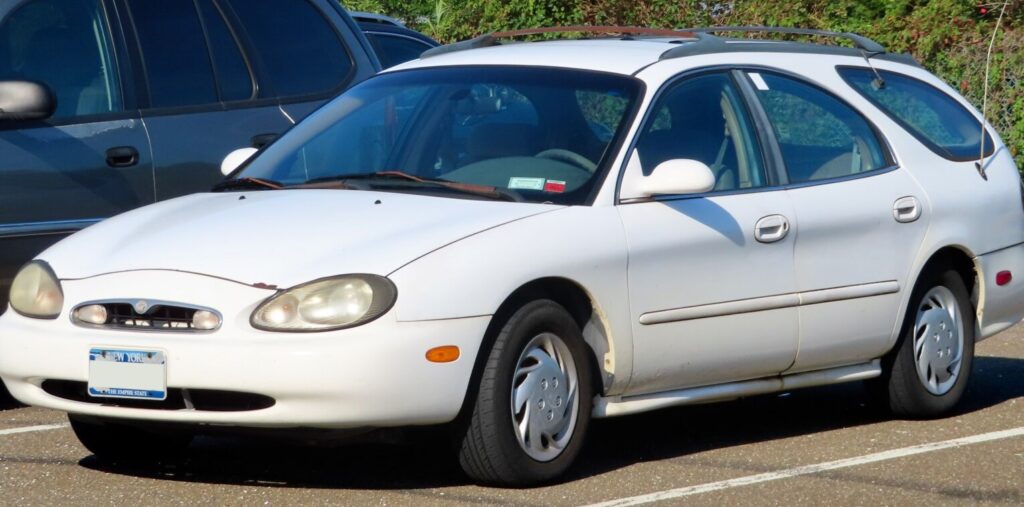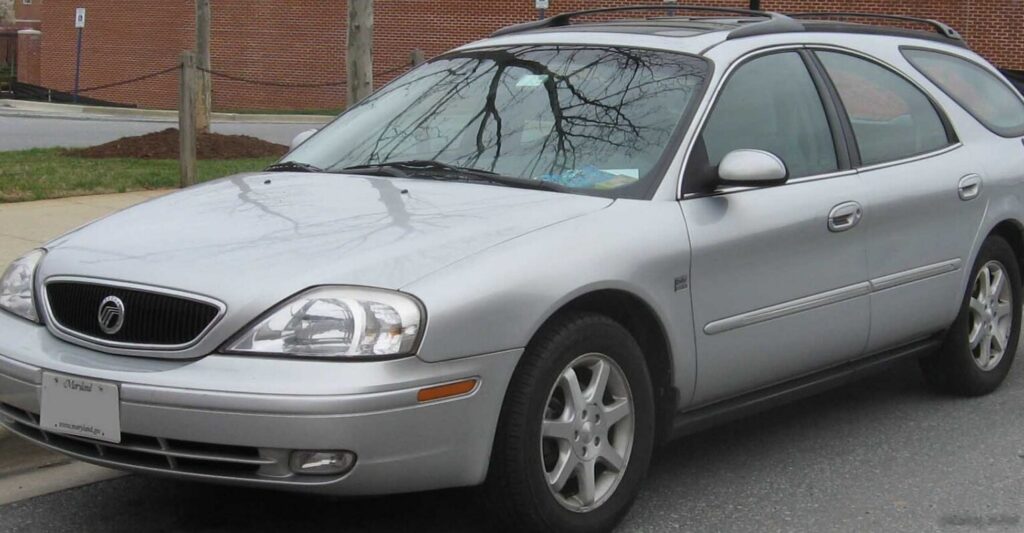
The Mercury Sable Station Wagon IV, equipped with the 3.0-liter V6 engine and automatic transmission, represented a significant offering in the American family station wagon market from 1999 to 2003. Positioned as a comfortable and practical choice, this variant aimed to provide a balance between performance and convenience for buyers seeking a spacious vehicle. It was built on the Ford CD270 platform, shared with the Ford Taurus and Lincoln Continental, and represented the fourth generation of the Sable nameplate. This particular configuration, with its 200 horsepower V6, occupied a mid-range position within the Sable lineup, offering more power than the base 3.0-liter engine but falling short of the performance potential of some of its competitors.
Technical Specifications
| Brand | Mercury |
| Model | Sable |
| Generation | Sable Station Wagon IV |
| Type (Engine) | 3.0 V6 (200 Hp) Automatic |
| Start of production | 1999 |
| End of production | 2003 |
| Powertrain Architecture | Internal Combustion engine |
| Body type | Station wagon (estate) |
| Seats | 5 |
| Doors | 5 |
| Fuel Type | Petrol (Gasoline) |
| Weight-to-power ratio | 7.9 kg/Hp, 127 Hp/tonne |
| Weight-to-torque ratio | 5.8 kg/Nm, 172.1 Nm/tonne |
| Power | 200 Hp @ 5650 rpm |
| Power per litre | 67.4 Hp/l |
| Torque | 271 Nm @ 4400 rpm, 199.88 lb.-ft. @ 4400 rpm |
| Engine layout | Front, Transverse |
| Engine Model/Code | Duratec |
| Engine displacement | 2967 cm3, 181.06 cu. in. |
| Number of cylinders | 6 |
| Engine configuration | V-engine |
| Cylinder Bore | 89 mm, 3.5 in. |
| Piston Stroke | 79.5 mm, 3.13 in. |
| Compression ratio | 10:1 |
| Number of valves per cylinder | 4 |
| Fuel injection system | Multi-port manifold injection |
| Engine aspiration | Naturally aspirated engine |
| Valvetrain | DOHC |
| Engine oil capacity | 5.2 l, 5.49 US qt | 4.58 UK qt |
| Coolant | 10 l, 10.57 US qt | 8.8 UK qt |
| Kerb Weight | 1575 kg, 3472.28 lbs |
| Trunk (boot) space – minimum | 1087 l, 38.39 cu. ft |
| Trunk (boot) space – maximum | 2302 l, 81.29 cu. ft |
| Fuel tank capacity | 61 l, 16.11 US gal | 13.42 UK gal |
| Length | 5024 mm, 197.8 in |
| Width | 1854 mm, 72.99 in |
| Height | 1519 mm, 59.8 in |
| Wheelbase | 2756 mm, 108.5 in |
| Front track | 1565 mm, 61.61 in |
| Rear (Back) track | 1570 mm, 61.81 in |
| Drivetrain Architecture | The Internal combustion engine (ICE) drives the front wheels of the vehicle. |
| Drive wheel | Front wheel drive |
| Number of gears and type of gearbox | 4 gears, automatic transmission |
| Front suspension | Independent type McPherson, Transverse stabilizer |
| Rear suspension | Double wishbone, Transverse stabilizer |
| Front brakes | Ventilated discs, 277 mm |
| Rear brakes | Disc, 257 mm |
| Assisting systems | ABS (Anti-lock braking system) |
| Steering type | Steering rack and pinion |
| Power steering | Hydraulic Steering |
| Tires size | 215/60 R16 |
| Wheel rims size | 6J x 16 |
Powertrain & Engine Architecture
The heart of this Sable variant is the Ford Duratec 3.0-liter V6 engine. This engine, part of Ford’s modular engine family, utilizes a 60-degree V-angle for improved balance and smoothness. It features a double overhead camshaft (DOHC) valvetrain with four valves per cylinder, contributing to its respectable power output. The engine employs multi-port fuel injection, delivering fuel directly to each intake port for efficient combustion. The 3.0L Duratec engine was known for its relatively smooth operation and decent reliability. Paired with this engine is a four-speed automatic transmission, designed for comfortable and convenient shifting. This transmission, while not offering the most advanced gear ratios, was well-suited to the engine’s torque curve and the Sable’s intended purpose as a family hauler. The transmission was electronically controlled, adapting shift points based on throttle position and vehicle speed.
Driving Characteristics
The 200 horsepower and 271 Nm (199.88 lb-ft) of torque provided by the 3.0-liter V6 and automatic transmission combination resulted in adequate, though not exhilarating, performance. Acceleration from 0 to 60 mph was typically in the 8-9 second range. Compared to the base 3.0-liter engine, this variant offered a noticeable improvement in responsiveness, particularly when merging onto highways or passing other vehicles. However, it didn’t match the quicker acceleration of the higher-output engines available in other models. The automatic transmission, while smooth, could sometimes feel hesitant during downshifts. The gear ratios were optimized for fuel economy and cruising comfort rather than outright performance. The Sable’s front-wheel-drive configuration provided predictable handling, but it lacked the sporty feel of rear-wheel-drive alternatives.
Equipment & Trim Levels
The 3.0 V6 Automatic Sable typically came standard with features such as air conditioning, power windows and locks, a CD player, and cloth upholstery. Higher trim levels, such as the LS and GS, added features like leather upholstery, upgraded audio systems, alloy wheels, and a power driver’s seat. Optional extras included a sunroof, heated seats, and a rear entertainment system. The interior design was generally functional and comfortable, prioritizing space and practicality over luxury. The dashboard layout was straightforward, with easy-to-read gauges and logically placed controls.
Chassis & Braking
The Sable Station Wagon IV utilized an independent McPherson strut front suspension and a double wishbone rear suspension. Both ends featured a transverse stabilizer bar to reduce body roll during cornering. The suspension was tuned for a comfortable ride, absorbing bumps and imperfections in the road effectively. Braking duties were handled by ventilated discs at the front and solid discs at the rear. An anti-lock braking system (ABS) was standard, enhancing safety by preventing wheel lockup during hard braking. The braking system provided adequate stopping power for everyday driving, but it wasn’t particularly sporty or high-performance.
Market Reception & Comparison
The Mercury Sable, in general, was well-regarded for its spacious interior, comfortable ride, and practical features. However, it often faced criticism for its somewhat bland styling and lack of a truly sporty driving experience. The 3.0 V6 Automatic variant was seen as a good compromise between performance and fuel economy. Critics noted that it offered sufficient power for most drivers, but it wasn’t as fuel-efficient as the base engine. Compared to competitors like the Honda Accord Wagon and Toyota Camry Wagon, the Sable offered a larger interior and a more comfortable ride, but it lacked the same level of refinement and brand prestige.
Legacy
The Duratec 3.0-liter V6 engine, when properly maintained, proved to be a relatively reliable powertrain. Common issues included occasional oil leaks and sensor failures, but these were generally not major concerns. The four-speed automatic transmission also demonstrated reasonable durability. Today, the Mercury Sable Station Wagon IV 3.0 V6 Automatic can be found on the used car market at affordable prices. It remains a practical and spacious option for those seeking a comfortable and reliable family vehicle. While it may not be a collector’s item, it represents a solid example of American automotive engineering from the early 2000s, offering a blend of practicality, comfort, and reasonable performance.