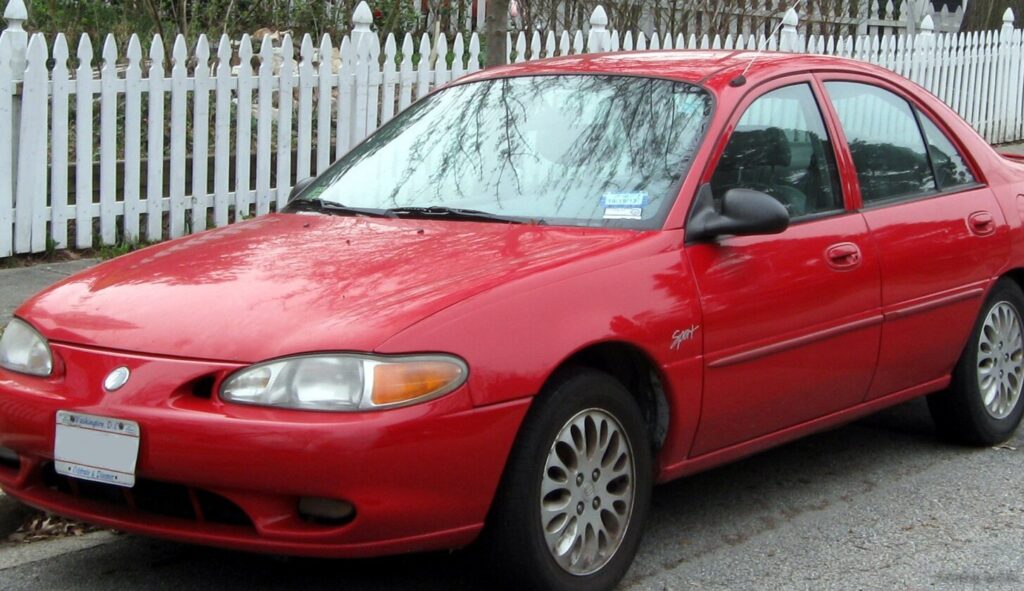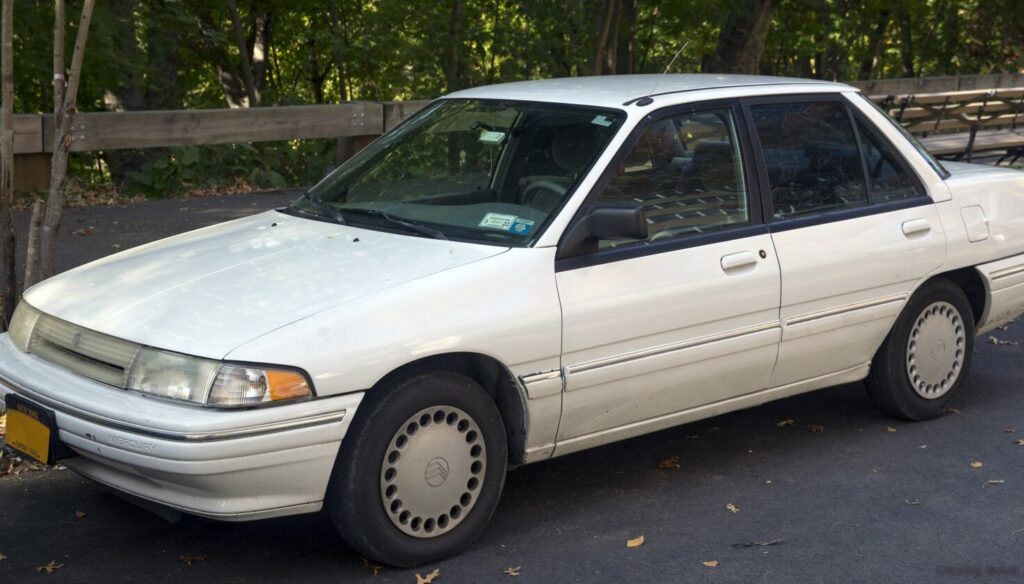
The Mercury Tracer II 1.9 (88 hp) Automatic, produced between 1990 and 1997, represented an entry-level offering within the second generation of the Mercury Tracer. This variant was positioned as an affordable and practical compact sedan, primarily aimed at buyers seeking economical transportation. The Tracer II itself was a rebadged version of the Mazda 323/Protegé, a result of the ongoing partnership between Ford (Mercury’s parent company) and Mazda. It was built on the Mazda BG platform, sharing much of its mechanical underpinnings with its Japanese counterpart. The 1.9L engine and automatic transmission combination was a popular choice for those prioritizing ease of use over outright performance.
Technical Specifications
| Brand | Mercury |
| Model | Tracer |
| Generation | Tracer II |
| Type (Engine) | 1.9 (88 Hp) Automatic |
| Start of production | 1990 |
| End of production | 1997 |
| Powertrain Architecture | Internal Combustion engine |
| Body type | Sedan |
| Seats | 5 |
| Doors | 4 |
| Fuel Type | Petrol (Gasoline) |
| Maximum speed | 170 km/h (105.63 mph) |
| Weight-to-power ratio | 11.7 kg/Hp, 85.4 Hp/tonne |
| Weight-to-torque ratio | 7.1 kg/Nm, 141.7 Nm/tonne |
| Power | 88 Hp @ 4400 rpm |
| Power per litre | 47.3 Hp/l |
| Torque | 146 Nm @ 3800 rpm (107.68 lb.-ft. @ 3800 rpm) |
| Engine layout | Front, Transverse |
| Engine displacement | 1859 cm3 (113.44 cu. in.) |
| Number of cylinders | 4 |
| Engine configuration | Inline |
| Cylinder Bore | 82 mm (3.23 in.) |
| Piston Stroke | 88 mm (3.46 in.) |
| Compression ratio | 9:1 |
| Number of valves per cylinder | 2 |
| Fuel injection system | Multi-port manifold injection |
| Engine aspiration | Naturally aspirated engine |
| Valvetrain | OHC |
| Engine oil capacity | 3.8 l (4.02 US qt | 3.34 UK qt) |
| Coolant | 6 l (6.34 US qt | 5.28 UK qt) |
| Kerb Weight | 1030 kg (2270.76 lbs.) |
| Trunk (boot) space – minimum | 527 l (18.61 cu. ft.) |
| Fuel tank capacity | 50 l (13.21 US gal | 11 UK gal) |
| Length | 4341 mm (170.91 in.) |
| Width | 1695 mm (66.73 in.) |
| Height | 1338 mm (52.68 in.) |
| Wheelbase | 2500 mm (98.43 in.) |
| Front track | 1435 mm (56.5 in.) |
| Rear (Back) track | 1435 mm (56.5 in.) |
| Drivetrain Architecture | The Internal combustion engine (ICE) drives the front wheels of the vehicle. |
| Drive wheel | Front wheel drive |
| Number of gears and type of gearbox | 4 gears, automatic transmission |
| Front suspension | Wishbone |
| Rear suspension | Spring Strut |
| Front brakes | Ventilated discs |
| Rear brakes | Drum |
| Assisting systems | ABS (Anti-lock braking system) |
| Steering type | Steering rack and pinion |
| Power steering | Hydraulic Steering |
| Tires size | 175/70 R13 |
| Wheel rims size | 13 |
Powertrain & Engine Architecture
The heart of the Tracer II 1.9 Automatic was the Mazda-sourced F8E engine, a 1.9-liter inline-four cylinder powerplant. This engine utilized a single overhead camshaft (SOHC) valvetrain with two valves per cylinder. Fuel delivery was managed by a multi-port fuel injection system, contributing to relatively smooth operation and acceptable fuel efficiency for the time. The engine’s 9:1 compression ratio was a typical figure for naturally aspirated engines of this era. The automatic transmission was a four-speed unit, designed for smooth, if not particularly sporty, shifts. It was a conventional hydraulic automatic, lacking the electronic controls found in later transmissions. The engine code for this variant is often associated with Mazda’s internal designations, and specific variations existed depending on the production year.
Driving Characteristics
The 88 horsepower output of the 1.9L engine, coupled with the four-speed automatic transmission, resulted in a driving experience focused on practicality rather than performance. Acceleration was adequate for everyday driving, but overtaking maneuvers required careful planning. The automatic transmission’s gear ratios were tuned for fuel economy and smooth cruising, rather than aggressive acceleration. Compared to the five-speed manual transmission option, the automatic version felt noticeably slower. The automatic also lacked the engine braking capabilities of a manual, which could be a disadvantage on long descents. However, the automatic provided a more relaxed driving experience, particularly in stop-and-go traffic.
Equipment & Trim Levels
The 1.9L Automatic Tracer II typically came with a fairly basic level of equipment. Standard features generally included power steering, an AM/FM radio, cloth upholstery, and manual windows and locks. Air conditioning was often an optional extra, as were power windows and upgraded audio systems. Interior trim was generally functional and durable, prioritizing practicality over luxury. The dashboard layout was straightforward and easy to use, with clearly marked controls. Higher trim levels, if available, might have added features like a sunroof, upgraded sound system, and alloy wheels.
Chassis & Braking
The Tracer II utilized a front-wheel-drive layout with independent front suspension employing wishbone components, and a rear suspension utilizing a spring strut setup. This suspension configuration provided a reasonably comfortable ride, although it wasn’t particularly sporty. Braking duties were handled by ventilated discs at the front and drum brakes at the rear. Anti-lock braking system (ABS) was often included as standard equipment, enhancing safety. The steering system was a rack-and-pinion setup with hydraulic power assistance, providing light and easy steering feel.
Market Reception & Comparison
The Mercury Tracer II 1.9 Automatic was generally well-received as an affordable and reliable compact sedan. Critics praised its fuel efficiency and comfortable ride, but noted its lack of performance. Compared to other trims in the Tracer II lineup, such as those equipped with the manual transmission or potentially a larger engine (though less common in the US market), the 1.9L Automatic was the least sporty option. However, it offered a compelling value proposition for buyers prioritizing practicality and ease of use. It competed with other compact sedans like the Honda Civic, Toyota Corolla, and Nissan Sentra.
Legacy
The Mercury Tracer II, and specifically the 1.9L Automatic variant, has developed a reputation for being a durable and relatively trouble-free vehicle. The Mazda-sourced engine and transmission are known for their reliability, provided they were properly maintained. Today, these cars are relatively rare, but those that remain are often sought after by enthusiasts looking for a simple, affordable, and reliable classic car. Parts availability can be a challenge, but many components are interchangeable with Mazda 323/Protegé parts. The Tracer II 1.9 Automatic represents a snapshot of 1990s automotive engineering, prioritizing practicality and affordability over outright performance.