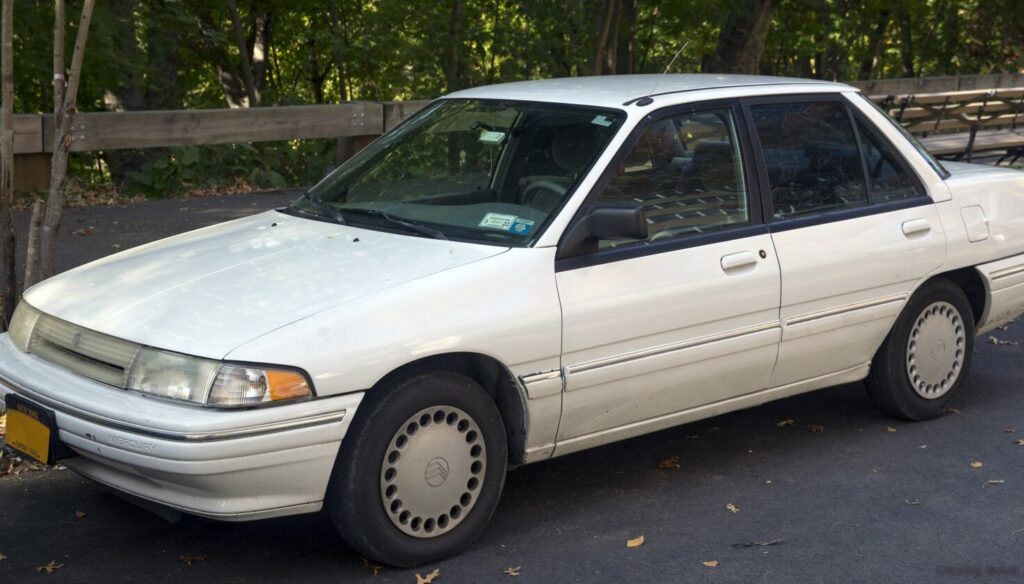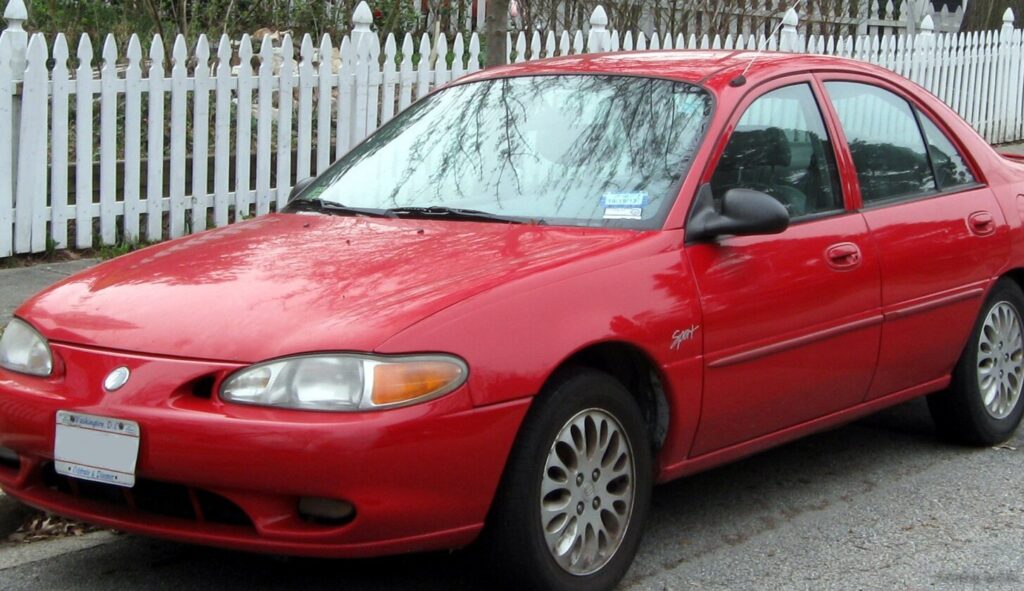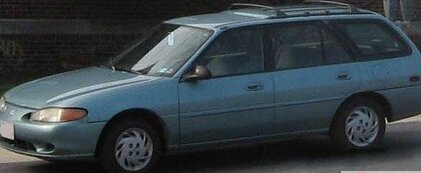
The Mercury Tracer Station Wagon 2.0, producing 111 horsepower, was a practical and affordable offering from the Mercury division of Ford, manufactured between 1997 and 2001. Positioned as a budget-friendly family vehicle, it represented the final iteration of the Tracer nameplate, which had roots in the earlier Mercury Lynx and Ford Escort. This generation, based on the Ford C-platform, aimed to provide a spacious and versatile alternative to increasingly expensive compact wagons. The 2.0-liter engine paired with an automatic transmission was a common configuration, targeting buyers prioritizing ease of use over outright performance. It was sold primarily in the North American market, offering a blend of practicality and value.
Technical Specifications
| Brand | Mercury |
| Model | Tracer |
| Generation | Tracer Station Wagon |
| Type (Engine) | 2.0 (111 Hp) |
| Start of production | 1997 |
| End of production | 2001 |
| Powertrain Architecture | Internal Combustion engine |
| Body type | Station wagon (estate) |
| Seats | 5 |
| Doors | 5 |
| Fuel consumption (urban) | 9.1 l/100 km (25.8 US mpg) |
| Fuel consumption (extra urban) | 6.9 l/100 km (34.1 US mpg) |
| Fuel Type | Petrol (Gasoline) |
| Maximum speed | 175 km/h (108.74 mph) |
| Weight-to-power ratio | 10.3 kg/Hp |
| Weight-to-torque ratio | 6.7 kg/Nm |
| Power | 111 Hp @ 5000 rpm |
| Power per litre | 55.8 Hp/l |
| Torque | 170 Nm @ 3750 rpm (125.39 lb.-ft. @ 3750 rpm) |
| Engine layout | Front, Transverse |
| Engine displacement | 1988 cm3 (121.32 cu. in.) |
| Number of cylinders | 4 |
| Engine configuration | Inline |
| Cylinder Bore | 84.8 mm (3.34 in.) |
| Piston Stroke | 88 mm (3.46 in.) |
| Compression ratio | 9.2:1 |
| Number of valves per cylinder | 2 |
| Fuel injection system | Multi-port manifold injection |
| Engine aspiration | Naturally aspirated engine |
| Valvetrain | OHC |
| Engine oil capacity | 3.8 l (4.02 US qt | 3.34 UK qt) |
| Coolant | 5 l (5.28 US qt | 4.4 UK qt) |
| Kerb Weight | 1145 kg (2524.29 lbs.) |
| Trunk (boot) space – minimum | 865 l (30.55 cu. ft.) |
| Fuel tank capacity | 48 l (12.68 US gal | 10.56 UK gal) |
| Length | 4390 mm (172.83 in.) |
| Width | 1700 mm (66.93 in.) |
| Height | 1370 mm (53.94 in.) |
| Wheelbase | 2500 mm (98.43 in.) |
| Front track | 1440 mm (56.69 in.) |
| Rear (Back) track | 1440 mm (56.69 in.) |
| Drivetrain Architecture | The Internal combustion engine (ICE) drives the front wheels of the vehicle. |
| Drive wheel | Front wheel drive |
| Number of gears and type of gearbox | 4 gears, automatic transmission |
| Front suspension | Wishbone |
| Rear suspension | Coil spring |
| Front brakes | Ventilated discs |
| Rear brakes | Drum |
| Assisting systems | ABS (Anti-lock braking system) |
| Steering type | Steering rack and pinion |
| Power steering | Hydraulic Steering |
| Tires size | 185/65 R14 |
Powertrain & Engine Architecture
The Mercury Tracer 2.0 utilized Ford’s Zetec engine family, specifically the 2.0-liter inline-four cylinder engine. This engine, internally designated as the 2.0L DOHC, featured a cast iron block and aluminum cylinder head. It employed multi-port fuel injection, delivering fuel directly into each intake port for improved efficiency and responsiveness. The engine’s overhead camshaft design (OHC) with two valves per cylinder contributed to its relatively smooth operation. The 111 horsepower output was achieved at 5000 rpm, while peak torque of 125.39 lb.-ft. arrived at 3750 rpm. Paired with this engine was a four-speed automatic transmission, a common choice for buyers seeking convenience. This transmission, while not known for its sportiness, provided smooth shifts and adequate performance for everyday driving. The automatic transmission was geared towards fuel efficiency and comfortable cruising rather than rapid acceleration.
Driving Characteristics
The 2.0-liter automatic Tracer offered a comfortable, if not particularly exciting, driving experience. Acceleration was adequate for merging onto highways and navigating city streets, but it lacked the punch of the higher-output engines available in other models. The automatic transmission’s gear ratios were optimized for fuel economy, resulting in a somewhat leisurely pace. Compared to the five-speed manual transmission option, the automatic version felt noticeably slower, especially during overtaking maneuvers. The suspension, tuned for comfort, absorbed bumps and road imperfections reasonably well, providing a stable ride. Steering was light and easy, making it maneuverable in tight spaces. Overall, the driving experience was geared towards practicality and ease of use, making it a suitable choice for families and commuters.
Equipment & Trim Levels
The Mercury Tracer 2.0 automatic typically came with a standard equipment list that included air conditioning, power steering, an AM/FM radio, and cloth upholstery. Higher trim levels, though not extensively offered on the Tracer, could add features like power windows and locks, a better stereo system, and upgraded interior trim. Safety features included standard anti-lock brakes (ABS), a significant addition for the time. The interior design was functional and straightforward, prioritizing space and usability over luxury. The dashboard layout was simple and easy to navigate, with clearly labeled controls. Optional extras were relatively limited, reflecting the Tracer’s position as an affordable vehicle.
Chassis & Braking
The Tracer’s chassis featured an independent front suspension with MacPherson struts and a twist-beam rear suspension. This setup provided a good balance between ride comfort and handling. The front brakes were ventilated discs, offering adequate stopping power, while the rear brakes were drums, a cost-saving measure common in this class of vehicle. The ABS system helped to prevent wheel lockup during hard braking, enhancing safety. The steering system utilized a rack-and-pinion setup with hydraulic power assist, providing light and responsive steering. The tires were typically 185/65 R14, offering a good compromise between ride comfort and handling.
Market Reception & Comparison
The Mercury Tracer 2.0 automatic received mixed reviews from automotive critics. While praised for its spacious interior, affordability, and fuel efficiency, it was often criticized for its lack of performance and somewhat bland styling. Compared to other wagons in its class, such as the Dodge Caravan or Toyota Corolla Wagon, the Tracer offered a more budget-friendly option, but lacked the refinement and features of some competitors. The 2.0-liter automatic version was generally considered a good choice for buyers prioritizing practicality and ease of use over sporty driving dynamics. Fuel economy was respectable for its time, averaging around 26 mpg in the city and 34 mpg on the highway. Reliability was generally good, although some owners reported minor issues with the automatic transmission.
Legacy
The Mercury Tracer, particularly the 2.0-liter automatic variant, has become a relatively affordable and accessible classic car in the used market. The Zetec engine is known for its durability, and with proper maintenance, can provide many years of reliable service. While not a particularly collectible vehicle, the Tracer remains a popular choice for those seeking a practical and affordable station wagon. Parts availability is generally good, as many components are shared with other Ford and Mercury models. The Tracer represents a bygone era of affordable family vehicles, offering a simple and straightforward driving experience that appeals to a growing number of enthusiasts.