
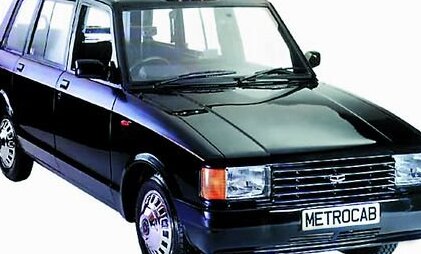
The Metrocab Taxi TTT 2.4 TD (90 hp) was a commercially focused vehicle produced between 2001 and 2006, primarily for the United Kingdom taxi market. Representing a significant evolution of the traditional London taxi, the TTT aimed to blend classic design cues with modern mechanical components. It was positioned as a durable and practical workhorse, offering a balance between passenger comfort and operational efficiency. This variant, powered by a 2.4-liter turbocharged diesel engine producing 90 horsepower, occupied a middle ground in the Metrocab lineup, offering a more economical option compared to higher-powered versions while still providing adequate performance for urban driving.
Technical Specifications
| Brand | Metrocab |
| Model | Taxi |
| Generation | Taxi TTT |
| Type (Engine) | 2.4 TD (90 Hp) |
| Start of production | 2001 |
| End of production | 2006 |
| Powertrain Architecture | Internal Combustion engine |
| Body type | Hatchback |
| Seats | 5 |
| Doors | 4 |
| Fuel consumption (urban) | 10 l/100 km (23.5 US mpg) |
| Fuel consumption (extra urban) | 8 l/100 km (29.4 US mpg) |
| Fuel Type | Diesel |
| Maximum speed | 125 km/h (77.67 mph) |
| Weight-to-power ratio | 21.7 kg/Hp |
| Weight-to-torque ratio | 9 kg/Nm |
| Power | 90 Hp @ 3500 rpm |
| Power per litre | 36.8 Hp/l |
| Torque | 218 Nm @ 2250 rpm (160.79 lb.-ft. @ 2250 rpm) |
| Engine layout | Front, Transverse |
| Engine displacement | 2446 cm3 (149.26 cu. in.) |
| Number of cylinders | 4 |
| Engine configuration | Inline |
| Cylinder Bore | 92 mm (3.62 in.) |
| Piston Stroke | 92 mm (3.62 in.) |
| Compression ratio | 22.2:1 |
| Number of valves per cylinder | 2 |
| Fuel injection system | Precombustion chamber injection |
| Engine aspiration | Turbocharger, Intercooler |
| Kerb Weight | 1955 kg (4310.04 lbs.) |
| Max. weight | 2515 kg (5544.63 lbs.) |
| Max load | 560 kg (1234.59 lbs.) |
| Fuel tank capacity | 64 l (16.91 US gal) |
| Length | 4505 mm (177.36 in.) |
| Width | 1770 mm (69.69 in.) |
| Height | 1755 mm (69.09 in.) |
| Wheelbase | 2900 mm (114.17 in.) |
| Front track | 1420 mm (55.91 in.) |
| Rear track | 1470 mm (57.87 in.) |
| Minimum turning circle | 8.5 m (27.89 ft.) |
| Drivetrain Architecture | Rear wheel drive |
| Drive wheel | Rear wheel drive |
| Number of gears | 5 gears, manual transmission |
| Front suspension | Coil spring |
| Rear suspension | Leaf spring |
| Front brakes | Ventilated discs |
| Rear brakes | Disc |
| Steering type | Steering rack and pinion |
| Power steering | Hydraulic Steering |
| Tires size | 175/80 R16 |
| Wheel rims size | 5J x 16 |
Powertrain & Engine Architecture
The heart of the Metrocab TTT 2.4 TD was a 2.4-liter inline-four cylinder diesel engine. This engine, often referred to by its internal codes, utilized a precombustion chamber injection system. This system, common in European diesels of the era, involved injecting fuel into a small pre-chamber within the cylinder head, which then ignited the main charge. This design promoted more complete combustion and reduced engine noise. A turbocharger with an intercooler was employed to boost power output to 90 hp at 3500 rpm and 218 Nm (160.79 lb-ft) of torque at 2250 rpm. The engine was transversely mounted in the front of the vehicle. The TTT utilized a 5-speed manual transmission, delivering power to the rear wheels. This rear-wheel-drive configuration was a deliberate choice, maintaining a traditional feel and providing good weight distribution for handling.
Driving Characteristics
The 90 hp 2.4 TD engine, coupled with the 5-speed manual transmission, provided adequate, though not exhilarating, performance for urban taxi duties. Acceleration was modest, prioritizing fuel economy and durability over outright speed. The engine’s torque peak at 2250 rpm meant that usable power was available from relatively low engine speeds, making it well-suited to stop-and-go traffic. The gear ratios were chosen to maximize fuel efficiency and provide smooth, predictable shifts. Compared to potential higher-output versions of the Metrocab, this variant offered a more relaxed driving experience, with a focus on minimizing running costs. The rear-wheel-drive layout contributed to a stable and predictable handling balance, although it wasn’t particularly sporty.
Equipment & Trim Levels
The Metrocab TTT 2.4 TD was primarily designed for commercial use, so its trim level was functional rather than luxurious. Standard equipment typically included basic cloth upholstery, a simple dashboard layout with essential gauges, and power steering. Air conditioning was often an optional extra, as were features like electric windows. The interior was designed for durability and ease of cleaning, reflecting its intended use as a taxi. Passenger comfort was prioritized with a spacious rear cabin and comfortable seating. The focus was on providing a reliable and practical vehicle for professional drivers.
Chassis & Braking
The Metrocab TTT featured a robust chassis designed to withstand the rigors of continuous use. The front suspension utilized coil springs, while the rear suspension employed leaf springs – a traditional design choice that offered durability and load-carrying capacity. The braking system consisted of ventilated discs at the front and solid discs at the rear, providing adequate stopping power for the vehicle’s weight. Hydraulic power steering was standard, making maneuvering in tight urban environments easier. The vehicle rode on 16-inch wheels with 175/80 R16 tires.
Market Reception & Comparison
The Metrocab TTT 2.4 TD was generally well-received by taxi operators in the UK. Critics praised its durability, spacious interior, and relatively low running costs. The 90 hp diesel engine offered a good balance between performance and fuel economy, making it a practical choice for high-mileage applications. Compared to other trims in the Metrocab lineup, this variant represented an entry-level option, appealing to operators who prioritized affordability over outright performance. It was often compared to other commercial vehicles used as taxis, such as the Ford E-Series, and generally held its own in terms of reliability and practicality.
Legacy
The Metrocab TTT 2.4 TD, while no longer in production, remains a familiar sight on the streets of London and other UK cities. The 2.4-liter diesel engine, while not known for being particularly sophisticated, proved to be relatively reliable and durable, with many examples still in service today. The vehicle’s robust construction and simple mechanical design contribute to its longevity. In the used car market, these Metrocabs are often sought after by enthusiasts and collectors who appreciate their unique character and historical significance. The TTT represents a transitional period in the evolution of the London taxi, bridging the gap between traditional designs and more modern vehicles.

