
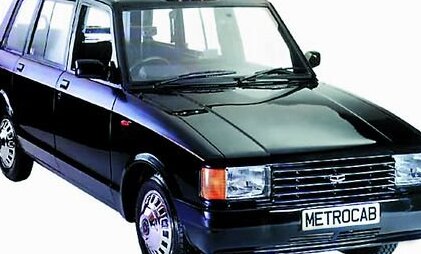
The Metrocab Taxi TTT 2.4 TD (90 hp) Automatic, produced between 2001 and 2006, represents a significant iteration in the evolution of London’s iconic black cab. Built by the Metrocab company, this variant was specifically designed for the demanding requirements of professional taxi operation. It sat within the TTT (Third Taxi Type) generation, built on a dedicated chassis designed for durability and passenger comfort. This model aimed to balance fuel efficiency with the power needed for navigating congested city streets, offering a diesel-powered alternative to earlier petrol-fueled versions. The 2.4 TD Automatic was positioned as a mid-range offering, providing a smoother driving experience than the manual transmission options while remaining more affordable than potential future, higher-specification models.
Technical Specifications
| Brand | Metrocab |
| Model | Taxi |
| Generation | Taxi TTT |
| Type (Engine) | 2.4 TD (90 Hp) Automatic |
| Start of production | 2001 |
| End of production | 2006 |
| Powertrain Architecture | Internal Combustion engine |
| Body type | Hatchback |
| Seats | 5 |
| Doors | 4 |
| Fuel Type | Diesel |
| Maximum speed | 125 km/h (77.67 mph) |
| Weight-to-power ratio | 21.7 kg/Hp, 46 Hp/tonne |
| Weight-to-torque ratio | 9 kg/Nm, 111.5 Nm/tonne |
| Power | 90 Hp @ 3500 rpm |
| Power per litre | 36.8 Hp/l |
| Torque | 218 Nm @ 2250 rpm (160.79 lb.-ft. @ 2250 rpm) |
| Engine layout | Front, Transverse |
| Engine displacement | 2446 cm3 (149.26 cu. in.) |
| Number of cylinders | 4 |
| Engine configuration | Inline |
| Cylinder Bore | 92 mm (3.62 in.) |
| Piston Stroke | 92 mm (3.62 in.) |
| Compression ratio | 22.2:1 |
| Number of valves per cylinder | 2 |
| Fuel injection system | Precombustion chamber injection |
| Engine aspiration | Turbocharger, Intercooler |
| Kerb Weight | 1955 kg (4310.04 lbs.) |
| Max. weight | 2515 kg (5544.63 lbs.) |
| Max load | 560 kg (1234.59 lbs.) |
| Fuel tank capacity | 64 l (16.91 US gal | 14.08 UK gal) |
| Length | 4505 mm (177.36 in.) |
| Width | 1770 mm (69.69 in.) |
| Height | 1755 mm (69.09 in.) |
| Wheelbase | 2900 mm (114.17 in.) |
| Front track | 1420 mm (55.91 in.) |
| Rear (Back) track | 1470 mm (57.87 in.) |
| Minimum turning circle | 8.5 m (27.89 ft.) |
| Drivetrain Architecture | The Internal combustion engine (ICE) drives the rear wheels of the vehicle. |
| Drive wheel | Rear wheel drive |
| Number of gears and type of gearbox | 4 gears, automatic transmission |
| Front suspension | Coil spring |
| Rear suspension | Leaf spring |
| Front brakes | Ventilated discs |
| Rear brakes | Disc |
| Steering type | Steering rack and pinion |
| Power steering | Hydraulic Steering |
| Tires size | 175/80 R16 |
| Wheel rims size | 5J x 16 |
Powertrain & Engine Architecture
The heart of the Metrocab TTT 2.4 TD Automatic is a 2.4-liter inline-four cylinder diesel engine. This engine, often identified by its engine codes, utilized a precombustion chamber injection system. This system, common in European diesels of the era, involved injecting fuel into a small pre-chamber within the cylinder head, which then ignited the main combustion chamber. This design aided in smoother combustion and reduced engine noise. A turbocharger with an intercooler was employed to boost power output, bringing the engine to 90 horsepower at 3500 rpm and 218 Nm (160.79 lb.-ft.) of torque at 2250 rpm. The automatic transmission was a four-speed unit, chosen for its ease of use in stop-and-go city traffic. While not known for blistering acceleration, the transmission was geared for efficient cruising and provided a comfortable driving experience for both drivers and passengers.
Driving Characteristics
The 90 hp output and four-speed automatic transmission resulted in a driving experience focused on practicality rather than performance. Acceleration was modest, but adequate for merging into traffic and maintaining speed on urban roads. The torque curve, peaking at 2250 rpm, provided reasonable pulling power from low speeds, which was beneficial for navigating hills and carrying passengers. Compared to the manual transmission versions, the automatic offered a smoother, less demanding driving experience, particularly in congested conditions. However, it did sacrifice some fuel economy and responsiveness. The higher-output versions, if available, would have offered quicker acceleration and more effortless highway cruising, but at the expense of fuel efficiency and potentially increased maintenance costs.
Equipment & Trim Levels
The Metrocab TTT 2.4 TD Automatic was primarily focused on functionality and durability. Standard equipment typically included basic features such as power steering, central locking, and a basic audio system. The interior was designed for ease of cleaning and longevity, with durable upholstery and hard-wearing plastics. Air conditioning was often an optional extra, as were electric windows. The rear passenger compartment prioritized space and comfort, with ample legroom and headroom. The dashboard layout was straightforward and functional, with clearly labeled controls. Trim levels were relatively limited, with most variations stemming from optional extras rather than distinct packages.
Chassis & Braking
The Metrocab TTT featured a robust chassis designed to withstand the rigors of continuous taxi operation. The front suspension utilized coil springs, while the rear suspension employed a traditional leaf spring setup. This combination provided a comfortable ride, even on uneven road surfaces. The braking system consisted of ventilated discs on the front wheels and solid discs on the rear. Hydraulic power steering was standard, making maneuvering in tight city streets easier. The tires were typically 175/80 R16, chosen for their durability and ride comfort.
Market Reception & Comparison
The Metrocab TTT 2.4 TD Automatic was generally well-received by taxi operators in London and other cities. Critics praised its durability, spacious interior, and relatively fuel-efficient diesel engine. The automatic transmission was a popular choice for drivers who spent long hours in congested traffic. Compared to other vehicles used as taxis, such as the Ford Mondeo or Vauxhall Vectra, the Metrocab offered a more purpose-built design with a focus on passenger comfort and ease of access. However, it was also more expensive to purchase and maintain. Fuel economy was competitive with other diesel-powered vehicles of the time, but the automatic transmission did result in slightly lower figures compared to the manual versions.
Legacy
The Metrocab TTT 2.4 TD Automatic remains a familiar sight on the streets of London and other cities. While newer models have since replaced it, the TTT generation established the Metrocab as a reliable and iconic taxi. The 2.4 TD engine, while not particularly powerful, proved to be durable and relatively easy to maintain. Today, well-maintained examples of this model are sought after by enthusiasts and collectors. The powertrain, while aging, is generally considered reliable if properly serviced. The Metrocab TTT 2.4 TD Automatic represents a unique chapter in the history of the London black cab, blending practicality, durability, and a touch of British automotive heritage.

