
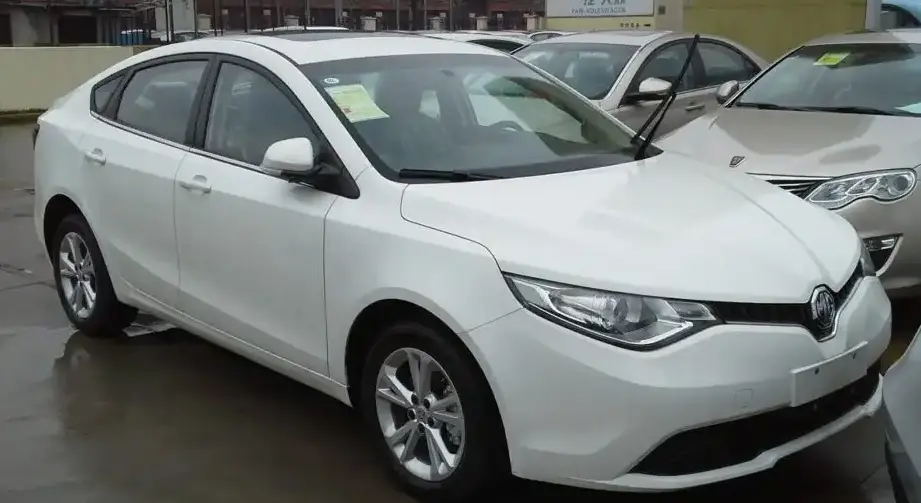
The MG GT I 1.4T (156 Hp) DCT represents a significant entry for the revived MG Motor brand, primarily targeted at the Chinese domestic market during its 2014-2019 production run. Positioned as a compact sedan, it aimed to offer a blend of modern styling, reasonable performance, and advanced technology at a competitive price point. This variant, equipped with a 1.4-liter turbocharged engine and a seven-speed dual-clutch transmission (DCT), occupied a mid-range position within the GT lineup, offering a step up from the naturally aspirated base models while remaining more accessible than potential future, higher-performance trims. The GT I itself was a key model in MG’s strategy to re-establish its presence as a mainstream automotive manufacturer.
Technical Specifications
| Brand | MG |
| Model | GT |
| Generation | GT I |
| Type (Engine) | 1.4T (156 Hp) DCT |
| Start of production | November, 2014 |
| End of production | May, 2019 |
| Powertrain Architecture | Internal Combustion engine |
| Body type | Sedan |
| Seats | 5 |
| Doors | 4 |
| Fuel consumption (combined) | 5.7 l/100 km (41.3 US mpg, 49.6 UK mpg, 17.5 km/l) |
| Fuel Type | Petrol (Gasoline) |
| Acceleration 0 – 100 km/h | 9.5 sec |
| Acceleration 0 – 62 mph | 9.5 sec |
| Acceleration 0 – 60 mph | 9 sec |
| Maximum speed | 200 km/h (124.27 mph) |
| Emission standard | China V |
| Weight-to-power ratio | 8.6 kg/Hp, 116.4 Hp/tonne |
| Weight-to-torque ratio | 5.7 kg/Nm, 175.4 Nm/tonne |
| Power | 156 Hp @ 5600 rpm |
| Power per litre | 111.5 Hp/l |
| Torque | 235 Nm @ 1600-4000 rpm (173.33 lb.-ft. @ 1600-4000 rpm) |
| Engine layout | Front, Transverse |
| Engine displacement | 1399 cm3 (85.37 cu. in.) |
| Number of cylinders | 4 |
| Engine configuration | Inline |
| Number of valves per cylinder | 4 |
| Fuel injection system | Direct injection |
| Engine aspiration | Turbocharger, Intercooler |
| Kerb Weight | 1340 kg (2954.19 lbs.) |
| Trunk (boot) space – minimum | 485 l (17.13 cu. ft.) |
| Fuel tank capacity | 55 l (14.53 US gal | 12.1 UK gal) |
| Length | 4612 mm (181.57 in.) |
| Width | 1804 mm (71.02 in.) |
| Height | 1488 mm (58.58 in.) |
| Wheelbase | 2650 mm (104.33 in.) |
| Drivetrain Architecture | The Internal combustion engine (ICE) drives the front wheels of the vehicle. |
| Drive wheel | Front wheel drive |
| Number of gears and type of gearbox | 7 gears, automatic transmission DCT |
| Front suspension | Independent type McPherson |
| Rear suspension | Torsion |
| Front brakes | Ventilated discs |
| Rear brakes | Disc |
| Assisting systems | ABS (Anti-lock braking system) |
| Steering type | Steering rack and pinion |
| Power steering | Electric Steering |
| Tires size | 205/55 R16 |
| Wheel rims size | 16 |
Powertrain & Engine Architecture
The heart of the MG GT I 1.4T is the 1.4-liter, inline-four cylinder engine, designated with various internal codes depending on the specific production year. This engine utilizes direct fuel injection and is coupled with a single scroll turbocharger and intercooler to boost power output. The direct injection system allows for precise fuel delivery, improving both efficiency and performance. The engine’s valvetrain features four valves per cylinder, contributing to improved breathing and higher RPM capability. The seven-speed dual-clutch transmission (DCT) was a key feature, offering quicker and smoother gear changes compared to a traditional automatic transmission. The DCT’s programming prioritized fuel efficiency and comfort over outright performance, with shift points calibrated for everyday driving conditions. The engine produces a peak of 156 horsepower at 5600 rpm and 235 Nm (173 lb-ft) of torque between 1600 and 4000 rpm.
Driving Characteristics
The 1.4T DCT variant of the MG GT I delivers a comfortable and generally responsive driving experience. Acceleration from 0-60 mph takes approximately 9 seconds, which is adequate for typical urban and highway driving. The DCT transmission provides relatively quick shifts, but it isn’t as aggressively tuned as those found in performance-oriented vehicles. The turbocharger does introduce a slight amount of turbo lag at lower RPMs, but the torque band is broad enough to provide usable power throughout most of the rev range. Compared to the base 1.5L naturally aspirated engine, the 1.4T offers a noticeable improvement in acceleration and overall responsiveness. However, it doesn’t match the performance of potential higher-output variants that may have been considered during the GT’s development. The suspension is tuned for comfort, absorbing bumps and imperfections in the road reasonably well, but it doesn’t offer particularly sporty handling characteristics.
Equipment & Trim Levels
The MG GT I 1.4T typically came equipped with a reasonable level of standard features. These included air conditioning, power windows and mirrors, a basic audio system with USB connectivity, and ABS brakes. Higher trim levels within the 1.4T range added features such as alloy wheels, a more advanced infotainment system with a touchscreen display, rear parking sensors, and automatic climate control. Interior upholstery was generally cloth, with leather options available as an upgrade. Safety features were relatively basic, typically including dual front airbags and ABS, but higher trims might have included additional airbags and stability control systems. Optional extras often included a sunroof, upgraded audio systems, and various cosmetic enhancements.
Chassis & Braking
The MG GT I utilizes a front-wheel-drive layout with an independent McPherson strut suspension at the front and a torsion beam suspension at the rear. This suspension setup is a common configuration for compact sedans, prioritizing cost-effectiveness and ride comfort. The front brakes are ventilated discs, providing adequate stopping power, while the rear brakes are solid discs. The steering system is a rack and pinion type with electric power assistance. Tire size is typically 205/55 R16, mounted on 16-inch alloy wheels. The chassis is designed to provide a balance between rigidity and weight, contributing to a stable and predictable driving experience.
Market Reception & Comparison
The MG GT I 1.4T was generally well-received in the Chinese market, offering a compelling value proposition for buyers seeking a modern and well-equipped compact sedan. Critics praised its styling, interior space, and the responsiveness of the 1.4T engine. However, some reviewers noted that the interior materials weren’t as premium as those found in some competing models. Compared to other trims in the GT lineup, the 1.4T offered a noticeable performance advantage over the base 1.5L engine, while remaining more affordable than any potential higher-performance variants. Fuel economy was competitive, averaging around 5.7 l/100km (41.3 US mpg), making it an efficient choice for daily commuting.
Legacy
The MG GT I 1.4T played a crucial role in MG’s revitalization efforts, establishing the brand as a viable competitor in the Chinese automotive market. The 1.4T engine and DCT transmission proved to be relatively reliable, with few widespread mechanical issues reported. In the used car market, these models continue to offer good value for money, particularly for buyers seeking an affordable and well-equipped compact sedan. While not a groundbreaking vehicle in terms of technology or performance, the MG GT I 1.4T represents a significant step forward for the MG brand, demonstrating its commitment to producing modern and competitive vehicles.

