
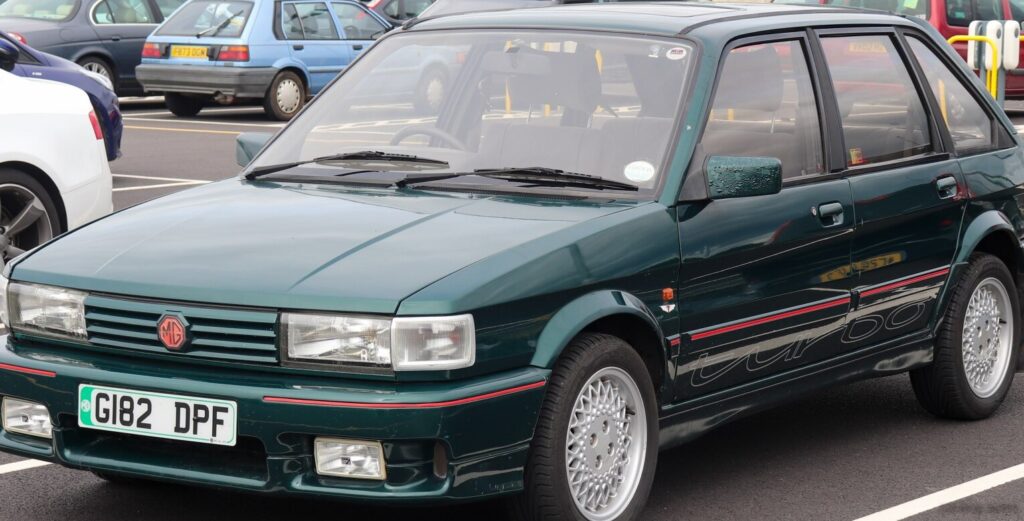
The MG Maestro 1600, produced between 1983 and 1984, represented a significant attempt by British Leyland (later Austin Rover Group) to modernize and compete in the increasingly competitive European small family car market. Positioned as a mid-range offering within the Maestro lineup, the 1600 model aimed to provide a balance of performance and affordability. It was a key component of the ADO84 project, a comprehensive effort to replace the aging Austin Allegro and Morris Ital. The Maestro, and specifically the 1600 variant, was intended to showcase British engineering and design, though its production was often hampered by quality control issues and industrial unrest common to the era. It utilized a front-wheel-drive layout, a relatively modern feature for British cars at the time, and incorporated a hatchback body style for practicality.
Technical Specifications
| Brand | MG |
| Model | Maestro |
| Generation | Maestro |
| Type (Engine) | 1600 (104 Hp) |
| Start of Production | 1983 |
| End of Production | 1984 |
| Powertrain Architecture | Internal Combustion Engine |
| Body Type | Hatchback |
| Fuel Type | Petrol (Gasoline) |
| Power | 104 Hp |
| Engine Aspiration | Naturally Aspirated |
Powertrain & Engine Architecture
The MG Maestro 1600 was powered by the O-Series engine, a 1.6-liter (1598cc) inline-four cylinder petrol engine. This engine, designated as the O16, was a significant departure from the older, pushrod designs previously used by British Leyland. It featured an overhead camshaft (OHC) configuration, a five-bearing crankshaft for improved durability, and a relatively modern electronic ignition system. The engine produced 104 horsepower at 5500 rpm and 107 lb-ft of torque at 3500 rpm. Fuel delivery was managed by a single Zenith-Stromberg carburetor, a somewhat dated technology compared to the fuel injection systems becoming increasingly common in other European cars. The Maestro 1600 was typically paired with a four-speed manual gearbox, although a three-speed automatic transmission was offered as an option. The automatic transmission, a Borg-Warner unit, was known for its smooth operation but contributed to slightly reduced fuel economy and acceleration compared to the manual version. The engine block was constructed from cast iron, while the cylinder head was made of aluminum alloy.
Driving Characteristics
The MG Maestro 1600 offered a noticeable step up in performance compared to the lower-spec models in the Maestro range, such as the 1.3L. With 104 horsepower, it provided adequate acceleration for everyday driving, though it wasn’t considered particularly sporty. The 0-60 mph time was around 10.5 seconds, which was competitive with other cars in its class at the time, but not exceptional. The four-speed manual gearbox offered precise shifts, while the optional automatic transmission provided a more relaxed driving experience. The front-wheel-drive layout contributed to predictable handling, although the Maestro’s suspension – consisting of MacPherson struts at the front and a twist-beam axle at the rear – was tuned more for comfort than outright handling prowess. The steering was power-assisted, making it light and easy to maneuver, particularly at low speeds. The automatic transmission, while convenient, did detract from the overall responsiveness of the car, resulting in slower acceleration and a less engaging driving experience. The gear ratios were optimized for fuel efficiency rather than outright performance.
Equipment & Trim Levels
The MG Maestro 1600 occupied a mid-range position in the Maestro lineup, offering a more comprehensive level of equipment than the base models. Standard features included reclining front seats, a heated rear window, and a basic stereo system. The interior trim was typically cloth upholstery, available in a range of colors. The dashboard featured a straightforward layout with analog gauges for speed, fuel level, coolant temperature, and battery voltage. Optional extras included central locking, electric front windows, and a more sophisticated stereo system. The MG variant also featured some unique styling cues, such as a distinctive grille and badging, to differentiate it from the Austin and Rover-branded models. The interior plastics, while durable, were generally considered to be of lower quality compared to those found in German or Japanese cars of the same era.
Chassis & Braking
The MG Maestro 1600 utilized a monocoque chassis construction, providing a good balance of strength and weight. The front suspension consisted of MacPherson struts with an anti-roll bar, while the rear suspension employed a twist-beam axle. Braking was provided by disc brakes at the front and drum brakes at the rear. The braking system was generally adequate for everyday driving, but lacked the stopping power of cars equipped with all-round disc brakes. The steering was rack and pinion, providing precise and responsive steering feel. The Maestro’s tires were typically 175/70 R14, offering a good compromise between comfort and grip. The suspension setup was tuned for ride comfort, resulting in a relatively soft and compliant ride quality, but at the expense of sharp handling.
Market Reception & Comparison
The MG Maestro 1600 received mixed reviews from automotive critics. While the engine was praised for its smoothness and power, the car was often criticized for its build quality and perceived lack of refinement. Compared to its rivals, such as the Ford Escort and Vauxhall Astra, the Maestro was often seen as being less polished and reliable. The automatic transmission version, while offering convenience, was generally considered to be slower and less fuel-efficient than the manual version. Fuel economy averaged around 30-35 mpg in mixed driving conditions. The Maestro 1600 was positioned as a more affordable alternative to the higher-spec MG models, such as the MG Maestro 2.0, but it lacked the performance and prestige of its more expensive sibling. The 1.3L Maestro was a more budget-friendly option, while the 2.0L offered significantly more power.
Legacy
The MG Maestro 1600, despite its relatively short production run, remains a significant car in British automotive history. It represented a bold attempt to modernize British Leyland’s product lineup, but ultimately fell short of expectations due to quality control issues and a lack of investment. The O-Series engine proved to be a durable and reliable unit, and continued to be used in other Rover Group vehicles for many years. Today, the MG Maestro 1600 is a relatively rare car, and well-maintained examples are sought after by collectors and enthusiasts. The automatic transmission versions are less common than the manual versions. While not known for exceptional reliability, the Maestro 1600, when properly maintained, can provide years of enjoyable motoring. Its legacy lies in its attempt to bridge the gap between traditional British car design and the demands of the modern automotive market.
