
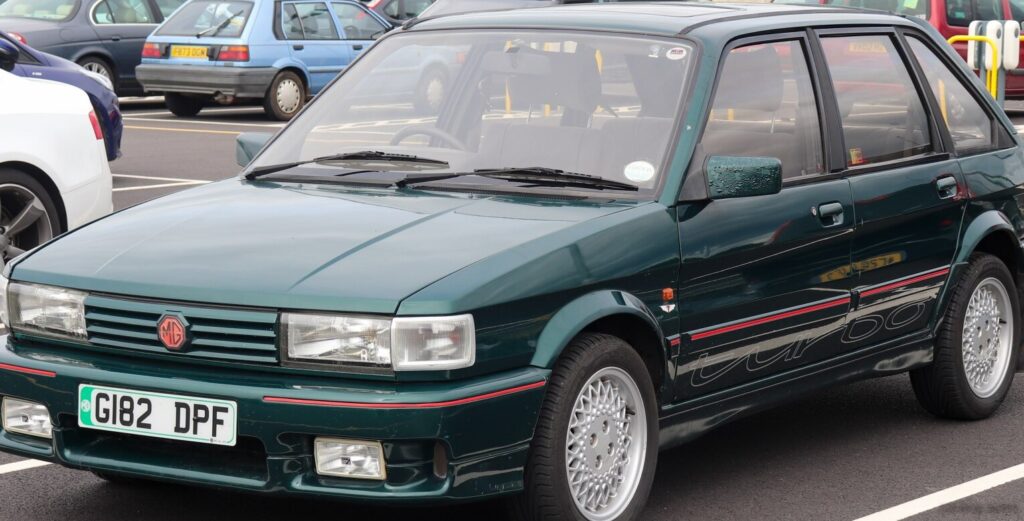
The MG Maestro 2.0 EFi, produced between 1984 and 1990, represented a significant attempt by British Leyland (later Austin Rover Group) to modernize its offerings in the face of increasing competition from Japanese and European manufacturers. Positioned as a mid-range to upper-mid-range variant within the Maestro lineup, the 2.0 EFi aimed to provide a more refined and powerful alternative to the base models, while remaining more accessible than the V6 option. It was a key part of the company’s strategy to offer a contemporary hatchback that could appeal to a broader customer base. The Maestro itself was built on the Austin Rover Group’s new platform, intended to underpin a range of models and streamline production. The 2.0 EFi was a crucial component in establishing the Maestro as a viable competitor in the family car segment.
Technical Specifications
| Brand | MG |
| Model | Maestro |
| Generation | Maestro |
| Type (Engine) | 2.0 EFi (117 Hp) |
| Start of production | 1984 |
| End of production | 1990 |
| Powertrain Architecture | Internal Combustion engine |
| Body type | Hatchback |
| Fuel Type | Petrol (Gasoline) |
| Power | 117 Hp |
| Engine aspiration | Naturally aspirated engine |
Powertrain & Engine Architecture
The heart of the MG Maestro 2.0 EFi was the M-Series engine, specifically the 2.0-liter (1994cc) version. This engine was a significant departure from the older, pushrod designs previously used by British Leyland. It featured a single overhead camshaft (SOHC) design with two valves per cylinder. The ‘EFi’ designation indicates the use of electronic fuel injection, a Bosch L-Jetronic system, which was a relatively advanced feature for a car in this class at the time. This system improved fuel efficiency and reduced emissions compared to earlier carbureted engines. The engine produced 117 horsepower at 5400 rpm and 125 lb-ft of torque at 3500 rpm. The engine block was constructed from cast iron, while the cylinder head was made of aluminum alloy. The Maestro 2.0 EFi was typically paired with a five-speed manual transmission, although a three-speed automatic transmission was also available, albeit less common. The automatic transmission, while offering convenience, noticeably impacted the car’s acceleration and fuel economy.
Driving Characteristics
The MG Maestro 2.0 EFi offered a noticeable step up in performance compared to the lower-powered versions of the Maestro. With 117 hp, it provided reasonably brisk acceleration, making it suitable for both urban driving and longer journeys. The five-speed manual transmission allowed drivers to effectively utilize the engine’s power band, while the automatic, though smoother, felt somewhat sluggish. The gear ratios were fairly well-spaced, providing adequate acceleration in each gear. Handling was generally considered competent for a car of its era, although it wasn’t particularly sporty. The suspension, consisting of MacPherson struts at the front and a twist-beam axle at the rear, provided a comfortable ride, but body roll was noticeable during cornering. Compared to the MG Maestro 1.6, the 2.0 EFi offered a more substantial power increase, resulting in quicker acceleration and improved cruising ability. However, the 2.0 EFi didn’t quite match the performance of the V6-powered Maestro, which offered significantly more power but at a higher price point.
Equipment & Trim Levels
The MG Maestro 2.0 EFi was generally well-equipped for its time, reflecting its position as a mid-to-upper range model. Standard features typically included central locking, electric front windows, and a basic stereo system. Interior upholstery was usually cloth, with options for upgraded materials. The dashboard featured a straightforward layout with clear instrumentation. Optional extras included a sunroof, alloy wheels, and upgraded sound systems. The MG trim level, as opposed to the Austin or Rover versions, generally included some additional cosmetic enhancements, such as unique badging and interior trim details. The seats were designed for comfort, offering reasonable support for longer journeys. The overall interior design was functional rather than luxurious, but it was considered reasonably well-appointed for a family hatchback of the 1980s.
Chassis & Braking
The MG Maestro 2.0 EFi utilized a monocoque chassis construction, providing a reasonable level of structural rigidity. The front suspension employed MacPherson struts with an anti-roll bar, while the rear suspension featured a twist-beam axle. Braking was typically accomplished with disc brakes at the front and drum brakes at the rear. The braking system was adequate for normal driving conditions, but it lacked the stopping power of more modern systems. Steering was rack and pinion, providing reasonably precise control. The tires were typically 175/70 R14, offering a good balance between grip and ride comfort. The suspension setup was tuned for comfort, prioritizing a smooth ride over sporty handling. The chassis and braking systems were generally reliable, but maintenance was required to ensure optimal performance.
Market Reception & Comparison
The MG Maestro 2.0 EFi received mixed reviews from automotive critics. While the engine was praised for its performance and refinement, the car as a whole was often criticized for its build quality and somewhat dated design. Compared to rivals such as the Ford Escort and Vauxhall Astra, the Maestro was often seen as less polished. However, the 2.0 EFi offered a compelling combination of performance and value, particularly for those seeking a more powerful and refined hatchback. Fuel economy was reasonable for the time, averaging around 28-32 mpg in mixed driving conditions. Reliability was a concern, as with many British Leyland/Austin Rover products of the era. The 2.0 EFi was generally more reliable than the V6 version, which was prone to overheating issues, but it still required regular maintenance to prevent problems. The automatic transmission versions tended to suffer from lower fuel economy and reduced performance compared to the manual models.
Legacy
The MG Maestro 2.0 EFi, while not a resounding commercial success, remains a significant vehicle in British automotive history. It represented a genuine attempt to modernize British Leyland’s offerings and compete with foreign rivals. Today, the Maestro 2.0 EFi is a relatively rare sight on the roads, and well-maintained examples are becoming increasingly collectible. The M-Series engine, while not without its flaws, was a durable and capable unit that powered a range of Austin Rover vehicles. The car’s legacy is somewhat tarnished by the reputation for unreliability that plagued British Leyland, but it is remembered fondly by many as a competent and reasonably enjoyable family hatchback. Parts availability can be challenging, but a dedicated community of enthusiasts continues to support the preservation of these vehicles. The 2.0 EFi, in particular, is valued for its improved performance and refinement compared to the lower-powered models.
