
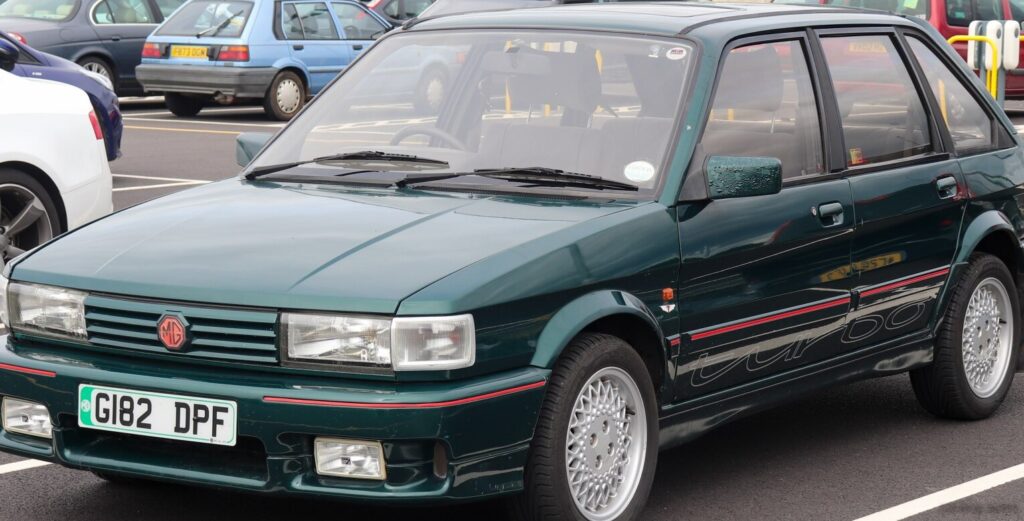
The MG Maestro 2.0 Turbo, produced between 1988 and 1990, represented a late and ambitious attempt by British Leyland (later Rover Group) to modernize and inject performance into its aging hatchback lineup. Positioned as the flagship variant of the Maestro range, it aimed to compete with hotter hatches from European manufacturers like Volkswagen and Ford. The Maestro itself was a product of the LC8 project, intended as a unified platform for several new models across the BL portfolio, ultimately resulting in the Austin Montego as well. The 2.0 Turbo was a relatively short-lived model, reflecting the financial difficulties and restructuring within Rover Group during that period, but it remains a notable example of 1980s British performance car engineering.
Technical Specifications
| Brand | MG |
| Model | Maestro |
| Generation | Maestro |
| Type (Engine) | 2.0 Turbo (152 Hp) |
| Start of production | 1988 |
| End of production | 1990 |
| Powertrain Architecture | Internal Combustion engine |
| Body type | Hatchback |
| Fuel Type | Petrol (Gasoline) |
| Power | 152 Hp |
| Engine aspiration | Turbocharger |
Powertrain & Engine Architecture
The heart of the MG Maestro 2.0 Turbo was the M-series engine, specifically the 2.0-liter (1994cc) version designated as the 200TC. This engine was based on the O-series engine block, but featured a redesigned cylinder head with eight valves (two per cylinder) and a Garrett T25 turbocharger. The turbocharger provided approximately 8 psi of boost, significantly increasing power output compared to the naturally aspirated versions of the M-series. Fuel delivery was handled by Bosch mechanical fuel injection, a system that, while effective, was becoming somewhat dated by the late 1980s. The engine management system was relatively basic, lacking the sophistication of electronic engine control units found in contemporary rivals. The engine produced 152 horsepower at 5800 rpm and 170 lb-ft of torque at 3500 rpm. The transmission was a five-speed manual gearbox, sourced from the Austin Montego, chosen for its ability to handle the increased power and torque. An automatic transmission was not offered with the Turbo model.
Driving Characteristics
The MG Maestro 2.0 Turbo offered a noticeable performance improvement over other Maestro variants. Acceleration from 0 to 60 mph was claimed to be around 7.8 seconds, making it competitive with rivals like the Ford Escort RS Turbo and the Volkswagen Golf GTI. However, the Maestro’s front-wheel-drive layout and relatively soft suspension meant that it wasn’t as sharp-handling as some of its competitors. Turbo lag was present, but manageable, providing a surge of power once the turbo spooled up. The five-speed gearbox was well-matched to the engine, allowing for comfortable cruising at highway speeds. The steering, while light, lacked feedback, and the brakes, while adequate, weren’t particularly powerful. Overall, the driving experience was characterized by brisk acceleration and reasonable comfort, but it lacked the finesse and precision of more refined hot hatches.
Equipment & Trim Levels
The MG Maestro 2.0 Turbo was generally well-equipped for its time, although it didn’t quite reach the levels of luxury found in some German rivals. Standard features included a sunroof, alloy wheels, a rear spoiler, and upgraded interior trim. The interior featured sports seats with cloth upholstery, and a leather-wrapped steering wheel. Electric windows and central locking were also standard. Optional extras included a stereo system and metallic paint. The dashboard layout was typical of British Leyland products of the era, functional but somewhat dated in its design. The instrument cluster featured a boost gauge, adding to the car’s sporty appeal. The trim level was positioned as the top-of-the-range Maestro, offering a more premium experience than the base models.
Chassis & Braking
The MG Maestro 2.0 Turbo utilized the standard Maestro chassis, which was a monocoque construction. The suspension consisted of MacPherson struts at the front and a twist-beam axle at the rear. The suspension was tuned to provide a balance between comfort and handling, but it wasn’t particularly sporty. The front brakes were ventilated discs, while the rear brakes were drums. This combination was adequate for normal driving, but could feel overwhelmed during hard braking, especially after repeated use. A stabilizer bar was fitted to the front suspension to reduce body roll, but it wasn’t enough to eliminate it entirely. The steering was a rack-and-pinion system, but it lacked the precision and feel of more modern setups.
Market Reception & Comparison
The MG Maestro 2.0 Turbo received mixed reviews from automotive critics. While the performance was generally praised, the car was often criticized for its dated interior, lack of refinement, and somewhat agricultural driving experience. Compared to rivals like the Ford Escort RS Turbo and the Volkswagen Golf GTI, the Maestro Turbo felt less sophisticated and less well-built. However, it was often praised for its value for money, offering a significant amount of performance for its price. Fuel economy was reasonable for a turbocharged car of the era, averaging around 28 mpg. Reliability was a concern, as with many British Leyland products of the time. The Bosch fuel injection system and Garrett turbocharger were generally reliable, but other components, such as the electrical system and cooling system, were prone to issues.
Legacy
The MG Maestro 2.0 Turbo remains a relatively rare and collectible car today. Its short production run and limited numbers mean that well-maintained examples are highly sought after by enthusiasts. The powertrain, while not particularly advanced by modern standards, is relatively robust and can be reliably maintained with proper care. However, finding spare parts can be challenging, as many components are no longer in production. The car’s legacy is as a final, spirited effort by MG to produce a competitive hot hatch. It represents a unique chapter in British automotive history, showcasing the engineering talent and ambition that existed within Rover Group despite its financial difficulties. Today, the Maestro Turbo is appreciated for its quirky charm, its performance, and its status as a reminder of a bygone era of British motoring. Its value in the used car market has been steadily increasing in recent years, reflecting its growing popularity among collectors.
