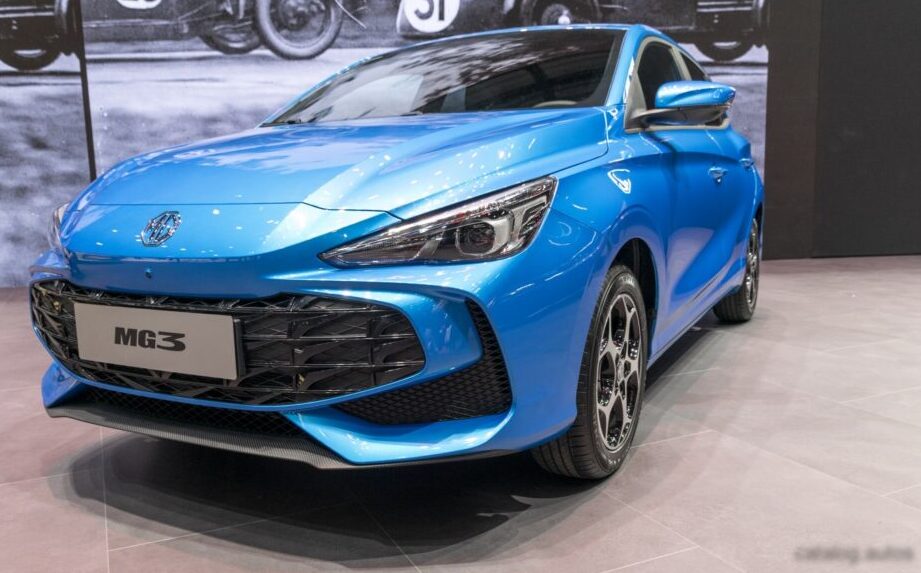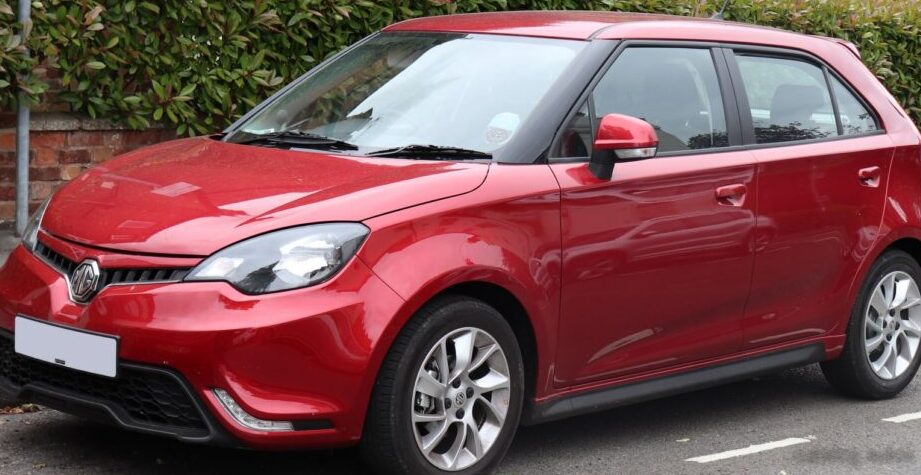
The MG3 II (facelifted in 2013) 1.5 VTI-TECH, producing 106 horsepower, represents a significant entry in MG Motor’s attempt to re-establish itself in the European and international hatchback market. Introduced as a successor to the original MG3, the facelifted model, produced from 2013 to 2018, aimed to offer a budget-friendly, yet reasonably well-equipped, option for first-time car buyers and those seeking an economical city vehicle. This particular 1.5L variant occupied the middle ground within the MG3 II range, positioned above the base 1.6L engine but below any potential performance-oriented trims. It was primarily sold in Europe, Australia, and select emerging markets.
Technical Specifications
| Brand | MG |
| Model | MG3 |
| Generation | MG3 II (facelift 2013) |
| Type (Engine) | 1.5 VTI-TECH (106 Hp) |
| Start of production | 2013 |
| End of production | 2018 |
| Powertrain Architecture | Internal Combustion engine |
| Body type | Hatchback |
| Seats | 5 |
| Doors | 5 |
| Fuel consumption (urban) | 7.5 l/100 km (31.4 US mpg) |
| Fuel consumption (extra urban) | 4.9 l/100 km (48 US mpg) |
| Fuel consumption (combined) | 5.8 l/100 km (40.6 US mpg) |
| CO2 emissions | 136 g/km |
| Fuel Type | Petrol (Gasoline) |
| Acceleration 0 – 100 km/h | 10.4 sec |
| Acceleration 0 – 62 mph | 10.4 sec |
| Acceleration 0 – 60 mph | 9.9 sec |
| Maximum speed | 108 km/h (67.11 mph) |
| Weight-to-power ratio | 10.6 kg/Hp |
| Weight-to-torque ratio | 8.2 kg/Nm |
| Power | 106 Hp @ 6000 rpm |
| Torque | 137 Nm @ 4750 rpm (101.05 lb.-ft. @ 4750 rpm) |
| Engine layout | Front, Transverse |
| Engine Model/Code | 15S4C |
| Engine displacement | 1498 cm3 (91.41 cu. in.) |
| Number of cylinders | 4 |
| Engine configuration | Inline |
| Cylinder Bore | 75 mm (2.95 in.) |
| Piston Stroke | 84.8 mm (3.34 in.) |
| Compression ratio | 10.5:1 |
| Number of valves per cylinder | 4 |
| Fuel injection system | Multi-port manifold injection |
| Engine aspiration | Naturally aspirated engine |
| Valvetrain | DOHC |
| Engine oil capacity | 4.5 l (4.76 US qt | 3.96 UK qt) |
| Coolant capacity | 4.9 l (5.18 US qt | 4.31 UK qt) |
| Kerb Weight | 1125 kg (2480.2 lbs.) |
| Max. weight | 1665 kg (3670.7 lbs.) |
| Max load | 540 kg (1190.5 lbs.) |
| Trunk (boot) space – minimum | 285 l (10.06 cu. ft.) |
| Trunk (boot) space – maximum | 1262 l (44.57 cu. ft.) |
| Fuel tank capacity | 45 l (11.89 US gal | 9.9 UK gal) |
| Permitted trailer load without brakes | 200 kg (440.92 lbs.) |
| Permitted towbar download | 75 kg (165.35 lbs.) |
| Length | 4018 mm (158.19 in.) |
| Width | 1729 mm (68.07 in.) |
| Width including mirrors | 1912 mm (75.28 in.) |
| Height | 1507 mm (59.33 in.) |
| Wheelbase | 2520 mm (99.21 in.) |
| Minimum turning circle | 10.4 m (34.12 ft.) |
| Drivetrain Architecture | Front wheel drive |
| Number of gears and type of gearbox | 5 gears, manual transmission |
| Front suspension | Independent type McPherson |
| Rear suspension | Semi-independent, coil spring |
| Assisting systems | ABS (Anti-lock braking system) |
| Steering type | Steering rack and pinion |
| Tires size | 185/75 R14; 195/55 R16 |
| Wheel rims size | 14; 16 |
INTRODUCTION
The MG3 II 1.5 VTI-TECH, launched after the 2013 facelift, was a key model in MG’s attempt to regain a foothold in the competitive European hatchback segment. Built upon the B-segment platform (shared with vehicles like the Peugeot 208 and Citroën C3), the MG3 aimed to provide affordable transportation with a focus on practicality and a relatively youthful aesthetic. The 1.5L engine was positioned as a sweet spot in the range, offering a balance between fuel efficiency and acceptable performance for everyday driving. It was a direct response to market demand for a slightly more powerful and refined option than the base 1.6L model.
Powertrain & Engine Architecture
At the heart of the MG3 II 1.5 VTI-TECH lies the 15S4C engine, a 1.5-liter naturally aspirated inline-four cylinder petrol engine. This engine utilizes a multi-point fuel injection system, delivering fuel directly into the intake ports. The engine features a double overhead camshaft (DOHC) valvetrain, operating 16 valves (four per cylinder) to optimize airflow and combustion efficiency. The compression ratio of 10.5:1 contributes to a reasonable level of thermal efficiency. The engine is transversely mounted at the front of the vehicle, driving the front wheels. Paired with this engine is a 5-speed manual transmission, chosen for its simplicity and cost-effectiveness. While an automatic transmission was offered in some markets, the 5-speed manual was the most common configuration for the 1.5 VTI-TECH.
Driving Characteristics
The 106 horsepower and 137 Nm (101 lb-ft) of torque produced by the 1.5L engine provide adequate, though not exhilarating, performance. Acceleration from 0-60 mph takes approximately 9.9 seconds, and the top speed is around 67 mph. The 5-speed manual transmission offers a reasonably direct feel, but the gear ratios are tuned more for fuel economy than outright performance. Compared to the 1.6L base model, the 1.5L offers noticeably improved responsiveness, particularly during overtaking maneuvers. However, it falls short of the performance offered by larger-displacement engines found in competitors like the Ford Fiesta or Volkswagen Polo. The steering is light and easy, making it well-suited for urban driving, but lacks the precision and feedback desired by more enthusiastic drivers. Overall, the driving experience is comfortable and predictable, prioritizing ease of use over sporty handling.
Equipment & Trim Levels
The MG3 II 1.5 VTI-TECH typically came equipped with a reasonable level of standard features, aiming to provide good value for money. Standard equipment often included air conditioning, power steering, electric front windows, a basic audio system with USB connectivity, and ABS brakes. Higher trim levels, such as the ‘Style’ or ‘Exclusive’ variants, added features like alloy wheels, rear parking sensors, Bluetooth connectivity, and upgraded interior trim. Interior upholstery was typically cloth, with a relatively simple dashboard layout. Optional extras included a panoramic sunroof and a more advanced infotainment system.
Chassis & Braking
The MG3 II utilizes a front-wheel-drive layout with an independent McPherson strut suspension at the front and a semi-independent coil spring suspension at the rear. This suspension setup provides a comfortable ride quality, absorbing bumps and imperfections in the road surface effectively. Braking duties are handled by disc brakes at the front and drum brakes at the rear. ABS (Anti-lock Braking System) is standard, enhancing safety during emergency braking situations. The chassis is relatively lightweight, contributing to the car’s fuel efficiency and agility. Stabilizer bars are present at both the front and rear to reduce body roll during cornering.
Market Reception & Comparison
The MG3 II 1.5 VTI-TECH received mixed reviews from automotive critics. While praised for its affordability and practicality, it was often criticized for its somewhat basic interior, unrefined engine, and lack of dynamic flair. Compared to its rivals, the MG3 offered a lower price point but lacked the sophistication and driving experience of established competitors. Fuel economy was generally considered to be good, averaging around 40.6 US mpg in combined driving conditions. Reliability reports were generally positive, with few major mechanical issues reported. However, some owners noted concerns about the longevity of certain interior components.
Legacy
The MG3 II 1.5 VTI-TECH represents a pivotal moment in MG’s modern history, marking its re-entry into the European market. While not a runaway success, it established a foothold for the brand and demonstrated its commitment to providing affordable transportation. On the used car market, the MG3 II 1.5 VTI-TECH remains a popular choice for budget-conscious buyers seeking a reliable and economical hatchback. The 15S4C engine is generally considered to be durable and relatively easy to maintain, making it a practical option for those seeking a low-cost vehicle. However, potential buyers should be aware of the car’s limitations in terms of performance and refinement.