
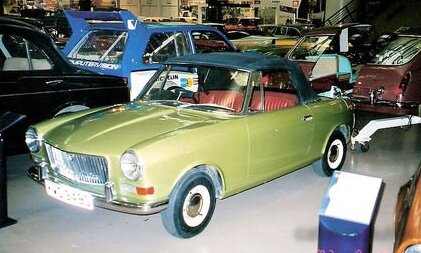
The MG Midget 1.1, produced between 1964 and 1966, represents an early iteration of the iconic British sports car. This variant, powered by a modest 1.1-liter engine producing 56 horsepower, served as the entry point into the Midget range during its initial years. It was a direct response to the growing demand for affordable, sporty roadsters, particularly in the UK and export markets like the United States. The 1.1-liter Midget was part of the Mark I generation (designated as the 1961-1964 model, though production continued into 1966 with minor changes), and played a crucial role in re-establishing MG’s reputation for fun-to-drive, accessible sports cars after a period of less focused production.
Technical Specifications
| Brand | MG |
| Model | Midget |
| Generation | Midget Mark I |
| Type (Engine) | 1.1L (56 hp) |
| Start of Production | 1964 |
| End of Production | 1966 |
| Powertrain Architecture | Internal Combustion Engine |
| Body Type | Cabriolet |
| Fuel Type | Petrol (Gasoline) |
| Engine Power | 56 hp |
| Engine Aspiration | Naturally Aspirated |
| Engine Displacement | 1098 cc (1.1 Liters) |
| Cylinders | 4 |
| Valves per Cylinder | 2 |
| Transmission | 4-Speed Manual (primarily, though automatic options were rare) |
| Drivetrain | Rear-Wheel Drive |
| Weight | Approximately 1,570 lbs (712 kg) |
| Top Speed | Approximately 87 mph (140 km/h) |
| 0-60 mph | Approximately 16.5 seconds |
Powertrain & Engine Architecture
The heart of the Midget 1.1 is the ‘A’ series engine, specifically the 1098cc version. This engine, a four-cylinder unit with a cast iron block and cylinder head, was a mainstay of British Leyland’s small car offerings for decades. It featured a chain-driven single overhead camshaft operating two valves per cylinder. The 1.1-liter engine utilized a single SU HS2 carburetor for fuel delivery, a relatively simple system that prioritized reliability and ease of maintenance over outright performance. The engine’s bore and stroke were 76.2mm x 89mm. While not a powerhouse, the ‘A’ series was known for its durability and willingness to rev. The vast majority of Midget 1.1s were equipped with a four-speed manual gearbox, though a rare three-speed automatic transmission was offered as an option, primarily in the US market. This automatic option significantly impacted performance, adding to the car’s already leisurely acceleration.
Driving Characteristics
The Midget 1.1 offered a classic British roadster driving experience – light, nimble, and engaging, albeit not particularly fast. The 56 horsepower engine provided adequate power for spirited driving on country roads, but acceleration was modest, especially when compared to later, more powerful Midget variants. The four-speed manual gearbox was well-matched to the engine’s characteristics, allowing drivers to keep the engine in its sweet spot. The automatic transmission, while offering convenience, noticeably dulled the car’s responsiveness. The car’s light weight (around 1,570 lbs) contributed to its nimble handling, and the rear-wheel-drive layout provided a traditional sports car feel. However, the relatively soft suspension and narrow tires meant that cornering at high speeds required caution. The steering, while direct, lacked power assistance, requiring some effort at low speeds.
Equipment & Trim Levels
The Midget 1.1 was positioned as the entry-level model, and as such, it featured a relatively basic level of equipment. Standard features included a simple dashboard with basic instrumentation (speedometer, fuel gauge, temperature gauge), vinyl upholstery, and a folding soft top. Chrome bumpers and trim were present, but relatively restrained. Optional extras included wire wheels, a heater, a radio, and upgraded interior trim. Interior space was limited, as is typical of small roadsters, and the car was best suited for two occupants. The dashboard layout was functional but lacked the sophistication of more modern cars. The seats offered reasonable comfort for short journeys, but longer drives could become tiring.
Chassis & Braking
The Midget 1.1 utilized a traditional body-on-frame construction, with a separate chassis and body. The suspension consisted of independent front suspension with coil springs and a live axle rear suspension with leaf springs. The braking system was initially equipped with drum brakes on all four wheels, though later models (particularly those destined for the US market) received front disc brakes as standard equipment. The drum brakes provided adequate stopping power for the car’s weight and performance, but they were prone to fading under heavy use. Steering was by a traditional steering box, providing direct but unassisted feel. The car’s relatively short wheelbase contributed to its nimble handling, but also made it susceptible to bumps and uneven road surfaces.
Market Reception & Comparison
The MG Midget 1.1 was generally well-received by critics as an affordable and charming sports car. It was praised for its nimble handling, classic styling, and engaging driving experience. However, its modest performance and basic equipment levels were also noted. Compared to its larger sibling, the MG B, the Midget 1.1 offered a more intimate and focused driving experience, but at the expense of practicality and outright speed. Later Midget variants, such as the 1.2-liter and 1.3-liter models, offered improved performance and refinement. The automatic transmission version of the 1.1 was often criticized for its sluggishness and was not a popular choice among enthusiasts. Fuel economy was reasonable for the time, averaging around 35-40 mpg.
Legacy
The MG Midget 1.1, while not the most powerful or refined of the Midget variants, holds a special place in the hearts of many enthusiasts. Its simplicity, affordability, and classic British roadster charm have made it a popular choice for restoration and classic car rallies. The ‘A’ series engine is known for its durability and ease of maintenance, making the Midget 1.1 a relatively reliable classic car. Today, well-maintained examples of the Midget 1.1 are sought after by collectors and enthusiasts, and prices have been steadily increasing in recent years. The car represents a bygone era of affordable, fun-to-drive sports cars, and its legacy continues to endure.
