
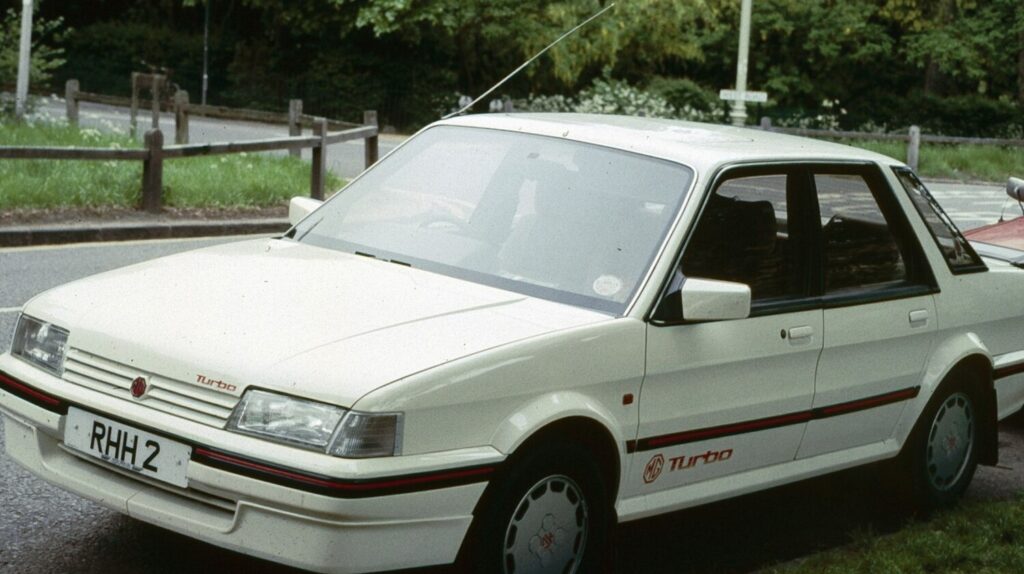
The MG Montego 2.0 EFi, produced between 1984 and 1990, represented British Leyland’s (later Austin Rover Group) attempt to modernize its mid-size sedan offering. Positioned as a more upmarket alternative to the Austin Ambassador, the Montego aimed to recapture some of the sporting heritage associated with the MG badge, though its execution was often hampered by the constraints of its platform and the economic realities facing the company at the time. The 2.0 EFi variant, producing 117 horsepower, occupied a middle ground in the Montego lineup, offering a balance between performance and fuel economy, and was intended to appeal to buyers seeking a comfortable and reasonably well-equipped family car. It was built on the ‘AD’ platform, a derivative of the earlier Triumph Dolomite and Morris Ital, and shared many components with those vehicles.
Technical Specifications
| Brand | MG |
| Model | Montego |
| Generation | Montego |
| Type (Engine) | 2.0 EFi (117 Hp) |
| Start of production | 1984 |
| End of production | 1990 |
| Powertrain Architecture | Internal Combustion engine |
| Body type | Sedan |
| Fuel Type | Petrol (Gasoline) |
| Power | 117 Hp |
| Engine aspiration | Naturally aspirated engine |
Powertrain & Engine Architecture
The heart of the Montego 2.0 EFi was the ‘O’ series engine, a 1,994cc inline-four cylinder unit. This engine had been in development for some time and represented a significant upgrade over the older ‘B’ series engines previously used in MG saloons. The ‘EFi’ designation indicated the use of Bosch fuel injection, a relatively modern feature for a British car of this era. The engine featured a single overhead camshaft (SOHC) design with two valves per cylinder. While not a particularly high-revving engine, it produced a respectable 117 horsepower at 5,200 rpm and 125 lb-ft of torque at 3,500 rpm. The engine block was cast iron, while the cylinder head was aluminum alloy. The 2.0 EFi was typically paired with either a five-speed manual gearbox or a three-speed automatic transmission, the latter being a Borg-Warner unit. The automatic transmission, while providing convenience, did noticeably impact the car’s acceleration and fuel economy. The engine management system was relatively basic by modern standards, but it did allow for reasonably precise control of fuel delivery and ignition timing.
Driving Characteristics
The Montego 2.0 EFi, particularly in automatic guise, offered a comfortable but not particularly engaging driving experience. Acceleration was adequate for everyday driving, with a 0-60 mph time of around 11-12 seconds. However, the automatic transmission’s relatively wide gear ratios meant that the engine often felt strained when accelerating hard, and downshifts were slow to respond. The manual transmission version offered a more responsive feel, but even then, the Montego was not considered a sporting car. The steering was light and precise, but lacked significant feedback. The suspension, while reasonably comfortable, could feel somewhat wallowy on uneven surfaces. Compared to the 2.0HL model (which featured a slightly higher compression ratio and more power), the EFi version offered a smoother, more refined driving experience, prioritizing comfort over outright performance. Against the lower-spec 1.5L models, the 2.0 EFi provided a substantial boost in power and torque, making it a more capable all-rounder, especially for motorway cruising.
Equipment & Trim Levels
The Montego 2.0 EFi was generally well-equipped for its price point. Standard features typically included central locking, electric front windows, and a basic stereo system. The interior was trimmed in cloth upholstery, and the dashboard featured a woodgrain finish. Higher trim levels, such as the ‘S’ variant, added features like alloy wheels, a sunroof, and upgraded interior trim. Optional extras included a more sophisticated stereo system, air conditioning, and leather upholstery. The Montego’s interior design was functional but somewhat dated, even when new, reflecting the car’s origins in earlier designs. The dashboard layout was straightforward, with clearly labeled controls. The seats were generally comfortable, providing adequate support for long journeys.
Chassis & Braking
The Montego’s chassis was based on a conventional front-engine, rear-wheel-drive layout. The suspension consisted of independent front suspension with MacPherson struts and a live axle with trailing arms at the rear. The braking system featured disc brakes on the front wheels and drum brakes on the rear wheels. The Montego’s braking performance was adequate, but not exceptional. Anti-lock brakes (ABS) were not available on the 2.0 EFi model. The car’s handling was generally predictable, but it was prone to understeer when pushed hard. The suspension was tuned for comfort, rather than outright handling prowess. Stabilizer bars were fitted to both the front and rear axles to reduce body roll, but their effectiveness was limited by the car’s relatively high center of gravity.
Market Reception & Comparison
The MG Montego 2.0 EFi received a mixed reception from automotive critics. While praised for its comfortable ride and relatively spacious interior, it was often criticized for its dated design, uninspiring handling, and questionable build quality. Compared to its rivals, such as the Ford Sierra and Vauxhall Cavalier, the Montego was often seen as being less modern and less refined. However, it did offer a distinctive character and a degree of British charm that appealed to some buyers. Fuel economy was reasonable for the time, averaging around 25-30 mpg in mixed driving conditions. Reliability was a concern, with reports of electrical issues and problems with the fuel injection system. The 2.0 EFi variant offered a better balance of performance and economy than the lower-spec 1.5L models, but it was more expensive. Compared to the higher-performance 2.0HL, it offered a more relaxed and refined driving experience.
Legacy
The MG Montego, and the 2.0 EFi variant in particular, has become something of a cult classic among British car enthusiasts. While not a commercial success, it represents a fascinating chapter in the history of British Leyland and the MG marque. The ‘O’ series engine proved to be a durable and reliable unit, and many examples are still on the road today. However, finding parts can be challenging, and maintenance can be expensive. The Montego’s relatively low production numbers and its growing popularity among collectors have led to a steady increase in its value in the used car market. Despite its flaws, the Montego 2.0 EFi remains a distinctive and characterful car that offers a glimpse into a bygone era of British motoring. Its blend of comfort, practicality, and a touch of sporting heritage continues to appeal to a dedicated following.
