
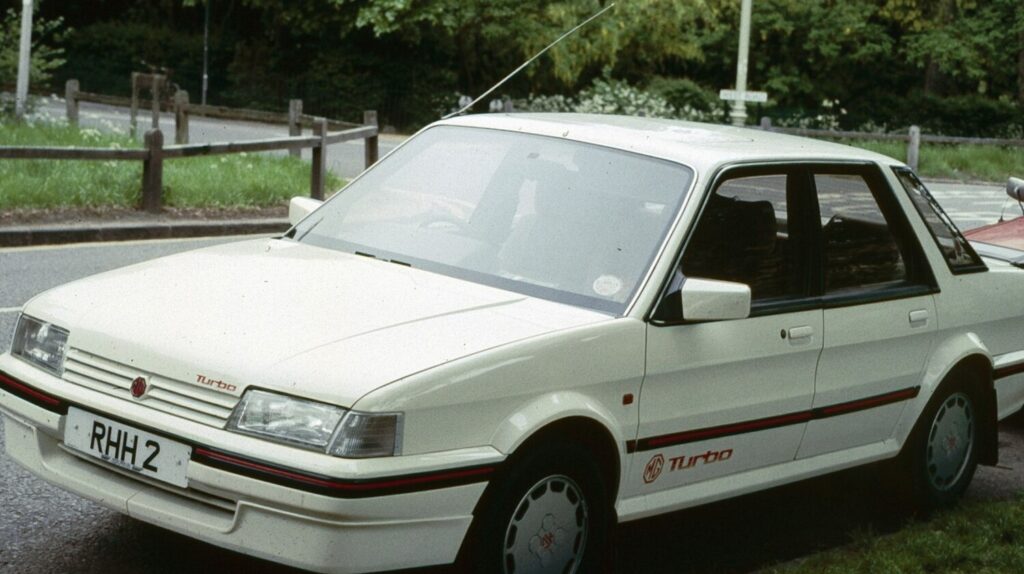
The MG Montego 2.0 Turbo, produced between 1984 and 1990, represented a late attempt by British Leyland (later Austin Rover Group) to inject some performance and modernity into its aging lineup. Positioned as the flagship of the Montego range, the 2.0 Turbo aimed to offer a sporting alternative to more commonplace family sedans of the era, primarily within the United Kingdom and limited export markets. It was a product of a challenging period for the company, facing increasing competition from Japanese and European manufacturers. The Montego itself was a derivative of the earlier Morris Ital, sharing much of its underpinnings, but with revised styling and a more upmarket interior intended to elevate its appeal.
Technical Specifications
| Brand | MG |
| Model | Montego |
| Generation | Montego |
| Engine Type | 2.0 Turbo (150 Hp) |
| Production Years | 1984 – 1990 |
| Powertrain Architecture | Internal Combustion Engine |
| Body Type | Sedan |
| Fuel Type | Petrol (Gasoline) |
| Power Output | 150 Hp |
| Engine Aspiration | Turbocharger |
Powertrain & Engine Architecture
The heart of the MG Montego 2.0 Turbo was the ‘O’ series engine, a 1,994cc inline-four cylinder unit. This engine had been around in various forms since the 1970s, but the Turbo variant received significant upgrades. The key addition, of course, was a Garrett T25 turbocharger, boosting power output considerably. Fuel delivery was handled by Bosch K-Jetronic mechanical fuel injection, a system known for its reliability but also its complexity. The engine featured a single overhead camshaft (SOHC) design with two valves per cylinder. The turbocharger provided approximately 8 psi of boost. The engine management system was relatively basic by modern standards, lacking the sophisticated electronic control units found in contemporary German or Japanese turbocharged vehicles. The transmission offered was a five-speed manual gearbox, as an automatic transmission wasn’t available with the turbo engine. The engine code is typically identified as 20DET.
Driving Characteristics
The MG Montego 2.0 Turbo offered a noticeable performance improvement over the naturally aspirated versions of the Montego. With 150 horsepower on tap, it could achieve a 0-60 mph time of around 8.4 seconds, which was competitive for a family sedan of the mid-1980s. However, the car’s relatively heavy weight (around 2,700 lbs) and the somewhat agricultural nature of the K-Jetronic fuel injection meant that the power delivery wasn’t particularly smooth or refined. Turbo lag was evident, requiring the driver to keep the engine revved to maintain optimal performance. The five-speed gearbox was reasonably well-matched to the engine’s characteristics, although the shift quality wasn’t as precise as that found in some rivals. Handling was adequate, but the Montego’s suspension was tuned more for comfort than outright sportiness. The rear suspension, in particular, could feel somewhat unsettled over uneven surfaces.
Equipment & Trim Levels
The MG Montego 2.0 Turbo was generally well-equipped for its time, reflecting its position as the range-topping model. Standard features included central locking, electric front windows, a sunroof, and a basic stereo system. The interior trim featured cloth upholstery with a sporty pattern, and the dashboard was equipped with a comprehensive array of gauges, including a boost gauge to monitor turbocharger performance. Optional extras included leather upholstery, upgraded stereo systems, and alloy wheels. The exterior was distinguished by a rear spoiler, body-colored bumpers, and MG badging. The interior plastics, while durable, were not particularly high quality, reflecting the car’s relatively modest price point.
Chassis & Braking
The MG Montego 2.0 Turbo utilized a conventional front-engine, rear-wheel-drive layout. The chassis was based on the Morris Ital, with some modifications to accommodate the turbocharged engine and improved suspension components. The front suspension featured MacPherson struts, while the rear suspension employed a live axle with trailing arms. Brakes were disc brakes all around, providing adequate stopping power for the car’s weight and performance. However, the braking system lacked the sophistication of some contemporary rivals, such as anti-lock brakes (ABS), which were not available on the Montego. Steering was power-assisted, but it lacked the precision and feedback of more modern systems. Stabilizer bars were fitted to both the front and rear axles to reduce body roll during cornering.
Market Reception & Comparison
The MG Montego 2.0 Turbo received mixed reviews from automotive critics. While its performance was generally praised, concerns were raised about its build quality, refinement, and the complexity of the K-Jetronic fuel injection system. Compared to rivals such as the Ford Sierra 2.8i and the Vauxhall Cavalier SRi, the Montego Turbo felt somewhat dated and less polished. Fuel economy was also a concern, averaging around 22-25 mpg in real-world driving. However, the Montego Turbo offered a unique combination of performance and practicality at a relatively affordable price, which appealed to some buyers. It was often seen as a more characterful alternative to the more mainstream offerings from Ford and Vauxhall. Reliability was a mixed bag; the turbocharger itself proved reasonably durable, but the K-Jetronic system could be prone to issues if not properly maintained.
Legacy
The MG Montego 2.0 Turbo represents a fascinating footnote in British automotive history. It was a bold attempt to revive the MG brand and offer a genuinely sporty family sedan. However, it was ultimately hampered by the financial difficulties of British Leyland and the car’s inherent limitations. Today, the Montego Turbo is a relatively rare and sought-after classic car, particularly among enthusiasts of 1980s British automobiles. Parts availability can be challenging, and maintenance requires specialized knowledge. Well-maintained examples command a premium in the used car market. The engine, while not particularly efficient by modern standards, is known for its robust construction and potential for further tuning. The Montego Turbo serves as a reminder of a time when British manufacturers were striving to compete on the world stage, and it remains a distinctive and characterful vehicle that continues to attract a dedicated following.
