
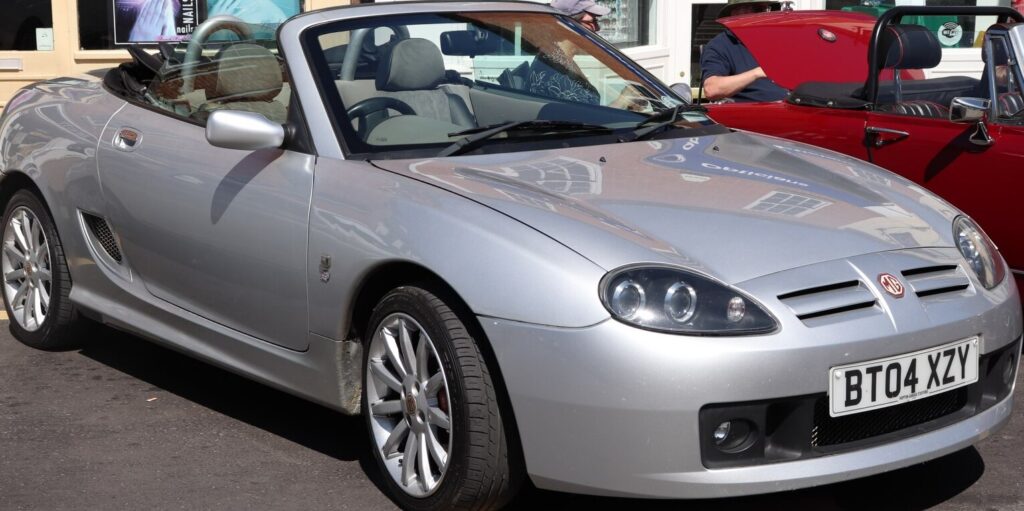
The MG TF 1.8i 16V, produced between 2002 and 2005, represents a significant iteration of the MG roadster lineage. Following the collapse of the British Leyland empire and subsequent ownership changes, the TF was intended to revitalize the MG brand. Built upon the MGF platform (internally designated as the X10), the TF offered a more focused, sporty driving experience than its predecessor. This 1.8-liter, 136 horsepower variant occupied a middle ground in the TF lineup, positioned between the base 1.6-liter model and the more potent 1.8i VVT (Variable Valve Timing) version. It aimed to provide a balance of performance, affordability, and everyday usability for the enthusiast driver.
Technical Specifications
| Brand | MG |
| Model | TF |
| Generation | TF |
| Type (Engine) | 1.8 i 16V (136 Hp) |
| Start of production | 2002 |
| End of production | 2005 |
| Powertrain Architecture | Internal Combustion engine |
| Body type | Cabriolet |
| Seats | 2 |
| Doors | 2 |
| Fuel consumption (urban) | 11.2 l/100 km (21 US mpg) |
| Fuel consumption (extra urban) | 6 l/100 km (39.2 US mpg) |
| Fuel consumption (combined) | 7.9 l/100 km (29.8 US mpg) |
| Fuel Type | Petrol (Gasoline) |
| Acceleration 0 – 100 km/h | 8.8 sec |
| Acceleration 0 – 62 mph | 8.8 sec |
| Acceleration 0 – 60 mph | 8.4 sec |
| Maximum speed | 205 km/h (127.38 mph) |
| Weight-to-power ratio | 8.1 kg/Hp |
| Weight-to-torque ratio | 6.7 kg/Nm |
| Power | 136 Hp @ 6750 rpm |
| Torque | 165 Nm @ 5000 rpm (121.7 lb.-ft. @ 5000 rpm) |
| Engine layout | Middle, Transverse |
| Engine Model/Code | 18K4F |
| Engine displacement | 1796 cm3 (109.6 cu. in.) |
| Number of cylinders | 4 |
| Engine configuration | Inline |
| Cylinder Bore | 80 mm (3.15 in.) |
| Piston Stroke | 89.3 mm (3.52 in.) |
| Compression ratio | 10.5:1 |
| Number of valves per cylinder | 4 |
| Fuel injection system | Multi-port manifold injection |
| Engine aspiration | Naturally aspirated |
| Engine oil capacity | 4.5 l (4.76 US qt | 3.96 UK qt) |
| Kerb Weight | 1105 kg (2436.11 lbs.) |
| Max. weight | 1330 kg (2932.15 lbs.) |
| Max load | 225 kg (496.04 lbs.) |
| Trunk (boot) space – minimum | 210 l (7.42 cu. ft.) |
| Fuel tank capacity | 50 l (13.21 US gal | 11 UK gal) |
| Length | 3943 mm (155.24 in.) |
| Width | 1630 mm (64.17 in.) |
| Height | 1261 mm (49.65 in.) |
| Wheelbase | 2375 mm (93.5 in.) |
| Front track | 1404 mm (55.28 in.) |
| Rear (Back) track | 1410 mm (55.51 in.) |
| Drivetrain Architecture | Rear wheel drive |
| Number of gears and type of gearbox | 5 gears, manual transmission |
| Front suspension | Coil spring |
| Rear suspension | Coil spring |
| Front brakes | Ventilated discs |
| Rear brakes | Disc |
| Assisting systems | ABS (Anti-lock braking system) |
| Power steering | Hydraulic Steering |
| Tires size | 195/45 R16; 215/40 R16 |
Powertrain & Engine Architecture
The heart of the MG TF 1.8i 16V is the 18K4F engine, a 1.8-liter inline-four cylinder powerplant. This engine is a derivative of the Rover K-Series, known for its lightweight construction and potential for high output. The 18K4F features a multi-port fuel injection system, delivering fuel directly into the intake ports. The engine utilizes a single overhead camshaft (SOHC) design with four valves per cylinder, contributing to its respectable power output. The 136 horsepower peak is achieved at 6750 rpm, while 165 Nm (121.7 lb-ft) of torque is available at 5000 rpm. The engine’s mid-engine layout, a defining characteristic of the TF, contributes to its balanced handling. The standard transmission for this variant was a five-speed manual gearbox, although a four-speed automatic transmission was also offered, albeit less common. The automatic transmission, while providing convenience, did impact acceleration and fuel economy compared to the manual.
Driving Characteristics
The MG TF 1.8i 16V offered a distinctly sporty driving experience, particularly when equipped with the manual transmission. The mid-engine layout provided excellent balance and responsive handling. The 136 horsepower engine, while not overwhelming, provided sufficient power for spirited driving on winding roads. Acceleration from 0-60 mph took approximately 8.4 seconds, making it competitive with other roadsters of the era. The five-speed manual gearbox allowed drivers to fully exploit the engine’s powerband. The automatic transmission, while smoother in everyday driving, resulted in slightly slower acceleration and a less engaging driving experience. Gear ratios were tuned to prioritize acceleration in the lower gears, while the final drive ratio was optimized for a balance of performance and fuel efficiency.
Equipment & Trim Levels
The MG TF 1.8i 16V typically came equipped with a reasonable level of standard features. Interior appointments included cloth upholstery, a leather-wrapped steering wheel, and basic instrumentation. Air conditioning was a common option. Exterior features included alloy wheels, a body-colored hardtop (often optional), and a distinctive rear spoiler. Optional extras included leather upholstery, upgraded audio systems, and various cosmetic enhancements. Trim levels were relatively simple, with the 1.8i 16V generally positioned as a mid-range offering, bridging the gap between the more basic 1.6-liter model and the higher-specification VVT variants.
Chassis & Braking
The MG TF utilized a steel monocoque chassis, providing a rigid and lightweight platform. Suspension consisted of independent coil springs all around, with anti-roll bars to minimize body roll during cornering. The front suspension featured MacPherson struts, while the rear utilized a multi-link setup. Braking duties were handled by ventilated discs at the front and solid discs at the rear. Anti-lock Braking System (ABS) was standard, enhancing safety and control. The relatively low weight of the TF, around 1105 kg (2436 lbs), contributed to its agile handling and responsive braking performance.
Market Reception & Comparison
The MG TF 1.8i 16V was generally well-received by automotive critics, who praised its sporty handling and engaging driving experience. However, some criticisms were leveled at the interior quality and perceived lack of refinement compared to some of its rivals, such as the Mazda MX-5. Fuel economy was reasonable for a sports car, averaging around 29.8 US mpg in combined driving. Reliability was a mixed bag, with some owners reporting issues with the K-Series engine, particularly head gasket failures. Compared to the 1.6-liter TF, the 1.8i 16V offered a noticeable performance improvement. The higher-output 1.8i VVT version provided even more power, but at a higher price point.
Legacy
The MG TF, despite its relatively short production run, has gained a loyal following among enthusiasts. The 1.8i 16V variant remains a popular choice in the used car market, offering a good balance of performance, affordability, and style. While the K-Series engine can be prone to certain issues, regular maintenance and preventative measures can help to ensure long-term reliability. Today, the MG TF is seen as a modern classic, representing a final chapter in the storied history of the MG brand. Parts availability is generally good, and a thriving community of owners and specialists provides support and expertise.
