
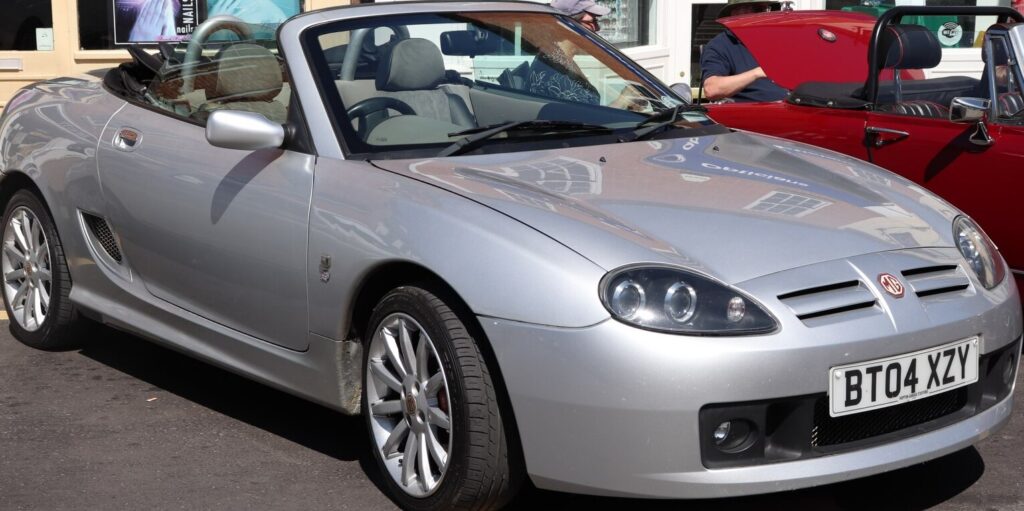
The MG TF 1.8i 16V, produced between 2002 and 2005, represents a significant iteration of the MG roadster lineage. Following the collapse of the British Motor Corporation (BMC) and subsequent ownership changes, the TF was the last roadster produced by MG before the brand was again restructured. Built upon the MGF platform (internally designated as the X10), the TF aimed to address criticisms leveled at the original MGF, primarily concerning its handling and structural rigidity. The 1.8i 16V variant occupied a middle ground in the TF lineup, offering a balance between performance and affordability, positioned above the base 1.6L model and below the more potent 1.8i VVT and later, supercharged models. It was primarily marketed towards enthusiasts seeking a traditional, engaging sports car experience.
Technical Specifications
| Brand | MG |
| Model | TF |
| Generation | TF |
| Type (Engine) | 1.8 i 16V (160 Hp) |
| Start of production | 2002 |
| End of production | 2005 |
| Powertrain Architecture | Internal Combustion engine |
| Body type | Cabriolet |
| Seats | 2 |
| Doors | 2 |
| Fuel consumption (urban) | 10.6 l/100 km (22.2 US mpg) |
| Fuel consumption (extra urban) | 5.7 l/100 km (41.3 US mpg) |
| Fuel consumption (combined) | 7.5 l/100 km (31.4 US mpg) |
| Fuel Type | Petrol (Gasoline) |
| Acceleration 0 – 100 km/h | 7.6 sec |
| Acceleration 0 – 62 mph | 7.6 sec |
| Acceleration 0 – 60 mph | 7.2 sec |
| Maximum speed | 220 km/h (136.7 mph) |
| Weight-to-power ratio | 7 kg/Hp |
| Weight-to-torque ratio | 6.4 kg/Nm |
| Power | 160 Hp @ 6900 rpm |
| Torque | 174 Nm @ 4700 rpm (128.34 lb.-ft. @ 4700 rpm) |
| Engine layout | Middle, Transverse |
| Engine Model/Code | 18K4K |
| Engine displacement | 1796 cm3 (109.6 cu. in.) |
| Number of cylinders | 4 |
| Engine configuration | Inline |
| Cylinder Bore | 80 mm (3.15 in.) |
| Piston Stroke | 89.3 mm (3.52 in.) |
| Compression ratio | 10.5:1 |
| Number of valves per cylinder | 4 |
| Fuel injection system | Multi-port manifold injection |
| Engine aspiration | Naturally aspirated |
| Engine oil capacity | 4.5 l (4.76 US qt | 3.96 UK qt) |
| Kerb Weight | 1115 kg (2458.15 lbs.) |
| Max. weight | 1340 kg (2954.19 lbs.) |
| Max load | 225 kg (496.04 lbs.) |
| Trunk (boot) space – minimum | 210 l (7.42 cu. ft.) |
| Fuel tank capacity | 50 l (13.21 US gal | 11 UK gal) |
| Length | 3943 mm (155.24 in.) |
| Width | 1630 mm (64.17 in.) |
| Height | 1261 mm (49.65 in.) |
| Wheelbase | 2375 mm (93.5 in.) |
| Front track | 1404 mm (55.28 in.) |
| Rear (Back) track | 1410 mm (55.51 in.) |
| Drivetrain Architecture | Rear wheel drive |
| Number of gears | 5 gears, manual transmission |
| Front suspension | Coil spring |
| Rear suspension | Coil spring |
| Front brakes | Ventilated discs |
| Rear brakes | Disc |
| Assisting systems | ABS (Anti-lock braking system) |
| Steering type | Steering rack and pinion |
| Power steering | Hydraulic Steering |
| Tires size | 195/45 R16; 215/40 R16 |
Powertrain & Engine Architecture
The MG TF 1.8i 16V utilizes the 18K4K engine, a naturally aspirated, 1.8-liter (1796 cc) inline-four cylinder engine. This engine is a derivative of the Rover K-Series, known for its compact dimensions and lightweight construction. The 18K4K features multi-port fuel injection and a double overhead camshaft (DOHC) valvetrain with four valves per cylinder. The engine produces 160 horsepower at 6900 rpm and 174 Nm (128.34 lb-ft) of torque at 4700 rpm. The engine’s relatively high-revving nature contributes to its sporty character. The TF was exclusively offered with a five-speed manual transmission, designed to complement the engine’s power delivery and provide an engaging driving experience. The transmission is rear-wheel drive, a configuration that enhances handling balance and driving enjoyment.
Driving Characteristics
The 1.8i 16V TF offers a noticeably more spirited driving experience than the base 1.6L model. Acceleration from 0-60 mph takes approximately 7.2 seconds, and it achieves a top speed of around 136.7 mph. While not exceptionally quick by modern standards, the TF’s light weight (approximately 2458 lbs) and rear-wheel drive layout contribute to a nimble and responsive feel. The five-speed manual transmission provides precise gear changes, allowing drivers to fully exploit the engine’s powerband. Compared to the later, more powerful 1.8i VVT and supercharged variants, the 1.8i 16V offers a more accessible and predictable power delivery, making it a good choice for drivers who prioritize handling and balance over outright speed. The gear ratios are well-matched to the engine’s characteristics, providing adequate acceleration in all gears.
Equipment & Trim Levels
The MG TF 1.8i 16V typically came equipped with a reasonable level of standard features. Interior appointments included sports seats, leather-wrapped steering wheel, and a basic audio system. Exterior features included alloy wheels, a body-colored hardtop (often optional), and fog lamps. Optional extras included air conditioning, upgraded audio systems, and various cosmetic enhancements. Trim levels were relatively limited, with most variations stemming from the addition of optional packages. The interior design was functional and driver-focused, reflecting the car’s sporty intentions. Dashboard layout was straightforward, with clearly marked gauges and controls.
Chassis & Braking
The MG TF features a fully independent suspension system, with coil springs and dampers at all four corners. The front suspension utilizes MacPherson struts, while the rear employs a trailing arm setup. This suspension configuration provides a good balance between ride comfort and handling precision. Braking duties are handled by ventilated discs at the front and solid discs at the rear, equipped with an Anti-lock Braking System (ABS) as standard. The steering is rack and pinion, providing direct and responsive steering feel. The chassis was significantly reinforced compared to the original MGF, addressing concerns about structural rigidity and improving handling characteristics. Stabilizer bars were fitted front and rear to reduce body roll during cornering.
Market Reception & Comparison
The MG TF 1.8i 16V was generally well-received by automotive critics, who praised its engaging handling, sporty driving experience, and attractive styling. However, some criticisms were leveled at its relatively basic interior and limited practicality. Compared to the 1.6L model, the 1.8i 16V offered a significant performance upgrade, justifying its higher price tag. Compared to the more powerful 1.8i VVT and supercharged variants, it provided a more affordable and accessible entry point into the TF range. Fuel economy was reasonable for a sports car of its era, averaging around 31.4 US mpg in combined driving. Reliability was generally good, although the K-Series engine is known to be sensitive to overheating if not properly maintained.
Legacy
The MG TF, including the 1.8i 16V variant, represents a final chapter in the storied history of MG roadsters. While production was relatively short-lived, the TF has gained a loyal following among enthusiasts. The 18K4K engine, while not without its quirks, is generally considered to be a reliable and durable unit when properly maintained. Today, the MG TF 1.8i 16V remains a relatively affordable and enjoyable sports car, offering a classic roadster experience with a touch of modern convenience. Values have been steadily increasing in recent years, as enthusiasts recognize the car’s unique character and historical significance. Parts availability is generally good, thanks to a dedicated aftermarket and the continued support of MG specialist workshops.
