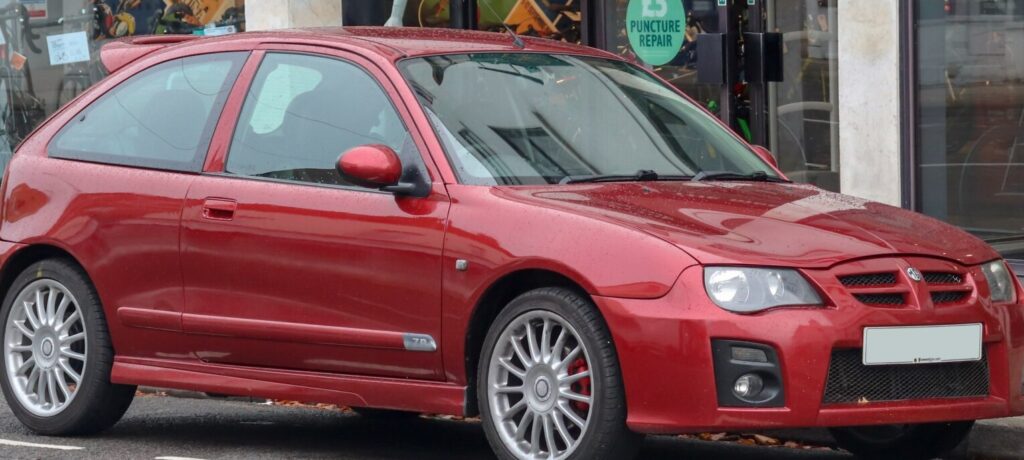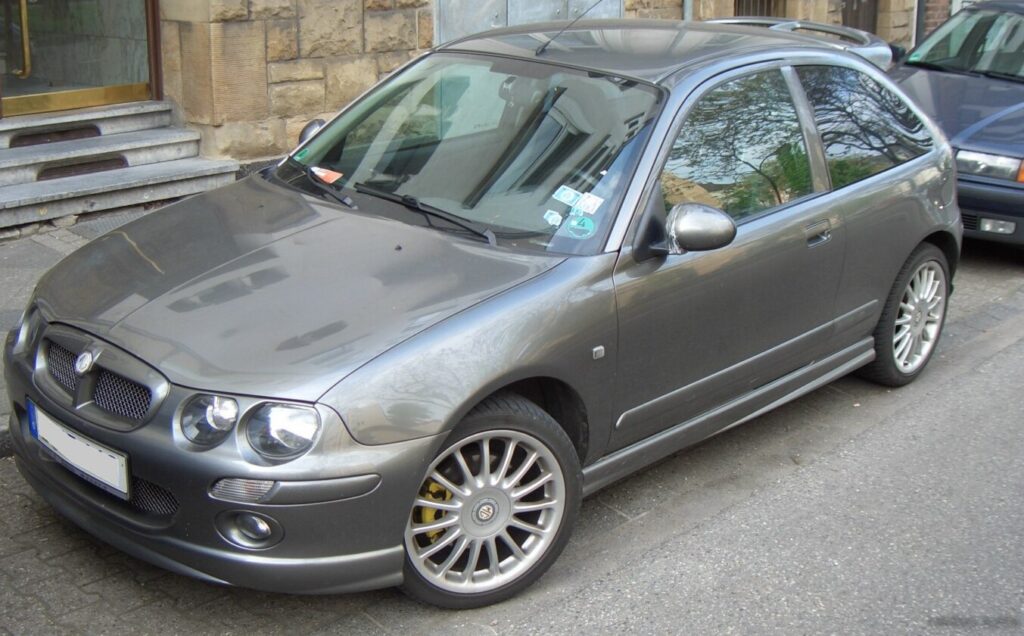
The MG ZR 1.4 i 16V, produced between 2001 and 2003, was an entry-level variant of the ZR compact hatchback, representing MG’s effort to revitalize the brand after its acquisition by the Phoenix Consortium. Positioned as the most affordable model in the ZR range, it aimed to deliver accessible British motoring with a focus on practicality and reasonable running costs. The ZR itself was based on the Rover 200 platform (internally designated as the R3 platform), inheriting much of its mechanical underpinnings. This 1.4-liter version served as the gateway into the ZR lineup, appealing to first-time buyers, city commuters, and those seeking a relatively inexpensive hatchback.
Technical Specifications
| Brand | MG |
| Model | ZR |
| Generation | ZR |
| Type (Engine) | 1.4 i 16V (103 Hp) |
| Start of production | 2001 |
| End of production | 2003 |
| Powertrain Architecture | Internal Combustion engine |
| Body type | Hatchback |
| Seats | 5 |
| Doors | 3/5 |
| Fuel consumption (urban) | 9.1 l/100 km (25.8 US mpg, 31 UK mpg, 11 km/l) |
| Fuel consumption (extra urban) | 5.5 l/100 km (42.8 US mpg, 51.4 UK mpg, 18.2 km/l) |
| Fuel consumption (combined) | 6.8 l/100 km (34.6 US mpg, 41.5 UK mpg, 14.7 km/l) |
| Fuel Type | Petrol (Gasoline) |
| Acceleration 0 – 100 km/h | 11 sec |
| Acceleration 0 – 62 mph | 11 sec |
| Acceleration 0 – 60 mph | 10.5 sec |
| Maximum speed | 179 km/h (111.23 mph) |
| Weight-to-power ratio | 10.3 kg/Hp, 97.2 Hp/tonne |
| Weight-to-torque ratio | 8.6 kg/Nm, 116 Nm/tonne |
| Power | 103 Hp @ 6000 rpm |
| Power per litre | 73.8 Hp/l |
| Torque | 123 Nm @ 4500 rpm (90.72 lb.-ft. @ 4500 rpm) |
| Engine layout | Front, Transverse |
| Engine Model/Code | 14K4F |
| Engine displacement | 1396 cm3 (85.19 cu. in.) |
| Number of cylinders | 4 |
| Engine configuration | Inline |
| Cylinder Bore | 75 mm (2.95 in.) |
| Piston Stroke | 79 mm (3.11 in.) |
| Compression ratio | 10.5:1 |
| Number of valves per cylinder | 4 |
| Fuel injection system | Multi-port manifold injection |
| Engine aspiration | Naturally aspirated engine |
| Engine oil capacity | 4.5 l (4.76 US qt | 3.96 UK qt) |
| Coolant capacity | 4.8 l (5.07 US qt | 4.22 UK qt) |
| Kerb Weight | 1060 kg (2336.9 lbs.) |
| Max. weight | 1520 kg (3351.03 lbs.) |
| Max load | 460 kg (1014.13 lbs.) |
| Trunk (boot) space – minimum | 304 l (10.74 cu. ft.) |
| Trunk (boot) space – maximum | 1090 l (38.49 cu. ft.) |
| Fuel tank capacity | 50 l (13.21 US gal | 11 UK gal) |
| Length | 4011 mm (157.91 in.) |
| Width | 1690 mm (66.54 in.) |
| Height | 1400 mm (55.12 in.) |
| Wheelbase | 2502 mm (98.5 in.) |
| Front track | 1472 mm (57.95 in.) |
| Rear track | 1457 mm (57.36 in.) |
| Drivetrain Architecture | Front wheel drive |
| Drive wheel | Front wheel drive |
| Number of gears | 5 gears, manual transmission |
| Front suspension | Spring Strut |
| Rear suspension | Coil spring |
| Front brakes | Ventilated discs |
| Rear brakes | Drum |
| Assisting systems | ABS (Anti-lock braking system) |
| Steering type | Steering rack and pinion |
| Power steering | Hydraulic Steering |
| Tires size | 205/50 R16 |
Powertrain & Engine Architecture
The MG ZR 1.4 i 16V was powered by the 14K4F engine, a 1.4-liter inline-four cylinder petrol engine. This engine was a derivative of the K-Series engine family developed by Rover Group, renowned for its compact size and lightweight construction. The 14K4F featured a multi-point fuel injection system and a 16-valve cylinder head, contributing to its relatively efficient operation. The engine produced 103 horsepower at 6000 rpm and 123 Nm (90.72 lb-ft) of torque at 4500 rpm. The engine’s design prioritized fuel economy and smooth operation over outright performance. The ZR 1.4 i 16V was exclusively offered with a five-speed manual transmission, designed to maximize the engine’s efficiency and provide adequate acceleration for everyday driving. The transmission was a standard configuration for this class of vehicle, offering a straightforward and reliable shifting experience.
Driving Characteristics
The driving experience in the MG ZR 1.4 i 16V was characterized by its light steering and nimble handling. While not a performance-oriented model, the ZR 1.4 offered a surprisingly engaging driving experience, particularly in urban environments. Acceleration from 0 to 60 mph took around 10.5 seconds, and the top speed was approximately 111 mph. The five-speed manual transmission allowed drivers to keep the engine in its optimal power band, providing reasonable responsiveness. Compared to the higher-powered ZR variants (like the 1.8 or 2.0-liter models), the 1.4 felt noticeably less potent, especially when fully loaded or tackling steep inclines. However, its lighter weight and efficient engine contributed to better fuel economy. The gear ratios were tuned for everyday usability, prioritizing smooth transitions and fuel efficiency over aggressive acceleration.
Equipment & Trim Levels
The MG ZR 1.4 i 16V typically came with a modest level of standard equipment. Interior features generally included cloth upholstery, a basic stereo system, power steering, and central locking. Safety features included driver and passenger airbags and ABS (Anti-lock Braking System). Optional extras included alloy wheels, air conditioning, electric windows, and a sunroof. The trim level was generally considered the base model, offering a functional and affordable package. The interior plastics were durable but not particularly luxurious, reflecting the car’s price point. The dashboard layout was straightforward and easy to use, with clearly labeled controls.
Chassis & Braking
The MG ZR 1.4 i 16V utilized a MacPherson strut front suspension and a coil spring rear suspension. This setup provided a comfortable ride quality while maintaining reasonable handling characteristics. The front brakes were ventilated discs, offering adequate stopping power, while the rear brakes were drums, a cost-saving measure common in this segment. The steering was a rack and pinion system with hydraulic power assistance, providing light and precise steering feel. The ZR 1.4’s suspension was tuned for comfort and everyday usability, rather than aggressive cornering. The relatively lightweight nature of the 1.4-liter model helped to minimize body roll and maintain stability.
Market Reception & Comparison
The MG ZR 1.4 i 16V received mixed reviews from automotive critics. While praised for its affordability and nimble handling, it was often criticized for its lack of outright performance and somewhat basic interior. Compared to rivals like the Ford Focus and Vauxhall Astra, the ZR 1.4 offered a more engaging driving experience but lacked the refinement and features of some competitors. Fuel economy was generally considered good for its class, and the ZR 1.4 proved to be a relatively reliable vehicle, although the K-Series engine was known for potential head gasket issues if not properly maintained. The 1.8-liter ZR offered significantly more power but came at a higher price point, while the diesel variants prioritized fuel efficiency over performance.
Legacy
The MG ZR 1.4 i 16V, while not a groundbreaking vehicle, holds a place in automotive history as a final attempt by MG to produce a competitive and affordable hatchback. Today, the ZR 1.4 is a relatively affordable classic car, appealing to enthusiasts seeking a unique and engaging driving experience. The 14K4F engine, while not known for its longevity, is relatively simple to maintain and repair. However, potential buyers should be aware of the potential for head gasket failure, a common issue with the K-Series engine. The ZR 1.4’s lightweight construction and nimble handling continue to make it a fun and rewarding car to drive, and its relatively low running costs make it an attractive option for those seeking a classic British hatchback.