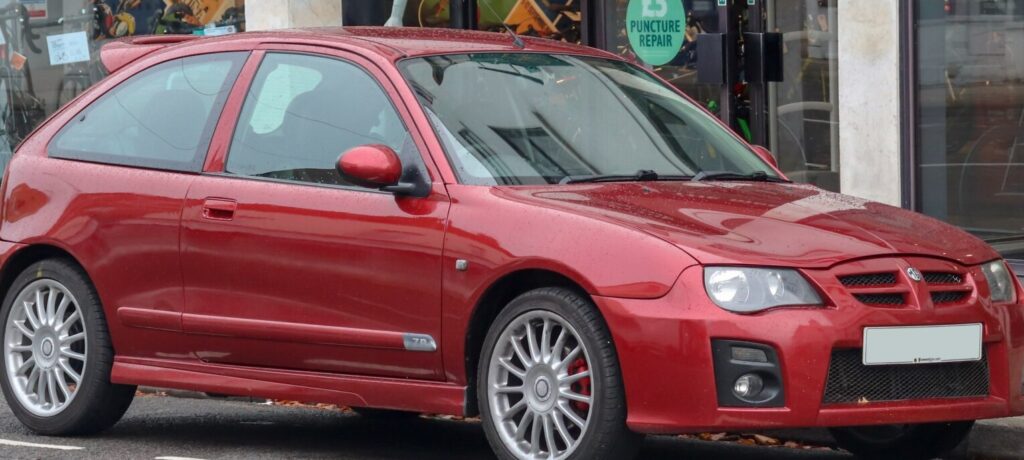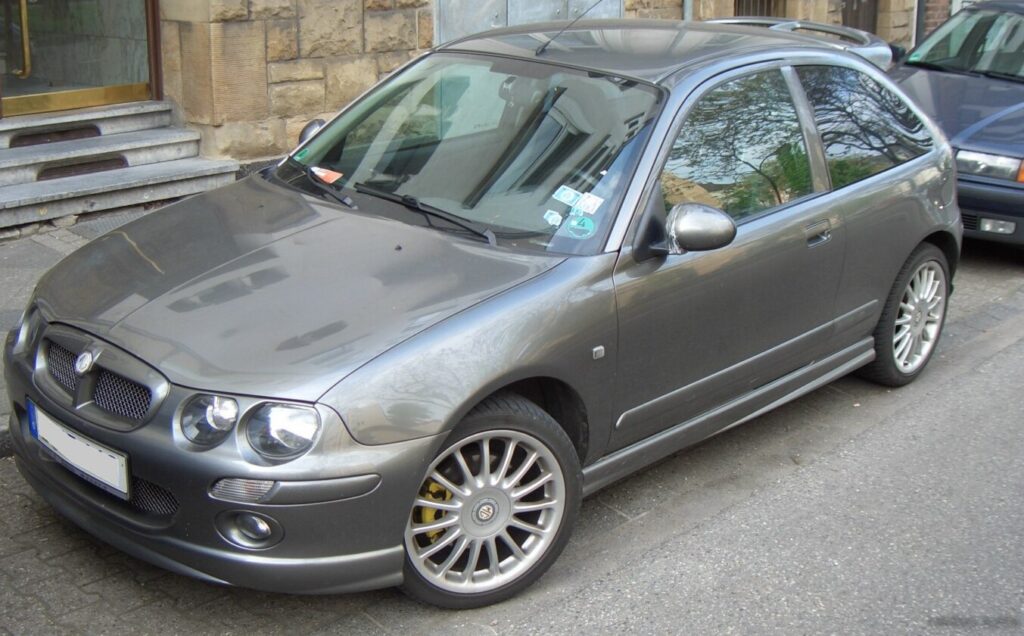
The MG ZR 1.8 i 16V, produced between 2001 and 2003, was a compact hatchback positioned as a sporting option within the Rover/MG range. It represented a significant attempt by MG to recapture its performance heritage following the acquisition of Rover by BMW in 1994. The ZR, based on the Rover 45 platform (internally designated as the X10), aimed to offer a more dynamic driving experience than its more conservatively styled sibling. The 1.8L engine with a Continuously Variable Transmission (CVT) represented a mid-range offering in the ZR lineup, slotting between the base 1.4L models and the more potent 2.0L VVC variants. This combination aimed to provide a balance of fuel efficiency and acceptable performance for the average driver, while still retaining some of the MG brand’s sporting character.
Technical Specifications
| Brand | MG |
| Model | ZR |
| Generation | ZR |
| Type (Engine) | 1.8 i 16V (117 Hp) CVT |
| Start of production | 2001 |
| End of production | 2003 |
| Powertrain Architecture | Internal Combustion engine |
| Body type | Hatchback |
| Seats | 5 |
| Doors | 3/5 |
| Fuel consumption (urban) | 11.5 l/100 km (20.5 US mpg) |
| Fuel consumption (extra urban) | 6.3 l/100 km (37.3 US mpg) |
| Fuel consumption (combined) | 7.3 l/100 km (32.2 US mpg) |
| Fuel Type | Petrol (Gasoline) |
| Acceleration 0 – 100 km/h | 10 sec |
| Acceleration 0 – 62 mph | 10 sec |
| Acceleration 0 – 60 mph | 9.5 sec |
| Maximum speed | 185 km/h (114.95 mph) |
| Weight-to-power ratio | 9.1 kg/Hp |
| Weight-to-torque ratio | 6.7 kg/Nm |
| Power | 117 Hp @ 5500 rpm |
| Torque | 160 Nm @ 2750 rpm (118.01 lb.-ft. @ 2750 rpm) |
| Engine layout | Front, Transverse |
| Engine Model/Code | 18K4F |
| Engine displacement | 1795 cm3 (109.54 cu. in.) |
| Number of cylinders | 4 |
| Engine configuration | Inline |
| Cylinder Bore | 80 mm (3.15 in.) |
| Piston Stroke | 89.3 mm (3.52 in.) |
| Compression ratio | 10.5:1 |
| Number of valves per cylinder | 4 |
| Fuel injection system | Multi-port manifold injection |
| Engine aspiration | Naturally aspirated |
| Valvetrain | DOHC |
| Engine oil capacity | 4.5 l (4.76 US qt | 3.96 UK qt) |
| Coolant capacity | 4.8 l (5.07 US qt | 4.22 UK qt) |
| Kerb Weight | 1070 kg (2358.95 lbs.) |
| Max. weight | 1530 kg (3373.07 lbs.) |
| Max load | 460 kg (1014.13 lbs.) |
| Trunk (boot) space – minimum | 304 l (10.74 cu. ft.) |
| Trunk (boot) space – maximum | 1090 l (38.49 cu. ft.) |
| Fuel tank capacity | 50 l (13.21 US gal | 11 UK gal) |
| Length | 4011 mm (157.91 in.) |
| Width | 1690 mm (66.54 in.) |
| Height | 1400 mm (55.12 in.) |
| Wheelbase | 2502 mm (98.5 in.) |
| Front track | 1472 mm (57.95 in.) |
| Rear track | 1457 mm (57.36 in.) |
| Drivetrain Architecture | Front wheel drive |
| Number of gears | 1 (CVT) |
| Front suspension | Spring Strut |
| Rear suspension | Coil spring |
| Front brakes | Ventilated discs |
| Rear brakes | Drum |
| Steering type | Steering rack and pinion |
| Power steering | Hydraulic |
| Tires size | 205/50 R16 |
| Wheel rims size | 16 |
Powertrain & Engine Architecture
The MG ZR 1.8 i 16V utilized the 18K4F engine, a 1.8-liter, inline-four cylinder powerplant. This engine was a derivative of the Rover K-Series, known for its compact dimensions and lightweight construction. The 18K4F featured a multi-port fuel injection system and a double overhead camshaft (DOHC) valvetrain, contributing to its relatively high specific output. The engine produced 117 horsepower at 5500 rpm and 160 Nm (118 lb-ft) of torque at 2750 rpm. The key differentiating factor for this variant was the use of a Continuously Variable Transmission (CVT). Unlike traditional automatic transmissions with fixed gear ratios, the CVT offered a seamless and stepless gear change, theoretically optimizing engine speed for efficiency or performance. However, the CVT used in the ZR was not known for its sporty character, often exhibiting a “rubber band” feel during acceleration.
Driving Characteristics
The 1.8L CVT-equipped ZR offered a comfortable, if not particularly exhilarating, driving experience. The CVT prioritized smooth acceleration over outright speed. While the engine provided adequate power for everyday driving, the CVT’s programming often resulted in the engine droning at a constant rpm during acceleration, lacking the responsiveness of a traditional manual or even a conventional automatic. Compared to the 2.0L VVC models, the 1.8L felt noticeably slower, particularly in overtaking situations. The manual transmission versions of the 1.8L offered a more engaging driving experience, allowing the driver to better utilize the engine’s powerband. The ZR’s suspension, while generally competent, was tuned for a balance between comfort and handling, resulting in a slightly softer ride than some of its more focused rivals.
Equipment & Trim Levels
The 1.8 i 16V CVT typically came equipped with a reasonable level of standard features. Interior appointments included cloth upholstery, a basic stereo system, and power windows. Air conditioning was often standard, but could be optional depending on the specific package. Optional extras included alloy wheels, upgraded audio systems, and a sunroof. The ZR’s interior design was functional but lacked the premium feel of some competitors. Trim levels varied, but generally focused on cosmetic enhancements such as different seat fabrics and exterior styling cues.
Chassis & Braking
The MG ZR utilized a front-wheel-drive layout with independent front suspension (MacPherson strut) and a semi-independent rear suspension (coil spring). Braking duties were handled by ventilated discs on the front wheels and drum brakes on the rear. The braking system was adequate for the car’s weight and performance, but lacked the stopping power of larger, more powerful ZR variants. The suspension setup provided a reasonable compromise between ride comfort and handling, although the rear drum brakes were a cost-saving measure that detracted from overall braking performance.
Market Reception & Comparison
The MG ZR 1.8 i 16V CVT received mixed reviews from automotive critics. While the car was praised for its affordability and relatively comfortable ride, the CVT transmission was a common point of criticism. Many reviewers found the CVT’s operation to be uninspiring and lacking in responsiveness. Compared to rivals like the Ford Focus and Vauxhall Astra, the ZR offered a more sporting image but lacked the refinement and overall polish of those competitors. Fuel economy was reasonable for its class, but not exceptional. Reliability was a concern, as with many British Leyland/Rover-era vehicles, and the K-Series engine was known for potential head gasket issues if not properly maintained.
Legacy
The MG ZR, and particularly the 1.8 i 16V CVT variant, has become a relatively affordable entry point into classic MG ownership. While not highly sought after by collectors, these cars offer a unique blend of British styling and reasonably modern technology. The 18K4F engine, when properly maintained, can be a reliable powerplant. However, potential buyers should be aware of the K-Series engine’s susceptibility to head gasket failure and the CVT’s potential for long-term durability issues. Today, the ZR represents a final, albeit flawed, attempt by MG to produce a genuinely sporting and engaging compact hatchback.