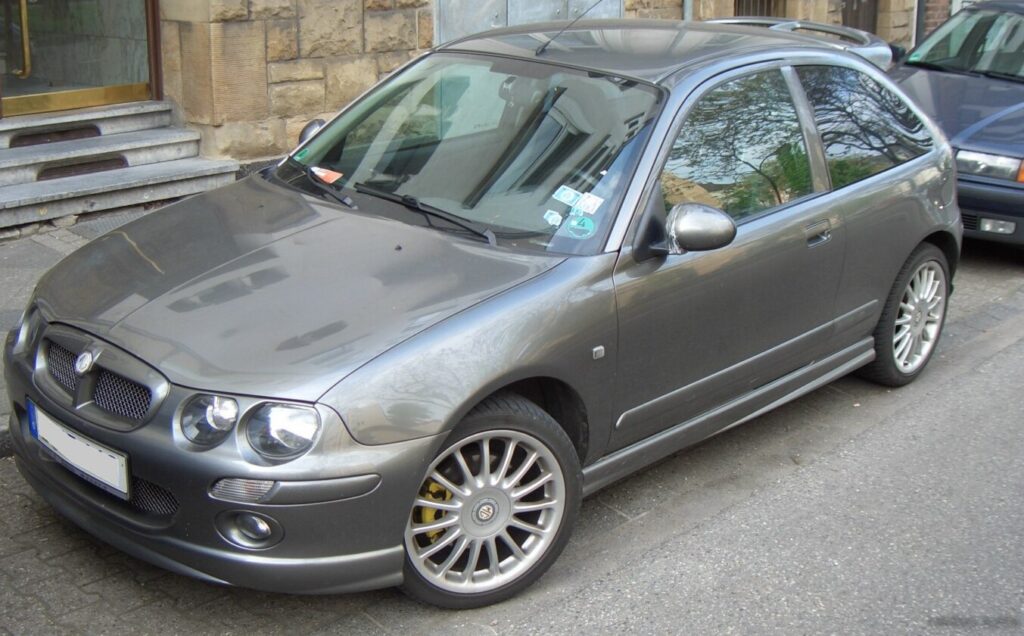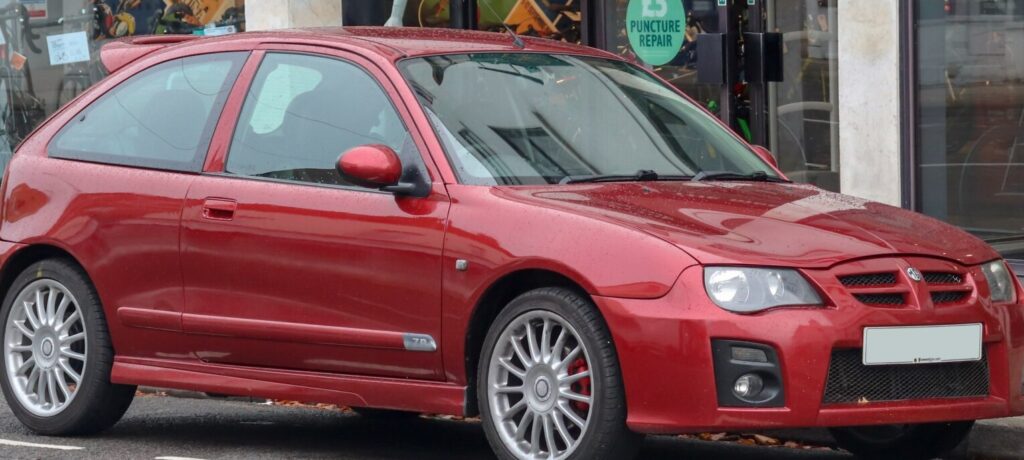
The MG ZR 1.8 16V VVC, produced from 2004 to 2005, represents a facelifted iteration of the ZR model, part of the X10 generation. Introduced as a rebadged Rover 200 following BMW’s divestment of the Rover Group, the ZR aimed to inject a sporting image into the small hatchback segment. The 1.8 VVC variant occupied a mid-range position within the ZR lineup, offering a balance between performance and affordability, slotting above the 1.4-liter models and below the more potent ZR 190. This model was primarily marketed in the United Kingdom and Europe, attempting to appeal to drivers seeking a dynamically engaging and relatively affordable hatchback.
Technical Specifications
| Brand | MG |
| Model | ZR |
| Generation | ZR (facelift 2004) |
| Type (Engine) | 1.8 16V VVC (160 Hp) |
| Start of production | 2004 |
| End of production | 2005 |
| Powertrain Architecture | Internal Combustion engine |
| Body type | Hatchback |
| Seats | 5 |
| Doors | 3/5 |
| Fuel consumption (urban) | 10.4 l/100 km (22.6 US mpg, 27.2 UK mpg, 9.6 km/l) |
| Fuel consumption (extra urban) | 5.8 l/100 km (40.6 US mpg, 48.7 UK mpg, 17.2 km/l) |
| Fuel consumption (combined) | 7.5 l/100 km (31.4 US mpg, 37.7 UK mpg, 13.3 km/l) |
| CO2 emissions | 179 g/km |
| Fuel Type | Petrol (Gasoline) |
| Acceleration 0 – 100 km/h | 7.8 sec |
| Acceleration 0 – 62 mph | 7.8 sec |
| Acceleration 0 – 60 mph | 7.4 sec |
| Maximum speed | 210 km/h (130.49 mph) |
| Emission standard | Euro 3 |
| Weight-to-power ratio | 7 kg/Hp, 142.2 Hp/tonne |
| Weight-to-torque ratio | 6.5 kg/Nm, 154.7 Nm/tonne |
| Power | 160 Hp @ 6900 rpm |
| Power per litre | 89.1 Hp/l |
| Torque | 174 Nm @ 4700 rpm (128.34 lb.-ft. @ 4700 rpm) |
| Maximum engine speed | 7100 rpm |
| Engine layout | Front, Transverse |
| Engine Model/Code | 18K4K |
| Engine displacement | 1796 cm3 (109.6 cu. in.) |
| Number of cylinders | 4 |
| Engine configuration | Inline |
| Cylinder Bore | 80 mm (3.15 in.) |
| Piston Stroke | 89.3 mm (3.52 in.) |
| Number of valves per cylinder | 4 |
| Fuel injection system | Multi-port manifold injection |
| Engine aspiration | Naturally aspirated engine |
| Valvetrain | DOHC |
| Engine oil capacity | 4.5 l (4.76 US qt | 3.96 UK qt) |
| Coolant capacity | 4.8 l (5.07 US qt | 4.22 UK qt) |
| Kerb Weight | 1125 kg (2480.2 lbs.) |
| Max. weight | 1550 kg (3417.17 lbs.) |
| Max load | 425 kg (936.96 lbs.) |
| Trunk (boot) space – minimum | 304 l (10.74 cu. ft.) |
| Fuel tank capacity | 50 l (13.21 US gal | 11 UK gal) |
| Max. roof load | 65 kg (143.3 lbs.) |
| Permitted trailer load with brakes (12%) | 1000 kg (2204.62 lbs.) |
| Permitted trailer load without brakes | 500 kg (1102.31 lbs.) |
| Permitted towbar download | 70 kg (154.32 lbs.) |
| Length | 4011 mm (157.91 in.) |
| Width | 1688 mm (66.46 in.) |
| Width including mirrors | 1946 mm (76.61 in.) |
| Height | 1395 mm (54.92 in.) |
| Wheelbase | 2500 mm (98.43 in.) |
| Front track | 1473 mm (57.99 in.) |
| Rear track | 1466 mm (57.72 in.) |
| Minimum turning circle | 10 m (32.81 ft.) |
| Drivetrain | Front wheel drive |
| Number of gears | 5 |
| Gearbox type | Manual transmission |
| Front brakes | Ventilated discs, 282 mm |
| Rear brakes | Disc, 260 mm |
| Assisting systems | ABS (Anti-lock braking system) |
| Steering type | Steering rack and pinion |
| Power steering | Hydraulic Steering |
| Tires size | 205/50 R16; 205/45 R17 |
| Wheel rims size | 7J x 16; 7J x 17 |
Powertrain & Engine Architecture
The MG ZR 1.8 16V VVC utilized the 18K4K engine, a 1.8-liter inline-four cylinder powerplant. This engine was derived from the K-Series engine family developed by Rover, and featured Variable Valve Control (VVC) technology. VVC altered the valve timing to optimize performance across the rev range, providing increased power and torque compared to non-VVC versions. The 18K4K employed multi-point fuel injection and a double overhead camshaft (DOHC) configuration. The engine produced 160 horsepower at 6900 rpm and 174 Nm (128.34 lb-ft) of torque at 4700 rpm. The engine was transversely mounted and paired with a five-speed manual transmission, delivering power to the front wheels. The transmission’s gear ratios were geared towards providing a balance of acceleration and fuel efficiency.
Driving Characteristics
The 1.8 VVC engine provided a noticeable step up in performance compared to the lower-displacement ZR models. Acceleration from 0 to 60 mph was achieved in approximately 7.4-7.8 seconds, and the car had a top speed of around 130 mph. While not a particularly fast car by modern standards, the 1.8 VVC offered a lively and engaging driving experience. The VVC system contributed to a relatively flat torque curve, making the engine responsive in most driving situations. The five-speed manual transmission allowed for precise gear selection, and the car felt nimble and well-balanced in corners. Compared to the ZR 190, the 1.8 VVC offered a more accessible power delivery, making it easier to drive on a daily basis. However, it lacked the outright punch of the higher-powered variant.
Equipment & Trim Levels
The MG ZR 1.8 16V VVC typically came equipped with features such as power steering, ABS brakes, electric front windows, and a basic stereo system. Higher trim levels added features like alloy wheels, air conditioning, and upgraded interior trim. Interior upholstery was typically cloth, with options for leather available. The dashboard layout was functional and driver-focused, with clear instrumentation. Optional extras included a sunroof, upgraded sound system, and metallic paint finishes.
Chassis & Braking
The MG ZR utilized a MacPherson strut front suspension and a multi-link rear suspension. The suspension was tuned to provide a sporty ride, with good body control and responsive handling. The 1.8 VVC models typically featured ventilated disc brakes at the front and solid disc brakes at the rear. The braking system provided adequate stopping power for everyday driving, although it lacked the sophistication of more advanced systems found on higher-end vehicles. Stabilizer bars were fitted to both the front and rear axles to reduce body roll during cornering.
Market Reception & Comparison
The MG ZR 1.8 VVC was generally well-received by automotive critics, who praised its sporty handling and engaging driving experience. However, some criticized its interior quality and perceived lack of refinement compared to rivals such as the Volkswagen Golf and Ford Focus. Fuel economy was considered average for its class. Compared to the 1.4-liter ZR models, the 1.8 VVC offered a significant performance upgrade, but at a higher price point. The ZR 190 provided even more performance, but was considerably more expensive and less fuel-efficient.
Legacy
The MG ZR, including the 1.8 VVC variant, had a relatively short production run. While not a commercial success, the ZR helped to revive the MG brand and establish a sporting image. The 18K4K engine, while prone to head gasket failures if not properly maintained, proved to be a reliable and durable powerplant. Today, the MG ZR 1.8 VVC is a popular choice among enthusiasts seeking an affordable and engaging classic hatchback. Parts availability can be a challenge, but a dedicated community of owners and specialists exists to support the car. The ZR’s combination of sporty handling, accessible performance, and retro styling has ensured its continued appeal in the used car market.