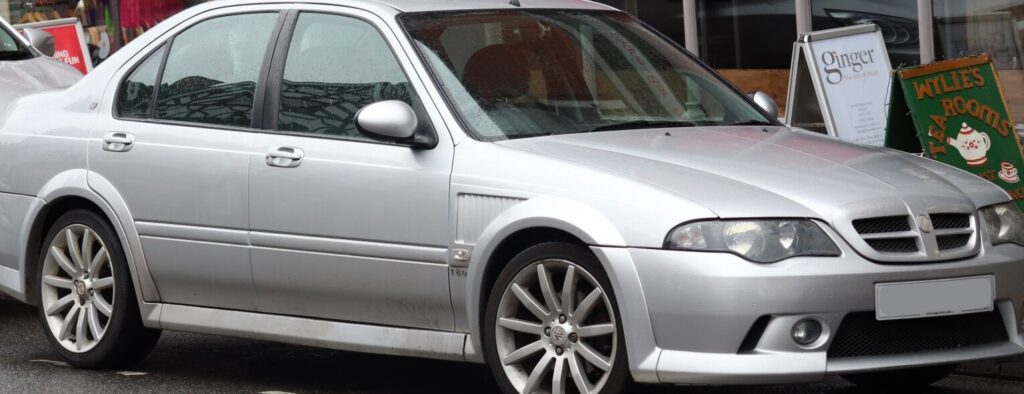
The MG ZS 1.8 16V, produced between 2001 and 2005, represented a significant step for MG Motor, then under the ownership of the Phoenix Consortium. This compact sedan, positioned as a mainstream offering, aimed to revitalize the MG brand in a competitive market. It was built on the platform initially developed by Rover, and represented a move towards more modern design and engineering for the British marque. The 1.8L 16V variant occupied a middle ground in the ZS lineup, offering a balance between performance and affordability, slotting above the base 1.4L model and below the sportier, higher-output versions.
Technical Specifications
| Brand | MG |
| Model | ZS |
| Generation | ZS |
| Type (Engine) | 1.8 16V (117 Hp) |
| Start of production | 2001 |
| End of production | 2005 |
| Powertrain Architecture | Internal Combustion engine |
| Body type | Sedan |
| Seats | 5 |
| Doors | 4 |
| Fuel consumption (urban) | 9.7 l/100 km (24.2 US mpg) |
| Fuel consumption (extra urban) | 5.8 l/100 km (40.6 US mpg) |
| Fuel consumption (combined) | 7.3 l/100 km (32.2 US mpg) |
| Fuel Type | Petrol (Gasoline) |
| Acceleration 0 – 100 km/h | 9 sec |
| Acceleration 0 – 62 mph | 9 sec |
| Acceleration 0 – 60 mph | 8.6 sec |
| Maximum speed | 11.81 mph (19 km/h) |
| Weight-to-power ratio | 9.6 kg/Hp |
| Weight-to-torque ratio | 7 kg/Nm |
| Power | 117 Hp @ 5500 rpm |
| Power per litre | 65.2 Hp/l |
| Torque | 160 Nm @ 2750 rpm (118.01 lb.-ft. @ 2750 rpm) |
| Engine layout | Front, Transverse |
| Engine Model/Code | 18K4F |
| Engine displacement | 1795 cm3 (109.54 cu. in.) |
| Number of cylinders | 4 |
| Engine configuration | Inline |
| Cylinder Bore | 80 mm (3.15 in.) |
| Piston Stroke | 89.3 mm (3.52 in.) |
| Compression ratio | 10.5:1 |
| Number of valves per cylinder | 4 |
| Fuel injection system | Multi-port manifold injection |
| Engine aspiration | Naturally aspirated |
| Valvetrain | DOHC |
| Engine oil capacity | 4.5 l (4.76 US qt | 3.96 UK qt) |
| Kerb Weight | 1125 kg (2480.2 lbs.) |
| Max. weight | 1640 kg (3615.58 lbs.) |
| Max load | 515 kg (1135.38 lbs.) |
| Trunk (boot) space – minimum | 470 l (16.6 cu. ft.) |
| Trunk (boot) space – maximum | 810 l (28.6 cu. ft.) |
| Fuel tank capacity | 55 l (14.53 US gal | 12.1 UK gal) |
| Length | 4520 mm (177.95 in.) |
| Width | 1700 mm (66.93 in.) |
| Height | 1390 mm (54.72 in.) |
| Wheelbase | 2620 mm (103.15 in.) |
| Front track | 1480 mm (58.27 in.) |
| Rear track | 1470 mm (57.87 in.) |
| Drivetrain Architecture | Front wheel drive |
| Drive wheel | Front wheel drive |
| Number of gears | 5 gears, manual transmission |
| Front suspension | Spring Strut |
| Rear suspension | Coil spring |
| Front brakes | Ventilated discs |
| Rear brakes | Disc |
| Assisting systems | ABS (Anti-lock braking system) |
| Steering type | Steering rack and pinion |
| Power steering | Hydraulic Steering |
| Tires size | 205/45 R17 |
Powertrain & Engine Architecture
The MG ZS 1.8 16V was powered by the 18K4F engine, a 1.8-liter inline-four cylinder gasoline engine. This engine, derived from the Rover K-series, featured a double overhead camshaft (DOHC) valvetrain with four valves per cylinder. It utilized a multi-port fuel injection system, providing a reasonable balance of power and fuel efficiency. The engine produced 117 horsepower at 5500 rpm and 160 Nm (118 lb-ft) of torque at 2750 rpm. The 18K4F engine had a compression ratio of 10.5:1. The engine was transversely mounted, driving the front wheels. While not a particularly advanced engine design, it was known for its relative reliability and ease of maintenance. The 5-speed manual transmission was the standard offering, providing adequate gear ratios for everyday driving.
Driving Characteristics
The 1.8L engine provided a noticeable improvement in performance over the base 1.4L ZS. Acceleration from 0-60 mph took approximately 8.6 seconds, making it competitive within its class. The engine felt responsive enough for typical commuting and highway driving, although it lacked the outright punch of the later, more powerful ZS variants. The 5-speed manual transmission offered a decent driving experience, with well-spaced gear ratios. However, it wasn’t a particularly sporty setup, prioritizing comfort and ease of use over engaging driving dynamics. Compared to the higher-output ZS models, the 1.8L felt less eager to rev and offered a more relaxed driving experience.
Equipment & Trim Levels
The MG ZS 1.8 16V typically came equipped with features such as power steering, central locking, electric front windows, and an AM/FM radio. Higher trim levels offered options like air conditioning, alloy wheels, a sunroof, and upgraded interior trim. Interior upholstery was generally cloth, with a relatively simple dashboard layout. The ZS aimed for a practical and functional interior rather than a luxurious one. Optional extras included a CD player, rear electric windows, and metallic paint finishes.
Chassis & Braking
The MG ZS featured a MacPherson strut front suspension and a coil spring rear suspension. This setup provided a comfortable ride, although it wasn’t particularly sporty. The front brakes were ventilated discs, while the rear brakes were solid discs. Anti-lock Braking System (ABS) was standard, enhancing safety. The ZS’s chassis was designed for stability and comfort, rather than aggressive handling. The relatively modest weight of the vehicle (around 1125 kg or 2480 lbs) helped to offset the engine’s moderate power output.
Market Reception & Comparison
The MG ZS 1.8 16V received mixed reviews from automotive critics. It was generally praised for its affordability, spacious interior, and comfortable ride. However, it was often criticized for its somewhat bland styling and lack of driving excitement. Compared to rivals like the Ford Focus and Vauxhall Astra, the ZS offered a competitive price point but lacked the refinement and brand recognition of its competitors. Fuel economy was reasonable for the time, averaging around 32.2 US mpg in combined driving. Reliability was generally considered average, with some reports of minor electrical issues.
Legacy
The MG ZS 1.8 16V, while not a groundbreaking vehicle, played a role in MG’s attempt to re-establish itself in the automotive market. Today, the ZS is a relatively affordable used car, appealing to buyers looking for a practical and economical sedan. The 18K4F engine is generally considered reliable, although regular maintenance is essential. Parts availability can be a challenge, given the age of the vehicle and the limited production run. The ZS represents a snapshot of British automotive engineering during a period of transition and ultimately, a reminder of a brand striving for a comeback.