
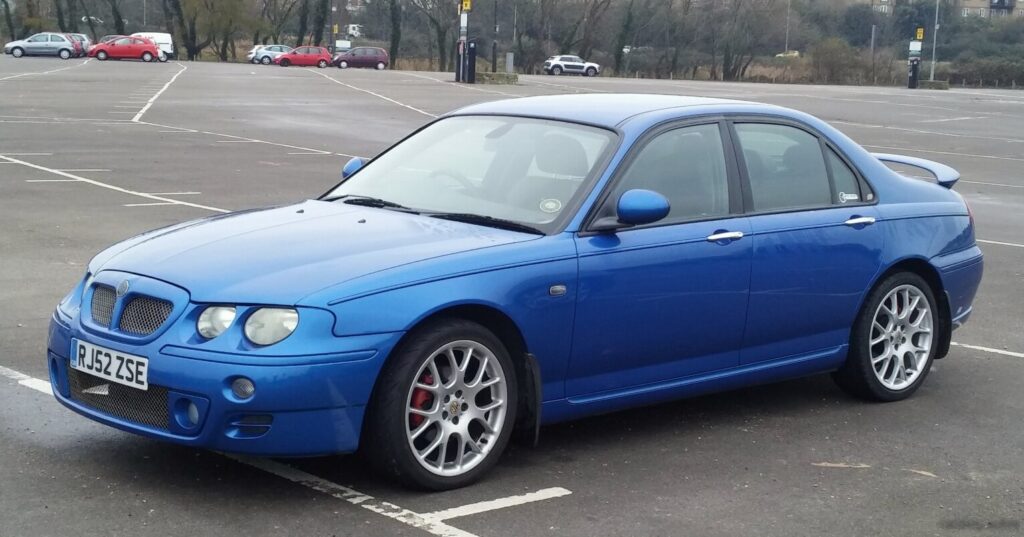
The MG ZT 1.8 i 16V Turbo, produced between 2003 and 2005, was a performance-oriented sedan positioned within the broader MG ZT range. Built upon the Rover 75 platform (internally designated X20 and often referred to as the 1HX0/A3 platform), the ZT represented MG’s attempt to inject sporting character into a traditionally conservative executive car. The 1.8L Turbo variant aimed to offer a balance between performance and affordability, serving as a mid-range option in the ZT lineup, slotting below the more powerful V6 models and above the naturally aspirated 1.8-liter non-turbo version. It was primarily marketed in the United Kingdom and Europe, representing a final flourish for the MG brand before its eventual collapse.
Technical Specifications
| Brand | MG |
| Model | ZT |
| Generation | ZT |
| Type (Engine) | 1.8 i 16V Turbo (160 Hp) |
| Start of production | 2003 |
| End of production | 2005 |
| Powertrain Architecture | Internal Combustion engine |
| Body type | Sedan |
| Seats | 5 |
| Doors | 4 |
| Fuel consumption (urban) | 11.4 l/100 km (20.6 US mpg) |
| Fuel consumption (extra urban) | 6.1 l/100 km (38.6 US mpg) |
| Fuel consumption (combined) | 7.8 l/100 km (30.2 US mpg) |
| Fuel Type | Petrol (Gasoline) |
| Acceleration 0 – 100 km/h | 11.6 sec |
| Acceleration 0 – 62 mph | 11.6 sec |
| Acceleration 0 – 60 mph | 11 sec |
| Maximum speed | 195 km/h (121.17 mph) |
| Weight-to-power ratio | 9 kg/Hp |
| Weight-to-torque ratio | 6.7 kg/Nm |
| Power | 160 Hp @ 5500 rpm |
| Torque | 215 Nm @ 6750 rpm (158.58 lb.-ft. @ 6750 rpm) |
| Engine layout | Front, Transverse |
| Engine Model/Code | 18K4G |
| Engine displacement | 1796 cm3 (109.6 cu. in.) |
| Number of cylinders | 4 |
| Engine configuration | Inline |
| Cylinder Bore | 80 mm (3.15 in.) |
| Piston Stroke | 89.3 mm (3.52 in.) |
| Compression ratio | 9.2:1 |
| Number of valves per cylinder | 4 |
| Fuel injection system | Multi-port manifold injection |
| Engine aspiration | Turbocharger, Intercooler |
| Valvetrain | DOHC |
| Engine oil capacity | 4.5 l (4.76 US qt | 3.96 UK qt) |
| Coolant capacity | 6.2 l (6.55 US qt | 5.46 UK qt) |
| Kerb Weight | 1440 kg (3174.66 lbs.) |
| Max. weight | 1940 kg (4276.97 lbs.) |
| Max load | 500 kg (1102.31 lbs.) |
| Trunk (boot) space – minimum | 432 l (15.26 cu. ft.) |
| Fuel tank capacity | 65 l (17.17 US gal | 14.3 UK gal) |
| Length | 4740 mm (186.61 in.) |
| Width | 1780 mm (70.08 in.) |
| Height | 1410 mm (55.51 in.) |
| Wheelbase | 2746 mm (108.11 in.) |
| Front track | 1505 mm (59.25 in.) |
| Rear track | 1505 mm (59.25 in.) |
| Drivetrain Architecture | Front wheel drive |
| Number of gears | 5 |
| Gearbox type | Manual transmission |
| Front suspension | Spring Strut |
| Rear suspension | Coil spring |
| Front brakes | Ventilated discs |
| Rear brakes | Disc |
| Assisting systems | ABS (Anti-lock braking system) |
| Steering type | Steering rack and pinion |
| Power steering | Hydraulic Steering |
| Tires size | 215/50 R17 |
Powertrain & Engine Architecture
The MG ZT 1.8 i 16V Turbo utilized the 18K4G engine, a 1.8-liter, inline-four cylinder powerplant. This engine was derived from the K-series engine family developed by Rover, but significantly enhanced with the addition of a Garrett GT22 turbocharger and an intercooler. The engine featured multi-point fuel injection and a double overhead camshaft (DOHC) valvetrain with four valves per cylinder. The 9.2:1 compression ratio was a compromise between performance and reliability with forced induction. The engine produced 160 horsepower at 5500 rpm and 215 Nm (158.58 lb-ft) of torque at 6750 rpm. The engine was mated to a five-speed manual transmission, providing a relatively direct connection to the front wheels. The transmission was chosen for its durability and suitability for the engine’s power output.
Driving Characteristics
The 1.8 Turbo ZT offered a noticeable step up in performance compared to the naturally aspirated 1.8-liter model. While not as rapid as the V6 variants, the turbocharger provided a useful boost in mid-range acceleration. The five-speed manual transmission allowed drivers to keep the engine within its optimal power band. However, turbo lag was present, requiring drivers to downshift to access the engine’s full potential. The front-wheel-drive configuration, while common for its class, could exhibit torque steer under hard acceleration. The suspension, tuned for a sportier feel than the Rover 75, provided reasonably controlled handling, but the car’s weight (1440 kg / 3174.66 lbs) was always apparent. Gear ratios were fairly standard for the time, prioritizing usability over outright performance.
Equipment & Trim Levels
The 1.8 Turbo ZT typically came equipped with a reasonable level of standard features. Interior upholstery was generally cloth, although leather options were available. Standard equipment included power windows, central locking, an RDS stereo, and air conditioning. Higher trim levels, such as the ZT+, added features like alloy wheels, upgraded audio systems, and climate control. Optional extras included a sunroof, leather seats, and parking sensors. The dashboard layout was largely carried over from the Rover 75, with a wood and chrome finish providing a somewhat luxurious ambiance.
Chassis & Braking
The ZT 1.8 Turbo utilized a MacPherson strut front suspension and a multi-link coil spring rear suspension. The suspension was firmer than that of the Rover 75, aiming for a more engaging driving experience. Front brakes were ventilated discs, while rear brakes were solid discs. Anti-lock Braking System (ABS) was standard. Stabilizer bars were fitted front and rear to reduce body roll during cornering. The chassis was reinforced compared to the Rover 75 to handle the increased power output of the turbocharged engine.
Market Reception & Comparison
The MG ZT 1.8 Turbo was generally well-received by automotive critics as a competent and enjoyable sedan. It was praised for its improved performance over the standard 1.8-liter model and its relatively affordable price point. However, it was often overshadowed by the more powerful V6 variants. Compared to rivals like the Ford Mondeo and Vauxhall/Opel Vectra, the ZT offered a more distinctive styling and a more focused driving experience, but it lacked the brand recognition and extensive dealer network of its competitors. Fuel economy was reasonable for a turbocharged engine of its era, averaging around 30.2 US mpg on the combined cycle. Reliability was a concern, as with many British Leyland/Rover-derived vehicles, and parts availability can be an issue today.
Legacy
The MG ZT 1.8 Turbo, along with the rest of the ZT range, represents a poignant chapter in British automotive history. It was one of the last models produced by MG before the company’s financial collapse in 2005. Today, the ZT 1.8 Turbo has a small but dedicated following among enthusiasts. The 18K4G engine, while not without its quirks, is generally considered to be a robust unit when properly maintained. Used examples are relatively affordable, but finding well-maintained cars can be challenging. The car’s unique styling and sporting pretensions continue to appeal to those seeking a distinctive and engaging driving experience.
