
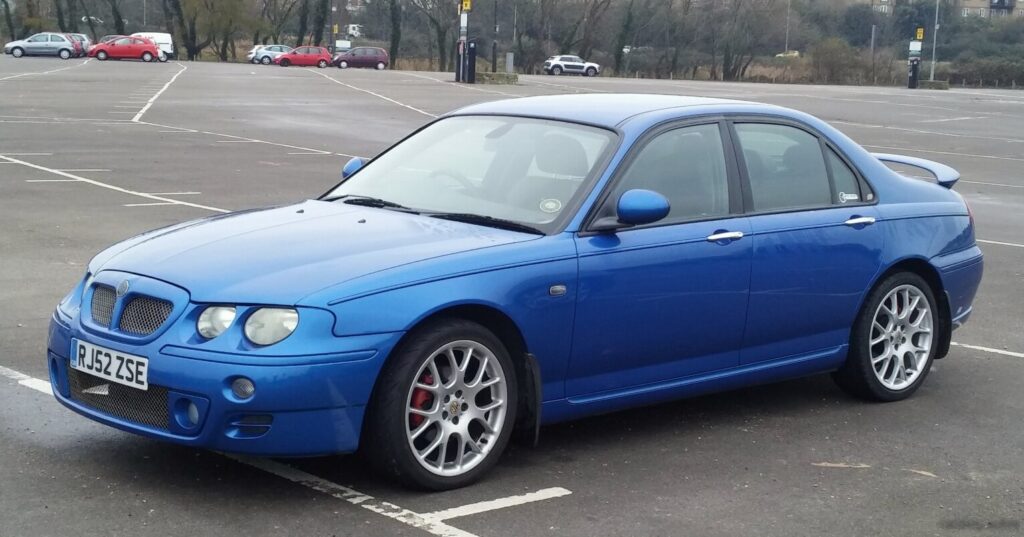
The MG ZT 2.0 CDTi, produced between 2003 and 2005, was a four-door sedan positioned as a sporting alternative within the British marque’s lineup. Built upon the Rover 75 platform (internally designated X20 and often referred to as the 1HX0), the ZT aimed to recapture some of MG’s sporting heritage. The 2.0 CDTi variant, powered by a common-rail diesel engine producing 116 horsepower, represented a balance between fuel efficiency and reasonable performance, targeting buyers seeking a comfortable and economical saloon with a touch of sporting flair. It occupied a mid-range position in the ZT lineup, slotting below the more powerful V6 models and above the entry-level 1.8-liter petrol versions.
Technical Specifications
| Brand | MG |
| Model | ZT |
| Generation | ZT |
| Type (Engine) | 2.0 CDTi (116 Hp) |
| Start of production | 2003 |
| End of production | 2005 |
| Powertrain Architecture | Internal Combustion engine |
| Body type | Sedan |
| Seats | 5 |
| Doors | 4 |
| Fuel consumption (urban) | 7.7 l/100 km (30.5 US mpg) |
| Fuel consumption (extra urban) | 4.7 l/100 km (50 US mpg) |
| Fuel consumption (combined) | 5.8 l/100 km (40.6 US mpg) |
| Fuel Type | Diesel |
| Acceleration 0 – 100 km/h | 11.7 sec |
| Acceleration 0 – 62 mph | 11.7 sec |
| Acceleration 0 – 60 mph | 11.1 sec |
| Maximum speed | 193 km/h (119.92 mph) |
| Weight-to-power ratio | 13.2 kg/Hp |
| Weight-to-torque ratio | 5.9 kg/Nm |
| Power | 116 Hp @ 4000 rpm |
| Power per litre | 59.5 Hp/l |
| Torque | 260 Nm @ 2000 rpm (191.77 lb.-ft. @ 2000 rpm) |
| Engine layout | Front, Transverse |
| Engine Model/Code | M47R / 204D2 |
| Engine displacement | 1951 cm3 (119.06 cu. in.) |
| Number of cylinders | 4 |
| Engine configuration | Inline |
| Cylinder Bore | 84 mm (3.31 in.) |
| Piston Stroke | 88 mm (3.46 in.) |
| Compression ratio | 18:1 |
| Number of valves per cylinder | 4 |
| Fuel injection system | Diesel Commonrail |
| Engine aspiration | Turbocharger, Intercooler |
| Engine oil capacity | 6.8 l (7.19 US qt | 5.98 UK qt) |
| Coolant | 8.2 l (8.66 US qt | 7.21 UK qt) |
| Kerb Weight | 1535 kg (3384.1 lbs.) |
| Max. weight | 2030 kg (4475.38 lbs.) |
| Max load | 495 kg (1091.29 lbs.) |
| Trunk (boot) space – minimum | 432 l (15.26 cu. ft.) |
| Fuel tank capacity | 65 l (17.17 US gal | 14.3 UK gal) |
| Length | 4740 mm (186.61 in.) |
| Width | 1780 mm (70.08 in.) |
| Height | 1410 mm (55.51 in.) |
| Wheelbase | 2746 mm (108.11 in.) |
| Front track | 1505 mm (59.25 in.) |
| Rear (Back) track | 1505 mm (59.25 in.) |
| Drivetrain Architecture | Front wheel drive |
| Drive wheel | Front wheel drive |
| Number of gears and type of gearbox | 5 gears, manual transmission |
| Front suspension | Spring Strut |
| Rear suspension | Coil spring |
| Front brakes | Ventilated discs |
| Rear brakes | Disc |
| Assisting systems | ABS (Anti-lock braking system) |
| Steering type | Steering rack and pinion |
| Power steering | Hydraulic Steering |
| Tires size | 225/45 R18 |
Powertrain & Engine Architecture
The heart of the ZT 2.0 CDTi was the M47R engine, a 1.951-liter inline-four cylinder diesel. This engine was sourced from BMW, a consequence of BMW’s ownership of Rover at the time of the ZT’s development. The ‘R’ designation indicates a right-hand drive configuration. The engine utilized a common-rail direct injection system, delivering fuel at extremely high pressure for improved combustion efficiency and reduced emissions. A turbocharger with an intercooler was employed to boost power output, providing 116 horsepower at 4000 rpm and a useful 260 Nm (191.77 lb-ft) of torque at just 2000 rpm. The engine featured four valves per cylinder and a compression ratio of 18:1. The ZT 2.0 CDTi was exclusively offered with a five-speed manual transmission, providing a relatively direct connection between the engine and the front wheels.
Driving Characteristics
The 2.0 CDTi powertrain delivered a respectable, if not exhilarating, driving experience. The relatively high torque output at low engine speeds made it a capable cruiser, providing ample power for overtaking maneuvers on the highway. However, the 11.7-second 0-60 mph acceleration time reflected its focus on economy rather than outright performance. Compared to the ZT 2.6 V6, the 2.0 CDTi felt noticeably slower, particularly at higher speeds. The five-speed manual transmission was well-matched to the engine’s characteristics, offering a reasonable spread of gears. The gear ratios were geared towards maximizing fuel efficiency, which meant that the engine could feel slightly strained when pushed hard. The front-wheel-drive configuration, while contributing to fuel economy, could exhibit some torque steer under hard acceleration.
Equipment & Trim Levels
The ZT 2.0 CDTi typically came equipped with a reasonable level of standard equipment. This included central locking, electric front windows, power steering, an ABS anti-lock braking system, and a basic stereo system. Interior upholstery was generally cloth, although leather options were available. Trim levels varied, with higher-spec models offering features such as alloy wheels, climate control, and upgraded audio systems. Optional extras included a sunroof, parking sensors, and heated front seats. The dashboard layout was shared with the Rover 75, featuring a wood and metal trim finish. The ZT generally aimed for a more driver-focused interior than the Rover 75, with sportier seats and a more prominent instrument cluster.
Chassis & Braking
The ZT 2.0 CDTi utilized a MacPherson strut front suspension and a coil spring rear suspension. The suspension setup was tuned to provide a balance between comfort and handling. Front brakes were ventilated discs, while rear brakes were solid discs. The braking system was adequate for the car’s weight and performance, but lacked the stopping power of the larger V6 models. The ZT’s chassis was relatively stiff, contributing to its handling stability. Stabilizer bars were fitted to both the front and rear axles to reduce body roll during cornering.
Market Reception & Comparison
The MG ZT 2.0 CDTi was generally well-received by automotive critics as a practical and economical saloon. It was praised for its comfortable ride, decent fuel economy (around 40.6 US mpg combined), and relatively low running costs. However, it was often criticized for its lack of outright performance compared to its V6 siblings. Compared to other diesel saloons of the time, such as the Ford Mondeo TDCi, the ZT offered a more premium feel and a more engaging driving experience, but at a slightly higher price point. Reliability was generally good, although some owners reported issues with the BMW-sourced engine components.
Legacy
The MG ZT 2.0 CDTi, along with the rest of the ZT range, represents a final attempt by MG to produce a competitive and desirable saloon car. While the model enjoyed a relatively short production run, it has gained a following among enthusiasts who appreciate its unique blend of British styling, BMW engineering, and affordable running costs. The M47R engine, while generally reliable, can be expensive to repair if major issues arise. Today, the ZT 2.0 CDTi can be found on the used car market at relatively affordable prices, making it an attractive option for buyers seeking a distinctive and economical saloon with a touch of sporting heritage. Parts availability can be a concern, but a dedicated network of MG enthusiasts and specialist parts suppliers helps to keep these cars on the road.
