
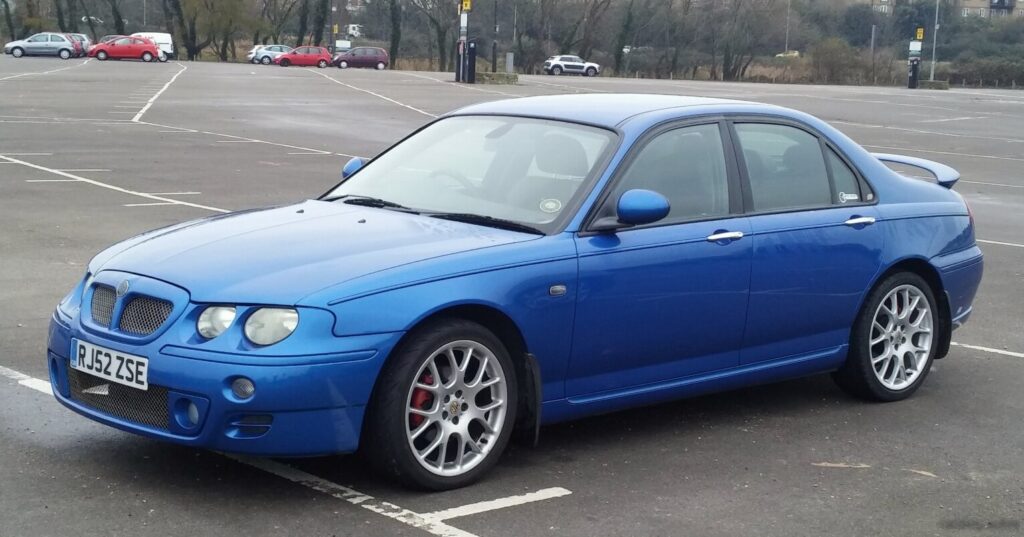
The MG ZT 2.5 i V6 24V, produced between 2001 and 2005, was a flagship sedan offered by MG, then under the ownership of MG Rover. Positioned as a sporty and refined alternative to more mainstream offerings, the ZT aimed to recapture some of the spirit of classic British saloons. It was built on the 75 platform (internally designated as the X20), but with a more aggressive design and performance-oriented tuning. The 2.5-liter V6 variant represented a mid-range offering within the ZT lineup, slotting between the 1.8-liter four-cylinder and the higher-performance 3.5-liter V8 models. This model aimed to provide a balance of power, refinement, and affordability for buyers seeking a distinctive British sedan.
Technical Specifications
| Brand | MG |
| Model | ZT |
| Generation | ZT |
| Type (Engine) | 2.5 i V6 24V (160 Hp) |
| Start of production | 2001 |
| End of production | 2005 |
| Powertrain Architecture | Internal Combustion engine |
| Body type | Sedan |
| Seats | 5 |
| Doors | 4 |
| Fuel consumption (urban) | 13.9 l/100 km (16.9 US mpg) |
| Fuel consumption (extra urban) | 7 l/100 km (33.6 US mpg) |
| Fuel consumption (combined) | 9.4 l/100 km (25 US mpg) |
| Fuel Type | Petrol (Gasoline) |
| Acceleration 0 – 100 km/h | 9.2 sec |
| Acceleration 0 – 62 mph | 9.2 sec |
| Acceleration 0 – 60 mph | 8.7 sec |
| Maximum speed | 211 km/h (131.11 mph) |
| Weight-to-power ratio | 9.3 kg/Hp |
| Weight-to-torque ratio | 6.5 kg/Nm |
| Power | 160 Hp @ 6250 rpm |
| Torque | 230 Nm @ 4000 rpm (169.64 lb.-ft. @ 4000 rpm) |
| Engine layout | Front, Transverse |
| Engine Model/Code | 25K4F |
| Engine displacement | 2497 cm3 (152.38 cu. in.) |
| Number of cylinders | 6 |
| Engine configuration | V-engine |
| Cylinder Bore | 80 mm (3.15 in.) |
| Piston Stroke | 82.8 mm (3.26 in.) |
| Compression ratio | 10.5:1 |
| Number of valves per cylinder | 4 |
| Fuel injection system | Multi-port manifold injection |
| Engine aspiration | Naturally aspirated engine |
| Engine oil capacity | 5.2 l (5.49 US qt | 4.58 UK qt) |
| Coolant capacity | 7.5 l (7.93 US qt | 6.6 UK qt) |
| Kerb Weight | 1485 kg (3273.86 lbs.) |
| Max. weight | 2000 kg (4409.25 lbs.) |
| Max load | 515 kg (1135.38 lbs.) |
| Trunk (boot) space – minimum | 432 l (15.26 cu. ft.) |
| Fuel tank capacity | 65 l (17.17 US gal | 14.3 UK gal) |
| Length | 4740 mm (186.61 in.) |
| Width | 1780 mm (70.08 in.) |
| Height | 1410 mm (55.51 in.) |
| Wheelbase | 2746 mm (108.11 in.) |
| Front track | 1505 mm (59.25 in.) |
| Rear track | 1505 mm (59.25 in.) |
| Drivetrain Architecture | Front wheel drive |
| Drive wheel | Front wheel drive |
| Number of gears | 5 gears, manual transmission |
| Front suspension | Spring Strut |
| Rear suspension | Coil spring |
| Front brakes | Ventilated discs |
| Rear brakes | Disc |
| Assisting systems | ABS (Anti-lock braking system) |
| Steering type | Steering rack and pinion |
| Power steering | Hydraulic Steering |
| Tires size | 225/45 R18 |
Powertrain & Engine Architecture
The heart of the ZT 2.5 i is the 2.5-liter KV6 engine, a naturally aspirated, 60-degree V6. This engine, designated as the 25K4F, was developed by MG Rover and represented a significant step up in refinement and performance compared to the earlier K-series four-cylinder engines. It featured a cast iron block with aluminum cylinder heads, and utilized multi-port fuel injection. The engine produced 160 horsepower at 6250 rpm and 230 Nm (169.64 lb-ft) of torque at 4000 rpm. The engine’s valvetrain employed four valves per cylinder, contributing to its relatively high specific output. The ZT 2.5 i was typically equipped with a five-speed manual transmission, although an automatic option was also available. The automatic transmission, a Jatco unit, was known for its smooth operation but could slightly impact acceleration compared to the manual.
Driving Characteristics
The ZT 2.5 i offered a comfortable and engaging driving experience. While not overtly sporty like the V8 models, the 2.5-liter V6 provided ample power for everyday driving and confident overtaking. The 0-60 mph time of around 8.7 seconds was respectable for its era. The manual transmission allowed for precise control, while the automatic offered convenience. The suspension, tuned for a balance between comfort and handling, provided a stable and predictable ride. Steering was well-weighted and offered good feedback. Compared to the 1.8-liter models, the 2.5 i felt significantly more responsive, and the V6 engine’s smooth power delivery made it a more enjoyable companion on longer journeys. However, it lacked the outright performance and exhaust note of the 3.5-liter V8.
Equipment & Trim Levels
The ZT 2.5 i typically came well-equipped, reflecting its position as a premium offering. Standard features included air conditioning, power windows, central locking, and an RDS stereo. Higher trim levels added features such as leather upholstery, heated front seats, a sunroof, and upgraded audio systems. Interior trim options included wood veneer or metallic finishes. The dashboard layout was generally well-designed and functional, although some materials felt less premium than those found in German competitors. Optional extras included satellite navigation and parking sensors.
Chassis & Braking
The ZT utilized a MacPherson strut front suspension and a multi-link rear suspension, providing a good balance of ride comfort and handling. The chassis was reinforced compared to the Rover 75, contributing to improved rigidity. Braking was handled by ventilated discs at the front and solid discs at the rear. Anti-lock braking system (ABS) was standard. The ZT 2.5 i’s weight of around 1485 kg (3273.86 lbs) meant that the braking system was adequate for most driving situations, but not exceptionally powerful.
Market Reception & Comparison
The MG ZT 2.5 i was generally well-received by automotive critics, who praised its stylish design, comfortable interior, and engaging driving experience. However, it faced stiff competition from established European brands such as BMW, Audi, and Mercedes-Benz. Fuel economy was reasonable for a V6 engine, averaging around 25 mpg in combined driving. Reliability was a mixed bag, with some owners reporting issues with the engine’s variable valve timing system and electrical components. Compared to the 1.8-liter ZT, the 2.5 i offered significantly more performance and refinement, but at a higher price point. The V8 models provided even greater performance, but were considerably more expensive to run and maintain.
Legacy
The MG ZT, and the 2.5 i variant specifically, has developed a cult following among enthusiasts. While MG Rover ultimately went into administration in 2005, the ZT remains a desirable classic car. The KV6 engine, while not without its quirks, is generally considered to be a robust and reliable unit when properly maintained. Today, well-maintained ZT 2.5 i models are sought after by collectors and enthusiasts who appreciate their distinctive styling, comfortable ride, and British heritage. Parts availability can be a challenge, but a dedicated network of specialists and enthusiasts helps to keep these cars on the road.
