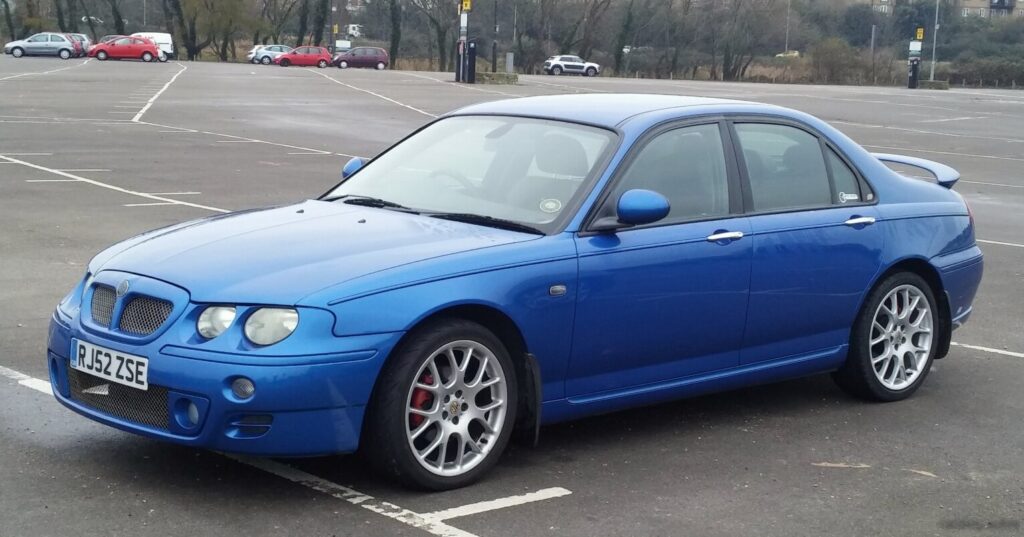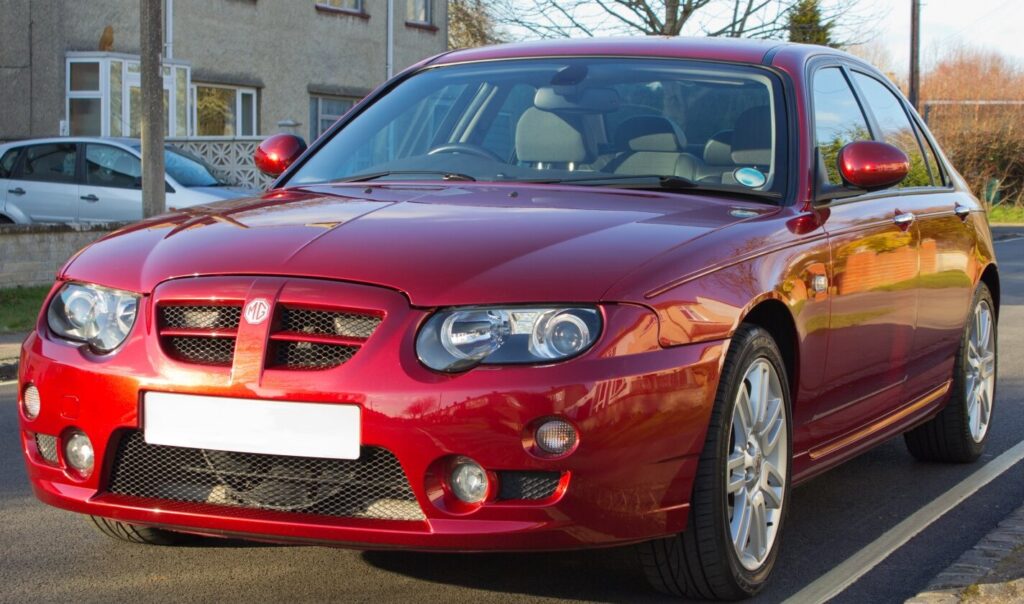
The MG ZT 1.8, produced during the 2004-2005 model years as part of the facelifted ZT range, represented an entry-level offering within the larger MG ZT sedan lineup. Built by MG Rover, the ZT was intended to revitalize the British marque’s image with a focus on sporting handling and a more contemporary design. The facelift, introduced in 2004, brought subtle styling revisions and aimed to address some of the criticisms leveled at the original model. This 1.8-liter variant, while not the performance flagship, played a crucial role in attracting a broader customer base seeking a comfortable and reasonably priced saloon.
Technical Specifications
| Brand | MG |
| Model | ZT |
| Generation | ZT (facelift 2004) |
| Type (Engine) | 1.8 (120 Hp) |
| Start of production | 2004 |
| End of production | 2005 |
| Powertrain Architecture | Internal Combustion engine |
| Body type | Sedan |
| Seats | 5 |
| Doors | 4 |
| Fuel consumption (urban) | 10.6 l/100 km (22.2 US mpg, 26.6 UK mpg, 9.4 km/l) |
| Fuel consumption (extra urban) | 6.1 l/100 km (38.6 US mpg, 46.3 UK mpg, 16.4 km/l) |
| Fuel consumption (combined) | 7.8 l/100 km (30.2 US mpg, 36.2 UK mpg, 12.8 km/l) |
| CO2 emissions | 184 g/km |
| Fuel Type | Petrol (Gasoline) |
| Acceleration 0 – 60 mph | 10.9 sec |
| Maximum speed | 195 km/h (121.17 mph) |
| Emission standard | Euro 3 |
| Weight-to-power ratio | 11.8 kg/Hp, 84.5 Hp/tonne |
| Weight-to-torque ratio | 8.9 kg/Nm, 112.7 Nm/tonne |
| Power | 120 Hp @ 5500 rpm |
| Power per litre | 66.8 Hp/l |
| Torque | 160 Nm @ 4000 rpm (118.01 lb.-ft. @ 4000 rpm) |
| Maximum engine speed | 6750 rpm |
| Engine layout | Front, Transverse |
| Engine Model/Code | 18K4F |
| Engine displacement | 1796 cm3 (109.6 cu. in.) |
| Number of cylinders | 4 |
| Engine configuration | Inline |
| Cylinder Bore | 80 mm (3.15 in.) |
| Piston Stroke | 89.3 mm (3.52 in.) |
| Compression ratio | 10.5:1 |
| Number of valves per cylinder | 4 |
| Fuel injection system | Multi-port manifold injection |
| Engine aspiration | Naturally aspirated engine |
| Valvetrain | DOHC |
| Engine oil capacity | 4.5 l (4.76 US qt | 3.96 UK qt) |
| Coolant | 6.2 l (6.55 US qt | 5.46 UK qt) |
| Kerb Weight | 1420-1565 kg (3130.56 – 3450.23 lbs.) |
| Max. weight | 1940 kg (4276.97 lbs.) |
| Max load | 375-520 kg (826.73 – 1146.4 lbs.) |
| Trunk (boot) space – minimum | 432 l (15.26 cu. ft.) |
| Trunk (boot) space – maximum | 674 l (23.8 cu. ft.) |
| Fuel tank capacity | 65 l (17.17 US gal | 14.3 UK gal) |
| Max. roof load | 80 kg (176.37 lbs.) |
| Permitted trailer load with brakes (12%) | 1200 kg (2645.55 lbs.) |
| Permitted trailer load without brakes | 750 kg (1653.47 lbs.) |
| Permitted towbar download | 100 kg (220.46 lbs.) |
| Length | 4747 mm (186.89 in.) |
| Width | 1778 mm (70 in.) |
| Height | 1417 mm (55.79 in.) |
| Wheelbase | 2746 mm (108.11 in.) |
| Drivetrain Architecture | The Internal combustion engine (ICE) drives the front wheels of the vehicle. |
| Drive wheel | Front wheel drive |
| Number of gears and type of gearbox | 5 gears, manual transmission |
| Front suspension | Independent, type McPherson with coil spring and anti-roll bar |
| Rear suspension | Independent multi-link spring suspension with stabilizer |
| Front brakes | Ventilated discs |
| Rear brakes | Disc |
| Assisting systems | ABS (Anti-lock braking system) |
| Steering type | Steering rack and pinion |
| Power steering | Hydraulic Steering |
| Tires size | 215/50 R17 |
| Wheel rims size | 7.5J x 17 |
Powertrain & Engine Architecture
The MG ZT 1.8 utilized the 18K4F engine, a 1.8-liter, naturally aspirated inline-four cylinder petrol engine. This engine was a product of the K-Series family, extensively used by Rover and MG. The 18K4F featured multi-point fuel injection and a double overhead camshaft (DOHC) valvetrain, contributing to its relatively smooth operation. While the K-Series engines were known for their potential, the 18K4F was tuned for economy and refinement rather than outright performance. The engine produced 120 horsepower at 5500 rpm and 160 Nm (118 lb-ft) of torque at 4000 rpm. The engine was typically paired with a five-speed manual transmission, but a Jatco-sourced four-speed automatic transmission was also available, and is the focus of this article. This automatic gearbox, while providing convenience, did impact acceleration and fuel economy compared to the manual version.
Driving Characteristics
The 1.8-liter engine with the automatic transmission delivered a comfortable, if not particularly exhilarating, driving experience. Acceleration from 0-60 mph took around 10.9 seconds, and top speed was approximately 121 mph. The automatic transmission, while smooth, had relatively long gear ratios, which meant the engine often felt strained during overtaking maneuvers. Compared to the higher-performance ZT variants, such as the V6 models, the 1.8 felt noticeably slower. However, it offered a more relaxed driving experience, particularly in urban environments. The automatic transmission prioritized fuel efficiency over sporty responsiveness, making it a suitable choice for drivers prioritizing comfort and ease of use.
Equipment & Trim Levels
The 1.8-liter ZT typically came equipped with a reasonable level of standard features. These included central locking, electric front windows, power steering, and an ABS anti-lock braking system. Interior upholstery was generally cloth, with options for leather upgrades. Trim levels varied, but even the base models offered a decent level of equipment. Optional extras included air conditioning, alloy wheels, and a CD player. The ZT aimed to provide a premium feel, with a relatively well-appointed interior for its price point. The 1.8 trim often served as a stepping stone for buyers who wanted the ZT’s styling and features without the higher price tag of the more powerful engines.
Chassis & Braking
The MG ZT featured independent suspension all around, with McPherson struts at the front and a multi-link setup at the rear. This suspension configuration provided a good balance between ride comfort and handling. The 1.8-liter models typically used ventilated disc brakes at the front and solid discs at the rear. The braking system was adequate for the car’s performance, but lacked the stopping power of the larger brake systems found on the V6 models. A stabilizer bar was fitted to both the front and rear suspension to reduce body roll during cornering.
Market Reception & Comparison
The MG ZT 1.8 received mixed reviews. Critics generally praised the car’s styling and comfortable ride, but noted the engine’s lack of outright performance, especially when paired with the automatic transmission. Fuel economy was considered average for its class. Compared to other saloons in its segment, such as the Ford Mondeo or Vauxhall Vectra, the ZT offered a more distinctive design and a more engaging driving experience, but often at a slightly higher price. The 1.8 automatic was often seen as a compromise – offering convenience but sacrificing some of the ZT’s sporting potential. The manual transmission version was generally preferred by enthusiasts.
Legacy
The MG ZT, and the 1.8-liter variant in particular, has developed a cult following among enthusiasts. While not known for exceptional reliability, the K-Series engine is relatively straightforward to maintain, and parts availability is generally good. The automatic transmission, however, can be prone to issues if not properly maintained. Today, well-maintained examples of the ZT 1.8 are becoming increasingly collectible, appealing to those seeking a stylish and affordable classic British saloon. The car represents a final chapter in MG Rover’s history, and a reminder of the brand’s ambition to create a modern, sporting saloon.