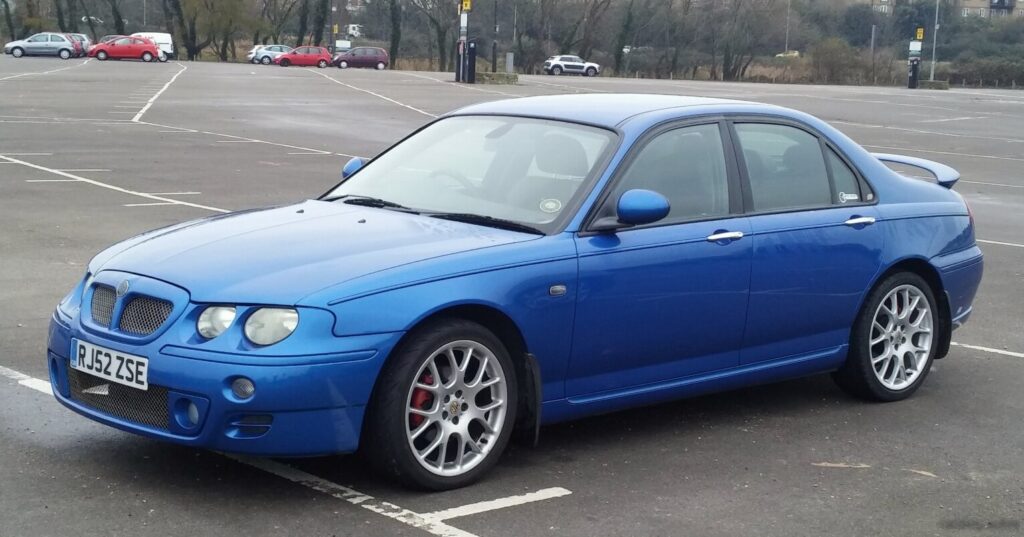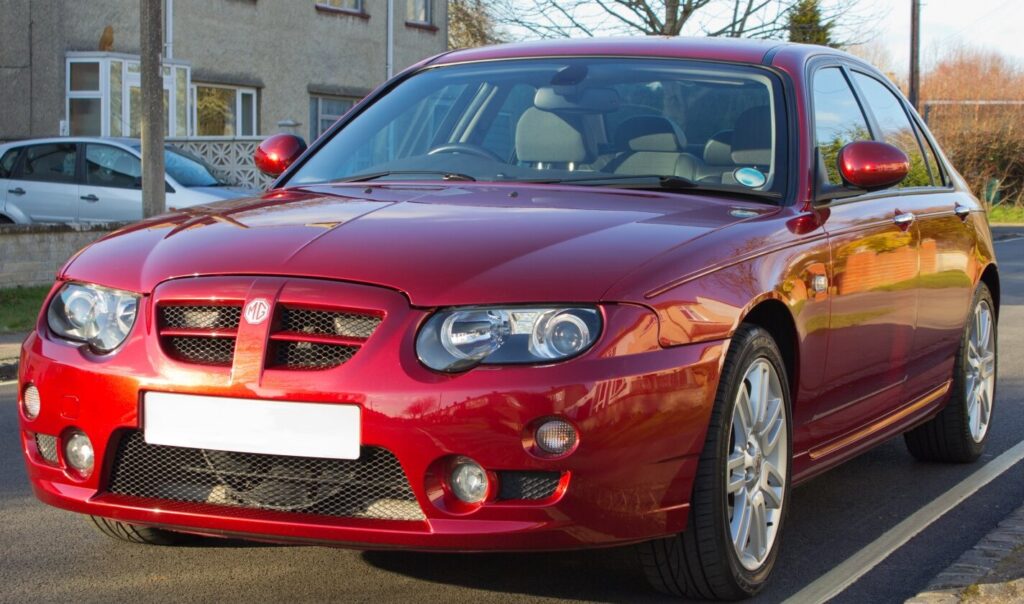
The MG ZT 1.8 Turbo, produced from 2004 to 2005, represented a significant offering in the British marque’s final years under MG Rover ownership. This facelifted version of the ZT, built on the 1HX0 platform shared with the Rover 75, aimed to inject some performance and modernity into the large family car segment. The 1.8 Turbo variant occupied a middle ground in the ZT lineup, positioned as a more accessible alternative to the high-performance 3.1 V6 models, while offering a more engaging driving experience than the base 1.8-liter naturally aspirated engine. It was primarily marketed in the United Kingdom and Europe, attempting to capture buyers seeking a blend of comfort, space, and respectable performance.
Technical Specifications
| Brand | MG |
| Model | ZT |
| Generation | ZT (facelift 2004) |
| Type (Engine) | 1.8 T (160 Hp) |
| Start of production | 2004 |
| End of production | 2005 |
| Powertrain Architecture | Internal Combustion engine |
| Body type | Sedan |
| Seats | 5 |
| Doors | 4 |
| Fuel consumption (urban) | 11.4 l/100 km (20.6 US mpg) |
| Fuel consumption (extra urban) | 6.2 l/100 km (37.9 US mpg) |
| Fuel consumption (combined) | 8.1 l/100 km (29 US mpg) |
| CO2 emissions | 194 g/km |
| Fuel Type | Petrol (Gasoline) |
| Acceleration 0 – 60 mph | 8.5 sec |
| Maximum speed | 212 km/h (131.73 mph) |
| Emission standard | Euro 3 |
| Weight-to-power ratio | 9 kg/Hp |
| Weight-to-torque ratio | 6.7 kg/Nm |
| Power | 160 Hp @ 5500 rpm |
| Power per litre | 89.1 Hp/l |
| Torque | 215 Nm @ 2100 rpm (158.58 lb.-ft. @ 2100 rpm) |
| Maximum engine speed | 6750 rpm |
| Engine layout | Front, Transverse |
| Engine Model/Code | 18K4G |
| Engine displacement | 1796 cm3 (109.6 cu. in.) |
| Number of cylinders | 4 |
| Engine configuration | Inline |
| Cylinder Bore | 80 mm (3.15 in.) |
| Piston Stroke | 89.3 mm (3.52 in.) |
| Compression ratio | 9.2:1 |
| Number of valves per cylinder | 4 |
| Fuel injection system | Multi-port manifold injection |
| Engine aspiration | Turbocharger, Intercooler |
| Valvetrain | DOHC |
| Engine oil capacity | 4.5 l (4.76 US qt | 3.96 UK qt) |
| Coolant | 6.2 l (6.55 US qt | 5.46 UK qt) |
| Kerb Weight | 1440-1580 kg (3174.66 – 3483.3 lbs.) |
| Max. weight | 1940 kg (4276.97 lbs.) |
| Max load | 360-500 kg (793.66 – 1102.31 lbs.) |
| Trunk (boot) space – minimum | 432 l (15.26 cu. ft.) |
| Trunk (boot) space – maximum | 674 l (23.8 cu. ft.) |
| Fuel tank capacity | 65 l (17.17 US gal | 14.3 UK gal) |
| Max. roof load | 80 kg (176.37 lbs.) |
| Permitted trailer load with brakes (12%) | 1450 kg (3196.7 lbs.) |
| Permitted trailer load without brakes | 750 kg (1653.47 lbs.) |
| Permitted towbar download | 100 kg (220.46 lbs.) |
| Length | 4747 mm (186.89 in.) |
| Width | 1778 mm (70 in.) |
| Height | 1417 mm (55.79 in.) |
| Wheelbase | 2746 mm (108.11 in.) |
| Drivetrain Architecture | Front wheel drive |
| Drive wheel | Front wheel drive |
| Number of gears and type of gearbox | 5 gears, manual transmission |
| Front suspension | Independent, type McPherson with coil spring and anti-roll bar |
| Rear suspension | Independent multi-link spring suspension with stabilizer |
| Front brakes | Ventilated discs |
| Rear brakes | Disc |
| Assisting systems | ABS (Anti-lock braking system) |
| Steering type | Steering rack and pinion |
| Power steering | Hydraulic Steering |
| Tires size | 225/45 R18 |
| Wheel rims size | 7.5J x 18 |
Powertrain & Engine Architecture
The heart of the ZT 1.8 Turbo was the 18K4G engine, a 1.8-liter, inline-four cylinder powerplant. This engine was a derivative of the K-series engine family developed by Rover, but significantly enhanced with the addition of a Garrett GT22 turbocharger and an intercooler. The engine utilized multi-point fuel injection and a double overhead camshaft (DOHC) valvetrain, contributing to its respectable power output. The 18K4G produced 160 horsepower at 5500 rpm and 215 Nm (158.58 lb-ft) of torque at a relatively low 2100 rpm. This torque curve provided good mid-range acceleration, making it suitable for everyday driving. The engine’s compression ratio was 9.2:1. The ZT 1.8 Turbo was exclusively offered with a 5-speed manual transmission, delivering power to the front wheels.
Driving Characteristics
The 1.8 Turbo ZT offered a noticeable step up in performance compared to the naturally aspirated 1.8-liter version. The turbocharger provided a surge of power, resulting in a 0-60 mph time of around 8.5 seconds and a top speed of 131.73 mph. While not a sports car, the 1.8 Turbo offered a more engaging driving experience than many of its competitors. The gear ratios were well-matched to the engine’s torque curve, allowing for effortless cruising and responsive acceleration. Compared to the more powerful 3.1 V6 ZT, the 1.8 Turbo felt less strained during everyday driving and offered better fuel economy. However, it lacked the V6’s outright power and refined engine note.
Equipment & Trim Levels
The ZT 1.8 Turbo typically came equipped with a reasonable level of standard features. This included air conditioning, electric front windows, central locking, and an RDS stereo. Higher trim levels, such as the SE, added features like alloy wheels, upgraded upholstery, and a multi-function steering wheel. Optional extras included leather seats, a sunroof, and parking sensors. The interior design was generally well-appointed, with a focus on comfort and practicality. The dashboard layout was straightforward and easy to use, although the materials used were not always of the highest quality.
Chassis & Braking
The ZT’s chassis featured independent suspension all around, with McPherson struts at the front and a multi-link setup at the rear. This provided a comfortable ride and decent handling characteristics. The front brakes were ventilated discs, while the rear brakes were solid discs. Anti-lock Braking System (ABS) was standard. The steering was hydraulic power-assisted rack and pinion, offering a good balance of feel and assistance. The 1.8 Turbo models typically rode on 225/45 R18 tires, providing adequate grip for most driving conditions.
Market Reception & Comparison
The MG ZT 1.8 Turbo was generally well-received by automotive critics. It was praised for its comfortable ride, decent performance, and relatively affordable price. However, some critics noted the interior quality was not up to par with some of its competitors, such as the Ford Mondeo or Vauxhall Vectra. Fuel economy was reasonable for a car of its size and performance, averaging around 29 US mpg on the combined cycle. Compared to the 3.1 V6 ZT, the 1.8 Turbo offered a better balance of performance and economy, making it a more practical choice for many buyers.
Legacy
The MG ZT 1.8 Turbo, along with the rest of the MG Rover range, ultimately fell victim to the company’s financial difficulties. Production ceased in 2005. Today, the ZT 1.8 Turbo is a relatively rare sight on the roads. The 18K4G engine, while generally reliable, can be prone to issues if not properly maintained. Common problems include turbocharger failure and oil leaks. However, parts availability is still reasonable, and the ZT 1.8 Turbo remains a relatively affordable and enjoyable classic car for enthusiasts. Its blend of British styling, decent performance, and comfortable ride continues to appeal to those seeking a unique and characterful alternative to more mainstream offerings.