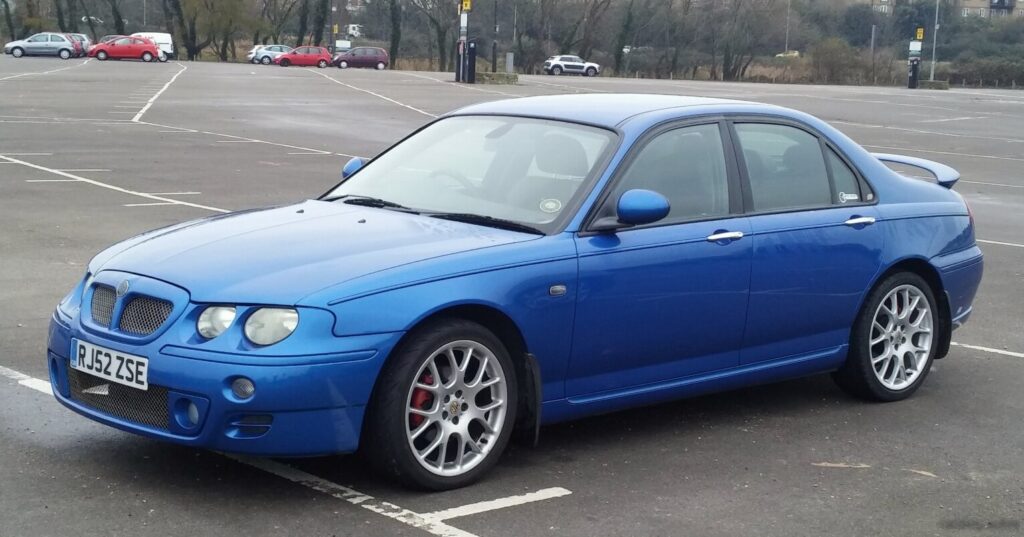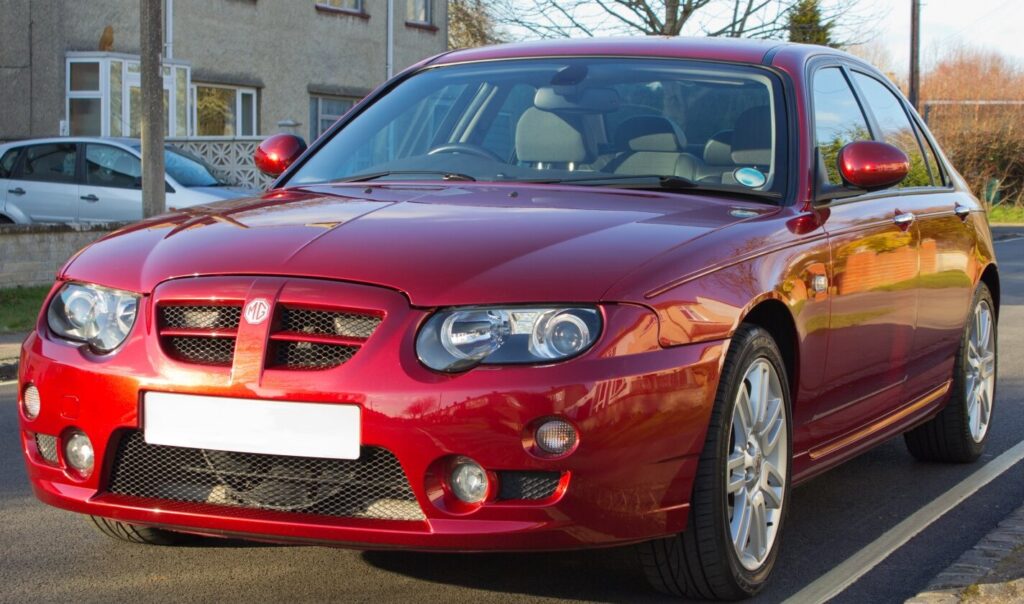
The MG ZT 2.0 CDTi Automatic, produced during the facelifted generation from 2004 to 2005, represented a key offering in MG’s attempt to revitalize its brand. Positioned as a mid-range variant within the ZT lineup, it aimed to provide a balance of performance, fuel efficiency, and comfort for the discerning driver. Built upon the Rover 75 platform (internally designated as the X20 and later the 1HX0), the ZT was MG’s performance-oriented take on the executive sedan, offering a more sporting driving experience than its Rover sibling. The 2.0 CDTi Automatic model specifically targeted buyers seeking a diesel-powered option with the convenience of an automatic transmission, appealing to those prioritizing economy and ease of driving over outright performance.
Technical Specifications
| Brand | MG |
| Model | ZT |
| Generation | ZT (facelift 2004) |
| Type (Engine) | 2.0 CDTi (116 Hp) Automatic |
| Start of production | 2004 |
| End of production | 2005 |
| Powertrain Architecture | Internal Combustion engine |
| Body type | Sedan |
| Seats | 5 |
| Doors | 4 |
| Fuel consumption (urban) | 10 l/100 km (23.5 US mpg, 28.2 UK mpg, 10 km/l) |
| Fuel consumption (extra urban) | 5.2 l/100 km (45.2 US mpg, 54.3 UK mpg, 19.2 km/l) |
| Fuel consumption (combined) | 6.9 l/100 km (34.1 US mpg, 40.9 UK mpg, 14.5 km/l) |
| CO2 emissions | 190 g/km |
| Fuel Type | Diesel |
| Acceleration 0 – 60 mph | 12.2 sec |
| Maximum speed | 190 km/h (118.06 mph) |
| Emission standard | Euro 3 |
| Weight-to-power ratio | 13.5 kg/Hp, 73.9 Hp/tonne |
| Weight-to-torque ratio | 6 kg/Nm, 165.6 Nm/tonne |
| Power | 116 Hp @ 4000 rpm |
| Power per litre | 59.5 Hp/l |
| Torque | 260 Nm @ 2000 rpm (191.77 lb.-ft. @ 2000 rpm) |
| Maximum engine speed | 4900 rpm |
| Engine layout | Front, Transverse |
| Engine Model/Code | M47R / 204D2 |
| Engine displacement | 1951 cm3 (119.06 cu. in.) |
| Number of cylinders | 4 |
| Engine configuration | Inline |
| Cylinder Bore | 84 mm (3.31 in.) |
| Piston Stroke | 88 mm (3.46 in.) |
| Compression ratio | 18:1 |
| Number of valves per cylinder | 4 |
| Fuel injection system | Diesel Commonrail |
| Engine aspiration | Turbocharger, Intercooler |
| Valvetrain | DOHC |
| Engine oil capacity | 6.8 l (7.19 US qt | 5.98 UK qt) |
| Coolant | 8.2 l (8.66 US qt | 7.21 UK qt) |
| Kerb Weight | 1570-1655 kg (3461.26 – 3648.65 lbs.) |
| Max. weight | 2030 kg (4475.38 lbs.) |
| Max load | 375-460 kg (826.73 – 1014.13 lbs.) |
| Trunk (boot) space – minimum | 432 l (15.26 cu. ft.) |
| Trunk (boot) space – maximum | 674 l (23.8 cu. ft.) |
| Fuel tank capacity | 65 l (17.17 US gal | 14.3 UK gal) |
| Max. roof load | 80 kg (176.37 lbs.) |
| Permitted trailer load with brakes (12%) | 1600 kg (3527.4 lbs.) |
| Permitted trailer load without brakes | 750 kg (1653.47 lbs.) |
| Permitted towbar download | 100 kg (220.46 lbs.) |
| Length | 4747 mm (186.89 in.) |
| Width | 1778 mm (70 in.) |
| Height | 1417 mm (55.79 in.) |
| Wheelbase | 2746 mm (108.11 in.) |
| Drivetrain Architecture | The Internal combustion engine (ICE) drives the front wheels of the vehicle. |
| Drive wheel | Front wheel drive |
| Number of gears and type of gearbox | 5 gears, automatic transmission |
| Front suspension | Independent, type McPherson with coil spring and anti-roll bar |
| Rear suspension | Independent multi-link spring suspension with stabilizer |
| Front brakes | Ventilated discs |
| Rear brakes | Disc |
| Assisting systems | ABS (Anti-lock braking system) |
| Steering type | Steering rack and pinion |
| Power steering | Hydraulic Steering |
| Tires size | 225/45 R18 |
| Wheel rims size | 7.5J x 18 |
Powertrain & Engine Architecture
The MG ZT 2.0 CDTi Automatic was powered by the M47R 204D2 engine, a 1.951-liter inline-four cylinder diesel engine. This engine was sourced from BMW, a result of the collaboration between BMW and Rover during the late 1990s. It featured a common rail direct injection system, delivering fuel directly into the cylinders at high pressure for improved combustion efficiency and reduced emissions. The engine also incorporated a turbocharger with an intercooler, boosting power output and providing enhanced torque. The valvetrain employed a double overhead camshaft (DOHC) configuration with four valves per cylinder, optimizing gas flow and contributing to the engine’s overall performance. The engine was paired with a five-speed automatic transmission, providing smooth and convenient gear changes. This transmission was specifically tuned to work with the characteristics of the diesel engine, offering a balance between fuel economy and drivability.
Driving Characteristics
The 2.0 CDTi Automatic offered a distinctly different driving experience compared to the higher-performance ZT variants, such as the V6 models. While lacking the outright acceleration of its petrol-powered siblings, the diesel engine delivered a substantial 260 Nm (191.77 lb.-ft.) of torque at just 2000 rpm. This resulted in strong low-end and mid-range pull, making it well-suited for everyday driving and overtaking maneuvers. The automatic transmission, while providing convenience, did slightly diminish the sense of driver engagement. Gear changes were generally smooth, but not particularly quick or sporty. The 0-60 mph acceleration time of 12.2 seconds was respectable for a diesel-powered sedan of its era, but noticeably slower than the V6 ZT. The focus was more on relaxed cruising and fuel efficiency, with a combined fuel economy of around 34.1 US mpg.
Equipment & Trim Levels
The 2.0 CDTi Automatic trim typically included features such as air conditioning, power windows, central locking, and an RDS stereo system. Interior upholstery was generally cloth, although leather options were available as upgrades. Standard safety equipment included ABS brakes, driver and passenger airbags, and seatbelt pretensioners. Optional extras could include a sunroof, upgraded audio system, and parking sensors. The dashboard layout was consistent with other ZT models, featuring a sporty design with aluminum trim accents. The overall interior ambiance aimed for a balance between comfort and a performance-oriented feel.
Chassis & Braking
The MG ZT featured an independent suspension system on both the front and rear axles. The front suspension utilized a McPherson strut design with coil springs and an anti-roll bar, while the rear suspension employed a multi-link setup with a stabilizer bar. This configuration provided a good balance between ride comfort and handling. The braking system consisted of ventilated discs on the front wheels and solid discs on the rear. ABS (Anti-lock Braking System) was standard, enhancing braking performance and stability. The steering was rack and pinion with hydraulic power assistance, offering precise and responsive steering feel.
Market Reception & Comparison
The MG ZT 2.0 CDTi Automatic received mixed reviews from automotive critics. While the engine was praised for its fuel efficiency and torque delivery, the automatic transmission was sometimes criticized for being somewhat sluggish. Compared to the higher-output ZT variants, the 2.0 CDTi Automatic offered a more affordable entry point into the ZT range, appealing to buyers prioritizing economy and practicality. It also provided a viable alternative to other diesel-powered sedans in the market, such as the Ford Mondeo and Vauxhall Vectra. Fuel economy was a key selling point, offering a significant improvement over the petrol-powered ZT models.
Legacy
The MG ZT 2.0 CDTi Automatic, like all ZT models, suffered from the financial difficulties of MG Rover and production ceased in 2005. However, the diesel engine itself, being a BMW design, has proven to be relatively reliable. Well-maintained examples are still found on the used car market today, often appealing to enthusiasts seeking a unique and affordable British sedan. While not as sought-after as the V6 variants, the 2.0 CDTi Automatic offers a practical and economical option for those looking for a classic British driving experience. Parts availability can be a challenge, but a dedicated community of MG Rover enthusiasts continues to support the preservation of these vehicles.