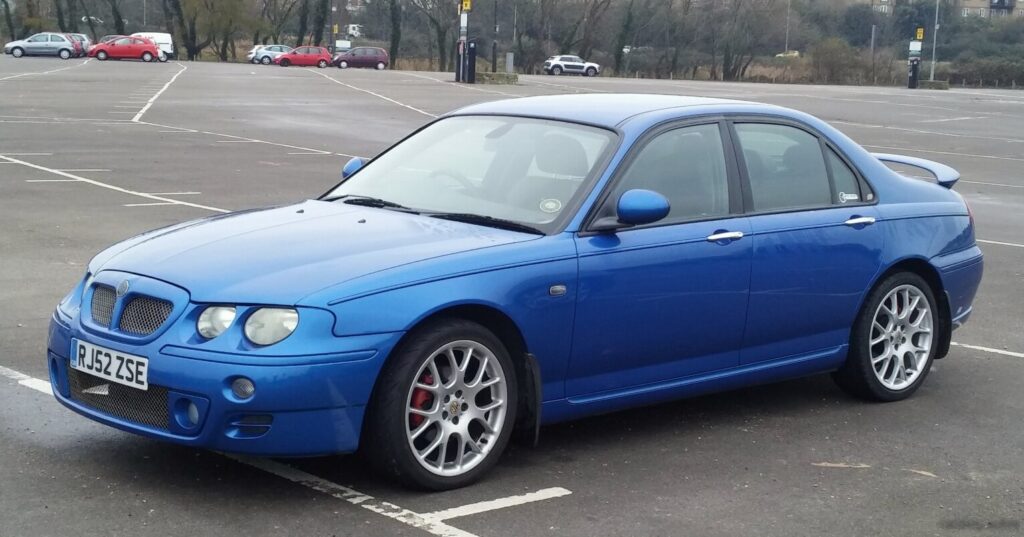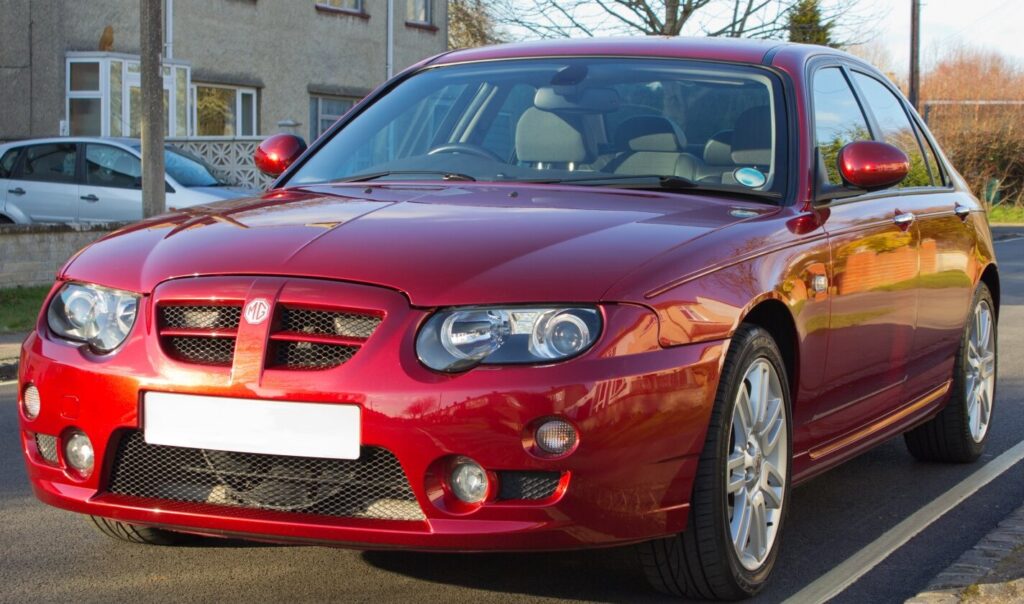
The MG ZT 2.0 CDTi, produced during the facelifted model run from 2004 to 2005, represented a significant attempt by MG Rover to offer a competitive, diesel-powered executive car. Positioned as a mid-range offering within the ZT lineup, it aimed to provide a balance of performance, economy, and equipment. The ZT itself was a large family car, a direct descendant of the Rover 75, and was part of the X10 platform family. The 2004 facelift brought subtle styling revisions and, crucially, the introduction of the BMW-sourced M47R diesel engine, marking a shift towards more modern powertrain options for the brand. This variant was primarily sold in the UK and European markets, where diesel engines held a strong preference among buyers in the executive car segment.
Technical Specifications
| Brand | MG |
| Model | ZT |
| Generation | ZT (facelift 2004) |
| Type (Engine) | 2.0 CDTi (131 Hp) |
| Start of production | 2004 |
| End of production | 2005 |
| Powertrain Architecture | Internal Combustion engine |
| Body type | Sedan |
| Seats | 5 |
| Doors | 4 |
| Fuel consumption (urban) | 8.1 l/100 km (29 US mpg, 34.9 UK mpg, 12.3 km/l) |
| Fuel consumption (extra urban) | 4.4 l/100 km (53.5 US mpg, 64.2 UK mpg, 22.7 km/l) |
| Fuel consumption (combined) | 5.8 l/100 km (40.6 US mpg, 48.7 UK mpg, 17.2 km/l) |
| CO2 emissions | 163 g/km |
| Fuel Type | Diesel |
| Acceleration 0 – 60 mph | 10.3 sec |
| Maximum speed | 193 km/h (119.92 mph) |
| Emission standard | Euro 3 |
| Weight-to-power ratio | 11.7 kg/Hp, 85.3 Hp/tonne |
| Weight-to-torque ratio | 5.1 kg/Nm, 195.4 Nm/tonne |
| Power | 131 Hp @ 3500 rpm |
| Power per litre | 67.1 Hp/l |
| Torque | 300 Nm @ 1900 rpm (221.27 lb.-ft. @ 1900 rpm) |
| Maximum engine speed | 4900 rpm |
| Engine layout | Front, Transverse |
| Engine Model/Code | M47R / 204D2 |
| Engine displacement | 1951 cm3 (119.06 cu. in.) |
| Number of cylinders | 4 |
| Engine configuration | Inline |
| Cylinder Bore | 84 mm (3.31 in.) |
| Piston Stroke | 88 mm (3.46 in.) |
| Compression ratio | 18:1 |
| Number of valves per cylinder | 4 |
| Fuel injection system | Diesel Commonrail |
| Engine aspiration | Turbocharger, Intercooler |
| Valvetrain | DOHC |
| Engine oil capacity | 6.8 l (7.19 US qt | 5.98 UK qt) |
| Coolant | 8.2 l (8.66 US qt | 7.21 UK qt) |
| Kerb Weight | 1535-1620 kg (3384.1 – 3571.49 lbs.) |
| Max. weight | 2030 kg (4475.38 lbs.) |
| Max load | 410-495 kg (903.9 – 1091.29 lbs.) |
| Trunk (boot) space – minimum | 432 l (15.26 cu. ft.) |
| Trunk (boot) space – maximum | 674 l (23.8 cu. ft.) |
| Fuel tank capacity | 65 l (17.17 US gal | 14.3 UK gal) |
| Max. roof load | 80 kg (176.37 lbs.) |
| Permitted trailer load with brakes (12%) | 1600 kg (3527.4 lbs.) |
| Permitted trailer load without brakes | 750 kg (1653.47 lbs.) |
| Permitted towbar download | 100 kg (220.46 lbs.) |
| Length | 4747 mm (186.89 in.) |
| Width | 1778 mm (70 in.) |
| Height | 1417 mm (55.79 in.) |
| Wheelbase | 2746 mm (108.11 in.) |
| Drivetrain Architecture | The Internal combustion engine (ICE) drives the front wheels of the vehicle. |
| Drive wheel | Front wheel drive |
| Number of gears and type of gearbox | 5 gears, manual transmission |
| Front suspension | Independent, type McPherson with coil spring and anti-roll bar |
| Rear suspension | Independent multi-link spring suspension with stabilizer |
| Front brakes | Ventilated discs |
| Rear brakes | Disc |
| Assisting systems | ABS (Anti-lock braking system) |
| Steering type | Steering rack and pinion |
| Power steering | Hydraulic Steering |
| Tires size | 225/45 R18 |
| Wheel rims size | 7.5J x 18 |
Powertrain & Engine Architecture
The heart of the ZT 2.0 CDTi is the BMW M47R 204D2 engine. This 1951cc, four-cylinder diesel engine was a product of BMW’s extensive diesel development program. MG Rover licensed this engine as part of their strategic partnership with BMW. The M47R features a common rail direct injection system, delivering fuel at extremely high pressure for improved combustion efficiency and reduced emissions. It utilizes a single turbocharger with an intercooler to boost power and torque. The engine also employs a double overhead camshaft (DOHC) valvetrain with four valves per cylinder, contributing to its relatively high specific output. The engine’s 18:1 compression ratio is typical for a direct injection diesel. The engine was paired with a five-speed manual transmission, which was the standard offering for this variant. While an automatic transmission was available on other ZT models, it wasn’t offered with the 2.0 CDTi engine.
Driving Characteristics
The 2.0 CDTi engine provided a noticeable step up in torque compared to the petrol engines available in the ZT range. The 300 Nm (221 lb-ft) of torque, available from just 1900 rpm, made the car feel responsive in everyday driving situations. Acceleration to 60 mph took around 10.3 seconds, which was respectable for a car of this size and weight, but not particularly sporty. The five-speed manual gearbox was well-matched to the engine’s characteristics, offering smooth shifts and allowing the driver to keep the engine in its optimal power band. Compared to the higher-performance ZT 260 V6, the 2.0 CDTi lacked outright speed, but it offered significantly better fuel economy. The lower power output also meant that the chassis didn’t feel as stressed during spirited driving.
Equipment & Trim Levels
The 2.0 CDTi trim level generally sat in the middle of the ZT range. Standard equipment included air conditioning, electric front windows, central locking, and an RDS stereo. Higher trim levels, such as the SE, added features like alloy wheels, upgraded upholstery, and a multi-function steering wheel. Optional extras included leather seats, a sunroof, and parking sensors. The interior design was largely carried over from the Rover 75, with a focus on comfort and practicality. The dashboard layout was relatively straightforward, with logically placed controls. Upholstery was typically cloth, although leather was available as an option.
Chassis & Braking
The ZT utilized a McPherson strut front suspension and a multi-link rear suspension, providing a comfortable ride and decent handling. The front suspension featured a coil spring and anti-roll bar, while the rear suspension also included a stabilizer bar. Braking was handled by ventilated discs at the front and solid discs at the rear. Anti-lock braking system (ABS) was standard. The ZT’s chassis was relatively robust, but the weight of the car (between 1535-1620 kg) could be felt during cornering. The steering was hydraulic power-assisted, providing a reasonable level of feedback.
Market Reception & Comparison
The MG ZT 2.0 CDTi was generally well-received by motoring journalists as a practical and economical executive car. Critics praised the engine’s torque and fuel efficiency, but some noted that it lacked the refinement of some of its German rivals. Compared to the petrol-powered ZT variants, the 2.0 CDTi offered significantly better fuel economy – around 40.6 US mpg combined – making it a more attractive option for high-mileage drivers. The 2.0 CDTi was also cheaper to run due to lower road tax and insurance costs. However, the 260 V6 offered a more engaging driving experience, while the 1.8T petrol engine provided a compromise between performance and economy.
Legacy
The MG ZT 2.0 CDTi, like all MG Rover models, suffered from the company’s financial difficulties and eventual collapse in 2005. As a result, relatively few examples remain on the road today. The M47R engine itself proved to be a reliable unit, and many examples have covered high mileages without major issues. However, finding parts can be challenging due to the limited production run and the demise of MG Rover. The ZT 2.0 CDTi is now considered a niche classic, appealing to enthusiasts who appreciate its unique blend of British styling, BMW engineering, and diesel economy. Values for well-maintained examples have been steadily increasing in recent years, reflecting its growing rarity and cult following.