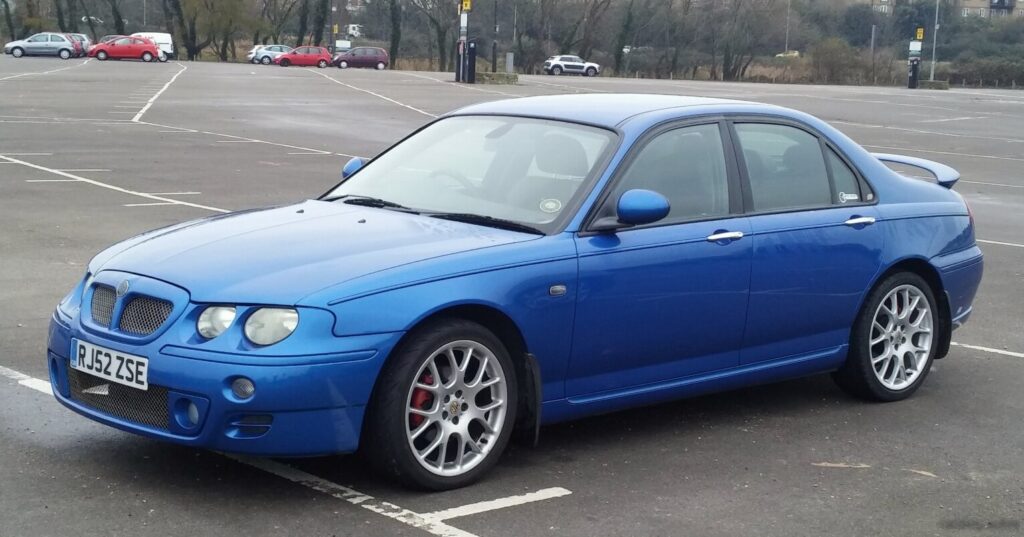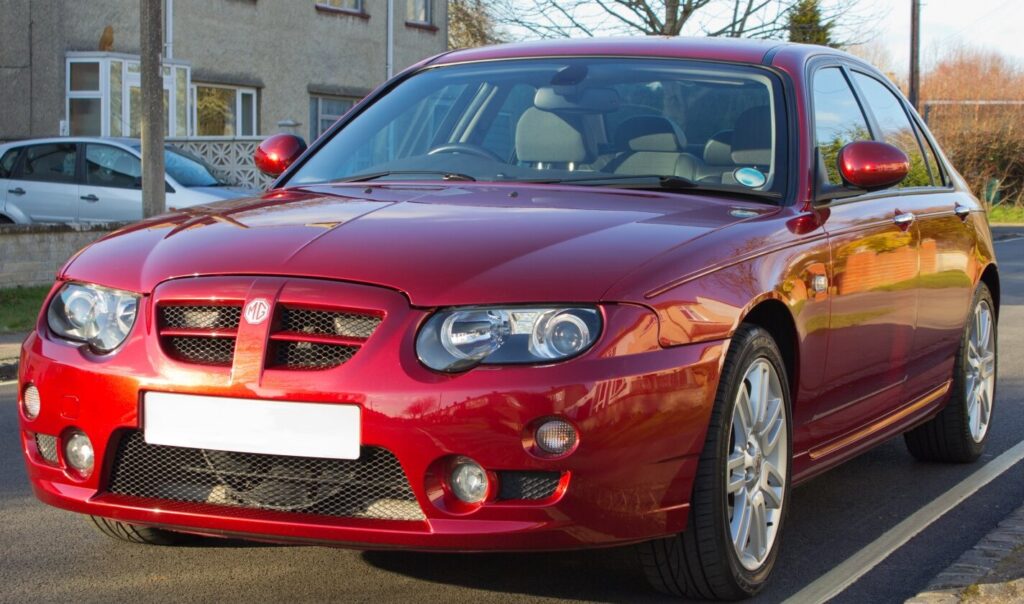
The MG ZT 2.5 V6 (facelift, 2004-2005) represents a final flourish for the British marque before its eventual dormancy. Introduced as part of a mid-life refresh for the ZT sedan, this variant combined a potent 2.5-liter V6 engine with a five-speed manual transmission, aiming to deliver a sporting driving experience within the upper echelons of the ZT lineup. Production spanned a brief period, from 2004 to 2005, reflecting the challenging circumstances faced by MG Rover at the time. The ZT itself was based on the Rover 75 platform, a vehicle developed under BMW ownership, and represented an attempt to inject some dynamism and appeal into a traditionally conservative segment.
Technical Specifications
| Brand | MG |
| Model | ZT |
| Generation | ZT (facelift 2004) |
| Type (Engine) | 2.5 V6 (190 Hp) |
| Start of production | 2004 |
| End of production | 2005 |
| Powertrain Architecture | Internal Combustion engine |
| Body type | Sedan |
| Seats | 5 |
| Doors | 4 |
| Fuel consumption (urban) | 14.4 l/100 km (16.3 US mpg, 19.6 UK mpg, 6.9 km/l) |
| Fuel consumption (extra urban) | 7.4 l/100 km (31.8 US mpg, 38.2 UK mpg, 13.5 km/l) |
| Fuel consumption (combined) | 9.9 l/100 km (23.8 US mpg, 28.5 UK mpg, 10.1 km/l) |
| CO2 emissions | 239 g/km |
| Fuel Type | Petrol (Gasoline) |
| Acceleration 0 – 100 km/h | 7.9 sec |
| Acceleration 0 – 62 mph | 7.9 sec |
| Acceleration 0 – 60 mph | 7.7 sec |
| Maximum speed | 227 km/h (141.05 mph) |
| Emission standard | Euro 3 |
| Weight-to-power ratio | 7.8 kg/Hp, 127.9 Hp/tonne |
| Weight-to-torque ratio | 6.1 kg/Nm, 165 Nm/tonne |
| Power | 190 Hp @ 6500 rpm |
| Power per litre | 76.1 Hp/l |
| Torque | 245 Nm @ 4000 rpm (180.7 lb.-ft. @ 4000 rpm) |
| Maximum engine speed | 6750 rpm |
| Engine layout | Front, Transverse |
| Engine Model/Code | KV6 / 25K4F |
| Engine displacement | 2497 cm3 (152.38 cu. in.) |
| Number of cylinders | 6 |
| Engine configuration | V-engine |
| Cylinder Bore | 80 mm (3.15 in.) |
| Piston Stroke | 82.6 mm (3.25 in.) |
| Compression ratio | 10.5:1 |
| Number of valves per cylinder | 4 |
| Fuel injection system | Multi-port manifold injection |
| Engine aspiration | Naturally aspirated engine |
| Valvetrain | DOHC |
| Engine oil capacity | 5.2 l (5.49 US qt | 4.58 UK qt) |
| Coolant | 7.5 l (7.93 US qt | 6.6 UK qt) |
| Kerb Weight | 1485-1625 kg (3273.86 – 3582.51 lbs.) |
| Max. weight | 2030 kg (4475.38 lbs.) |
| Max load | 405-545 kg (892.87 – 1201.52 lbs.) |
| Trunk (boot) space – minimum | 432 l (15.26 cu. ft.) |
| Trunk (boot) space – maximum | 674 l (23.8 cu. ft.) |
| Fuel tank capacity | 65 l (17.17 US gal | 14.3 UK gal) |
| Max. roof load | 80 kg (176.37 lbs.) |
| Permitted trailer load with brakes (12%) | 1600 kg (3527.4 lbs.) |
| Permitted trailer load without brakes | 750 kg (1653.47 lbs.) |
| Permitted towbar download | 100 kg (220.46 lbs.) |
| Length | 4747 mm (186.89 in.) |
| Width | 1778 mm (70 in.) |
| Height | 1417 mm (55.79 in.) |
| Wheelbase | 2746 mm (108.11 in.) |
| Minimum turning circle | 11.36 m (37.27 ft.) |
| Drivetrain Architecture | The Internal combustion engine (ICE) drives the front wheels of the vehicle. |
| Drive wheel | Front wheel drive |
| Number of gears and type of gearbox | 5 gears, manual transmission |
| Front suspension | Independent, type McPherson with coil spring and anti-roll bar |
| Rear suspension | Independent multi-link spring suspension with stabilizer |
| Front brakes | Ventilated discs, 325 mm |
| Rear brakes | Ventilated discs, 276 mm |
| Assisting systems | ABS (Anti-lock braking system) |
| Steering type | Steering rack and pinion |
| Power steering | Hydraulic Steering |
| Tires size | 225/45 R18 |
| Wheel rims size | 7.5J x 18 |
Powertrain & Engine Architecture
The heart of the ZT 2.5 V6 is the KV6 engine, a 2.5-liter, 60-degree V6 developed by MG Rover, but with roots in the Honda J32 engine. The KV6/25K4F code designates this specific iteration. It features a cast iron block with aluminum cylinder heads, and utilizes a multi-port fuel injection system. The engine employs a double overhead camshaft (DOHC) valvetrain, operating four valves per cylinder. This configuration allowed for a relatively high power output for its displacement. The 190 horsepower peak arrives at 6500 rpm, while a respectable 245 Nm (180.7 lb-ft) of torque is available at 4000 rpm. The engine’s transverse mounting and front-wheel-drive configuration were typical for the segment, prioritizing space efficiency. The five-speed manual transmission provided a direct connection to the engine, offering drivers greater control over the power delivery.
Driving Characteristics
The ZT 2.5 V6 with the manual transmission offered a noticeably more engaging driving experience than the lower-powered variants. Acceleration to 60 mph took approximately 7.7 seconds, and the car could reach a top speed of 141 mph. The V6 engine provided a smooth and linear power delivery, making it easy to modulate throttle response. The five-speed gearbox, while not particularly innovative, was well-matched to the engine’s characteristics. Compared to the 1.8-liter four-cylinder models, the V6 offered significantly more performance, but at the cost of increased fuel consumption. The manual transmission also provided a more connected feel than the available automatic option, which could sometimes feel hesitant in its shifts.
Equipment & Trim Levels
The 2.5 V6 typically sat towards the top of the ZT range, and as such, came equipped with a generous level of standard features. These included leather upholstery, air conditioning, electric windows and mirrors, and an upgraded audio system. Alloy wheels were also standard. Optional extras included a sunroof, satellite navigation, and upgraded sound systems. The interior design was generally well-appointed, although the materials used were not always of the highest quality. The dashboard layout was functional and straightforward, prioritizing ease of use.
Chassis & Braking
The ZT utilized a McPherson strut front suspension and a multi-link rear suspension, providing a good balance between ride comfort and handling. Anti-roll bars were fitted to both axles to reduce body roll during cornering. The braking system consisted of ventilated discs all around, providing ample stopping power. ABS (Anti-lock Braking System) was standard. The steering was hydraulically assisted, offering a reasonably direct and responsive feel. The ZT’s chassis was a modified version of the Rover 75 platform, which had been developed under BMW ownership, and provided a solid foundation for the car’s dynamics.
Market Reception & Comparison
The MG ZT 2.5 V6 was generally well-received by automotive critics, who praised its performance and handling. However, it was also criticized for its relatively high fuel consumption and the somewhat dated interior design. Compared to rivals such as the Ford Mondeo and Vauxhall Vectra, the ZT offered a more sporting driving experience, but lacked the refinement and modern features of some competitors. The 1.8-liter models offered better fuel economy and lower running costs, making them more appealing to budget-conscious buyers. The V6, however, appealed to those seeking a more engaging and rewarding driving experience.
Legacy
The MG ZT 2.5 V6, along with the rest of the MG Rover range, ultimately fell victim to the company’s financial difficulties. However, the car has developed a loyal following among enthusiasts, who appreciate its unique character and sporting potential. The KV6 engine, while not without its quirks, is generally considered to be a robust and reliable unit, provided it is properly maintained. Today, well-maintained examples of the ZT 2.5 V6 are becoming increasingly collectible, representing a final chapter in the history of a once-proud British marque. Parts availability can be a challenge, but a dedicated network of specialists and enthusiasts helps to keep these cars on the road.