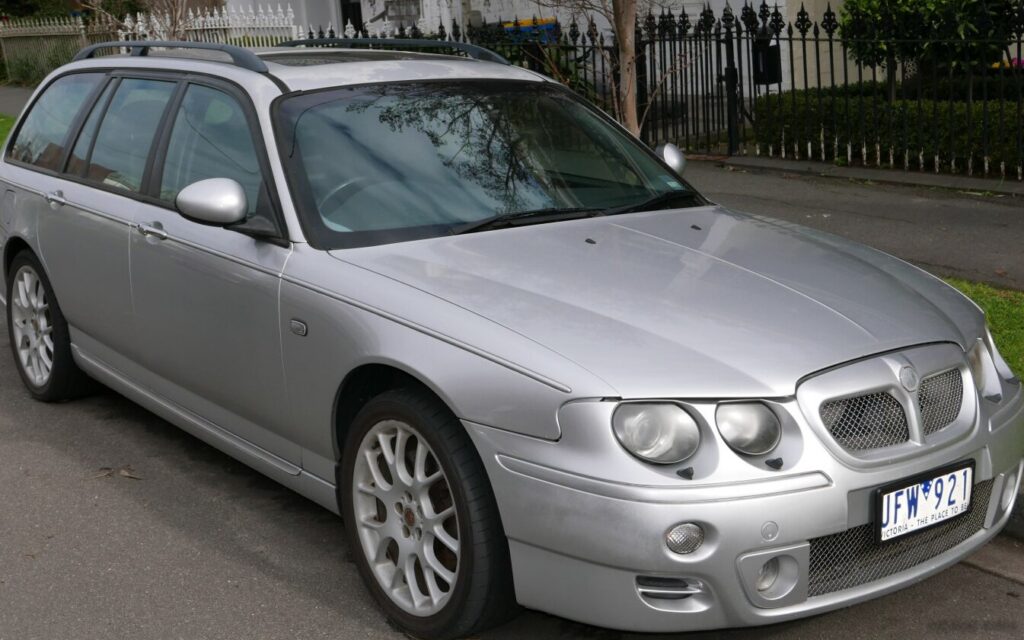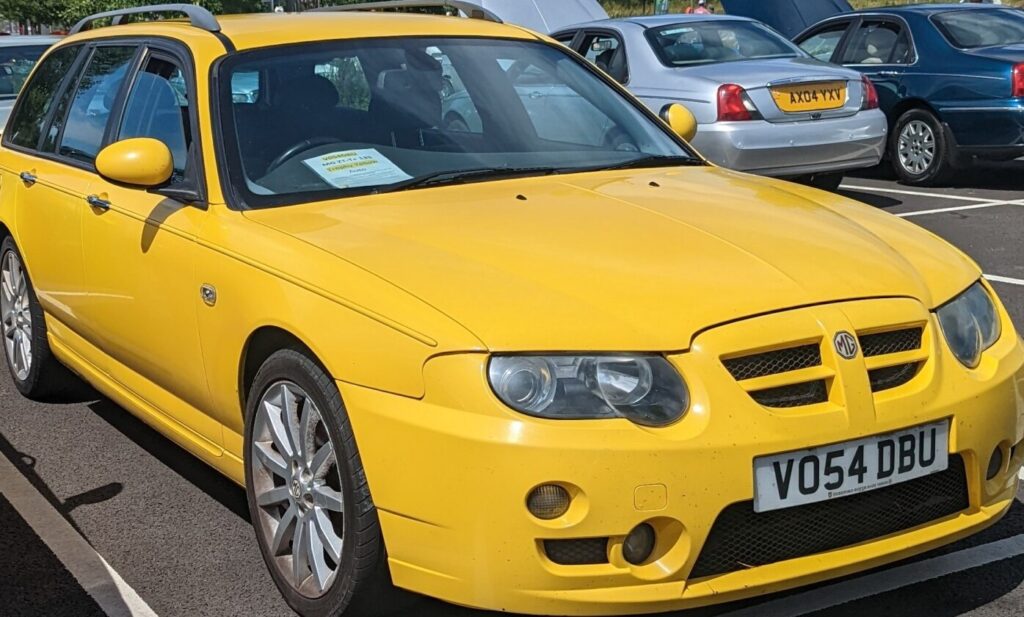
The MG ZT-T 2.0 CDTi, introduced in 2004 as part of the facelifted ZT range, represented a practical and fuel-efficient offering within the British marque’s lineup. Positioned as a mid-range variant, it aimed to provide estate car practicality with a reasonably economical diesel engine. Production continued until 2005, coinciding with the broader challenges faced by MG Rover. The ZT-T (Tourer) itself was based on the Rover 75 platform, and the 2.0 CDTi variant sought to appeal to buyers prioritizing space and running costs over outright performance. This model occupied a niche between the more sporting petrol versions and the higher-output diesel options.
Technical Specifications
| Brand | MG |
| Model | ZT |
| Generation | ZT-T (facelift 2004) |
| Type (Engine) | 2.0 CDTi (131 Hp) |
| Start of production | 2004 |
| End of production | 2005 |
| Powertrain Architecture | Internal Combustion engine |
| Body type | Station wagon (estate) |
| Seats | 5 |
| Doors | 5 |
| Fuel consumption (urban) | 8.1 l/100 km (29 US mpg, 34.9 UK mpg, 12.3 km/l) |
| Fuel consumption (extra urban) | 4.4 l/100 km (53.5 US mpg, 64.2 UK mpg, 22.7 km/l) |
| Fuel consumption (combined) | 5.8 l/100 km (40.6 US mpg, 48.7 UK mpg, 17.2 km/l) |
| CO2 emissions | 163 g/km |
| Fuel Type | Diesel |
| Acceleration 0 – 60 mph | 10.6 sec |
| Maximum speed | 192 km/h (119.3 mph) |
| Emission standard | Euro 3 |
| Weight-to-power ratio | 12.1 kg/Hp, 82.6 Hp/tonne |
| Weight-to-torque ratio | 5.3 kg/Nm, 189.3 Nm/tonne |
| Power | 131 Hp @ 3500 rpm |
| Power per litre | 67.1 Hp/l |
| Torque | 300 Nm @ 1900 rpm (221.27 lb.-ft. @ 1900 rpm) |
| Maximum engine speed | 4900 rpm |
| Engine layout | Front, Transverse |
| Engine Model/Code | M47R / 204D2 |
| Engine displacement | 1951 cm3 (119.06 cu. in.) |
| Number of cylinders | 4 |
| Engine configuration | Inline |
| Cylinder Bore | 84 mm (3.31 in.) |
| Piston Stroke | 88 mm (3.46 in.) |
| Compression ratio | 18:1 |
| Number of valves per cylinder | 4 |
| Fuel injection system | Diesel Commonrail |
| Engine aspiration | Turbocharger, Intercooler |
| Valvetrain | DOHC |
| Engine oil capacity | 6.8 l (7.19 US qt | 5.98 UK qt) |
| Coolant | 8.2 l (8.66 US qt | 7.21 UK qt) |
| Kerb Weight | 1585-1670 kg (3494.33 – 3681.72 lbs.) |
| Max. weight | 2090 kg (4607.66 lbs.) |
| Max load | 420-505 kg (925.94 – 1113.33 lbs.) |
| Trunk (boot) space – minimum | 400 l (14.13 cu. ft.) |
| Trunk (boot) space – maximum | 1222 l (43.15 cu. ft.) |
| Fuel tank capacity | 65 l (17.17 US gal | 14.3 UK gal) |
| Max. roof load | 100 kg (220.46 lbs.) |
| Permitted trailer load with brakes (12%) | 1600 kg (3527.4 lbs.) |
| Permitted trailer load without brakes | 750 kg (1653.47 lbs.) |
| Permitted towbar download | 100 kg (220.46 lbs.) |
| Length | 4791 mm (188.62 in.) |
| Width | 1778 mm (70 in.) |
| Height | 1428 mm (56.22 in.) |
| Wheelbase | 2746 mm (108.11 in.) |
| Drivetrain Architecture | The Internal combustion engine (ICE) drives the front wheels of the vehicle. |
| Drive wheel | Front wheel drive |
| Number of gears and type of gearbox | 5 gears, manual transmission |
| Front suspension | Independent, type McPherson with coil spring and anti-roll bar |
| Rear suspension | Independent multi-link spring suspension with stabilizer |
| Front brakes | Ventilated discs |
| Rear brakes | Disc |
| Assisting systems | ABS (Anti-lock braking system) |
| Steering type | Steering rack and pinion |
| Power steering | Hydraulic Steering |
| Tires size | 225/45 R18 |
| Wheel rims size | 7.5J x 18 |
Powertrain & Engine Architecture
The MG ZT-T 2.0 CDTi utilized the M47R engine, a 1951cc four-cylinder diesel engine. This engine, often identified by the code 204D2, was sourced from BMW and represented a collaboration between MG Rover and the German manufacturer. It featured a common rail direct injection system, a turbocharger with an intercooler, and a double overhead camshaft (DOHC) valvetrain. The engine produced 131 horsepower at 3500 rpm and a respectable 300 Nm (221 lb-ft) of torque at just 1900 rpm. The five-speed manual transmission was the standard offering, providing a balance between fuel efficiency and drivability. The engine’s design prioritized low-end torque, making it suitable for everyday driving and hauling loads, typical for an estate car.
Driving Characteristics
The 2.0 CDTi engine in the ZT-T provided a comfortable and relaxed driving experience. While not particularly quick – 0-60 mph took around 10.6 seconds – the ample torque made it feel more responsive than the horsepower figure might suggest. The five-speed gearbox was well-matched to the engine’s characteristics, offering usable ratios for both urban and highway driving. Compared to the higher-output petrol versions of the ZT-T, the 2.0 CDTi prioritized fuel economy and ease of driving over outright performance. The manual transmission allowed for greater driver control, but the engine lacked the sporty character of the V6 options. The relatively long gearing contributed to the fuel efficiency but also meant that the engine could feel strained when accelerating hard.
Equipment & Trim Levels
The 2.0 CDTi trim level in the ZT-T typically included features such as air conditioning, electric front windows, central locking, and an RDS stereo. Higher trim levels added options like leather upholstery, alloy wheels, and a sunroof. Interior appointments were generally functional and well-built, reflecting the Rover heritage. The ZT-T’s estate body style provided a generous 400 liters of boot space (expanding to 1222 liters with the rear seats folded), making it a practical choice for families or those needing to carry larger items. Optional extras included parking sensors, upgraded audio systems, and heated front seats.
Chassis & Braking
The ZT-T’s chassis utilized independent suspension all around – McPherson struts at the front and a multi-link setup at the rear – providing a comfortable ride quality. Anti-roll bars were fitted front and rear to reduce body roll during cornering. Braking was handled by ventilated discs at the front and solid discs at the rear, assisted by an Anti-lock Braking System (ABS). The steering was a hydraulic rack and pinion system, offering a reasonable level of feel and precision. The suspension tuning was geared towards comfort rather than outright sportiness, making the ZT-T a pleasant cruiser.
Market Reception & Comparison
The MG ZT-T 2.0 CDTi was generally well-received by critics as a practical and economical estate car. Its fuel economy of around 40.6 US mpg combined was a significant selling point. However, some reviewers noted that the engine lacked the refinement and performance of some of its competitors, particularly those from German manufacturers. Compared to the petrol-powered ZT-T variants, the 2.0 CDTi offered lower running costs but less excitement. Against other diesel estates of the time, it provided a good balance of price, space, and economy, but its relatively short production run and the financial difficulties of MG Rover impacted its overall market presence.
Legacy
The MG ZT-T 2.0 CDTi, while not a high-volume seller, has gained a following among enthusiasts who appreciate its practicality and the unique blend of British and German engineering. The BMW-sourced diesel engine is generally considered to be reliable, although regular maintenance is essential. Today, well-maintained examples are becoming increasingly sought after by collectors and those looking for a distinctive and affordable estate car. Parts availability can be a challenge, but a dedicated community of MG Rover owners provides support and resources. The ZT-T 2.0 CDTi represents a final chapter in the story of MG Rover, showcasing the company’s attempt to compete in the modern estate car market.