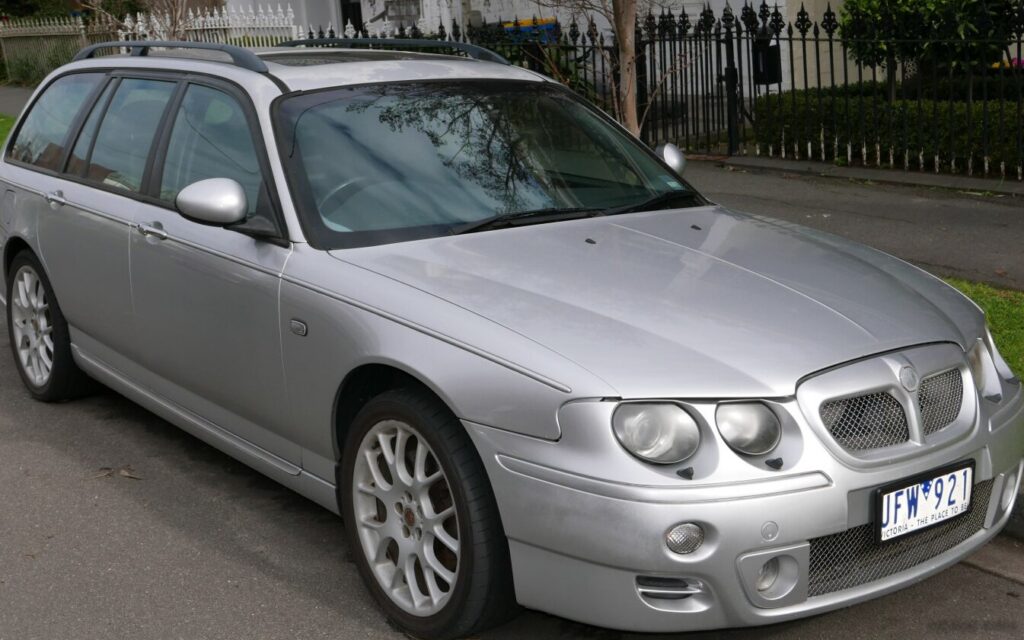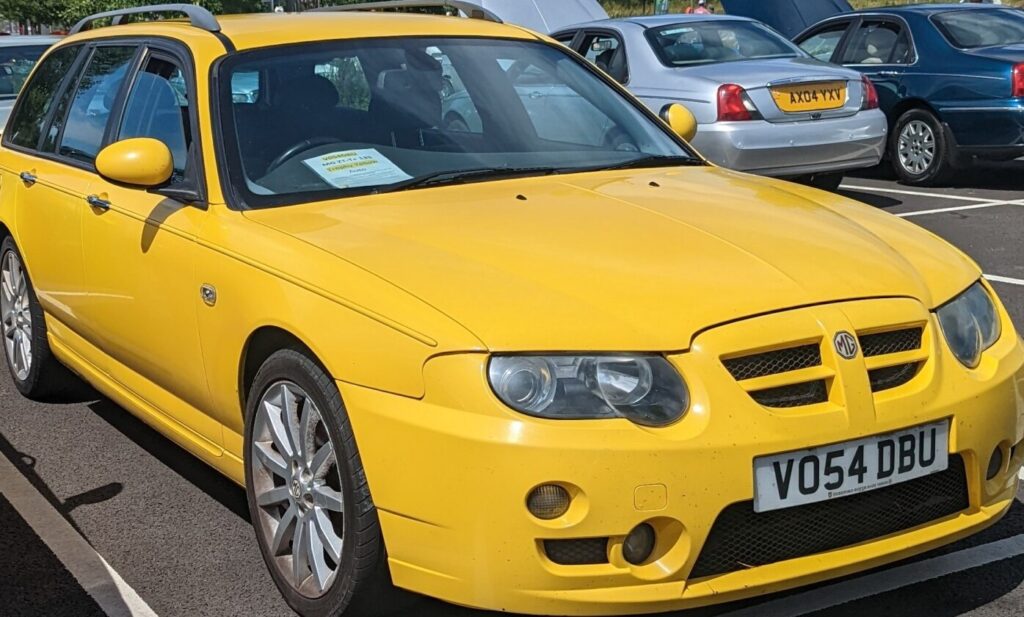
The MG ZT-T 2.5 V6, introduced in 2004 as part of the facelifted ZT range, represented a somewhat niche offering within the British marque’s lineup. Positioned as the performance-oriented estate car, it combined the sporting aspirations of the ZT saloon with the practicality of a station wagon. Production continued until 2005, coinciding with the financial difficulties that ultimately led to MG Rover’s collapse. The ZT-T, built on the platform shared with the Rover 75 (known internally as the X20 platform), aimed to provide a uniquely British alternative to more mainstream European estates. This particular 2.5 V6 variant was the top-of-the-line engine option available in the ZT-T body style, offering a significant performance upgrade over the four-cylinder models.
Technical Specifications
| Brand | MG |
| Model | ZT |
| Generation | ZT-T (facelift 2004) |
| Type (Engine) | 2.5 V6 (190 Hp) |
| Start of production | 2004 |
| End of production | 2005 |
| Powertrain Architecture | Internal Combustion engine |
| Body type | Station wagon (estate) |
| Seats | 5 |
| Doors | 5 |
| Fuel consumption (urban) | 14.4 l/100 km (16.3 US mpg, 19.6 UK mpg, 6.9 km/l) |
| Fuel consumption (extra urban) | 7.4 l/100 km (31.8 US mpg, 38.2 UK mpg, 13.5 km/l) |
| Fuel consumption (combined) | 9.9 l/100 km (23.8 US mpg, 28.5 UK mpg, 10.1 km/l) |
| CO2 emissions | 239 g/km |
| Fuel Type | Petrol (Gasoline) |
| Acceleration 0 – 60 mph | 8.2 sec |
| Maximum speed | 220 km/h (136.7 mph) |
| Emission standard | Euro 3 |
| Weight-to-power ratio | 8.2 kg/Hp, 122.6 Hp/tonne |
| Weight-to-torque ratio | 6.3 kg/Nm, 158.1 Nm/tonne |
| Power | 190 Hp @ 6500 rpm |
| Power per litre | 76.1 Hp/l |
| Torque | 245 Nm @ 4000 rpm (180.7 lb.-ft. @ 4000 rpm) |
| Maximum engine speed | 6750 rpm |
| Engine layout | Front, Transverse |
| Engine Model/Code | KV6 / 25K4F |
| Engine displacement | 2497 cm3 (152.38 cu. in.) |
| Number of cylinders | 6 |
| Engine configuration | V-engine |
| Cylinder Bore | 80 mm (3.15 in.) |
| Piston Stroke | 82.6 mm (3.25 in.) |
| Compression ratio | 10.5:1 |
| Number of valves per cylinder | 4 |
| Fuel injection system | Multi-port manifold injection |
| Engine aspiration | Naturally aspirated engine |
| Valvetrain | DOHC |
| Engine oil capacity | 5.2 l (5.49 US qt | 4.58 UK qt) |
| Coolant | 7.5 l (7.93 US qt | 6.6 UK qt) |
| Kerb Weight | 1550-1680 kg (3417.17 – 3703.77 lbs.) |
| Max. weight | 2090 kg (4607.66 lbs.) |
| Max load | 410-540 kg (903.9 – 1190.5 lbs.) |
| Trunk (boot) space – minimum | 400 l (14.13 cu. ft.) |
| Trunk (boot) space – maximum | 1222 l (43.15 cu. ft.) |
| Fuel tank capacity | 65 l (17.17 US gal | 14.3 UK gal) |
| Max. roof load | 100 kg (220.46 lbs.) |
| Permitted trailer load with brakes (12%) | 1600 kg (3527.4 lbs.) |
| Permitted trailer load without brakes | 750 kg (1653.47 lbs.) |
| Permitted towbar download | 100 kg (220.46 lbs.) |
| Length | 4791 mm (188.62 in.) |
| Width | 1778 mm (70 in.) |
| Height | 1428 mm (56.22 in.) |
| Wheelbase | 2746 mm (108.11 in.) |
| Minimum turning circle | 11.36 m (37.27 ft.) |
| Drivetrain Architecture | The Internal combustion engine (ICE) drives the front wheels of the vehicle. |
| Drive wheel | Front wheel drive |
| Number of gears and type of gearbox | 5 gears, manual transmission |
| Front suspension | Independent, type McPherson with coil spring and anti-roll bar |
| Rear suspension | Independent multi-link spring suspension with stabilizer |
| Front brakes | Ventilated discs, 325 mm |
| Rear brakes | Ventilated discs, 276 mm |
| Assisting systems | ABS (Anti-lock braking system) |
| Steering type | Steering rack and pinion |
| Power steering | Hydraulic Steering |
| Tires size | 225/45 R18 |
| Wheel rims size | 7.5J x 18 |
Powertrain & Engine Architecture
The heart of the ZT-T 2.5 V6 was the KV6 engine, a 2.5-liter naturally aspirated V6. This engine, developed by Powertrain Limited (a joint venture between MG Rover and Honda), was a significant departure from the Rover’s traditional inline-six designs. The KV6 featured an aluminum block and cylinder heads, contributing to a relatively lightweight construction. The engine code 25K4F specifically denotes this 190 horsepower variant. Fuel delivery was handled by a multi-port fuel injection system, and the engine utilized a double overhead camshaft (DOHC) valvetrain with four valves per cylinder. The engine’s 60-degree V-angle was chosen to optimize balance and reduce vibrations. The ZT-T 2.5 V6 was exclusively offered with a five-speed manual transmission, providing a more engaging driving experience than the automatic options available with the smaller-displacement engines.
Driving Characteristics
The 190 hp KV6 engine provided a noticeable performance boost compared to the 1.8-liter and 2.0-liter four-cylinder ZT-T models. Acceleration to 60 mph took approximately 8.2 seconds, and the car had a top speed of 136.7 mph. While not a sports car in the purest sense, the ZT-T 2.5 V6 offered a good balance of performance and practicality. The engine delivered a smooth power delivery, with peak torque of 180.7 lb.-ft. available at 4000 rpm. The five-speed manual transmission allowed drivers to effectively utilize the engine’s power band. The estate body style did add some weight compared to the saloon, but the increased power output largely compensated for this. The steering was well-weighted, and the suspension provided a comfortable ride without sacrificing handling.
Equipment & Trim Levels
The ZT-T 2.5 V6 typically came well-equipped, reflecting its position as the range-topping estate model. Standard features included alloy wheels, air conditioning, electric windows, and a CD stereo system. Higher trim levels added features such as leather upholstery, heated front seats, and a sunroof. Optional extras included satellite navigation and upgraded audio systems. Interior trim generally featured wood veneer accents and a generally upscale feel, aiming to provide a premium experience. The ZT-T’s spacious interior and large boot (offering between 14.13 and 43.15 cubic feet of space) made it a practical choice for families and those needing to carry large loads.
Chassis & Braking
The ZT-T utilized an independent suspension setup, with McPherson struts at the front and a multi-link system at the rear. This configuration provided a good balance of ride comfort and handling. Anti-roll bars were fitted to both axles to reduce body roll during cornering. Braking was handled by ventilated discs on all four wheels, providing ample stopping power. An Anti-lock Braking System (ABS) was standard. The ZT-T’s chassis was relatively robust, but the car’s weight (between 3417 and 3703 pounds) could be felt during spirited driving.
Market Reception & Comparison
The MG ZT-T 2.5 V6 received generally positive reviews from automotive critics. It was praised for its performance, spacious interior, and relatively affordable price. However, some critics noted the car’s somewhat dated design and the concerns surrounding MG Rover’s financial stability. Compared to other estates in its class, such as the Ford Mondeo Estate and the Vauxhall Vectra Estate, the ZT-T offered a more distinctive character and a more engaging driving experience. Fuel economy, at around 23.8 US mpg combined, was reasonable but not class-leading. Reliability was a concern, as with many British cars of the era, and parts availability has become increasingly challenging since MG Rover’s demise.
Legacy
The MG ZT-T 2.5 V6, while a relatively short-lived model, has gained a cult following among enthusiasts. The KV6 engine, despite its occasional quirks, is generally considered a robust and capable unit. Today, surviving examples are becoming increasingly rare and sought-after by collectors. The ZT-T 2.5 V6 represents a final flourish of British automotive engineering and a unique alternative to the mainstream estates of its time. While long-term reliability can be an issue, the car’s distinctive character and engaging driving experience continue to appeal to those seeking a classic British motoring experience.