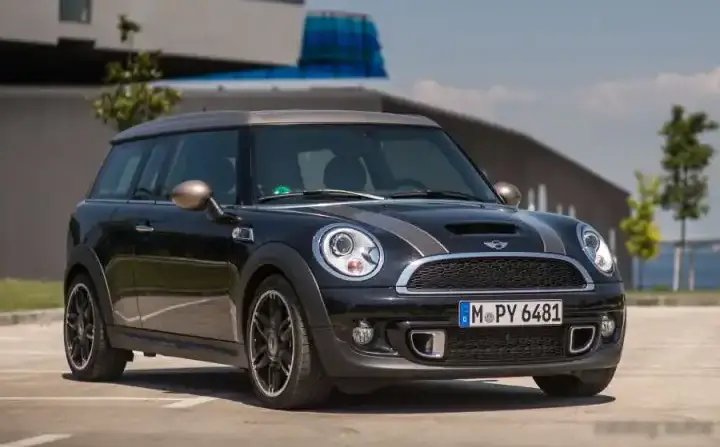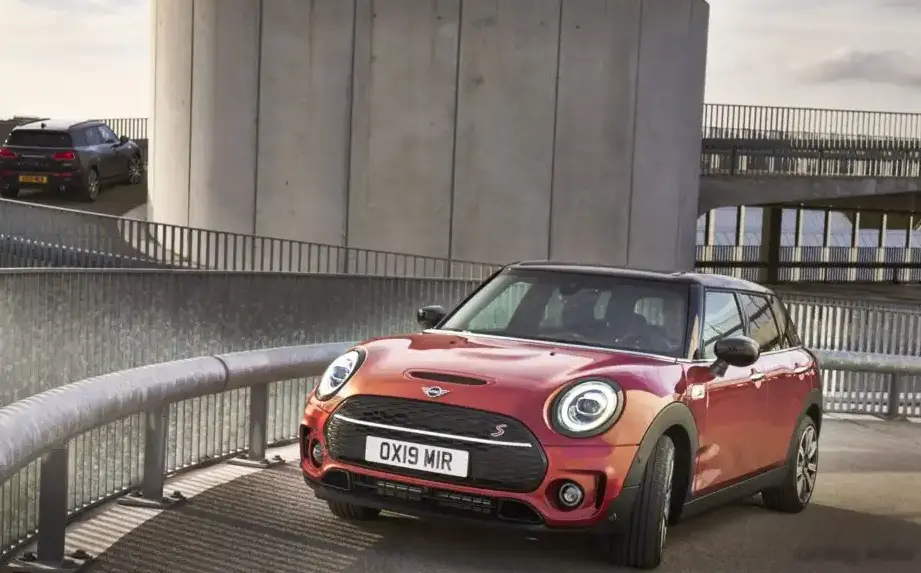
The Mini Clubman (F54) facelift Cooper D 2.0, produced from 2019 onwards, represents a refinement of the second-generation Clubman (F54) introduced in 2015. Positioned as a practical, yet premium, compact wagon, the Cooper D 2.0 offered a diesel-powered option within the Clubman range, appealing to buyers seeking fuel efficiency and reasonable performance. This variant sat in the mid-range of the lineup, offering a step up from the base Cooper models while remaining more accessible than the performance-oriented John Cooper Works (JCW) trim. The facelift brought updated styling, improved technology, and refinements to the engine and interior.
Technical Specifications
| Brand | Mini |
| Model | Clubman |
| Generation | Clubman (F54, facelift 2019) |
| Type (Engine) | Cooper D 2.0 (150 Hp) |
| Start of production | 2019 |
| Powertrain Architecture | Internal Combustion engine |
| Body type | Station wagon (estate) |
| Seats | 5 |
| Doors | 5 |
| Fuel consumption (urban) | 5.0-5.1 l/100 km (47 – 46.1 US mpg) |
| Fuel consumption (extra urban) | 3.8-4.1 l/100 km (61.9 – 57.4 US mpg) |
| Fuel consumption (combined) | 4.3-4.4 l/100 km (54.7 – 53.5 US mpg) |
| CO2 emissions | 113-116 g/km |
| Fuel Type | Diesel |
| Acceleration 0 – 100 km/h | 8.9 sec |
| Acceleration 0 – 62 mph | 8.9 sec |
| Acceleration 0 – 60 mph | 8.5 sec |
| Maximum speed | 211 km/h (131.11 mph) |
| Emission standard | Euro 6d-Temp |
| Power | 150 Hp |
| Torque | 350 Nm @ 1750 rpm (258.15 lb.-ft. @ 1750 rpm) |
| Engine layout | Front, Transverse |
| Engine Model/Code | B47C20B |
| Engine displacement | 1995 cm3 (121.74 cu. in.) |
| Number of cylinders | 4 |
| Engine configuration | Inline |
| Number of valves per cylinder | 4 |
| Fuel injection system | Diesel Commonrail |
| Engine aspiration | Turbocharger, Intercooler |
| Engine oil capacity | 5.5 l (5.81 US qt | 4.84 UK qt) |
| Coolant capacity | 7 l (7.4 US qt | 6.16 UK qt) |
| Trunk (boot) space – minimum | 360 l (12.71 cu. ft.) |
| Trunk (boot) space – maximum | 1250 l (44.14 cu. ft.) |
| Fuel tank capacity | 48 l (12.68 US gal | 10.56 UK gal) |
| Length | 4253 mm (167.44 in.) |
| Width | 1800 mm (70.87 in.) |
| Height | 1441 mm (56.73 in.) |
| Wheelbase | 2670 mm (105.12 in.) |
| Drivetrain Architecture | Front wheel drive |
| Number of gears and type of gearbox | 6 gears, manual transmission |
| Front suspension | Independent type McPherson |
| Rear suspension | Independent multi-link suspension |
| Front brakes | Disc |
| Rear brakes | Disc |
| Tires size | 205/55 R16 |
| Wheel rims size | 7J x 16 |
Powertrain & Engine Architecture
The Cooper D 2.0 utilizes BMW’s B47C20B engine, a 2.0-liter inline-four cylinder diesel engine. This engine is a member of the modular BMW engine family, known for its efficiency and refinement. The B47 features a cast iron block, aluminum cylinder head, and a single turbocharger with an intercooler. Fuel is delivered via a common rail direct injection system, operating at extremely high pressures to optimize combustion. The engine employs four valves per cylinder and a chain-driven camshaft, contributing to its durability and reduced maintenance requirements. The 6-speed manual transmission was standard, providing a balance between fuel economy and driver engagement. The transmission’s gear ratios were tuned to maximize the engine’s torque output, providing strong acceleration from low speeds.
Driving Characteristics
The 150 horsepower and 350 Nm (258 lb-ft) of torque delivered by the Cooper D 2.0 provided a comfortable and capable driving experience. While not overtly sporty, the engine offered ample power for everyday driving and highway cruising. Acceleration from 0-60 mph took approximately 8.5 seconds, making it competitive within its class. The manual transmission allowed for precise control, and the engine’s strong low-end torque meant that frequent downshifting wasn’t necessary. Compared to the more powerful Cooper S models, the Cooper D 2.0 prioritized fuel economy and relaxed cruising over outright performance. The manual gearbox, while engaging, didn’t offer the quick shifts of a dual-clutch transmission, but it did contribute to a more connected driving feel.
Equipment & Trim Levels
The 2019 facelifted Clubman Cooper D 2.0 came reasonably well-equipped as standard. Interior features typically included cloth upholstery, a leather-wrapped steering wheel, and a 6.5-inch infotainment system with Bluetooth connectivity. Standard safety equipment included ABS, stability control, and multiple airbags. Optional extras included a larger 8.8-inch infotainment screen with navigation, a panoramic sunroof, heated seats, and a premium Harman Kardon sound system. The Clubman’s split rear doors, a defining feature of the model, provided convenient access to the cargo area. Trim levels could vary slightly depending on the market, but generally offered packages that bundled popular options together.
Chassis & Braking
The Clubman F54 utilizes a front-wheel-drive platform with independent suspension at all four corners. The front suspension employs McPherson struts, while the rear features a multi-link setup. This configuration provided a good balance between ride comfort and handling. The Cooper D 2.0 was equipped with disc brakes on all four wheels, providing adequate stopping power for its weight and performance. ABS (Anti-lock Braking System) was standard, enhancing safety during emergency braking situations. Stabilizer bars were fitted front and rear to reduce body roll during cornering.
Market Reception & Comparison
The Clubman Cooper D 2.0 was generally well-received by automotive critics. It was praised for its fuel efficiency, comfortable ride, and practical interior space. However, some reviewers noted that the engine could be somewhat noisy under hard acceleration. Compared to the petrol-powered Cooper models, the diesel offered significantly better fuel economy, making it an attractive option for drivers covering long distances. Against competitors like the Volkswagen Golf Estate and Audi A4 Avant, the Clubman offered a more distinctive and stylish design, but often at a slightly higher price point. The manual transmission was favored by enthusiasts, but some buyers preferred the convenience of an automatic option, which was available on other Clubman variants.
Legacy
The B47 engine, while generally reliable, has been subject to some concerns regarding timing chain wear, particularly in earlier iterations. However, the 2019 facelifted models benefited from improvements made to address these issues. The Clubman Cooper D 2.0 remains a popular choice in the used car market, offering a blend of practicality, efficiency, and style. Its relatively low running costs and comfortable driving experience continue to appeal to a wide range of buyers. Proper maintenance, including regular oil changes and adherence to BMW’s service schedule, is crucial for ensuring the long-term reliability of this powertrain.