
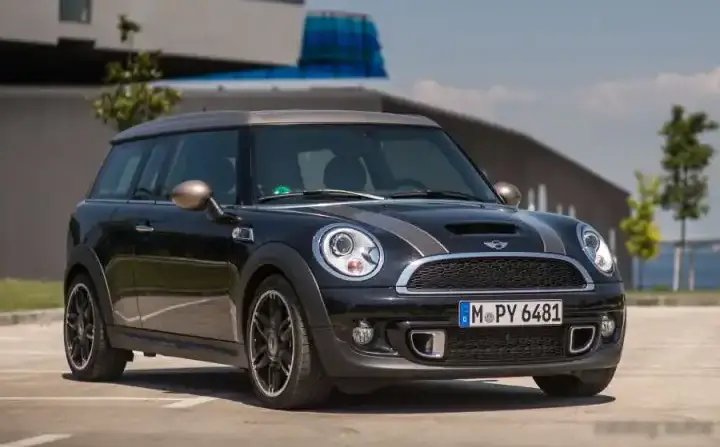
The Mini Clubman JCW 2.0 (231 Hp) represents the high-performance variant of the F54 Clubman generation, produced between 2016 and 2019. Positioned as the flagship model within the Clubman lineup, it offered a significant performance upgrade over the Cooper and Cooper S versions. This model aimed to blend the practicality of a compact station wagon with the sporty driving dynamics traditionally associated with the Mini brand, appealing to enthusiasts seeking a more engaging driving experience without sacrificing everyday usability. It was primarily marketed in Europe, North America, and Australia, offering a premium alternative to mainstream compact hatchbacks.
Technical Specifications
| Brand | Mini |
| Model | Clubman |
| Generation | Clubman (F54) |
| Type (Engine) | JCW 2.0 (231 Hp) |
| Start of production | 2016 |
| End of production | 2019 |
| Powertrain Architecture | Internal Combustion engine |
| Body type | Station wagon (estate) |
| Seats | 5 |
| Doors | 5 |
| Fuel consumption (urban) | 9.7 l/100 km (24.2 US mpg) |
| Fuel consumption (extra urban) | 6 l/100 km (39.2 US mpg) |
| Fuel consumption (combined) | 7.4 l/100 km (31.8 US mpg) |
| CO2 emissions | 168 g/km |
| Fuel Type | Petrol (Gasoline) |
| Acceleration 0 – 100 km/h | 6.3 sec |
| Acceleration 0 – 62 mph | 6.3 sec |
| Acceleration 0 – 60 mph | 6 sec |
| Maximum speed | 238 km/h (147.89 mph) |
| Emission standard | Euro 6 |
| Weight-to-power ratio | 6.4 kg/Hp |
| Weight-to-torque ratio | 4.2 kg/Nm |
| Power | 231 Hp @ 5000-6000 rpm |
| Torque | 350 Nm @ 1450-4500 rpm (258.15 lb.-ft.) |
| Engine layout | Front, Transverse |
| Engine Model/Code | B48A20B |
| Engine displacement | 1998 cm3 (121.93 cu. in.) |
| Number of cylinders | 4 |
| Engine configuration | Inline |
| Cylinder Bore | 82 mm (3.23 in.) |
| Piston Stroke | 94.6 mm (3.72 in.) |
| Compression ratio | 10.2:1 |
| Number of valves per cylinder | 4 |
| Fuel injection system | Direct injection |
| Engine aspiration | Twin-power turbo, Intercooler |
| Engine oil capacity | 5.3 l (5.6 US qt | 4.66 UK qt) |
| Coolant | 5.8 l (6.13 US qt | 5.1 UK qt) |
| Kerb Weight | 1475 kg (3251.82 lbs.) |
| Max. weight | 2050 kg (4519.48 lbs.) |
| Max load | 575 kg (1267.66 lbs.) |
| Trunk (boot) space – minimum | 360 l (12.71 cu. ft.) |
| Trunk (boot) space – maximum | 1250 l (44.14 cu. ft.) |
| Fuel tank capacity | 48 l (12.68 US gal | 10.56 UK gal) |
| Max. roof load | 75 kg (165.35 lbs.) |
| Permitted trailer load with brakes (12%) | 1500 kg (3306.93 lbs.) |
| Permitted trailer load without brakes | 750 kg (1653.47 lbs.) |
| Permitted towbar download | 75 kg (165.35 lbs.) |
| Length | 4253 mm (167.44 in.) |
| Width | 1800 mm (70.87 in.) |
| Height | 1441 mm (56.73 in.) |
| Wheelbase | 2670 mm (105.12 in.) |
| Front track | 1553 mm (61.14 in.) |
| Rear track | 1555 mm (61.22 in.) |
| Ride height (ground clearance) | 141 mm (5.55 in.) |
| Drag coefficient (Cd) | 0.34 |
| Minimum turning circle | 11.3 m (37.07 ft.) |
| Drivetrain Architecture | Front wheel drive |
| Number of gears | 6 |
| Type of gearbox | Manual transmission |
| Front suspension | Independent, type McPherson with coil spring and anti-roll bar |
| Rear suspension | Independent multi-link suspension |
| Front brakes | Ventilated discs |
| Rear brakes | Ventilated discs |
| Assisting systems | ABS (Anti-lock braking system) |
| Steering type | Steering rack and pinion |
| Power steering | Electric Steering |
| Tires size | 225/40 R18 |
| Wheel rims size | 8J x 18 |
INTRODUCTION
The F54 Clubman JCW 2.0, launched in 2016, represented a significant step up in performance for the Clubman range. Built on the UKL2 platform (shared with the BMW 2 Series Active Tourer), the JCW variant aimed to deliver a more dynamic and engaging driving experience than its Cooper and Cooper S siblings. The “JCW” designation, standing for John Cooper Works, signifies Mini’s performance-focused sub-brand, and this model carried that legacy with a more powerful engine, upgraded suspension, and distinctive styling cues. Production continued through 2019, with minor revisions occurring throughout its lifespan.
Powertrain & Engine Architecture
At the heart of the Clubman JCW 2.0 lies the BMW B48A20B 2.0-liter turbocharged inline-four cylinder engine. This engine, part of BMW’s modular engine family, utilizes direct fuel injection and a twin-scroll turbocharger to produce 231 horsepower and 350 Nm (258 lb-ft) of torque. The engine’s architecture features a cast aluminum block and head, double VANOS variable valve timing, and a relatively high 10.2:1 compression ratio. The six-speed manual transmission was standard, offering precise shifts and a direct connection to the engine. An optional eight-speed Steptronic automatic transmission was also available, providing smoother gear changes and enhanced convenience. The automatic transmission featured paddle shifters for manual control. The engine’s turbocharger is strategically positioned for quick spool-up, minimizing turbo lag and delivering a responsive power delivery across the rev range.
Driving Characteristics
The Clubman JCW 2.0 delivers a noticeably more spirited driving experience compared to the lower-powered Clubman variants. Acceleration from 0 to 60 mph takes approximately 6 seconds, and the car feels eager to rev. The manual transmission provides a satisfyingly tactile experience, while the automatic offers smooth and quick shifts. The JCW model benefits from a retuned suspension system, featuring stiffer springs and dampers, along with a larger diameter stabilizer bar. This results in reduced body roll and improved handling precision. While the ride is firmer than the standard Clubman, it remains reasonably comfortable for everyday driving. The front-wheel-drive layout provides good traction, although torque steer can be noticeable under hard acceleration. The steering is precise and well-weighted, offering good feedback to the driver.
Equipment & Trim Levels
The Clubman JCW 2.0 came standard with a comprehensive list of features, including sport seats, a leather-wrapped steering wheel, automatic climate control, and a 6.5-inch infotainment system with Mini Connected services. Exterior styling cues included a unique front bumper with larger air intakes, side skirts, a rear diffuser, and a JCW-specific exhaust system. Optional extras included a larger 8.8-inch infotainment system with navigation, a Harman Kardon premium sound system, a panoramic sunroof, and adaptive LED headlights. Interior upholstery options included cloth/leather combinations and full leather trim. A variety of exterior colors and interior trim options were available, allowing buyers to personalize their vehicle.
Chassis & Braking
The Clubman JCW 2.0 features an independent suspension setup at all four corners. The front suspension utilizes a McPherson strut design with coil springs and an anti-roll bar, while the rear suspension employs a multi-link setup. This configuration provides a good balance between ride comfort and handling performance. The braking system consists of ventilated disc brakes on all four wheels, providing ample stopping power. ABS (Anti-lock Braking System) is standard, along with electronic brake-force distribution and corner brake control. The JCW model also features a slightly larger brake rotor diameter compared to the Cooper and Cooper S variants, further enhancing braking performance.
Market Reception & Comparison
The Clubman JCW 2.0 was generally well-received by automotive critics, who praised its performance, handling, and distinctive styling. However, some reviewers noted that the front-wheel-drive layout limited its ultimate handling potential compared to rear-wheel-drive competitors. Compared to the standard Clubman Cooper and Cooper S models, the JCW offered a significant performance upgrade, but at a higher price point. The JCW also delivered slightly lower fuel economy due to its more powerful engine. Compared to rivals like the Volkswagen Golf GTI, the Clubman JCW offered a more unique and characterful driving experience, but the Golf GTI generally provided more interior space and practicality.
Legacy
The Clubman JCW 2.0 has established itself as a desirable and relatively reliable performance car in the used car market. The B48 engine has proven to be robust, although regular maintenance is essential. Common issues reported by owners include occasional oil leaks and problems with the cooling system. The JCW’s distinctive styling and engaging driving dynamics continue to appeal to enthusiasts. Its blend of practicality and performance makes it a compelling alternative to more mainstream hot hatchbacks, and well-maintained examples hold their value reasonably well. The F54 JCW represents a significant chapter in Mini’s history, demonstrating the brand’s commitment to delivering fun-to-drive vehicles with a premium feel.
