Technical Specifications
| Brand | Mini |
| Model | Clubman |
| Generation | Clubman (R55) |
| Type (Engine) | Cooper 1.6 (122 Hp) |
| Start of production | September, 2010 |
| End of production | November, 2013 |
| Powertrain Architecture | Internal Combustion engine |
| Body type | Station wagon (estate) |
| Seats | 5 |
| Doors | 5 |
| Fuel consumption (urban) | 7 l/100 km (33.6 US mpg, 40.4 UK mpg, 14.3 km/l) |
| Fuel consumption (extra urban) | 4.7 l/100 km (50 US mpg, 60.1 UK mpg, 21.3 km/l) |
| Fuel consumption (combined) | 5.5 l/100 km (42.8 US mpg, 51.4 UK mpg, 18.2 km/l) |
| CO2 emissions | 129 g/km |
| Fuel Type | Petrol (Gasoline) |
| Acceleration 0 – 100 km/h | 9.8 sec |
| Acceleration 0 – 62 mph | 9.8 sec |
| Acceleration 0 – 60 mph | 9.3 sec |
| Maximum speed | 201 km/h (124.9 mph) |
| Emission standard | Euro 5 |
| Weight-to-power ratio | 9.4 kg/Hp, 106.6 Hp/tonne |
| Weight-to-torque ratio | 7.2 kg/Nm, 139.7 Nm/tonne |
| Power | 122 Hp @ 6000 rpm |
| Power per litre | 76.3 Hp/l |
| Torque | 160 Nm @ 4250 rpm (118.01 lb.-ft. @ 4250 rpm) |
| Engine layout | Front, Transverse |
| Engine Model/Code | N16B16A |
| Engine displacement | 1598 cm3 (97.52 cu. in.) |
| Number of cylinders | 4 |
| Engine configuration | Inline |
| Cylinder Bore | 77 mm (3.03 in.) |
| Piston Stroke | 85.8 mm (3.38 in.) |
| Compression ratio | 11:1 |
| Number of valves per cylinder | 4 |
| Fuel injection system | Multi-port manifold injection |
| Engine aspiration | Naturally aspirated engine |
| Engine oil capacity | 4.2 l (4.44 US qt | 3.7 UK qt) |
| Coolant | 5.2 l (5.49 US qt | 4.58 UK qt) |
| Kerb Weight | 1145 kg (2524.29 lbs.) |
| Max. weight | 1645 kg (3626.6 lbs.) |
| Max load | 500 kg (1102.31 lbs.) |
| Trunk (boot) space – minimum | 260 l (9.18 cu. ft.) |
| Trunk (boot) space – maximum | 930 l (32.84 cu. ft.) |
| Fuel tank capacity | 40 l (10.57 US gal | 8.8 UK gal) |
| Length | 3937 mm (155 in.) |
| Width | 1683 mm (66.26 in.) |
| Height | 1426 mm (56.14 in.) |
| Wheelbase | 2547 mm (100.28 in.) |
| Front track | 1459 mm (57.44 in.) |
| Rear (Back) track | 1467 mm (57.76 in.) |
| Ride height (ground clearance) | 138 mm (5.43 in.) |
| Minimum turning circle | 11 m (36.09 ft.) |
| Drivetrain Architecture | The Internal combustion engine (ICE) drives the front wheels of the vehicle. |
| Drive wheel | Front wheel drive |
| Number of gears and type of gearbox | 6 gears, manual transmission |
| Front suspension | Independent, type McPherson with coil spring and anti-roll bar |
| Rear suspension | Semi-independent, coil spring |
| Front brakes | Ventilated discs |
| Rear brakes | Disc |
| Assisting systems | ABS (Anti-lock braking system) |
| Steering type | Steering rack and pinion |
| Tires size | 175/65 R15 84H |
| Wheel rims size | 5.5J x 15 LM |
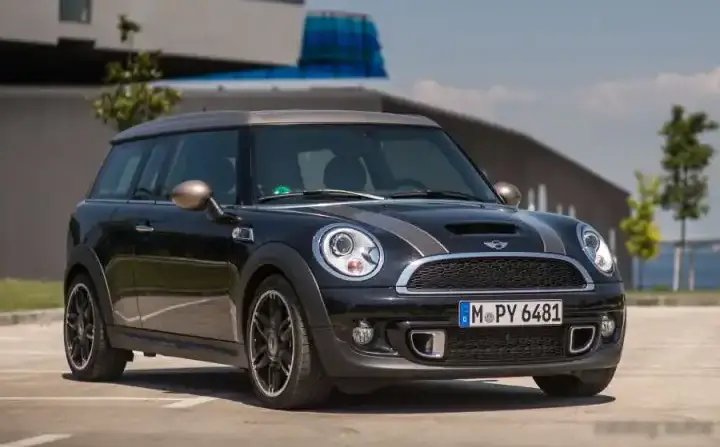
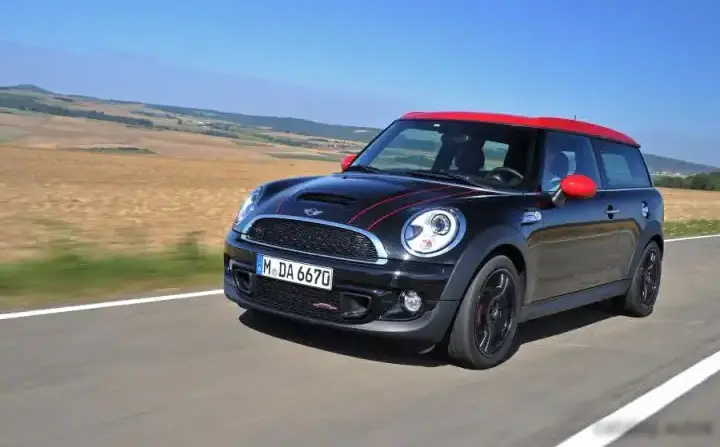
The Mini Clubman Cooper 1.6 (122 hp) represents a specific configuration within the R55 Clubman generation, produced from September 2010 to November 2013. Positioned as a core offering in the Clubman lineup, it aimed to blend Mini’s signature styling and handling with a more practical, wagon-like body style. The R55 Clubman, launched in 2007, was the first modern Mini to offer five doors and a split rear tailgate – a design element harking back to the original 1960s Mini estate. This 1.6-liter variant served as a popular entry point into the Clubman range, offering a balance between affordability, fuel efficiency, and the brand’s characteristic driving experience.
Powertrain & Engine Architecture
At the heart of the Clubman Cooper 1.6 lies the N16B16A engine, a 1.6-liter naturally aspirated inline-four cylinder petrol engine. This engine was a mainstay of the second-generation Mini lineup, known for its relatively simple design and decent reliability. The N16 engine family utilized a cast iron block with an aluminum cylinder head, featuring double overhead camshafts (DOHC) and four valves per cylinder. Fuel delivery was managed by a multi-port fuel injection system, providing adequate atomization for efficient combustion. The engine produced 122 horsepower at 6000 rpm and 160 Nm (118 lb-ft) of torque at 4250 rpm. The six-speed manual transmission was standard, offering precise shifts and contributing to the car’s engaging driving feel. The engine’s design prioritized fuel efficiency and smooth power delivery over outright performance.
Driving Characteristics
The 1.6-liter engine, paired with the six-speed manual gearbox, provided a respectable, if not exhilarating, driving experience. Acceleration from 0-60 mph took around 9.3 seconds, and top speed was approximately 125 mph. The gear ratios were well-matched, allowing for comfortable cruising on the highway while still providing enough punch for overtaking maneuvers. Compared to the more powerful Cooper S models, the 1.6-liter felt less urgent, but it offered a more relaxed and economical driving experience. The manual transmission encouraged driver involvement, and the car’s relatively light weight (around 2524 lbs) contributed to its nimble handling. The steering was precise and well-weighted, typical of Mini’s DNA.
Equipment & Trim Levels
The Clubman Cooper 1.6 typically came equipped with a reasonable level of standard features. These included air conditioning, power windows, power mirrors, a CD/MP3 stereo system, and alloy wheels. Interior upholstery was typically cloth, with options for leather upgrades. Available optional extras included a panoramic sunroof, navigation system, sport seats, and various customization options through Mini’s extensive personalization program. The Clubman’s split rear tailgate was a defining feature, offering unique access to the cargo area. Trim levels were relatively simple, with the Cooper 1.6 serving as the base model, with options packages available to add more features.
Chassis & Braking
The R55 Clubman utilized a McPherson strut front suspension and a semi-independent coil spring rear suspension. This setup provided a good balance between ride comfort and handling precision. The front brakes were ventilated discs, while the rear brakes were solid discs, providing adequate stopping power for the car’s weight and performance. Anti-lock Braking System (ABS) was standard. The chassis was relatively stiff, contributing to the car’s responsive handling. Stabilizer bars were fitted front and rear to reduce body roll during cornering.
Market Reception & Comparison
The Clubman Cooper 1.6 was generally well-received by automotive critics as a practical and stylish alternative to traditional hatchbacks. It was praised for its unique design, engaging driving dynamics, and relatively good fuel economy (around 43 mpg combined). However, some critics noted that the 1.6-liter engine could feel underpowered, especially when fully loaded or driving uphill. Compared to the Cooper S, the 1.6 offered a more affordable entry point into the Clubman range, but at the expense of performance. The 1.6 also offered better fuel economy than the diesel variants, making it an attractive option for drivers prioritizing efficiency.
Legacy
The N16B16A engine, while not known for being exceptionally groundbreaking, proved to be a relatively reliable unit when properly maintained. Common issues included oil leaks and occasional problems with the cooling system. Today, the Clubman Cooper 1.6 represents an affordable entry point into Mini ownership. Well-maintained examples are still relatively common on the used car market, and parts availability is generally good. The R55 Clubman, and particularly the 1.6-liter variant, has gained a following among enthusiasts who appreciate its unique styling, engaging driving experience, and relative simplicity.