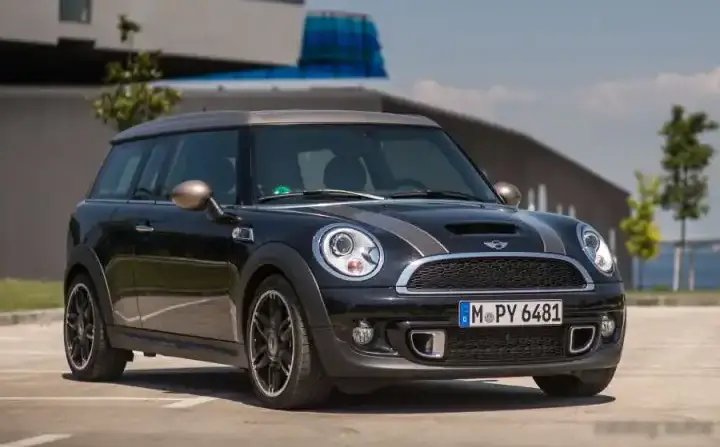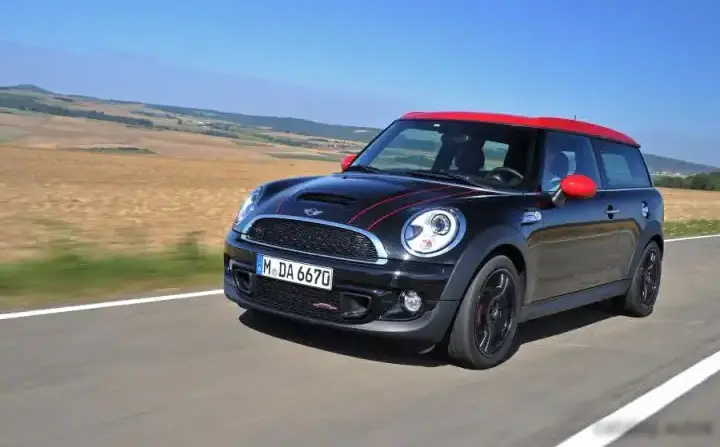
The Mini Clubman (R55) Cooper D 1.6, produced primarily in 2010, represented a unique offering within the second generation Clubman lineup (introduced in 2007). Positioned as a fuel-efficient and practical variant, it catered to buyers seeking the distinctive Mini styling with the benefits of diesel power. This model year saw a convergence of the R55 platform, which blended the iconic Mini design with a more spacious, wagon-like body style – a departure from the traditional hatchback. The Cooper D 1.6, with its 110 horsepower output, aimed to balance economy with acceptable performance for everyday driving. It was a key part of Mini’s strategy to broaden its appeal beyond purely enthusiast-focused models.
Technical Specifications
| Brand | Mini |
| Model | Clubman |
| Generation | Clubman (R55) |
| Type (Engine) | Cooper D 1.6 (110 Hp) |
| Start of production | 2010 |
| End of production | 2010 |
| Powertrain Architecture | Internal Combustion engine |
| Body type | Station wagon (estate) |
| Seats | 5 |
| Doors | 5 |
| Fuel consumption (urban) | 4.9 l/100 km (48 US mpg, 57.6 UK mpg, 20.4 km/l) |
| Fuel consumption (extra urban) | 3.6 l/100 km (65.3 US mpg, 78.5 UK mpg, 27.8 km/l) |
| Fuel consumption (combined) | 4.1 l/100 km (57.4 US mpg, 68.9 UK mpg, 24.4 km/l) |
| CO2 emissions | 109 g/km |
| Fuel Type | Diesel |
| Acceleration 0 – 100 km/h | 10.4 sec |
| Acceleration 0 – 62 mph | 10.4 sec |
| Acceleration 0 – 60 mph | 9.9 sec |
| Maximum speed | 193 km/h (119.92 mph) |
| Emission standard | Euro 4 |
| Weight-to-power ratio | 10.7 kg/Hp, 93.6 Hp/tonne |
| Weight-to-torque ratio | 4.5 kg/Nm, 221.3 Nm/tonne |
| Power | 110 Hp @ 4000 rpm |
| Power per litre | 70.5 Hp/l |
| Torque | 260 Nm @ 1750-2000 rpm (191.77 lb.-ft. @ 1750-2000 rpm) |
| Engine layout | Front, Transverse |
| Engine Model/Code | N47C16 |
| Engine displacement | 1560 cm3 (95.2 cu. in.) |
| Number of cylinders | 4 |
| Engine configuration | Inline |
| Cylinder Bore | 75 mm (2.95 in.) |
| Piston Stroke | 88.3 mm (3.48 in.) |
| Compression ratio | 18:1 |
| Number of valves per cylinder | 4 |
| Fuel injection system | Diesel Commonrail |
| Engine aspiration | Turbocharger, Intercooler |
| Engine oil capacity | 3.7 l (3.91 US qt | 3.26 UK qt) |
| Coolant | 5.4 l (5.71 US qt | 4.75 UK qt) |
| Kerb Weight | 1175 kg (2590.43 lbs.) |
| Max. weight | 1675 kg (3692.74 lbs.) |
| Max load | 500 kg (1102.31 lbs.) |
| Trunk (boot) space – minimum | 260 l (9.18 cu. ft.) |
| Trunk (boot) space – maximum | 930 l (32.84 cu. ft.) |
| Fuel tank capacity | 40 l (10.57 US gal | 8.8 UK gal) |
| Length | 3945 mm (155.31 in.) |
| Width | 1683 mm (66.26 in.) |
| Height | 1426 mm (56.14 in.) |
| Wheelbase | 2547 mm (100.28 in.) |
| Front track | 1459 mm (57.44 in.) |
| Rear (Back) track | 1467 mm (57.76 in.) |
| Ride height (ground clearance) | 118 mm (4.65 in.) |
| Minimum turning circle | 11 m (36.09 ft.) |
| Drivetrain Architecture | Front wheel drive |
| Number of gears and type of gearbox | 6 gears, manual transmission |
| Front suspension | Independent, type McPherson with coil spring and anti-roll bar |
| Rear suspension | Semi-independent, coil spring |
| Front brakes | Ventilated discs |
| Rear brakes | Disc |
| Assisting systems | ABS (Anti-lock braking system) |
| Steering type | Steering rack and pinion |
| Tires size | 175/65 R15 84H |
| Wheel rims size | 5.5J x 15 LM |
INTRODUCTION
The Mini Clubman R55 Cooper D 1.6, launched in 2010, was a key component of the second-generation Clubman range (based on the BMW 1-Series platform, internally known as the 1HX0/A3). It distinguished itself from the standard Cooper models by utilizing a diesel engine, offering improved fuel economy and torque. The Clubman, with its unique split rear doors (often referred to as “barn doors”), aimed to provide a more practical and versatile option within the Mini lineup, appealing to those needing more cargo space than the traditional hatchback. The Cooper D 1.6 variant occupied the lower-mid range of the Clubman offerings, serving as a more affordable and economical alternative to the petrol-powered Cooper and the higher-performance Cooper S models.
Powertrain & Engine Architecture
At the heart of the Cooper D 1.6 was the BMW-developed N47C16 diesel engine. This 1.6-liter inline-four cylinder engine was a significant advancement in diesel technology for the Mini brand. It featured a common rail direct injection system, delivering fuel directly into the combustion chamber at extremely high pressure for optimized combustion. The engine also incorporated a turbocharger with an intercooler, boosting power and torque output. The N47 engine family was known for its relatively sophisticated design, including four valves per cylinder and a variable geometry turbocharger (VGT) in later iterations. The 2010 model produced 110 horsepower at 4000 rpm and 260 Nm (191.77 lb-ft) of torque between 1750 and 2000 rpm. The engine was paired with a 6-speed manual transmission, providing a balance between fuel efficiency and driver control. While an automatic transmission was available on other Clubman models, the Cooper D 1.6 was primarily offered with the manual gearbox in many markets.
Driving Characteristics
The Cooper D 1.6 Clubman offered a distinctly different driving experience compared to its petrol counterparts. While lacking the outright acceleration of the Cooper S, it provided ample torque for everyday driving situations. The 260 Nm of torque available from low engine speeds made it particularly adept at navigating city streets and overtaking on the highway. The 6-speed manual transmission was well-matched to the engine’s characteristics, allowing drivers to keep the engine in its optimal power band. Acceleration from 0-60 mph took approximately 9.9 seconds, and the top speed was around 119.92 mph. Compared to the petrol Cooper, the diesel model felt more relaxed and effortless, particularly on longer journeys. The manual gearbox, while engaging, required more driver involvement than the optional automatic transmission found on other Clubman trims.
Equipment & Trim Levels
The Cooper D 1.6 Clubman typically came equipped with a reasonable level of standard features. These included air conditioning, power windows, central locking, and an audio system with CD player. Interior upholstery was generally cloth, with options for leather upgrades. The dashboard layout was characteristic of the R55 Clubman, featuring a large central speedometer and a smaller fuel/temperature gauge. Optional extras included a panoramic sunroof, sport seats, parking sensors, and a more advanced infotainment system. Trim levels varied depending on the market, but generally, the Cooper D 1.6 sat in the mid-range, offering a good balance of features and affordability. It was positioned below the Cooper S, which boasted more powerful engines, sportier suspension, and a more luxurious interior.
Chassis & Braking
The Clubman R55 utilized a McPherson strut front suspension and a semi-independent coil spring rear suspension. This setup provided a comfortable ride quality while maintaining reasonable handling characteristics. The front brakes were ventilated discs, offering good stopping power, while the rear brakes were solid discs. ABS (Anti-lock Braking System) was standard. The Clubman’s chassis was relatively lightweight, contributing to its nimble handling. The weight distribution was fairly balanced, enhancing cornering stability. Stabilizer bars were fitted to both the front and rear axles to reduce body roll.
Market Reception & Comparison
The Mini Clubman Cooper D 1.6 was generally well-received by automotive critics. It was praised for its fuel efficiency, comfortable ride, and distinctive styling. However, some reviewers noted that the engine lacked the excitement of the petrol-powered Cooper S. Compared to the standard Cooper, the diesel model offered significantly better fuel economy, making it a more practical choice for those covering long distances. Against competitors like the Audi A3 and Volkswagen Golf, the Clubman offered a more stylish and individualistic alternative, albeit with slightly less interior space. The diesel engine’s reliability was generally good, although early N47 engines were known to have potential issues with timing chain tensioners, a concern that was addressed in later revisions.
Legacy
The Mini Clubman Cooper D 1.6, while not the most iconic version of the Clubman, remains a popular choice in the used car market. Its fuel efficiency, combined with the Mini brand’s enduring appeal, makes it an attractive option for buyers seeking a stylish and economical vehicle. The N47 diesel engine, despite its early reliability concerns, has proven to be relatively durable when properly maintained. Today, these Clubmans are often sought after by enthusiasts who appreciate their unique blend of practicality, style, and fuel efficiency. The R55 Clubman, and the Cooper D 1.6 variant in particular, helped to solidify Mini’s position as a premium small car brand, offering a compelling alternative to more conventional competitors.