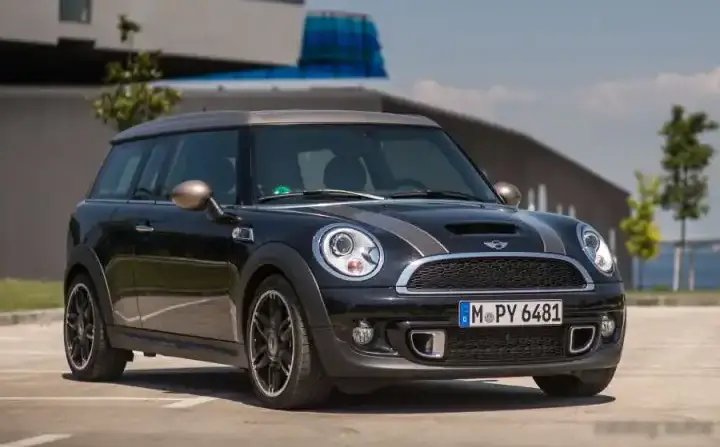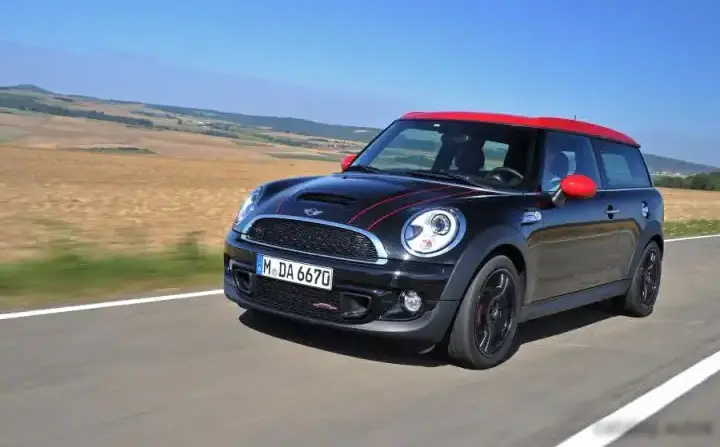
The Mini Clubman (R55) Cooper D 1.6 Automatic, produced primarily in 2010, represents a unique offering within the second generation of the Clubman, which debuted in 2007. Positioned as a practical, fuel-efficient variant, it combined the distinctive styling of the Clubman – characterized by its split rear doors – with a diesel engine and a six-speed automatic transmission. This configuration aimed to broaden the Clubman’s appeal to buyers seeking a blend of style, economy, and convenience. The R55 Clubman itself was built on the BMW Group’s 1HX0/A3 platform, shared with the first-generation BMW X1, and represented a departure from the original Mini’s more compact dimensions, offering increased interior space and practicality.
Technical Specifications
| Brand | Mini |
| Model | Clubman |
| Generation | Clubman (R55) |
| Type (Engine) | Cooper D 1.6 (110 Hp) Automatic |
| Start of production | 2010 |
| End of production | 2010 |
| Powertrain Architecture | Internal Combustion engine |
| Body type | Station wagon (estate) |
| Seats | 5 |
| Doors | 5 |
| Fuel consumption (urban) | 6.6 l/100 km (35.6 US mpg, 42.8 UK mpg, 15.2 km/l) |
| Fuel consumption (extra urban) | 4.2 l/100 km (56 US mpg, 67.3 UK mpg, 23.8 km/l) |
| Fuel consumption (combined) | 5.1 l/100 km (46.1 US mpg, 55.4 UK mpg, 19.6 km/l) |
| CO2 emissions | 136 g/km |
| Fuel Type | Diesel |
| Acceleration 0 – 100 km/h | 10.9 sec |
| Acceleration 0 – 62 mph | 10.9 sec |
| Acceleration 0 – 60 mph | 10.4 sec |
| Maximum speed | 188 km/h (116.82 mph) |
| Emission standard | Euro 4 |
| Weight-to-power ratio | 11 kg/Hp, 91.3 Hp/tonne |
| Weight-to-torque ratio | 4.6 kg/Nm, 215.8 Nm/tonne |
| Power | 110 Hp @ 4000 rpm |
| Power per litre | 70.5 Hp/l |
| Torque | 260 Nm @ 1750-2000 rpm (191.77 lb.-ft. @ 1750-2000 rpm) |
| Engine layout | Front, Transverse |
| Engine Model/Code | N47C16 |
| Engine displacement | 1560 cm3 (95.2 cu. in.) |
| Number of cylinders | 4 |
| Engine configuration | Inline |
| Cylinder Bore | 75 mm (2.95 in.) |
| Piston Stroke | 88.3 mm (3.48 in.) |
| Compression ratio | 18:1 |
| Number of valves per cylinder | 4 |
| Fuel injection system | Diesel Commonrail |
| Engine aspiration | Turbocharger, Intercooler |
| Engine oil capacity | 3.7 l (3.91 US qt | 3.26 UK qt) |
| Coolant | 5.4 l (5.71 US qt | 4.75 UK qt) |
| Kerb Weight | 1205 kg (2656.57 lbs.) |
| Max. weight | 1705 kg (3758.88 lbs.) |
| Max load | 500 kg (1102.31 lbs.) |
| Trunk (boot) space – minimum | 260 l (9.18 cu. ft.) |
| Trunk (boot) space – maximum | 930 l (32.84 cu. ft.) |
| Fuel tank capacity | 40 l (10.57 US gal | 8.8 UK gal) |
| Length | 3945 mm (155.31 in.) |
| Width | 1683 mm (66.26 in.) |
| Height | 1426 mm (56.14 in.) |
| Wheelbase | 2547 mm (100.28 in.) |
| Front track | 1459 mm (57.44 in.) |
| Rear (Back) track | 1467 mm (57.76 in.) |
| Ride height (ground clearance) | 118 mm (4.65 in.) |
| Minimum turning circle | 11 m (36.09 ft.) |
| Drivetrain Architecture | Front wheel drive |
| Number of gears and type of gearbox | 6 gears, automatic transmission |
| Front suspension | Independent, type McPherson with coil spring and anti-roll bar |
| Rear suspension | Semi-independent, coil spring |
| Front brakes | Ventilated discs |
| Rear brakes | Disc |
| Assisting systems | ABS (Anti-lock braking system) |
| Steering type | Steering rack and pinion |
| Tires size | 175/65 R15 84H |
| Wheel rims size | 5.5J x 15 LM |
Powertrain & Engine Architecture
The Cooper D 1.6 Automatic utilized the BMW N47C16 engine, a 1.6-liter inline-four diesel engine. This engine was a significant step forward for Mini, offering improved fuel efficiency and reduced emissions compared to earlier petrol offerings. The N47 featured a common rail direct injection system, delivering fuel at extremely high pressure for optimized combustion. A single turbocharger with an intercooler boosted power output, providing 110 horsepower at 4000 rpm and a healthy 260 Nm (191.77 lb-ft) of torque between 1750 and 2000 rpm. The engine employed four valves per cylinder and a compression ratio of 18:1. The automatic transmission was a six-speed unit, designed to provide smooth shifts and contribute to the car’s overall fuel economy. It wasn’t the sportiest automatic available, prioritizing comfort and efficiency over rapid gear changes.
Driving Characteristics
The 1.6-liter diesel engine, paired with the automatic transmission, delivered a comfortable and relaxed driving experience. Acceleration from 0-60 mph took around 10.4 seconds, which was adequate for everyday driving but noticeably slower than the more powerful Cooper S models. The automatic transmission, while smooth, lacked the responsiveness of a manual gearbox, and didn’t offer manual shift modes. The engine’s torque peak, available at relatively low revs, provided good in-gear acceleration for overtaking. The Clubman’s front-wheel-drive configuration meant that traction could be a limitation in slippery conditions, but the ABS system helped to mitigate this. Overall, the driving experience was geared towards practicality and fuel efficiency rather than outright performance.
Equipment & Trim Levels
The Cooper D 1.6 Automatic typically came equipped with a reasonable level of standard features. These included air conditioning, power windows, central locking, and an audio system with CD player. Interior upholstery was generally cloth, with options for leather upgrades. Common optional extras included a panoramic sunroof, parking sensors, and upgraded alloy wheels. The dashboard layout was typical of the R55 Clubman, featuring a large central speedometer and a smaller fuel/temperature gauge. Trim levels were relatively simple, with the Cooper D Automatic representing a mid-range offering within the Clubman lineup.
Chassis & Braking
The Clubman’s chassis featured independent McPherson strut suspension at the front and a semi-independent coil spring setup at the rear. This configuration provided a comfortable ride, although it wasn’t particularly sporty. The front brakes were ventilated discs, while the rear brakes were solid discs. ABS (Anti-lock Braking System) was standard, enhancing safety. The suspension was tuned to prioritize ride comfort over handling precision, reflecting the car’s focus on everyday usability. Stabilizer bars were fitted front and rear to reduce body roll during cornering.
Market Reception & Comparison
The Cooper D 1.6 Automatic was generally well-received by critics as a practical and economical option within the Clubman range. Its fuel economy – around 46.1 US mpg combined – was a major selling point. Compared to the petrol-powered Cooper, the diesel offered significantly better fuel efficiency, although it came with a slightly higher purchase price. Against the more powerful Cooper S models, the Cooper D Automatic lacked the same level of performance, but it appealed to buyers who prioritized economy and comfort. Reliability was generally good, although diesel particulate filters (DPFs) could require occasional maintenance, particularly on vehicles used primarily for short journeys.
Legacy
The N47 engine, in various iterations, proved to be a reliable and durable powerplant. However, early versions of the N47 were known for potential timing chain issues, which could lead to engine failure if not addressed. The Cooper D 1.6 Automatic Clubman remains a relatively affordable and practical used car option today. Its fuel efficiency and distinctive styling continue to appeal to buyers looking for a unique and economical vehicle. The automatic transmission, while not the most engaging, provides a comfortable driving experience, and the Clubman’s split rear doors offer a degree of practicality that sets it apart from conventional hatchbacks. Well-maintained examples are still relatively common on the used car market, offering a blend of style, economy, and practicality.